
Electric truck regenerative braking, explained – Fleet Equipment Magazine
Summary:
Electric truck regenerative braking dramatically extends brake pad life, but doesn't eliminate brake pad needs. This article for fleet buyers and aftermarket distributors explains how regen braking works, what it means for maintenance schedules, and how to source certified commercial vehicle brake pads that meet new demands for corrosion resistance and glazing prevention.
Electric truck regenerative braking, explained - Fleet Equipment Magazine
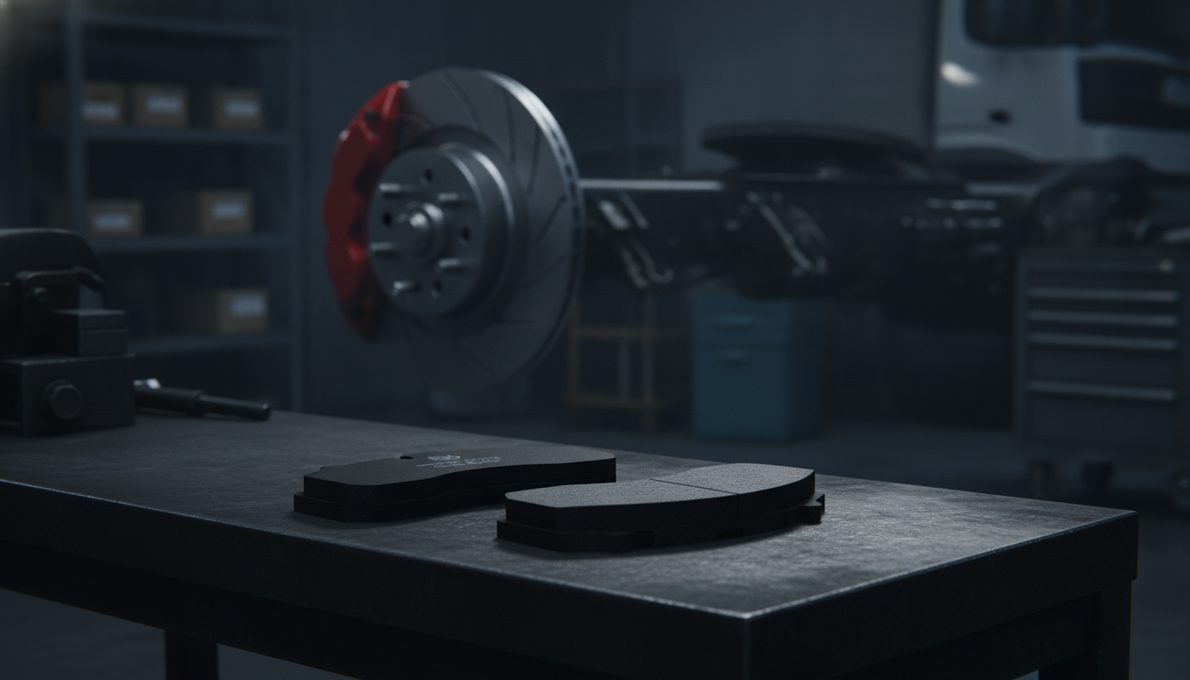
Quick answer: Electric trucks use regenerative braking to slow the vehicle by reversing the electric motor, converting kinetic energy into electricity that charges the battery. This process dramatically reduces the load on the friction brakes, meaning brake pads and rotors can last 2 to 4 times longer than on a diesel truck. But brake pads don’t disappear—they still handle hard stops, emergency braking, and parking. For fleet buyers and distributors, the shift means new demands on pad material science (corrosion resistance, glazing prevention) and a continued need for certified, high-quality aftermarket parts. Understanding how regen braking impacts your brake maintenance strategy is essential to controlling total cost of ownership.
How does regenerative braking actually affect commercial vehicle brake pad wear?
A heavy electric truck decelerating on a highway exit ramp is doing most of its slowing with the electric motor. The motor becomes a generator, absorbing kinetic energy and feeding it back to the battery. The Electronic Braking System (EBS) blends this regenerative torque with the friction brakes, but it prioritizes recuperation—the brake pads only engage when the regen can’t handle the requested deceleration, or when the battery is full. In a recent Fleet Equipment Magazine webinar, ZF engineers explained that the EBS “demands the retardation capabilities of the electrical drive before activating wear-free braking (retarder) and finally friction braking.”
What’s the result for fleet maintenance? Friction brake usage drops by 60–80% in typical regional-haul duty cycles. That sounds like brake pads will last forever, but reality is more nuanced. Less use means pads and rotors are more prone to corrosion, especially in northern climates where road salt is common. You’ll also see glazing—when the pad surface becomes smooth and hard from insufficient friction cycling—reducing its effectiveness when you really need it. So your pad material needs to fight rust and maintain friction stability across long inactivity periods.
BAIYUN Brake’s commercial vehicle pads are engineered with anti-corrosion additives and a friction profile that stays consistent even after hundreds of kilometers without heavy engagement. That’s something you don’t get with every off-the-shelf aftermarket pad. Fleet managers we talk to now check not only pad thickness but also surface condition at every PM, even if the pad has 80% life left.
What does the shift to electric trucks mean for aftermarket brake pad distributors?
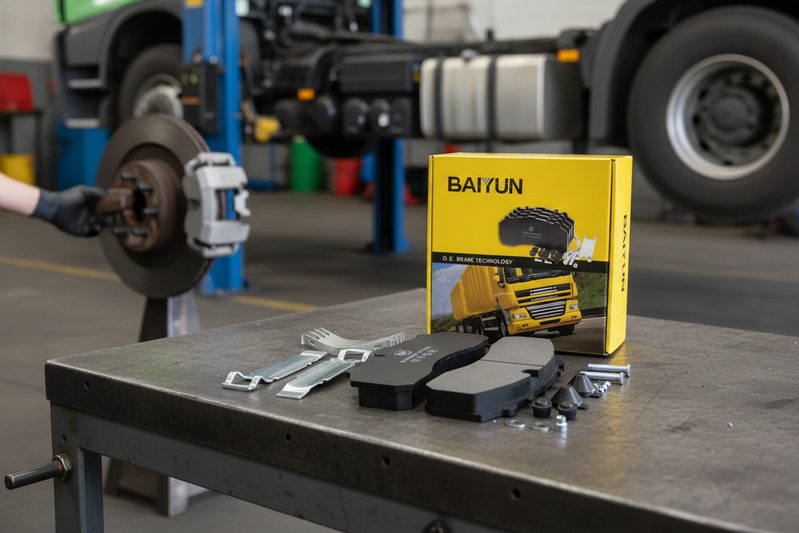
Volume per truck will go down—no question. But the importance of part quality goes way up. A distributor supplying 500 sets a month to mixed fleets can’t afford to have a batch that glazes after 10,000 km or rusts prematurely. The fleet will notice, and they’ll switch suppliers. Electric truck operators are hyper-aware of noise too, because the cab is silent without a diesel engine. Squeal at a stoplight becomes a maintenance complaint.
So if you’re sourcing brake pads for EV trucks, you need to look beyond price. Certifications become non-negotiable. IATF 16949 certification tells you the factory runs a quality management system designed for automotive series production—batch consistency is part of the DNA. ECE R90 certification confirms the pad’s performance matches or exceeds the OE part in braking efficiency, speed sensitivity, and cold performance. BAIYUN Brake holds both, with full dynamometer reports available for every friction code.
Our commercial vehicle brake pads range covers everything from light distribution trucks to heavy tractor units. For fleets running mixed electric/diesel operations, we can supply pads that fit both drivetrain types, but the friction formulation for electric duty emphasizes low corrosion and thermal cycling resistance. WVA reference numbers allow precise cross-referencing, and we support brake linings for drum brake applications as well, because many electric commercial vehicles still use pneumatic drum brakes on rear axles.
How will your maintenance schedule change when you introduce electric trucks?
A typical diesel long-haul tractor might need brake pad changes at 300,000 km. With regenerative braking, that same electric tractor can push pad intervals to 600,000 km or beyond. Stop-and-go distribution trucks see even larger jumps—from 80,000 km to 200,000 km or more. But don’t cut your inspection frequency. In fact, we recommend keeping a 25,000 km inspection interval for all axle ends, because corrosion can eat through a rotor faster than you’d think when brakes sit unused.
Here’s a real-world checklist item that surprises many fleet managers: On electric trucks, you often change pads because of rust jacking—where corrosion between the backing plate and pad material causes swelling—not because of friction material wear. That’s a failure mode that doesn’t exist in high-use diesel trucks. So pad design matters: galvanized backing plates, high-quality bonding, and protective edge coatings all extend service life. BAIYUN Brake uses a proprietary bonding process that’s been validated through 1,000-hour salt spray tests, which is why distributors in Scandinavia and Canada rely on our formulations.
From a total cost of ownership perspective, even though you buy fewer pads, the pads you do buy need to be genuinely certified and technically vetted. A single unplanned brake service on an electric truck costs far more in downtime than the price difference between a premium certified pad and a no-name option.
What should fleet buyers and importers look for in an electric truck brake pad supplier?
It’s not enough to have a catalog and a price list. You need a supplier who understands commercial vehicle braking and can prove it. I always tell buyers to ask these three threshold questions:
- Can they provide IATF 16949 and ECE R90 certificates, with test reports for the specific friction formula?
- Do they have real-world fleet references running the same pad in electric and mixed-environment operations?
- What’s their WVA number accuracy? A mismatched WVA code means a returned shipment and downtime.
BAIYUN Brake has been manufacturing friction materials for 49+ years. We’ve seen the shift from asbestos to NAO, the rise of disc brakes on trailers, and now the electric transition. Our factory runs fully automated mixing and pressing lines, with statistical process control on every batch. For importers, we offer flexible MOQs tailored to market size, private label packaging, and consolidated shipping from our port-side warehouse. Lead times for standard catalog items are typically 4–6 weeks, but we keep safety stock on high-demand WVA numbers.
We also make it easy to verify fitment: our electronic catalog is searchable by WVA, OE part number, or vehicle application. For new electric truck models that aren’t yet widely covered in aftermarket databases, our engineering team can reverse-engineer based on pad samples and provide a matching formulation.
Table: Brake Pad Replacement Intervals — Diesel vs. Electric Truck Duty Cycles
| Duty Cycle | Typical Diesel Pad Change | Typical Electric Pad Change | Key Factor for Electric Pads |
|---|---|---|---|
| Long-haul highway | 300,000 km | 600,000–800,000 km | Corrosion resistance during inactive periods |
| Regional delivery | 150,000 km | 350,000–500,000 km | Glazing resistance from light friction cycles |
| Stop-and-go urban | 80,000 km | 200,000–300,000 km | Friction stability after prolonged idling |
| Heavy construction | 60,000 km | 150,000–200,000 km | Mud/debris shedding and abrasive wear resistance |
*Mileage estimates based on fleet operator data and manufacturer projections. Actual intervals depend on vehicle load, route topography, driving style, and pad quality.
7-Point Buyer Verification Checklist for Sourcing EV-Ready Brake Pads
- Check IATF 16949 certification — ensures the factory quality system is designed for automotive series production, not generic commercial parts.
- Confirm ECE R90 homologation — the pad must have a valid R90 number, proving its performance matches the OE specification.
- Validate WVA reference numbers — cross-check the supplier’s WVA codes against your fleet’s pad profiles to avoid fitment errors.
- Request material data sheets — look for friction coefficient graphs across the full temperature range (SAE J2522 or similar) and corrosion test results.
- Ask about anti-corrosion features — galvanized backing plates, Nucap NRS hooks, or edge coatings can make the difference between a 2-year and a 5-year pad life on electric trucks.
- Evaluate batch consistency — reliable suppliers provide dynamometer test reports per production batch, not just an initial type-approval test.
- Review MOQ, packaging, and lead times — make sure the supplier can scale with your distribution volume and offer private label options if needed.
FAQs — Electric Truck Regenerative Braking and Brake Pads
- Q: Does regenerative braking mean brake pads never need replacement?
A: No. Brake pads still wear during hard braking, emergency stops, and when the battery is at full state-of-charge (regen is reduced). Corrosion and glazing can also require replacement even when friction material thickness is adequate. Plan for pad changes at roughly double to triple the diesel interval, not eliminate them. - Q: How often should electric truck brake pads be inspected?
A: We recommend every 25,000 km—same as diesel. Even though pads wear slower, corrosion and pad material degradation can progress quickly if the brakes sit unused for extended periods, especially in salty environments. - Q: What certifications should fleet buyers look for in brake pads for electric trucks?
A: IATF 16949 is critical for manufacturing consistency; ECE R90 is mandatory for aftermarket brake pads sold in most countries. Together they ensure the pad’s friction characteristics, cold performance, and speed sensitivity meet OE-equivalent standards, giving you confidence in a blending system that prioritizes regen. - Q: Can I use standard diesel truck brake pads on an electric truck?
A: Only if the pad’s part number and friction code are identical and the manufacturer has validated it for electric truck duty cycles. Many “standard” pads lack the anti-corrosion and glazing-resistant formulations needed for infrequent use. Always check with the pad manufacturer for specific vehicle approval. - Q: How does regen braking affect brake pad friction material requirements?
A: Friction material must maintain stable mu (friction coefficient) even after long light-use periods, resist moisture absorption, and have a low propensity to transfer film that causes judder. BAIYUN Brake’s electric truck formulations, for example, use a high graphite content and special binding resins to keep the pad surface conditioned with minimal mechanical abrasion cycles.
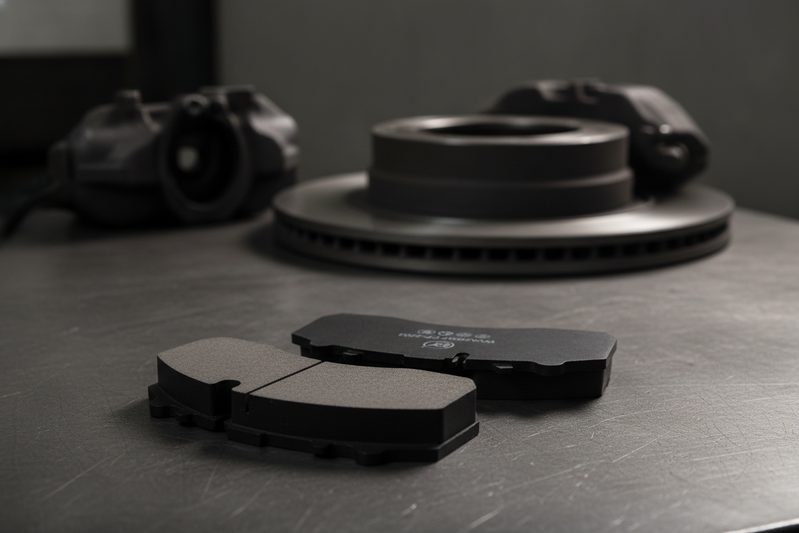
So where does this leave you as a fleet manager or distributor? The fundamentals haven’t changed: safety, uptime, and total cost of ownership still drive brake part purchasing decisions. The difference is that electric truck technology selects for the best brake pad designs, not the cheapest. If you’re building a supply chain that will last the next decade, partner with a manufacturer who understands commercial vehicle dynamics and has the certifications to prove it.
BAIYUN Brake has been supplying commercial vehicle brake pads and linings to fleets, OEMs, and aftermarket distributors worldwide for nearly five decades. Every pad we ship is backed by IATF 16949 and ECE R90 certification, batch-level dynamometer reports, and WVA-number precision that keeps your inventory turning. Whether you need a bulk order of commercial vehicle brake pads or a consistent supply of brake linings for drum axles, we’re ready to work with you on pricing, packaging, and logistics. Request a wholesale quote today and let’s build a brake parts program that matches the future of commercial transport.
Was this article helpful?
Average Rating: 5/5 (579)