
FMSI Updates Brake Pad Identification System – Work Truck Online
Summary:
FMSI Updates Brake Pad Identification System - Work Truck Online: The Friction Materials Standards Institute has introduced a 'Z' number suffix to flag OE brake pads with mechanical attachment. For fleet buyers and distributors, this update means verifying that ordered pads have rivets, locking tabs, or dovetail anchors where specified. BAIYUN Brake integrates the Z‑suffix into its commercial vehicle brake pad catalog, helping global importers avoid inventory mix‑ups. Learn how to audit your stock, update your ERP, and source ECE R90 certified pads that match the new FMSI identification system.
FMSI Updates Brake Pad Identification System - Work Truck Online
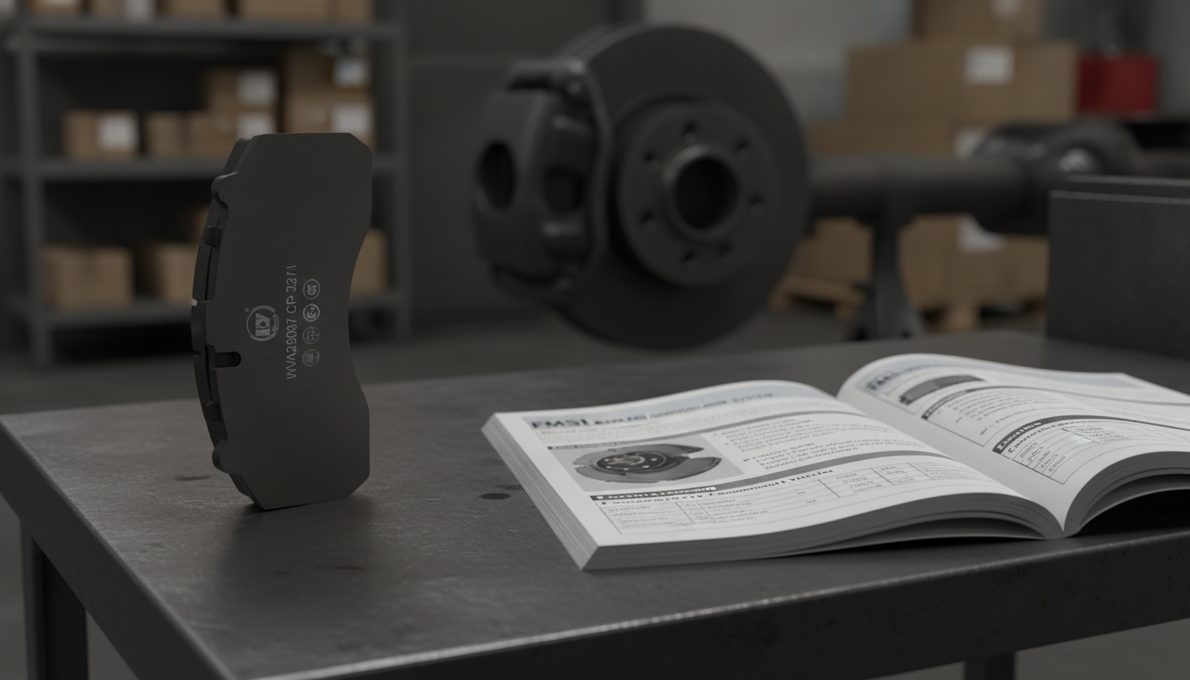
Quick answer: The Friction Materials Standards Institute (FMSI) has introduced a new “Z” number suffix to its brake pad identification system to flag OE designs that use mechanical attachment—rivets, locking tabs, or hooks—instead of only adhesive bonding. This change targets the 42 D-numbers covering roughly 30% of North America’s commercial trucks, school buses, and vocational fleet vehicles. For distributors and fleet buyers, the update means re-checking inventory cataloging and ordering procedures to avoid sourcing pads without the required mechanical safety interlock. BAIYUN Brake already maps its ECE R90–certified commercial vehicle brake pad range to both conventional FMSI D-numbers and the new Z-suffix format, helping global importers streamline parts matching.
Why Did FMSI Add a Z‑Number to the Existing D‑Number System?
For decades, a standard D‑number from the FMSI catalog was all a parts specialist needed. Fleet garages and distributors would look up the D‑number, order sets, and bolt them on. But about three years ago, the aftermarket started seeing a quiet shift: a handful of OE‑brand brake pads came into the parts channel with mechanical attachment features that the plain D‑number didn’t distinguish. A D‑number identifies shape, dimensions, and friction material—not whether the pad relies on rivets or a stamped locking clip to stay put.
So the FMSI board voted to create a parallel suffix system. The “Z” designation—short for “mechanical attachment”—gets appended to the existing D‑number when the OEM fitment requires that extra retention method. Frank Oliveto, FMSI president, described it as part of a five‑year modernization push to protect intellectual property and give members sharper data. For a wholesale CV brake pads inquiry, this means you now need to confirm both the base D‑number and whether a Z‑suffix is required.
The 42 affected D‑numbers span refuse trucks, delivery vans, school buses, and heavy‑duty tractors. That’s roughly 3 out of every 10 commercial vehicles on North American roads today. If your fleet buys pads by generic D‑number and you happen to run one of those applications, you’re potentially installing a pad that lacks the mechanical anchor the OE caliper expects. Most aftermarket pads still bond the friction material directly to the steel backing plate, and for many truck models that’s perfectly fine. But for the ones that need that extra lock, skipping it can lead to friction material separation—and a roadside call nobody wants.
How Does the Z‑Suffix Affect Fleet Brake Sourcing and Inventory Management?
A parts manager at a municipal fleet once told me, “I don’t read brake catalogs for fun—I read them so a refuse truck doesn’t lose braking at 4 a.m. on a frozen hill.” That’s exactly why the Z‑suffix matters. When FMSI splits a D‑number into two variants—one standard bonded, one with mechanical attachment—your supplier’s catalog, your ERP system, and your warehouse bins all need to reflect that distinction.
Think of the downstream workflow. A distributor with 4,000 SKUs might have stocked “D1234” for a Freightliner M2 106 application for years. Now, FMSI designates “D1234Z” as the correct pad for 2023‑model‑year trucks that have calipers from a specific Tier‑1 supplier. If the distributor only carries “D1234,” a shop ordering by VIN could receive the wrong spec. The resulting VIN‑sensitive lookup tools from parts‑data providers like WHI and OEC already incorporate Z‑suffix logic, but only if your import partner updates their master data. That’s where a manufacturer that actively tracks FMSI revisions can make life easier. At BAIYUN Brake, we’ve integrated the Z‑suffix into our cross‑reference tables, so clients running an automated EDI feed get the right suffix the first time.
For fleet buyers running their own PM programs, the risk isn’t just a wrong part—it’s inventory duplication. Without the Z‑suffix awareness, a shop might stock both “D1234” (bonded) and “D1234Z” (mechanical attachment) under the same bin location, thinking they’re interchangeable. That creates a 50/50 chance of pulling the wrong pad during a brake job. Re‑labeling bins, updating digital catalogs, and training counter staff takes effort but prevents expensive mid‑service surprises.
Bottom line for B2B buyers: Request an updated cross‑reference file from your brake pad supplier that explicitly flags Z‑suffix numbers and confirms whether the manufacturer’s parts comply with both the original D‑number dimensions and the mechanical attachment requirement.
What Should Fleet Buyers Look for When Verifying Mechanical Attachment on Brake Pads?
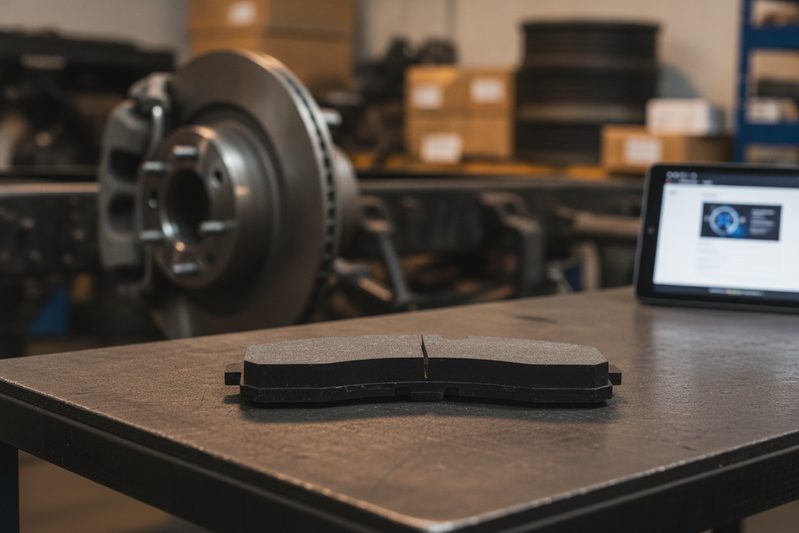
You don’t need to cut a pad apart to see if it has mechanical attachment. The telltale signs are visible with the pad out of the box. Look for one of three features: steel rivets protruding through the backing plate into the friction material, a folded‑over locking tab on the plate edge that grips the friction block, or a series of T‑shaped dovetail anchors cast into the backing plate. If you see none of those, the pad is purely bonded.
Riveted attachment is the most common of the three. It dates back decades on heavy‑duty drum shoes and is now spreading to disc pads because of the high thermal stress cycles modern trucks endure. A bonded joint can delaminate if moisture wicks in through microscopic cracks and flash‑steams during a hard stop. The rivet provides a fail‑safe. Locking tabs are newer—stamped directly into the backing plate during manufacturing, they reduce cost per pad by eliminating a separate riveting step. Dovetail anchors are rarer, mostly seen on European truck calipers, and they require a very specific backing plate tooling that not every factory owns.
If you have a commercial truck pad in your hand and the Z‑suffix appears on the box label, open the box and check those features physically. A reputable manufacturer will stamp the FMSI base number and the Z‑suffix on the pad’s own edge code as well. Our own quality checks at BAIYUN Brake include a 100% visual inspection for proper rivet clinch or tab engagement on Z‑designated pads before the set goes into the commercial vehicle brake pads box. That’s not a marketing fluff—it’s a requirement baked into our IATF 16949 process control.
One more point: the Z‑suffix isn’t a “better” pad; it’s a different specification. Don’t automatically assume a Z‑pad outperforms a bonded pad on a truck that wasn’t engineered for mechanical attachment. The OE caliper may not have the clearance for the rivet heads, or the extra mass of the locking feature may shift the pad’s thermal balance. Always match the spec, not the hype.
How Does BAIYUN Brake Support the Updated FMSI Identification for Global Importers?
Supply chains for commercial vehicle brake parts are stretched across time zones. A Brazilian fleet group sourcing from a Chinese factory via a Miami warehouse doesn’t want to discover a catalog mismatch at the service bay. That’s why, since the FMSI announcement, we’ve assigned every D‑number in our commercial vehicle range a secondary Z‑suffix flag in our data management system. When an importer requests our download our product catalogue, the export team can filter by Z‑status immediately.
Our ECE R90 approval process for commercial pads already demands full‑scale dynamometer testing that verifies mechanical integrity after high‑temperature cycles. So verifying the attachment method isn’t a separate exercise—it’s part of the same approval loop. For a pad with riveted attachment, our ECE R90 test submission includes a cross‑section photo showing rivet penetration depth, material hardness around the clinch, and pull‑out force data. That’s documentation you won’t get from a factory without its own accredited lab.
Distributors who ship mixed containers of commercial vehicle brake linings and disc pads often ask whether a FMSI D‑number with Z‑suffix changes the box labeling. Yes, it does. The FMSI‑mandated label format now includes a “ZID” field that we populate from our master database. We also print the WVA number—which remains unchanged—on the same label so cross‑continental referencing stays clean. For a heavy‑duty importer juggling both North American and European customers, that dual‑number printing prevents an entire shipment from being rejected at port.
What Changes Should Maintenance Teams Expect in Daily Operations?
At the technician level, the Z‑suffix update won’t require new tools or training certificates. But it will require a change in habit: before grabbing a pad set off the shelf, the tech or parts clerk needs to check whether the job card calls for a Z‑suffix part. Some fleet maintenance software will flag this automatically if the PM program was built from a VIN decode that recognized the mechanical attachment spec. Others won’t.
Two practical steps. First, audit the fleet’s top 20 highest‑volume brake part numbers and cross‑reference them against the latest FMSI data (available to members and now to the public through a subscription service FMSI launched in July 2025). Second, add a simple “Z?” checkbox to your PM work order template. If a technician sees that box ticked, they know to inspect the pad before bolting down the caliper. It’s a cheap safeguard against a costly misdiagnosis.
For servicing fleets that do their own drum brake relining, the concept is identical. A riveted drum shoe liner has always been common in heavy‑duty applications, but FMSI’s new system for disc pads brings the same logic forward. When you order replacement OEM brake lining solutions, confirm the Z‑flag so the linings match the original rivet pattern exactly.
Buyer Verification Checklist for FMSI Z‑Suffix Compliance
Use this checklist when evaluating a brake pad shipment for a commercial truck or bus fleet:
| Checkpoint | What to Look For | Why It Matters |
|---|---|---|
| 1. FMSI label includes Z‑suffix | Box label reads “DXXXXZ,” not just “DXXXX.” | Confirms the pad was manufactured to the mechanical‑attachment spec. |
| 2. Physical attachment feature present | Rivets, locking tabs, or dovetail anchors visible on the steel backing plate. | Validates that the part in the box matches the label claim. |
| 3. Edge code matches label | Pad’s molded‑in marking includes the FMSI base D‑number and Z. | Provides permanent traceability after packaging is discarded. |
| 4. WVA number unchanged | Same WVA four‑digit code as the non‑Z version. | Ensures the friction formulation and shape are identical; only attachment differs. |
| 5. Certification marks valid | ECE R90 homologation number stamped on pad. | Required for legal use on public roads in over 60 countries. |
| 6. Supplier data file includes Z flag | Your ERP import file contains a “Z_suffix” field for this SKU. | Prevents inventory mix‑ups in automated ordering systems. |
| 7. Physical sample audit | Randomly pull one set per batch and inspect rivet clinch or tab engagement. | Catches manufacturing variability before parts reach the workshop floor. |
If any of these checks fail, quarantine the batch and request a replacement browse our heavy-duty brake pad range from a supplier that can demonstrate full Z‑suffix documentation.
FAQ: FMSI Z‑Suffix and Commercial Vehicle Brake Pads
Q: Does the Z‑suffix mean the brake pad is higher quality?
A: No. The Z‑suffix only indicates that mechanical attachment is required for specific OE calipers. A bonded pad without a Z‑suffix may be equally high‑quality; it just isn’t designed for applications where the manufacturer demands a riveted or tabbed retention. Always follow the FMSI spec, not a generic “better” assumption.
Q: Can I use a non‑Z pad on a truck that originally had a Z‑suffix pad?
A: Only if the OE caliper specifications and your fleet’s engineering department explicitly approve the substitution. FMSI created the Z‑suffix because skipping the mechanical interlock risks friction material separation under extreme thermal cycling. Most fleets will not accept that liability.
Q: How do I know if my current inventory has Z‑suffix parts?
A: Check the FMSI label on the box and the edge code on the pad itself. If neither shows a “Z” after the D‑number, the pad is standard bonded. For North American applications, FMSI has published a list of the 42 D‑numbers that now have a Z variant. Cross‑reference your stock against that list.
Q: Will the D‑number itself change if only the attachment method changes?
A: No. The base D‑number remains the same shape and friction code. The Z‑suffix is appended—e.g., D1234 becomes D1234Z. So the D‑number stays constant, and the suffix flags the attachment type. Your catalog system should treat them as two separate part numbers.
Q: Why should an importer care about FMSI updates if they supply markets outside North America?
A: Many global truck platforms—Mercedes‑Benz Atego, Volvo FL, Hino 500 series—use the same pad shape in both North America and other regions. If your factory sends containers to multiple continents, mapping Z‑suffixes properly prevents a mixed inventory scenario where a bonded pad accidentally enters a North American distribution channel that requires mechanical attachment.
What Does the FMSI Update Mean for the Aftermarket Brake Pad Supply Chain?
Every SKU split creates downstream complexity. A warehouse that previously stocked one part number now stocks two. A distributor’s web store now needs a VIN decoder that can differentiate between “D1234” and “D1234Z” based on the vehicle’s build month. Handling this poorly leads to returns, chargebacks, and angry fleet managers. Handling it well builds loyalty.
For factories that manufacture the pads, the operational shift is manageable if they already run flexible backing‑plate stamping lines. Adding a locking‑tab feature might require a progressive‑die modification, but it’s not a ground‑up redesign. The bigger challenge is catalog maintenance: every revision FMSI publishes must propagate into the factory’s cross‑reference tables within days, not weeks. Delays of even a week can cause a wholesaler to order the wrong part.
That’s one area where large, IATF‑16949‑certified manufacturers hold an advantage. Their engineering teams are already accustomed to APQP (Advanced Product Quality Planning) discipline, which mandates immediate document control updates when an industry standard changes. A smaller workshop may not have the bandwidth to track FMSI bulletins in real time.
Distributors seeking a long‑term brake pad supply partnership should ask prospective factories two questions during an audit: “Do you subscribe to the FMSI electronic catalog?” and “Show me your last three internal engineering change notices related to FMSI revisions.” If they can produce those documents, you’ve found a supplier that treats catalog accuracy as seriously as material quality.
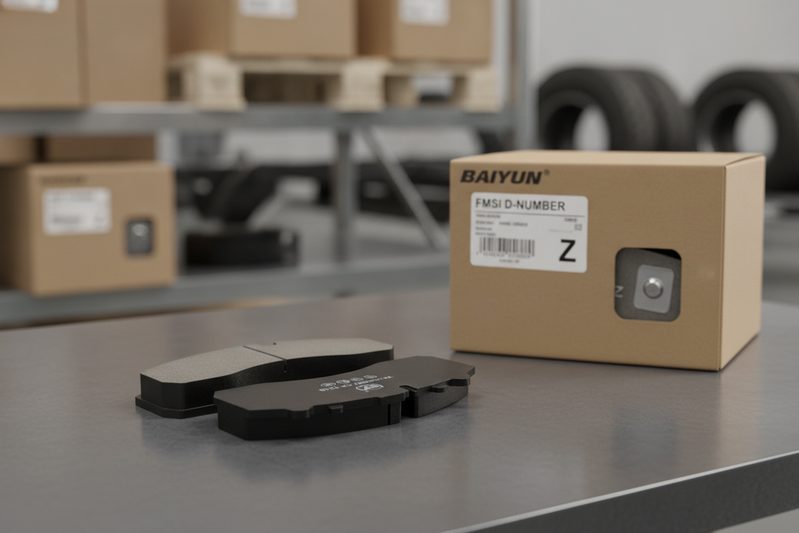
At trusted brake pad supplier BAIYUN Brake, we’ve been maintaining cross‑reference databases since the days of paper FMSI bulletins. Today, our commercial vehicle brake pad catalog includes over 1,800 active FMSI numbers, and we update the Z‑suffix field within 48 hours of any FMSI bulletin release. That kind of speed keeps a distributor’s inventory accurate from the moment the container leaves our factory.
Looking Ahead: Will More Brake Pad Numbers Get Z‑Suffixes?
All signs point to yes. The North American heavy‑duty market is seeing increased adoption of air‑disc brakes with high‑thermal‑load cycles, and some caliper designs are moving to thicker friction blocks that engineers don’t trust to bond alone. One industry analyst we spoke to predicted that within five years, up to 60% of new heavy‑duty disc pad designs will incorporate mechanical attachment as an OE requirement. That would push the Z‑suffix count well beyond 42.
FMSI has also hinted that the Z‑flag framework could extend to drum brake shoes in the future, though no timeline has been announced. For now, the focus remains on disc pads for Class 4–8 trucks and school buses.
Fleet buyers who build their PM programs around a 5‑ to 7‑year vehicle replacement cycle should start planning for a gradual shift. Partnering with a manufacturer that already produces both bonded and mechanically attached pads ensures you won’t face a supply gap when your next fleet order includes Z‑only vehicles. Our production lines at BAIYUN Brake run both pad types simultaneously, so MOQs don’t leap when you need a mix of bonded and Z‑suffix sets in one container.
This article was produced by the BAIYUN Brake editorial team, combining 49+ years of brake manufacturing expertise with current industry research. For product inquiries or technical questions, contact our team.
To discuss your specific fleet or distribution requirements for FMSI‑compliant commercial vehicle brake pads, including Z‑suffix verified catalogues, submit your inquiry to our sales team or request a wholesale CV brake pads inquiry today. We’ll provide current FMSI cross‑reference data, ECE R90 documentation, and MOQ options tailored to your market.
Was this article helpful?
Average Rating: 5/5 (611)