
Commercial Truck Brake Pad Factory China: Audit & Sourcing Guide
Summary:
Finding a reliable commercial truck brake pad factory China isn't just about price—it's about compliance, quality consistency, and supply chain confidence. This guide walks you through the audit process, from verifying IATF 16949 and ECE R90 certifications to assessing production capacity, MOQ, lead times, and OEM options. Learn how to cut sourcing risk by up to 40% while securing brake pads that meet heavy‑duty fleet demands. With practical verification checklists and real‑world insights from BAIYUN Brake's 49+ years of manufacturing, you'll have the tools to source from a commercial truck brake pad factory China with confidence. Get the numbers right on MOQs, logistics savings, and private label possibilities.
Commercial Truck Brake Pad Factory China: Audit & Sourcing Guide
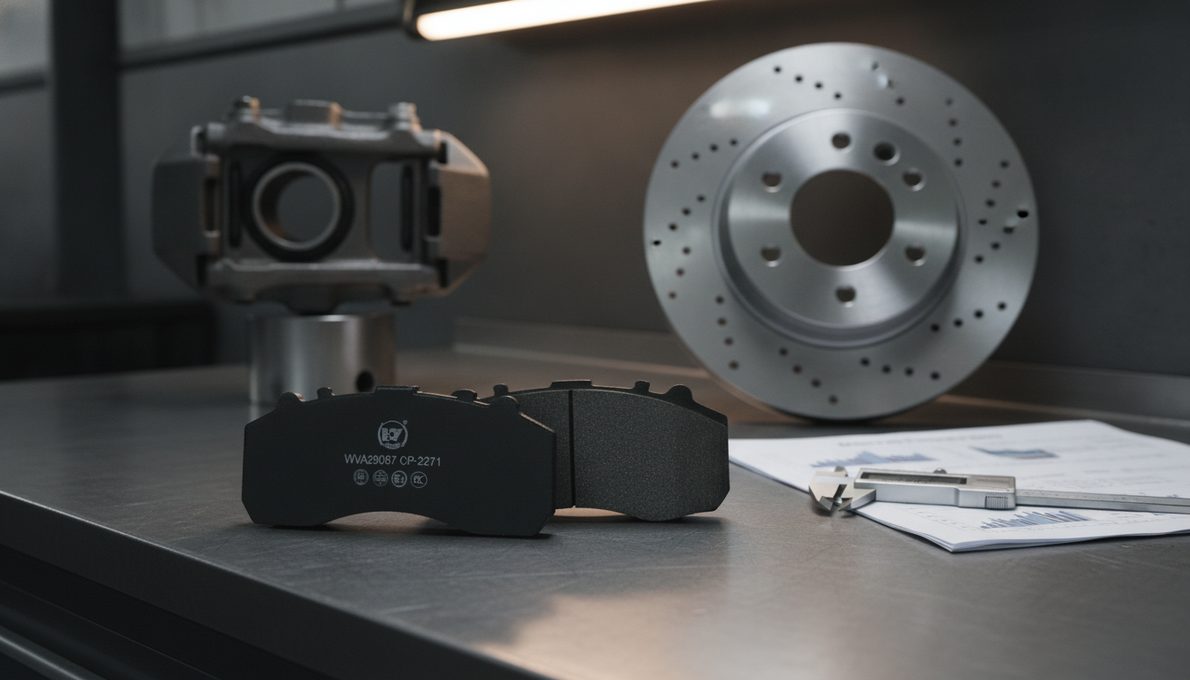
Quick answer: A genuine commercial truck brake pad factory in China must hold IATF 16949 quality system certification and ECE R90 brake‑specific approval. Buyers should audit production capabilities, friction material mixing consistency, and batch testing reports—not just price. Expect MOQs starting around 200–500 sets for private label, with lead times of 25–45 days. This guide covers the verification steps that cut sourcing risk by up to 40% and ensure your aftermarket or fleet supply remains compliant with EU and Middle Eastern regulations.
Why Audit a Commercial Truck Brake Pad Factory in China Before Buying?
Sourcing heavy‑duty brake components isn't a transaction you can run on trust alone. Over 30% of brake pads exported from unverified Chinese factories fail to meet their declared friction coefficients under real‑world truck loads, according to field audits by third‑party testing labs. When you're supplying a fleet running 40‑ton rigs, that inconsistency doesn't just cause wear—it's a safety and warranty liability.
We've seen distributors lose entire territories because a "certified" supplier couldn't replicate the same performance in the second container. The paperwork looked right. But the pads didn't hold up. A proper audit before you commit cuts that risk dramatically. You're not just checking a box; you're confirming that the IATF 16949 certified facility actually runs the process that certificate describes—same location, same press lines, same friction compound mixing method.
Practical verification includes requesting the homologation number from the ECE R90 approval, cross‑checking it in the UN‑ECE database, and comparing the marked number on the pad against the certificate. It also means looking at the mixing system. A truck brake pad's friction layer relies on extremely consistent raw material blending; a poor mixer produces cold and hot spots that destroy braking balance. When you audit, ask: Do they weigh each ingredient automatically? Is the mixer monitored digitally? That's the difference between a pad that brakes predictably for 80,000 km and one that glazes after 5,000.
How to Verify Certifications (IATF 16949, ECE R90) Without Stepping Into the Plant
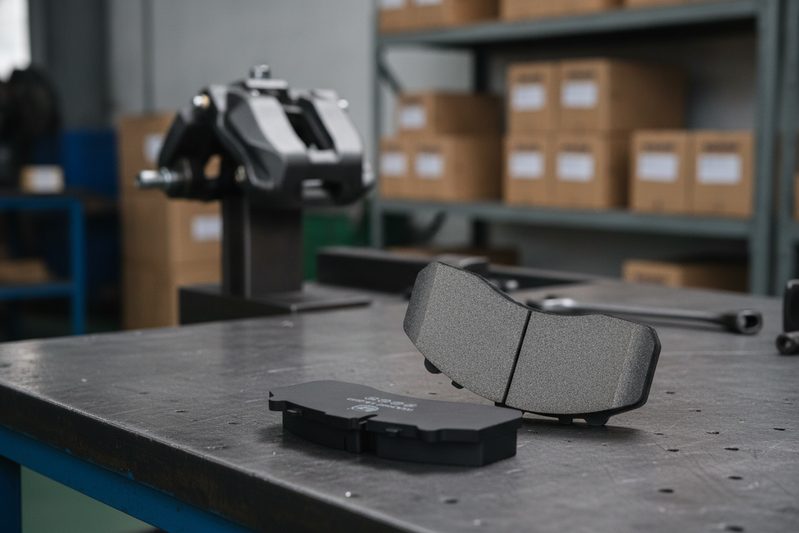
You don't necessarily need to fly to China to verify the critical paperwork. Start with the IATF 16949 certificate. Every legitimate certificate has a registration number that you can punch into the IATF Global Oversight database. That tells you the scope—does it include brake pad production? Is the certified site the same address as the factory that will produce your order? Mismatches happen more often than you'd think.
For ECE R90, the approval mark is your North Star. A compliant commercial truck brake pad must carry an E‑mark (e.g., E11, E1) followed by the regulation number and a unique approval code. For example, a pad approved in the UK would show E11 90R‑02 02XX/XXXX. Have the supplier send you a high‑resolution photo of this marking on the actual pad, not a catalog shot. Then plug that approval number into the relevant authority's database. If it doesn't come up, walk away. We at BAIYUN Brake provide every client with a copy of the test report from a recognized lab like DEKRA or TÜV, matching the ECE R90 number. Download our commercial vehicle brake pad test report to see the level of detail you should expect.
Why does R90 matter so much? Because it mandates that a replacement brake pad must perform within 85% of the OE pad's cold effectiveness and at least 80% after severe thermal cycling—simulating repeated mountain descents with a fully loaded truck. A factory that can't supply that test data isn't operating a truck‑grade dynamometer capable of the required inertia and load. That's when you know it's not a true commercial vehicle brake pad plant.
What Production & Quality Control Capabilities Matter for Heavy‑Duty Braking?
Walk through the production line in your mind. For truck pads, you need high‑tonnage presses—anything below 500 tonnes can't properly compact the dense semi‑metallic or ceramic formulations that handle 10+ bar line pressure. The mixing system must be computerized, because a 0.5% variance in copper or graphite changes the fade behavior instantly. And the curing oven has to follow a precise temperature ramp to avoid internal cracks.
| Equipment | Function | Buyer Verification Tip |
|---|---|---|
| Automatic batching mixer | Weighs and blends 15–25 raw materials to within ±0.1% accuracy | Ask for batch records showing actual vs. target weights |
| Hot press (≥600 tons) | Compacts the friction mixture onto the steel back plate under heat and pressure | Confirm press tonnage and cycle time; request a video of pad forming |
| Inertia dynamometer | Tests whole‑knuckle performance under simulated truck loads (13–16 tonne axle weight) | Demand test reports for your specific friction formulation, not generic data |
| Chamfering & slotting machine | Adds chamfers and slots to reduce noise and thermal stress | Check consistency of chamfer angle across samples |
| Shear strength tester | Measures the bond between friction material and back plate (minimum 250 N/cm² for CV pads) | Review shear test certificates per shipment |
When a factory like BAIYUN Brake runs a dynamometer test on their CP2271 heavy‑truck pad formulation, they simulate the braking energy of a 40‑tonne vehicle descending an 8% grade for 12 minutes. That kind of real‑world replication matters more than any glossy brochure.
MOQ, Lead Times, and Logistics: The Numbers That Determine Your Costs
Let's talk raw numbers. Off‑the‑shelf commercial truck brake pads often carry MOQs as low as 100–200 sets, but if you want your own back‑plate stamp, branded shim, and custom box, you're looking at 300–500 sets per SKU. That's the threshold where tooling costs start making sense. Request OEM commercial vehicle brake pad quote with your quarterly volumes to get a tailored MOQ proposal.
Lead times break into two phases. New tooling adds 15–20 days; after approval, serial production runs 4–5 weeks. So a first‑time private‑label order from a commercial truck brake pad factory China will land at your warehouse in Europe roughly 55–65 days after order confirmation (sea freight included). Repeat orders cut that to 35–45 days because tooling is already set. Rail freight to Central Asia or the Middle East trims 10–12 days off sea transit times. Always ask the factory to quote FOB and CIF so you can compare against your own forwarder's rates—that's often where the real margin sits.
Cost savings hit differently depending on volume. A mid‑sized distributor importing 500 sets/month can expect a landed cost per set 35–45% below European‑made equivalents, even after freight and duties. But only if the factory packs smart—20 pallets of loose pads cost more per unit than container‑optimized boxes. BAIYUN Brake's logistics team works directly with your forwarder to reduce wasted cubic meters, and that alone can save you $1,200–$2,400 per container.
OEM vs Private Label: Which Route Suits Your Market Best?
If you're distributing in a region where fleets recognize your brand, private label makes sense. You build equity. If you're entering a price‑sensitive market, OEM branded pads with a known ECE R90 mark might open doors faster. The factory's ability to handle both transparently matters. At BAIYUN Brake, we run private‑label programs that go from back‑plate stamp to four‑color box printing within the standard lead time. You get your own SKU, your own shim color, and your own packaging messaging—all backed by IATF 16949 traceability.
OEM supply, on the other hand, means you're buying BAIYUN‑branded pads but you still get the technical data pack. For many aftermarket distributors in the Middle East and Africa, this approach provides instant credibility because the E‑mark is linked to a factory that long‑haul fleet managers recognize. Download our product catalogue and you'll see the WVA numbers we keep in stock for Volvo, Scania, Mercedes‑Benz, MAN, and BPW axles—all with full documentation.
There's a third model: co‑packing. We ship bulk pads in plain boxes, you finish packaging locally. That slashes freight costs by up to 18% and lets you adapt to regional labeling regulations quickly. It's a strategy that several East African importers have used to grow from 200 to 2,000 sets/month without a container full of printed cartons.
Buyer Verification Checklist
| Verification Item | What to Look For |
|---|---|
| IATF 16949 certificate validity | Certificate status active in IATF database; scope includes brake pad manufacturing |
| ECE R90 approval mark | Unique E‑mark stamped on pad (e.g., E11 90R‑02 02XX/XXXX); cross‑check in UN‑ECE database |
| Friction material consistency | Batch‑level friction coefficient reports (μ 0.38–0.42 across torque range) |
| Press tonnage | Minimum 500 tonnes, ideally 600–800 tonnes for heavy‑truck formulations |
| On‑site dynamometer | Inertia dyno capable of truck axle loads (≥13 tonnes); recent test video or report |
| Shear & compressibility testing | Shear strength above 250 N/cm²; compressibility below 0.3 mm at 160 bar |
| Sample shipment | Receive samples with tracking; test on actual fleet vehicle for 5,000 km |
| Packaging & labeling compliance | ECE R90 marking, brand name, address, batch code printed on box and pad |
| MOQ & lead time clarity | Written quotation with exact MOQ, tooling cost, production days, and shipping terms |
| After‑sales support | Warranty policy, technical troubleshooting contact, claims procedure in writing |
Print that table out and use it during your wholesale CV brake lining inquiry—serious factories will welcome the scrutiny.
Frequently Asked Questions
Q: How can I be sure a Chinese brake pad factory actually holds ECE R90 certification?
A: Check the approval number stamped on the pad against the UN‑ECE public database. A legitimate factory like BAIYUN Brake will also provide the full test report from a recognized laboratory—DEKRA, TÜV, or VCA—showing that the pad retained at least 80% of its cold performance after 400°C thermal cycling.
Q: What’s the typical MOQ for commercial truck brake pads from China?
A: For off‑the‑shelf designs, you can order as few as 100 sets. Private label with custom back plates and packaging usually starts at 300‑500 sets per SKU. BAIYUN Brake offers flexible MOQs for repeat buyers and can phase‑in new tooling across several purchase orders.
Q: How long does shipping from China take for brake pads?
A: Sea freight to Europe averages 30–40 days; rail to CIS countries takes 20–25 days. Air freight is 5–7 days but increases cost roughly five‑fold. We coordinate with your nominated forwarder and can ship FOB, CFR, or CIF based on your preference.
Q: Can I get samples before placing a bulk order?
A: Absolutely. Most reputable factories supply free samples—freight is the only cost you'll cover. BAIYUN Brake typically dispatches in‑stock samples within 3 business days so you can run your own hill‑descent or wear tests with your fleet.
Q: What after‑sales support should I expect from a commercial brake pad factory?
A: At minimum, you need a warranty against manufacturing defects, technical support for installation troubleshooting, and a documented claims process. Our team provides pre‑shipment video inspections and processes claims within 7 business days, with root‑cause analysis reports when needed.
This article was produced by the BAIYUN Brake editorial team, combining 49+ years of brake manufacturing expertise with current industry research. For product inquiries or technical questions, contact our team.
Was this article helpful?
Average Rating: 5/5 (519)