Ferodo Expands Zero-Copper Brakes to OE Commercial Segment – AftermarketNews
Summary:
Ferodo Expands Zero-Copper Brakes to OE Commercial Segment - AftermarketNews reports that Tenneco's Ferodo OE braking business is moving copper-free friction into series production for heavy-duty trucks and trailers. For fleet buyers, distributors, and maintenance teams, this signals a broader shift toward low- and zero-copper commercial vehicle brake pads across North America and global markets. The article explains what the transition means for parts rooms, how to verify IATF 16949 and ECE R90 documentation, and why WVA reference codes often change when copper is removed. BAIYUN Brake, a Chinese brake pad manufacturer with 49+ years of experience, outlines a supplier qualification checklist, performance considerations for air disc and drum brakes, and practical guidance on managing dual inventory during the transition. Fleet operators should not treat copper-free pads as an optional upgrade; they are becoming the compliance baseline for commercial vehicle friction.
Ferodo Expands Zero-Copper Brakes to OE Commercial Segment - AftermarketNews
Quick answer: Ferodo's zero-copper brake friction technology is now moving into series production for heavy-duty trucks and trailers in North America, with more global projects expected. Fleet buyers, distributors, and maintenance teams should treat copper-free commercial vehicle brake pads as the next baseline, not an option. Before you switch stock, verify copper content below 0.5%, confirm ECE R90 and IATF 16949 documentation, and re-check WVA references because copper-free versions often carry different friction codes.
Why Should Commercial Fleet Buyers Pay Attention to Ferodo's Zero-Copper OE Move?
Ferodo's copper reduction story didn't start with commercial trucks. Tenneco introduced low- and zero-copper pads in lighter vehicle classes back in 2012. But after the OE technical release for commercial vehicle applications in 2022, the first copper-free OE commercial brake pads entered series production for truck applications in the North American market. More projects were lined up for 2023, and by late 2026, this isn't a test program anymore—it's an OE specification migrating through the supply chain.
Here's why that matters for your fleet. Washington and California both set copper limits for brake pads: no more than 5% by weight starting in 2021, and no more than 0.5% by 2025. Several other states have mirrored those rules. If your trucks run the West Coast, a copper-containing pad on the next brake job can create a compliance headache. And because commercial vehicle brake pads get replaced every 80,000 to 120,000 km on many heavy-duty applications, the spec you choose today affects your parts room for the next three years.
So what does that mean for a distributor? You'll need to manage a transition period. Some fleets will still request the old copper-containing linings, while others will demand copper-free documentation up front. Stocking both versions adds SKU complexity, but ignoring the trend means losing business on the next tender.
What Certifications Matter for Zero-Copper Commercial Vehicle Brake Pads?
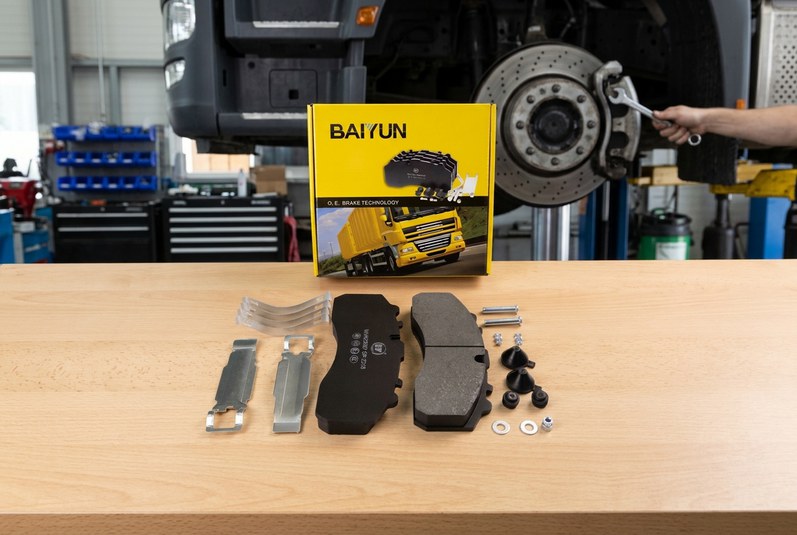
A zero-copper claim without test data is just a label. For commercial vehicle friction, you need three layers of proof. First, the factory should hold IATF 16949, which covers production consistency, traceability, and defect prevention. Second, the pad should carry ECE R90 type approval if you're selling into European, Middle Eastern, or Asian markets that follow ECE regulations. Third, the WVA reference number identifies the friction formulation—not just the backing plate shape. A copper-free pad will often carry a different WVA code than its copper-containing predecessor, even if it fits the same caliper.
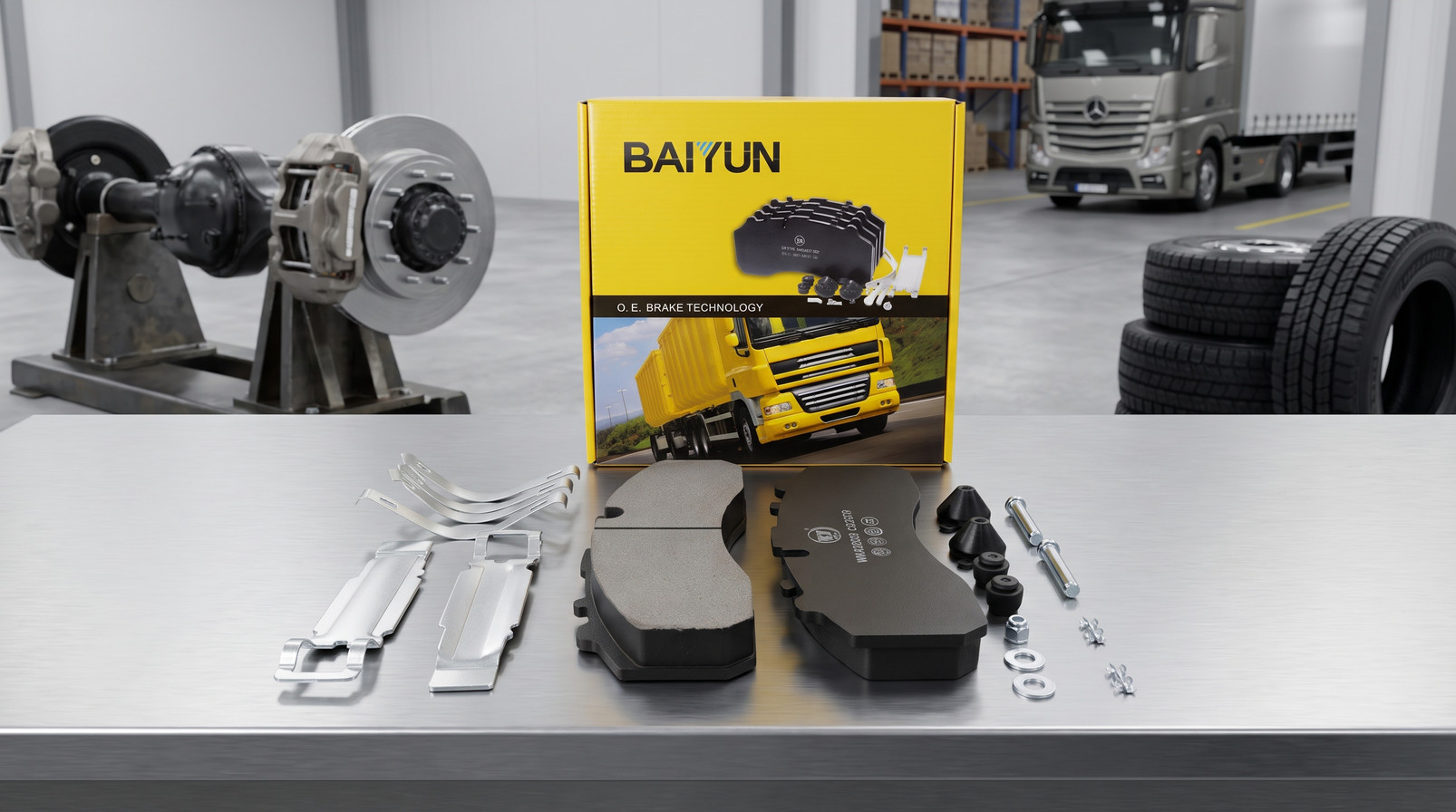
BAIYUN Brake, an IATF 16949 and ECE R90 certified manufacturer, treats copper reduction as a formulation variable. That means we adjust the fiber, abrasive, and lubricant package to hold friction stability without relying on copper's thermal conductivity. Any serious supplier should be able to give you a material data sheet, a dynamometer test summary, and a part-specific test report. If they can't, move on.
Also check the IATF 16949 certified facility scope. It should explicitly cover commercial vehicle friction materials, not just general automotive components. The same applies to ECE R90 approvals—always verify the exact part number and WVA reference against the approval certificate.
How Do Zero-Copper CV Pads Hold Up in Truck and Trailer Duty Cycles?
Copper was never the whole formula. It helped with heat transfer and high-temperature friction stability, especially on long descents with heavy loads. But modern zero-copper formulations use engineered fibers, synthetic graphite, and ceramic modifiers to manage the same thermal load. The real question for a fleet isn't whether copper-free pads can work—it's whether the specific formulation you're buying has been validated for your duty cycle.
Heavy-duty air disc brakes run hotter than drum brakes in stop-and-go and mountainous routes. That's why you should ask for SAE J2522 or ECE R90 dynamometer data, not a brochure. If the friction coefficient stays in a predictable band across 100°C to 400°C, you'll likely see acceptable stopping distances and lining life. If the supplier won't share the curve, assume trouble.
| Factor | Copper-Containing CV Pad | Zero-Copper CV Pad | Sourcing Note |
|---|---|---|---|
| Copper content | Typically 5% or more by weight | Less than 0.5% by weight | Request material declaration or mill certificate |
| Environmental compliance | Fails 2025 US state limits | Meets low-copper/zero-copper mandates | Confirm target market rules before import |
| High-temperature fade resistance | Long-established baseline | Formulation-specific; must pass ECE R90/SAE J2522 | Ask for dynamometer test report, not catalog claims |
| WVA reference | Original friction code | Often changed; cross-reference required | Confirm with supplier catalogue |
| Aftermarket availability | Still stocked but declining | Growing OE pull; availability improving | Plan dual inventory during transition |
For fleets running a mix of air disc and drum brakes, the same copper-free logic applies to OEM brake lining solutions. Don't assume a zero-copper disc pad and a zero-copper drum lining perform identically. They use different friction families and need separate validation.
Supplier Qualification Checklist for Zero-Copper CV Brake Programs
Distributors and importers sourcing zero-copper commercial vehicle brake pads should run a practical verification, not a paper audit. Here's the checklist we recommend before placing a container order:
- Confirm the IATF 16949 certificate is current and covers commercial vehicle friction production.
- Request ECE R90 approval for the exact part number and WVA reference you plan to import.
- Ask for a copper content declaration showing less than 0.5% by weight.
- Verify the WVA reference against the supplier catalogue and your existing cross-reference database.
- Order a sample batch and test on at least three trucks over 10,000 km before committing to a bulk order.
- Check MOQ, lead time, and private label packaging options if you supply multiple regional brands.
At BAIYUN Brake, we don't ship a commercial sample without the matching material data sheet and part-specific test summary. A trusted brake pad supplier should make documentation easier than the purchase order, not harder.
FAQ: What Do Distributors Ask About Zero-Copper Commercial Brake Pads?
Q: Does zero-copper mean lower stopping power on heavy trucks?
A: Not necessarily. Modern zero-copper formulations are engineered to hold friction stability through the same temperature range as copper-containing pads. The key is checking ECE R90 or SAE J2522 dynamometer data for the specific WVA reference, not relying on a generic material claim.
Q: Will zero-copper CV brake pads cost more than conventional pads?
A: First-generation copper-free pads often carried a 5% to 15% price premium due to alternative raw materials and smaller batch runs. As OE demand scales, that gap tightens. Fleet buyers should compare total cost per kilometer, not purchase price alone, and factor in reduced compliance risk.
Q: How do I verify the copper content of an incoming batch?
A: Ask for a material declaration or mill certificate from the supplier, and consider independent XRF spot checks on random samples. A reliable supplier will specify copper at less than 0.5% by weight and provide batch traceability.
Q: Can I switch my fleet from copper-containing to zero-copper pads without changing rotors or drums?
A: In most cases, yes—if the pad dimensions and WVA reference match the application. However, you should check the brake lining installation guide for bedding-in recommendations. Mismatched friction families can cause uneven transfer layer and noise during the first 500 km.
Q: What if my customer still requires the old copper-containing WVA code?
A: During the transition, many distributors carry both versions. But you should verify the copper-containing pad still meets the destination market's current copper restrictions. Some US states and European markets no longer allow new stock above the 0.5% limit, so selling aged inventory can become a liability.
Final Sourcing Advice for Zero-Copper CV Brake Programs
If you're buying commercial vehicle brakes for a fleet or resale channel in 2026, don't treat Ferodo's zero-copper expansion as someone else's problem. The OE shift pulls the aftermarket along with it. Start by auditing your current pad part numbers. Which ones still list copper above 0.5%? Which WVA codes have copper-free replacements? Which suppliers can produce the test reports on demand?
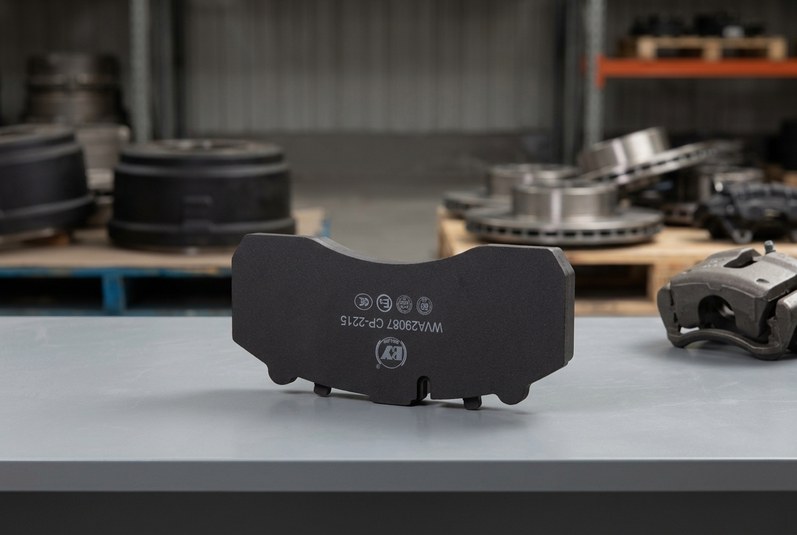
BAIYUN Brake's technical team has been through formulation transitions before. We recommend you browse our heavy-duty brake pad range and then request a wholesale quote with your target WVA codes and monthly volumes. That way you'll know whether a zero-copper option fits your budget before your next fleet tender goes out.
For manufacturer and company information, see About BAIYUN.
Was this article helpful?
Average Rating: 5/5 (295)