Brake Manufacturers to Adjust Brake Pad Formulations – Commercial Carrier Journal
Summary:
Brake manufacturers to adjust brake pad formulations - Commercial Carrier Journal reports that copper-free friction rules are reshaping commercial vehicle brake pad supply. This guide explains the 2025 copper limit (less than 0.5% by weight), what it means for fleet braking performance, and how distributors can verify compliant copper-free CV brake pads. Learn which certifications matter (ECE R90, IATF 16949), what test standards to request (SAE J2522), and how BAIYUN Brake's copper-free formulations maintain friction coefficients of 0.38-0.42 across 100-350°C. Includes a buyer verification checklist, typical MOQs for private label, and FAQs for fleet buyers and importers.
Brake Manufacturers to Adjust Brake Pad Formulations - Commercial Carrier Journal
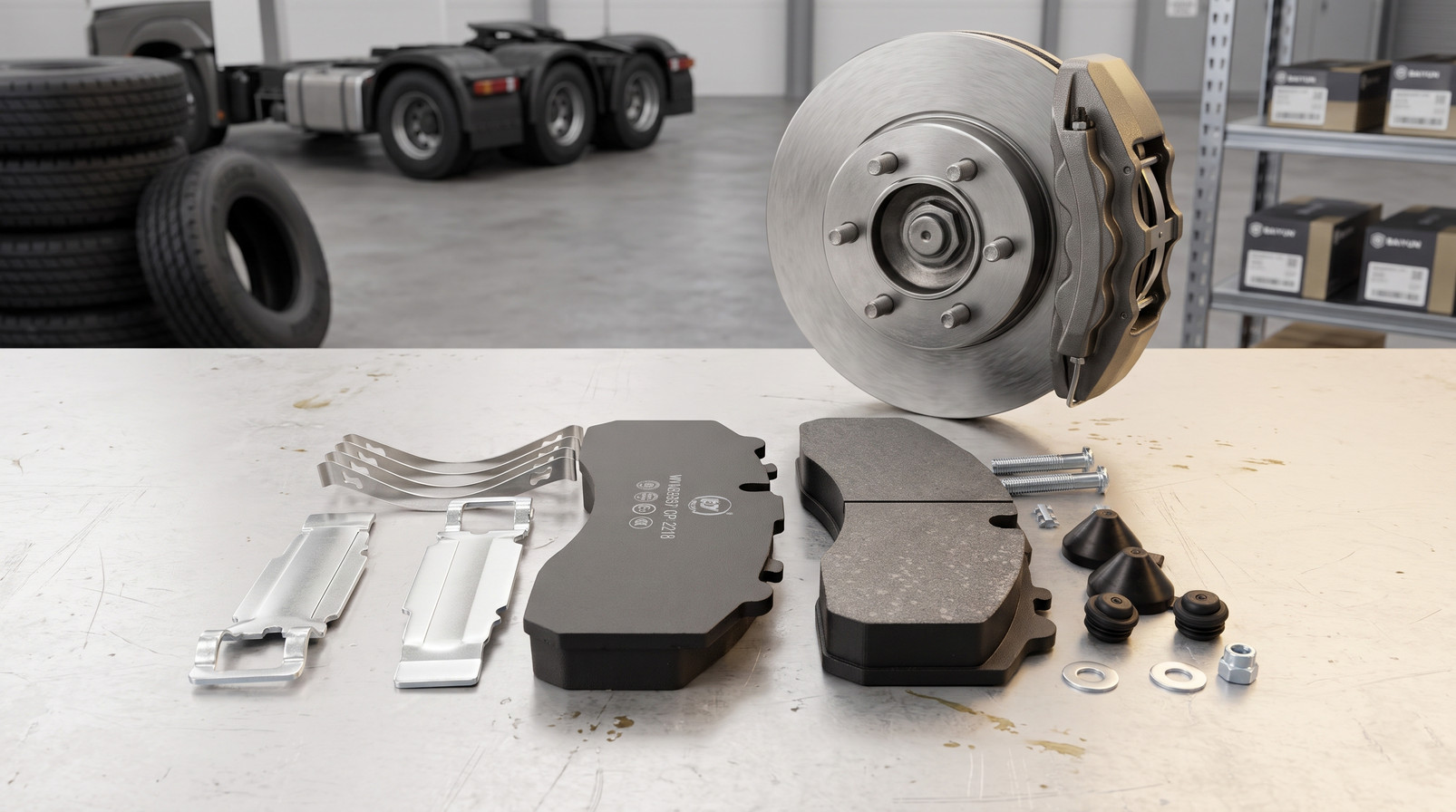
Quick answer: Brake pad manufacturers are reformulating friction materials to comply with the Copper-Free Brake Initiative, which limited copper content in brake pads to less than 0.5% by weight starting in 2025. For commercial vehicle fleets and distributors, this means sourcing pads that maintain stopping power, wear life, and noise characteristics without copper, and requires verifying ECE R90 compliance and updated friction material data. BAIYUN Brake has already transitioned its CV brake pad lines to copper-free formulations while maintaining thermal stability and low wear, backed by IATF 16949 and ECE R90 certifications.
Why Are Commercial Vehicle Brake Manufacturers Adjusting Pad Formulations?
The Copper-Free Brake Initiative, agreed in 2015 between the U.S. EPA, California, Washington State, and industry groups, set a phased reduction for copper in brake friction materials. By 2021, copper content had to drop below 5% by weight. The final step? Less than 0.5% copper by 2025. That essentially removes copper as a major friction ingredient.
Copper has long been used in brake pads for its thermal conductivity and wear resistance. On a heavy truck descending a grade, brake temperatures can exceed 400°C. Copper helps pull heat away from the pad surface. Removing it forced manufacturers to find alternatives like ceramic fibers, graphite, and proprietary mineral blends. You'll find that many suppliers now blend synthetic fibers with high-temperature lubricants to replicate copper's heat dissipation.
For commercial vehicle fleets, the change isn't just regulatory. It's a materials engineering shift. Fleet buyers need to know that the new formulations still deliver predictable stopping power and pad life. That's where certification and testing become critical. Before you sign a new supply contract, check the brake pad composition guide to understand what ingredients matter for heavy-duty applications.
What Does Copper-Free Formulation Mean for Fleet Brake Performance?
Early copper-free pads for passenger cars had some issues with noise and wear, but commercial vehicle formulations have been developed specifically for high-load, high-temperature duty cycles. Test programs like SAE J2522 (the standard for commercial vehicle brake pad performance) evaluate cold performance, fade, and recovery under heavy braking loads.
At BAIYUN Brake, our CV copper-free formulations maintain a friction coefficient between 0.38 and 0.42 across the 100°C to 350°C range, tested on a full-scale dynamometer per SAE J2522. That's within the typical range for aftermarket heavy-duty pads. Fleet managers should expect no reduction in stopping distance if the pad is ECE R90 approved. ECE R90 requires the replacement pad to perform within 15% of the original equipment pad in braking tests. If a copper-free pad passes that, it's safe for fleet use.
However, pad compressibility may change slightly. That's a parameter brake technicians should note during installation. A slightly higher compressibility can affect pedal feel but doesn't reduce outright braking force. A distributor sourcing 500 sets per month for a bus fleet can't afford inconsistent friction coefficients batch to batch. Without proper supplier qualification, you might get a batch that behaves differently. That's why BAIYUN Brake tests every production lot for friction and shear strength.
What Certifications and Test Standards Should Buyers Require for Reformulated CV Brake Pads?
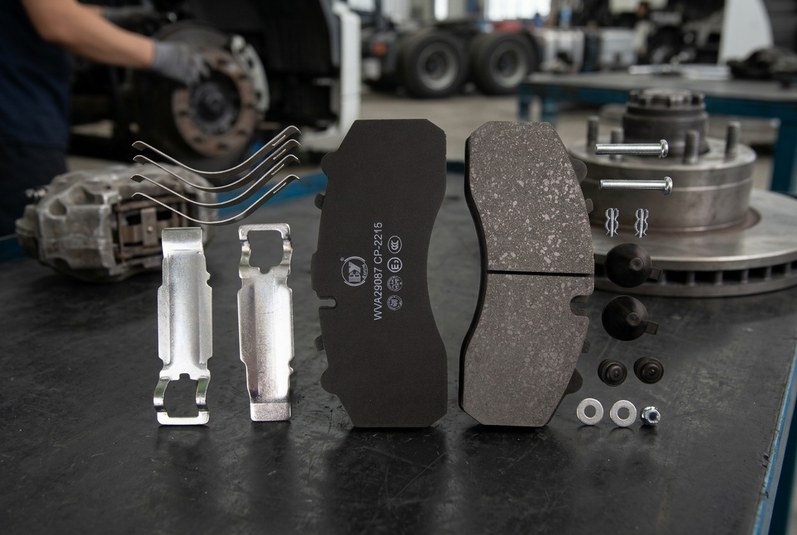
ECE R90 is the baseline for aftermarket brake pads in Europe and many global markets. It requires performance testing against a reference pad, with braking effectiveness within ±15%. For commercial vehicles, the test procedure includes high-load braking cycles from speeds up to 60 km/h and fade resistance tests. If a copper-free pad passes ECE R90, you have independent verification that it won't compromise fleet safety.
IATF 16949 is the quality management standard for automotive production. A supplier without IATF 16949 may not have the process controls needed for consistent friction material blending. Copper-free formulations often use more complex raw material mixes, so batch consistency becomes even more important. BAIYUN Brake's commercial vehicle brake pads are produced in an IATF 16949 certified facility, which means every formulation change is documented and traceable.
SAE J2522 and SAE J866 are common test procedures for commercial vehicle brakes. J2522 measures performance under various conditions; J866 defines friction material classification. Buyers should request a material data sheet that explicitly states copper content below 0.5% and lists the friction pair materials. Also ask for the ECE R90 approval number and the corresponding test report.
| Year | Copper Limit (by weight) | Impact on Commercial Vehicle Brake Pads |
|---|---|---|
| 2015 | Agreement signed | Voluntary reduction begins; industry prepares for reformulation |
| 2021 | <5% | First mandatory threshold; many CV pads transition to low-copper blends |
| 2025 | <0.5% | Effectively copper-free; all new CV brake pads must comply in regulated markets |
| Ongoing | ECE R90 compliance | Aftermarket pads must maintain performance within ±15% of OEM reference |
How Should Distributors and Fleet Buyers Qualify a Brake Pad Supplier for Copper-Free Formulations?
Start with experience. A manufacturer that has been blending friction materials for decades is more likely to have a robust R&D pipeline for copper-free formulas. BAIYUN Brake has 49+ years of manufacturing experience and has already transitioned its CV pad lines. That kind of track record matters when you're counting on batch-after-batch consistency.
Ask about formulation validation: How many dyno hours? What environmental chambers? Look for suppliers that publish or share test reports. Don't accept a vague "we meet standards" answer. Request the actual SAE J2522 test curves and material data sheets. A serious supplier will provide them without hesitation.
Check batch traceability. Every box should carry a lot number that links to raw material batches and production records. Without that, you can't investigate a field performance issue. If a fleet reports premature wear, you need to trace it back to the exact mix. BAIYUN Brake uses automatic batch mixing systems with full electronic records, so every lot is traceable to its raw materials.
Verify logistics and lead times. For a distributor, consistent supply is critical. BAIYUN Brake supports OEM and aftermarket orders with flexible MOQs and reliable export packaging. Ask about typical lead times for copper-free CV pads and what happens if you need a rush order.
What OEM/Private Label Options Exist for Copper-Free Commercial Vehicle Brake Pads?
Many distributors want their own brand on copper-free commercial vehicle brake pads. That requires a manufacturer with flexible production lines, quick formulation adjustment, and packaging customization. BAIYUN Brake offers OEM and private label programs for request OEM commercial vehicle brake pad quote and request a quote for commercial vehicle brake linings. Typical MOQs for private label start around 300-500 sets per SKU, but this varies by formulation and packaging. Confirm with supplier catalogue for specific WVA references and availability.
Lead times for standard copper-free CV pads are typically 30-45 days for repeat orders, with new private label projects taking 60-90 days depending on artwork approval and sample validation. The key is to choose a supplier that can handle formulation adjustments without long retooling delays. BAIYUN Brake's in-house mixing and pressing lines allow for quick changeovers between copper-free compounds.
Buyer Verification Checklist for Copper-Free CV Brake Pads
- Request the material data sheet confirming copper content ≤0.5% by weight.
- Verify ECE R90 approval number and the corresponding test report.
- Ask for IATF 16949 or ISO 9001 certificate.
- Request SAE J2522 performance test results showing friction coefficient and fade recovery.
- Check batch traceability system: lot numbers on boxes and ability to trace to raw material batches.
- Confirm packaging labeling includes WVA reference? Confirm with supplier catalogue.
- Require sample approval before bulk order; test samples on a single vehicle or dyno.
Frequently Asked Questions for Fleet Buyers and Distributors
Q: How do copper-free formulations affect commercial vehicle brake pad wear life?
A: Modern copper-free CV pads using advanced ceramic and mineral fibers typically achieve similar wear life to older copper-containing pads, often within 5-10% of original pad life. In BAIYUN Brake's dynamometer testing, wear rates stayed below 0.4 mm per 1,000 km under standard load cycles, meeting ECE R90 durability requirements.
Q: What documentation proves a copper-free brake pad is compliant?
A: A material data sheet showing copper content below 0.5% and an ECE R90 approval number are the two key documents. Buyers should also request the SAE J2522 test report and batch traceability records from the manufacturer.
Q: Can fleets mix old copper-containing pads and new copper-free pads on the same axle?
A: It's not recommended. Different friction formulations can cause uneven braking and premature wear on a commercial vehicle axle. Always replace pads in axle sets from the same production lot to maintain balanced braking.
Q: What is a typical MOQ for private label copper-free CV brake pads?
A: Most manufacturers require a minimum order quantity of 300-500 sets per SKU for private label, though BAIYUN Brake can sometimes accommodate smaller trial orders. Confirm with supplier catalogue for specific SKUs and packaging options.
Q: How does ECE R90 testing verify copper-free pad performance?
A: ECE R90 requires the replacement pad to perform within ±15% of the reference pad in cold and hot braking tests. For commercial vehicles, this includes high-load braking from 60 km/h and fade resistance cycles, ensuring copper-free pads do not compromise safety.
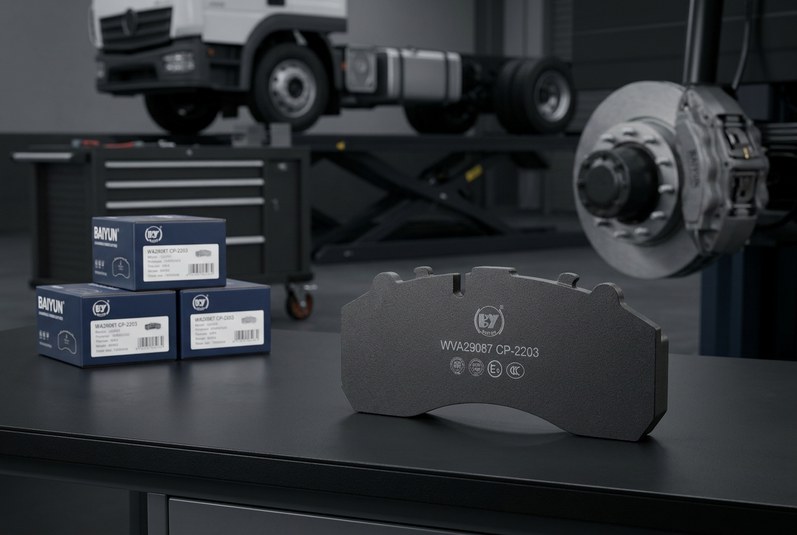
Don't treat copper-free reformulation as a simple ingredient swap. It's a chance to audit your supply chain. If your current supplier can't document copper content and test performance, it's time to ask harder questions. Request samples, run them on a few trucks, and compare wear and noise. The cost of a bad batch far exceeds the price difference of a certified pad.
For your next order of copper-free CV brake pads, wholesale CV brake pads inquiry or request a wholesale quote from our export team. We'll provide material data sheets, ECE R90 documentation, and a sample for your evaluation before you commit to a container load.
Was this article helpful?
Average Rating: 5/5 (256)