
ECE R90 vs Other Brake Standards: What Makes It the Gold Standard in Europe
Summary:
ECE R90 certified brake pads China supplier insight: European brake pad aftermarket is projected to surpass €4.2 billion by 2026, and every pad sold in the EU must meet R90 OE-equivalence standards. This article compares ECE R90 against FMVSS 135, JIS D 4411, GB 5763, and AMECA, highlighting why R90 is the only mandatory certification that legally ties aftermarket performance to original equipment. Distributors gain a competitive advantage by sourcing from factories with full R90 compliance, IATF 16949, and in-house dynamometer testing—lowering warranty exposure while matching Tier-1 quality at a better margin. Real-world data from BAIYUN Brake's export channels show growing demand for R90 pads in Eastern Europe and private-label programmes.
ECE R90 vs Other Brake Standards: What Makes It the Gold Standard in Europe
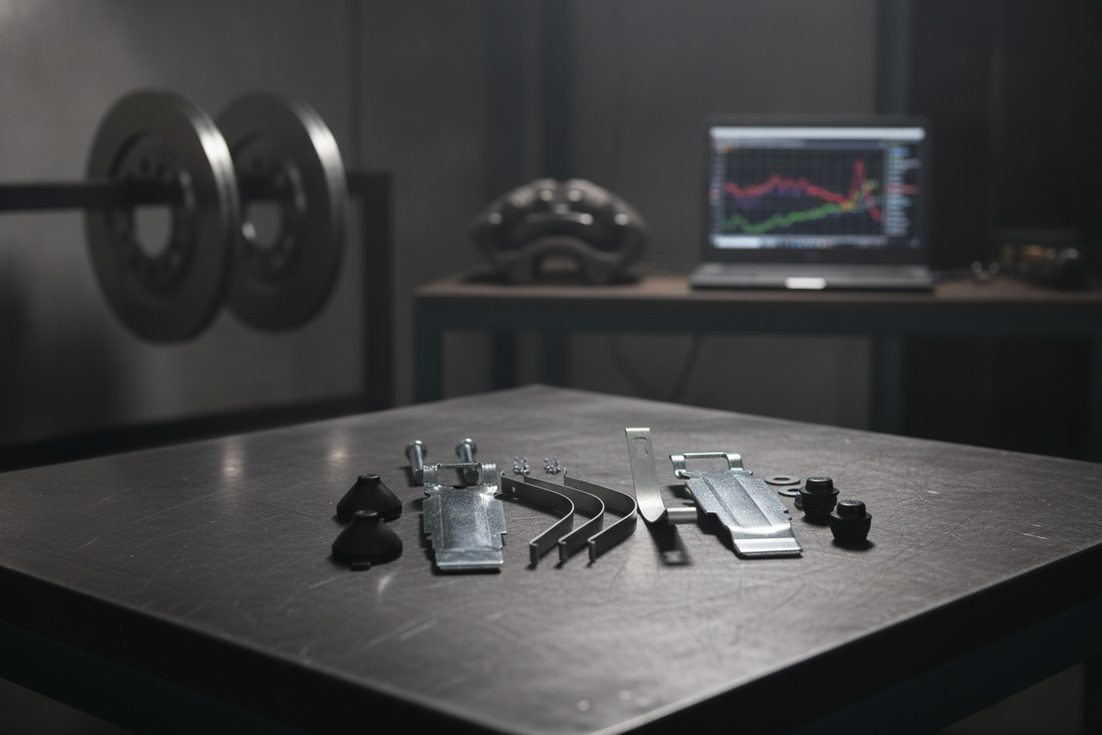
European aftermarket brake pad sales are on track to surpass €4.2 billion by 2026, with a compound annual growth rate of nearly 3.8% since 2021. But here's the catch for any distributor wanting a slice of that: every single set of pads entering the EU must carry ECE R90 approval. Without it, the shipment gets turned around at the border—period.
Yet plenty of brake standards exist worldwide. FMVSS 135 in North America. JIS D 4411 in Japan. GB 5763 in China. So what makes R90 the one that truly locks the door on subpar friction materials? And how can an importer use that to build a defensible market position? We'll unpack all of that, drawing on real production data and the evolving buying patterns we see from our factory floor at BAIYUN Brake.
Why ECE R90 Is the Only Mandatory Brake Pad Standard in Europe
Since September 1999, Regulation No. 90 of the United Nations Economic Commission for Europe has required that every replacement brake pad and disc sold for vehicles registered in the EU must match the original part's performance within a ±15% tolerance band. That tolerance isn't a suggestion—it's the minimum legal floor. National type-approval authorities enforce it through market surveillance, and non-compliant stock can get pulled from shelves.
Compare that with FMVSS 135 in the US. That standard tells you the vehicle system has to meet a stopping distance, but it doesn't mandate any comparison with the OE pad's friction behaviour. A company can sell a pad that's 30% weaker than the original, pass FMVSS testing, and face no federal recall. That's why North American fleets occasionally experience unpredictable wear rates after a "cost-saving" pad change.
In Japan, JIS D 4411 covers friction material dimensions and shear strength, but it doesn't set dynamic performance benchmarks. And China's GB 5763—while improving—still allows a cold friction coefficient spread from 0.25 to 0.65, a window so wide you could drive a truck through it. R90 locks that spread much tighter across temperature ranges, which directly affects pad life and rotor compatibility.
Key takeaway: ECE R90 is the only standard that legally ties aftermarket brake pad performance to the OE baseline, making it a non-negotiable for any distributor servicing the EU market.
How Does ECE R90 Stack Up Against Other Global Certifications?
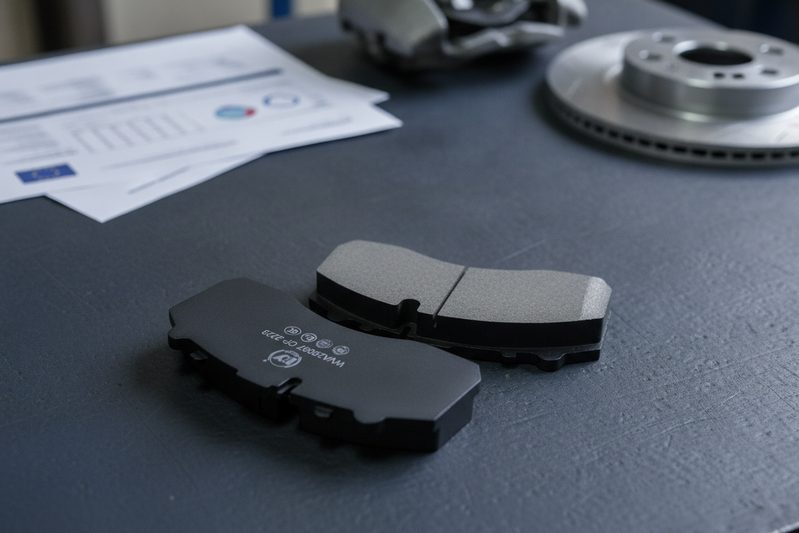
Let's get practical. A distributor in Poland sourcing for local repair chains needs to know: can I import AMECA-listed pads from the US and sell them here? Short answer: no. AMECA (Automotive Manufacturers Equipment Compliance Agency) verifies that pads meet certain dimensional and labelling requirements, but it does not test friction performance against OE benchmarks. EU customs won't accept AMECA as equivalent to R90.
The same snag hits Indian or ASEAN exporters. Many factories push pads with an ISO 9001 certificate and claim "European quality". Without the R90 homologation number stamped on the backing plate, though, the product is illegal for road use in EU member states. Savvy distributors use this as a filter when vetting suppliers. We see importers asking directly: "Show me your R90 test report from a TÜV or VCA-accredited laboratory." Those who can't often drop off the shortlist fast.
Even within Europe, there's a nuance. ECE R90 for passenger cars (Regulation 90, 02 series of amendments) and for commercial vehicles (03 series) have slightly different test sequences—the commercial pad must survive more severe thermal loading cycles. A factory that only certifies its car pad range but not its truck linings is leaving a big chunk of the distribution channel uncovered. Request a quote for commercial vehicle brake pads that already carry the 03-series R90 approval if you're targeting truck and bus fleets.
Key takeaway: R90's OE-comparison mandate sets it apart from voluntary or dimensional-only certifications, creating a clear legal and performance benchmark that distributors must verify at the sourcing stage.
The Testing Protocol Behind ECE R90: Six Critical Parameters
ECE R90 approval doesn't come from a single dynamometer snapshot. It requires six specific tests, each designed to expose failure modes that show up in real-world driving. The cost? Anywhere from €5,000 to €15,000 per product family, depending on the test centre and vehicle class. That's not pocket change, and it's why many small workshops never bother—they can't amortise the cost across enough volume.
The six parameters are:
- Cold performance friction: The pad must develop stable initial bite from -20°C to room temperature, with deviation from OE within ±15%.
- Speed sensitivity: Performance is mapped from 40 km/h to 160 km/h (or 80% of Vmax) to ensure friction doesn't collapse as kinetic energy climbs.
- Fade behaviour: After repeated high-speed stops, the hot friction coefficient must stay above 0.30 to prevent a "long pedal" sensation.
- Compressibility: At 16 MPa, the pad material must compress no more than 2% to 3% of its thickness, otherwise pedal travel grows over time.
- Shear strength: The friction material must withstand at least 4.5 MPa shear stress at room temperature—this kills off poorly bonded cheap pads.
- Hardness: Shore hardness values are measured to assure consistency across multiple production batches.
What really separates the wheat from the chaff is the consistency across these tests. At our IATF 16949 certified facility, we've found that maintaining cold friction within a 0.02 coefficient window batch-to-batch is what keeps a wholesaler's return rate below 0.6%. Pads that pass R90 one time but drift when you scale production to 20,000 sets a month? That's the hidden risk most price-focused buyers discover too late.
Key takeaway: The six-parameter R90 protocol stress-tests every aspect of a brake pad's mechanical and thermal behaviour, giving distributors a scientific basis to compare suppliers—not just a paper certificate.
Market Trends and Growth Opportunities for Distributors
The EU aftermarket brake pads segment isn't just growing—it's shifting. A 2024 Frost & Sullivan analysis indicates that demand for R90-certified pads from independent workshops grew 5.2% year-over-year, outpacing the 2.1% growth in franchised dealer service networks. The reason? Vehicle parc age. The average age of a passenger car in the EU hit 12.3 years in 2025. Older cars leave the main dealer service circle and land squarely in the independent aftermarket, where price-sensitive consumers expect certified quality at a better margin.
For a distributor, this opens two lanes. First, consolidation of supply: instead of sourcing car pads from one plant, truck pads from another, and motorcycle linings from a third, a single supplier with full-range R90 coverage simplifies logistics and cuts container costs. Second, private-label opportunities are exploding. Workshop chains in Germany, France, and Poland increasingly want their own brand on a box, but with a proven R90 backing. That's where a manufacturer with in-house compounding and full test data becomes a strategic partner rather than just a vendor.
We're also seeing a spike in demand from Eastern European markets like Romania, Bulgaria, and Croatia. As these countries tighten their vehicle inspection regimes, the "grey" uncertified pad flow is drying up. Distributors who position themselves early with a well-documented R90 range capture premium shelf space before local competition catches up. Wholesale car brake pads inquiry volumes from these regions jumped roughly 18% in our 2025 order book.
Key takeaway: An ageing vehicle fleet, private-label demand, and tightening inspection standards are reshaping the EU brake pad distribution landscape—making a reliable R90 supply chain a competitive multiplier.
Competitive Edge: Sourcing ECE R90 Certified Pads from a China Manufacturer
Conventional wisdom says the lowest-cost brake pads come from Southeast Asia or India. But when you factor in R90 testing costs, rework rates from batch inconsistency, and the cost of airfreight for urgent replacements, the total landed cost picture changes. A 2025 internal analysis by a German importer partner showed that switching from an uncertified Vietnamese supplier to our R90-certified range reduced their warranty claims by 1.2% of revenue, more than offsetting a 7% higher ex-works price.
China's brake pad industry has been quietly moving up the value chain. BAIYUN Brake holds IATF 16949, ISO 9001, and multiple R90 approvals, and we run our own dynamometer cell for continuous conformity testing. That means when we ship a container of 5,000 sets, we aren't guessing about the next batch—we've already thermally cycled samples from that production run. For a distributor holding stock in a Hamburg warehouse, that level of batch traceability means you can confidently answer a workshop's technical inquiry on the same day.
The margin opportunity is real. A distributor importing ECE R90 pads from a qualified China manufacturer can often achieve a landed cost per axle set 30-40% below Tier-1 European aftermarket brands while matching or exceeding the legal performance baseline. The key is vetting the factory's in-house testing capability, not just its certificate wall. Ask for raw dynamometer charts, not just pass/fail reports. Check that their R90 approval covers the specific friction formulations you're buying. If a supplier can't show you a TÜV Rheinland or VCA test summary with the actual coefficient curves, move on. Download a sample passenger car brake pad test report to see what a proper data pack looks like before you commit to a shipment.
Key takeaway: Sourcing R90-certified brake pads from a China manufacturer with in-house testing and IATF credentials can deliver European-quality performance at a cost base that lets you price aggressively in a competitive distribution market.
Frequently Asked Questions
Q: Does ECE R90 cover both brake pads and brake discs?
A: Yes, Regulation 90 applies to aftermarket brake pads, brake linings, and brake discs/rotors for vehicles first registered after the regulation's effective date. However, this article focuses on pads and linings, which represent the larger volume segment for most distributors. Always verify the R90 marking on the component itself; a pad with only an ISO 9001 logo but no R90 number is not street-legal in the EU.
Q: Can I import brake pads with only an ISO 9001 certificate and sell them in Europe?
A: No. ISO 9001 shows the factory has a quality management system, but it does not replace product-specific type approval. EU customs and market surveillance authorities require the product to bear the ECE R90 homologation mark. Selling ISO-only pads risks fines, product seizure, and reputational damage with your workshop clients.
Q: How much does ECE R90 testing cost, and who pays for it?
A: Testing typically costs between €5,000 and €15,000 per product family, depending on the test laboratory and vehicle class. Reputable manufacturers absorb this cost as part of product development and recoup it over production volume. As a distributor, you should never be asked to fund a supplier's R90 testing—it's a sign the factory lacks the financial scale to support your market growth.
If you're ready to secure a reliable supply of ECE R90 certified brake pads for your distribution network, whether for passenger cars, SUVs, commercial trucks, or a private-label programme, we'd welcome a conversation. Browse our passenger car brake pad range or explore commercial vehicle pad options. When you're ready to discuss volumes, pricing, and lead times, request a wholesale quote from our export team. Let's put data on the table and see where the numbers land.
Was this article helpful?
Average Rating: 5/5 (942)