
Copper-Free Brake Pads: The Compliance Guide for North American Importers — Why a Low Copper Eco-Friendly Brake Pads Manufacturer China Is Your Key to Compliance
Summary:
For North American importers navigating the 2025 copper-free brake pad regulations, partnering with a low copper eco-friendly brake pads manufacturer China is no longer optional—it’s a compliance necessity. This guide breaks down the copper content limits, verification methods, technical specifications, and why IATF 16949 certification matters for your supply chain. Learn how to avoid fines, protect your market access, and source brakes that meet both environmental and performance standards.
Copper-Free Brake Pads: The Compliance Guide for North American Importers — Why a Low Copper Eco-Friendly Brake Pads Manufacturer China Is Your Key to Compliance
The enforcement hammer dropped on January 1, 2025. If you're importing brake pads into California or Washington without verifying copper content below 0.5% by weight, you're already living on borrowed time. Enforcement isn't theoretical—the Washington Department of Ecology and California's regulatory bodies are auditing distributor invoices. A single non-compliant shipment can mean fines, product quarantines, and a black mark that ripples through your entire North American distribution network.
I've seen too many importers assume that "eco-friendly" labels from uncertified factories are enough. They aren't. What actually matters is having a low copper eco-friendly brake pads manufacturer China that backs up every shipment with test data, material certifications, and a production system that doesn't suddenly "forget" a formulation batch. BAIYUN Brake has been manufacturing brake pads for 49+ years, and we've watched this copper phase-down unfold from the beginning. Here's what you need to know to stay compliant and avoid brand-damaging interruptions.
What Exactly Are the Copper Content Limits, and Who Do They Affect?
Both California (SB346) and Washington (SB6557) mandate that brake pads sold after January 1, 2025 must contain no more than 0.5% copper by weight. The laws are not identical in timing—California set a hard 2025 deadline, while Washington tied its timeline to the availability of a viable alternative—but in practice, the market moved in unison. Every reputable friction manufacturer had to hit that 0.5% threshold by 2025, or lose access to two of the largest vehicle markets in the U.S.
The regulation doesn't just apply to big OE contracts. If you're a distributor selling into independent repair shops in Los Angeles or Seattle, those pads must comply. Even the "B-level" stock (up to 5% copper) manufactured before 2025 gets a temporary pass—it can be used until 2035—but no new high-copper pads can enter the supply chain. So how do you know whether that container arriving next month is still legal? You need more than a supplier's verbal assurance.
Bottom line: The 0.5% copper ceiling is now the baseline, and enforcement is real.
How Do You Verify That a Brake Pad Is Truly Copper-Free?
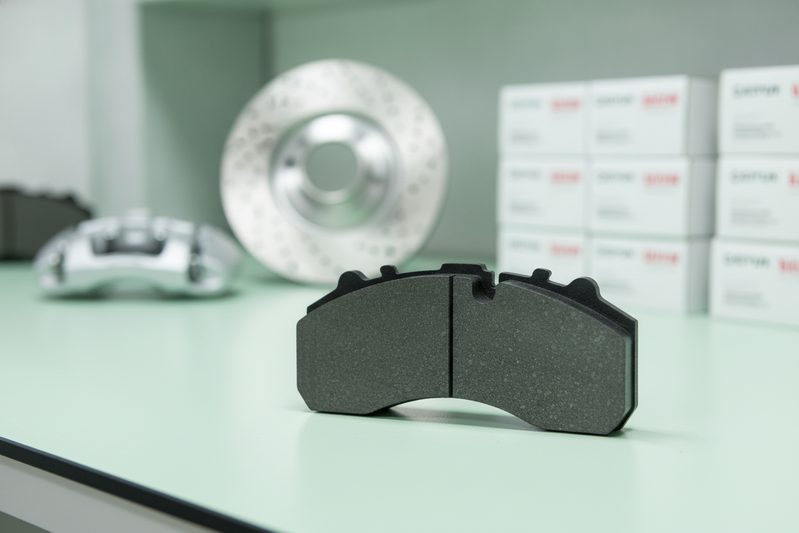
A lot of importers rely on a supplier's self-declaration. That's a mistake. Copper reduction isn't just about swapping one metal powder for another—it reshapes the entire friction formulation. If the engineer doesn't get the replacement fibers, fillers, and lubricants right, you'll get pads that glaze over, fade early, or chew through rotors. Verification starts with two things: an independent lab test for elemental composition and the right third-party certifications.
Request a formal test report done to ASTM or ISO standards—preferably using X-ray fluorescence (XRF) or inductively coupled plasma (ICP) analysis—that quantifies copper, along with other restricted heavy metals like lead, mercury, and cadmium. The report should be tied to the specific friction compound code, not a generic "family" of pads. At BAIYUN Brake, every compound batch goes through in-house XRF verification before it ever reaches the press line, and we provide batch-specific material data sheets. That's the kind of rigor you should demand.
Certifications also matter. An IATF 16949 certification means the facility operates under a quality management system that controls process changes—so you're not surprised by a "silent" formula tweak. ECE R90 approval confirms the pad's performance characteristics (friction level, speed sensitivity, cold performance) meet international standards. If your supplier can't show both an IATF 16949 certificate and ECE R90 test reports for the same part number, you're taking on unnecessary risk. As we discuss in our understanding brake pad materials guide, formulation consistency is everything.
Verification requires lab data, not labels; IATF 16949 and ECE R90 are your non-negotiables.
What Technical Specifications Really Separate Compliant Pads from the Rest?
Going copper-free isn't just a chemistry problem—it's a friction engineering challenge. Copper provides excellent thermal conductivity and acts as a high-temperature lubricant. Remove it, and you risk hot spots, noise, and unpredictable mu curves. The importers who win are the ones who understand which performance parameters to scrutinize.
First, friction coefficient (mu) stability across the temperature range. A copper-free formulation should hold a mu of 0.35–0.45 from cold (100°C) up to 350°C, with no more than a 15% drop at 400°C. In our dynamometer testing of the CP2223 and CP2203 series (get OEM passenger car brake pad pricing), we've seen consistent mu values of 0.38–0.42 across that span, which meets or exceeds OE specs for most Asian, European, and North American platforms. Second, pad and rotor wear life. A poorly formulated low-copper pad can eat through a rotor in 20,000 km. We target system wear such that the pad lasts 35,000–50,000 km under mixed driving, with rotor wear below 0.02 mm per 1,000 km.
Third, noise propensity. Copper-free pads tend to have different damping characteristics. The SAE J2521 squeal matrix test should show less than 5% occurrence above 70 dB across all temperature and pressure combinations. BAIYUN Brake's engineering team records full NVH spectrums during R&D, and we reject any formulation that exceeds OEM noise thresholds. For heavy-duty applications, request OEM commercial vehicle brake pad quote for pads tested under loaded conditions that replicate real fleet duty cycles.
Insist on dynamometer data showing mu stability, wear rates, and noise performance—not just a copper-free claim.
Why Does Your Supplier's Certification Portfolio Matter More Than a Low Price?
I'll be direct: a $2.50 ex-factory price difference per set evaporates the moment a shipment gets flagged at the port of Long Beach because the importer of record can't produce compliance documentation. Beyond copper content, the real supply chain security lies in a manufacturer's overall quality infrastructure. That means IATF 16949, ISO 9001, and ECE R90, all maintained with annual surveillance audits.
An IATF 16949-certified facility like BAIYUN Brake must demonstrate process capability (Cpk ≥ 1.67) on critical characteristics—think pad thickness, compressibility, shear strength—and operate under strict change management. If the factory decides to switch from one phenolic resin to another to shave costs, that change goes through a PPAP (Production Part Approval Process) that the customer must approve. Without that, you're gambling. We've had importers come to us after their previous supplier delivered pads with friction material delamination because nobody controlled the curing cycle. The cost of a recall dwarfs any per-unit savings.
Also, ECE R90 isn't optional for many markets. It's the regulatory gatekeeper for aftermarket brake pads in Europe, Australia, and increasingly referenced in North American fleet specifications. A pad with R90 approval has passed a rigorous program that includes cold performance equivalent to 80% of the OE pad's effectiveness, speed sensitivity testing, and fade behavior. Having that certification ready when an importer's customer (a national fleet, for instance) demands it can close a deal.
Certifications protect your supply line from surprises; the cheapest factory rarely has them.
How Can You Future-Proof Your Brake Pad Supply Chain Beyond the 2025 Deadline?
The copper phase-out is done, but environmental standards keep tightening. Washington State's Department of Ecology already tracks other constituents: antimony, zinc, and nickel compounds are under scrutiny. The same "Better Brakes Law" framework that targeted copper can be expanded. California's Proposition 65 already lists many friction material ingredients. Your sourcing strategy should anticipate the next wave, not just scramble to meet the current one.
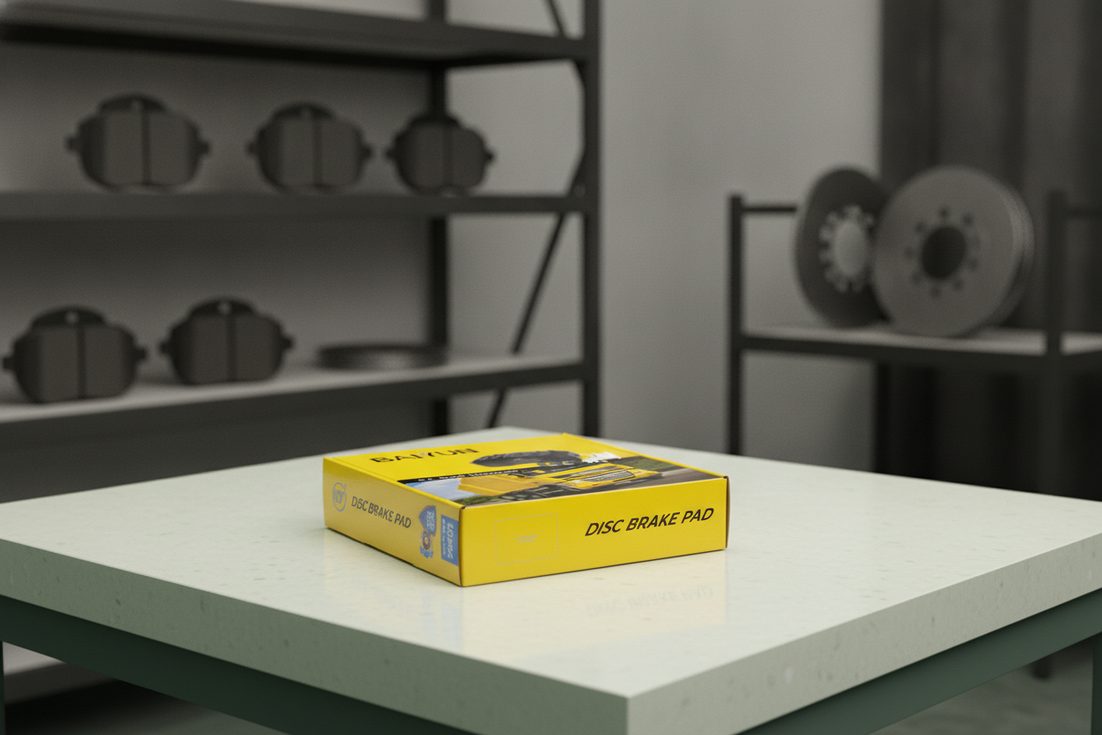
A forward-thinking low copper eco-friendly brake pads manufacturer China is already researching fully bio-based friction fibers, water-based manufacturing processes, and zero-heavy-metal formulations. At BAIYUN Brake, our R&D team runs continuous life-cycle assessment (LCA) on new compounds to project their environmental footprint reduction. We've cut manufacturing water usage by 40% over the past decade and are developing recyclable packaging for our aftermarket kits (like the WVA29087 repair kit box). Importers who lock in with a manufacturer committed to sustainable innovation won't have to switch suppliers every time a new substance gets restricted.
Beyond chemistry, build redundancy into your supplier relationships. A single-source factory without a backup production line is a vulnerability. Our facility runs parallel mixing and pressing lines, so if one line undergoes maintenance, the other keeps your orders moving. That's especially critical during the spring and fall peak seasons when North American distributors can't afford a two-week delay.
Choose a partner with visible investment in sustainability and manufacturing redundancy, not just a one-time copper fix.
What Are the Most Common Questions Importers Ask About Copper-Free Compliance?
Q: Are there any exemptions for heavy-duty or commercial vehicle brake pads?
A: No. The California and Washington laws cover all motor vehicle brake pads, from passenger cars to Class 8 trucks. The 0.5% copper limit applies uniformly. Commercial vehicle pads often have higher thermal demands, which makes the engineering transition trickier, but there is no exemption. That's why our commercial vehicle line (request OEM commercial vehicle brake pad quote) was reformulated and validated years before the deadline.
Q: Can I still sell B-level (up to 5% copper) brake pads manufactured before 2025?
A: Yes—only for inventory manufactured before January 1, 2025. Those pads may continue to be sold and installed until 2035 (in Washington and California). However, you must maintain clear records proving the date of manufacture. Any new production, even of the old compound, is illegal. Most importers are already transitioning to avoid future logistical headaches.
Q: How does a copper-free pad affect braking feel and performance?
A: A well-engineered low-copper pad should be transparent to the driver. The initial bite, modulation, and fade resistance can all match or exceed the copper-containing predecessor. The key is the replacement package of lubricants and structural fibers. Poor formulations can lead to a mushy pedal or increased dust. That's why we always recommend requesting a full dynamometer report—mu vs. temperature and pressure—before committing to a shipment. Our CP2223 series, for example, delivers pedal feel comparable to OE semi-metallic pads without the copper-related downsides.
North American compliance isn't going backwards. The 2025 copper deadline is just one milestone in a longer trend toward greener, more tightly regulated automotive aftermarket parts. If you're sourcing brake pads from China, you need a partner that treats environmental compliance as a core engineering discipline, not a marketing label. At BAIYUN Brake, we've poured 49+ years into that discipline, and we'd rather help you get it right the first time than watch you fight through a customs hold. request a wholesale quote today, and let's discuss your specific part numbers and volume needs. Or browse our ceramic and semi-metallic car brake pads to see formulations already compliant with the 0.5% copper standard.
Was this article helpful?
Average Rating: 5/5 (879)