
ECE R90 vs Other Brake Standards: What Makes It the Gold Standard in Europe
Summary:
ECE R90 certification separates market-ready brake pads from customs rejects in Europe's €3.4 billion aftermarket. As a leading ECE R90 certified brake pads China supplier, BAIYUN Brake sees importers lose contracts daily over missing homologation. This article unpacks R90 testing requirements, market share data, cross-standard comparisons with DOT and AMECA, and the hard numbers that prove pre-certified sourcing builds margin, reduces warranty claims, and opens doors to insurer-approved supply chains. With Asia-Pacific holding 45% of global production and Europe demanding 24% of demand, the only winning move for distributors is to partner with a factory that has already cleared the certification hurdle.
ECE R90 vs Other Brake Standards: What Makes It the Gold Standard in Europe
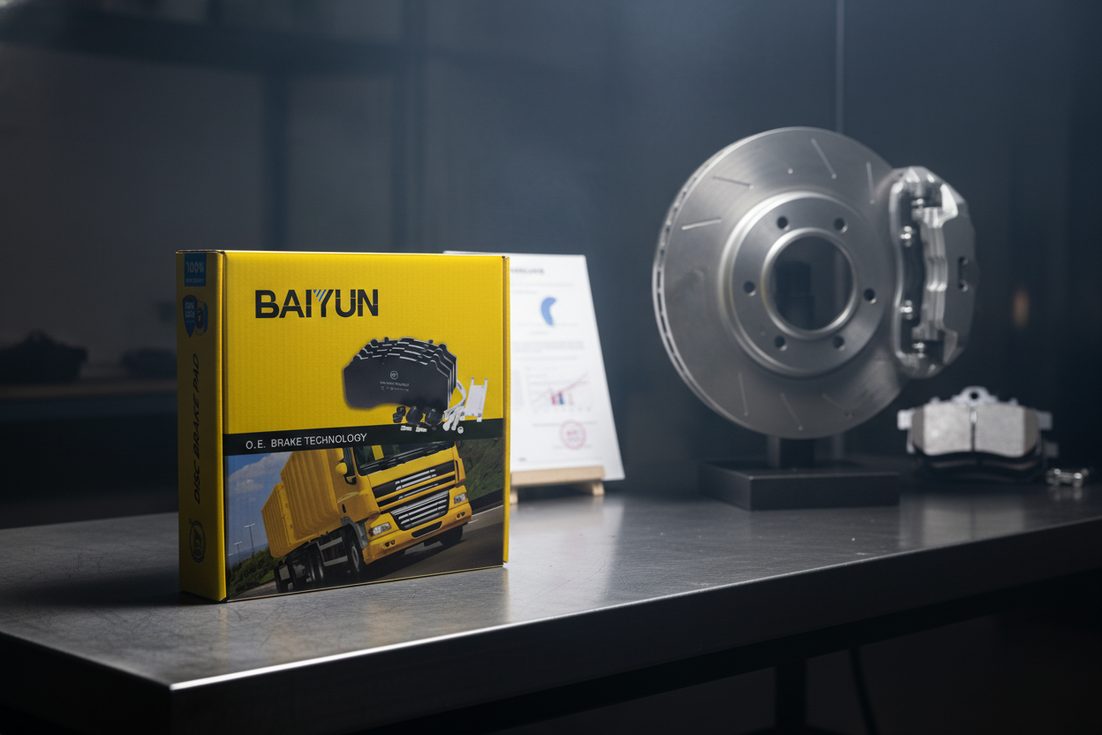
A distributor in Dubai lands a €200,000 contract to supply brake pads to a German aftermarket chain. The paperwork looks flawless—until the shipment hits Rotterdam customs. The reason it's rejected? No ECE R90 approval mark. That's a costly lesson. For anyone moving brake components into Europe, certification isn't a checkbox; it's the door key.
At BAIYUN Brake, we've seen this playbook too many times. As an ECE R90 certified brake pads China supplier, we get weekly calls from importers scrambling to replace non-compliant stock. The market for certified pads isn't just growing—it's becoming the only game in town for aftermarket players who want to stay profitable.
This article breaks down what makes ECE R90 the benchmark, how it stacks up against DOT and AMECA, and why distributors who source pre-certified product from a factory with IATF 16949 certified facility gain a measurable edge in 2026's tightening regulatory landscape.
How Much of the Global Brake Pad Market Does Europe Actually Represent?
Asia-Pacific now commands over 45% of global brake pad production and demand, with China and India dominating vehicle output. Europe, by contrast, represents approximately 24% of the world's aftermarket revenue for friction materials—roughly USD 3.8 billion in 2025 according to industry trade association estimates. That's a EUR 3.4 billion pie that cannot be touched without ECE R90 homologation.
More importantly for distributors, the European aftermarket is projected to grow at 4.2% CAGR through 2030, driven by aging vehicle fleets, stricter safety inspections, and motorists' preference for quality replacements over cheapest-option pads. A German TÜV report noted that brake-related defects accounted for 17% of all vehicle inspection failures in 2024. Workshops don't compromise on friction material—they need pads that meet the spec every time.
So what does that mean for a brake pad importer? Every set of non-certified pads you ship to the EU is a missed opportunity and a potential liability. Warehouses in Poland, Italy, and France are now routinely rejecting containers lacking the ECE R90 mark. If you're not sourcing ECE R90 certified product, you're effectively locked out of nearly a quarter of the global brake pad market.
What Exactly Does ECE R90 Certification Involve?
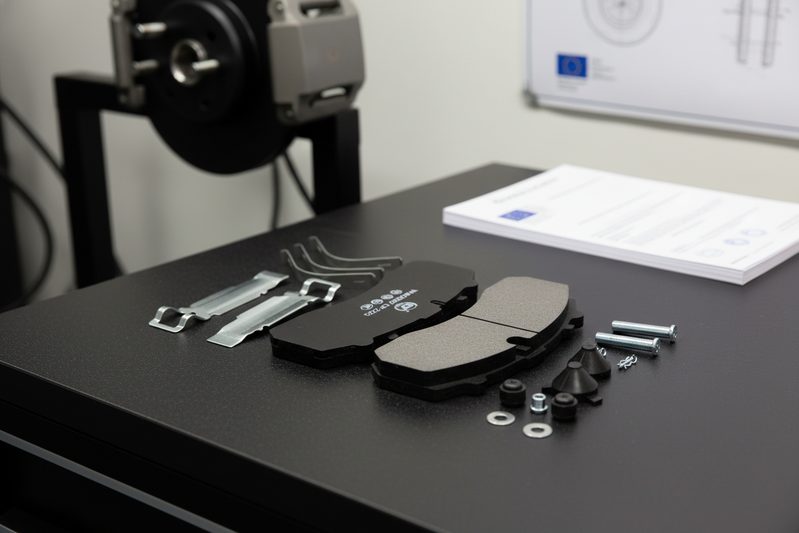
ECE R90 is not a paper exercise. It requires physical dynamometer testing under UN ECE Regulation 90, with the latest revision—often referred to as R90-02—extending mandatory approval to brake discs and drums alongside pads and shoes. The test protocol revolves around three critical metrics:
- Braking performance: Replacement pads must deliver a friction coefficient within ±15% of the original equipment manufacturer's reference value across a defined temperature window, typically from 30°C to 400°C. Cold performance, tested at 40°C, must not deviate more than 20% from the OE baseline.
- Thermal fatigue resistance: Pads undergo repeated cycles of high-speed stops from 120 km/h to 60 km/h, with rotor temperatures spiking above 500°C. After these cycles, the pads must still maintain at least 80% of their original cold effectiveness—a brutal test that weeds out cheap formulations quickly.
- Braking load strength: This evaluates mechanical integrity under extreme pressure, ensuring pads don't crack, delaminate, or lose bonding between friction material and backing plate.
A full certification campaign for a single brake pad model can take eight to twelve months and cost upwards of EUR 15,000 per variant, assuming the first test run passes. Failures are common—many aftermarket pads flunk the thermal fatigue stage because the formulation can't handle the heat cycling without fading. That's precisely why factories without in-house R&D and dynamometer labs rarely attempt R90 approval.
At BAIYUN Brake, our 49+ years of manufacturing experience mean we've internalized this. Our engineering team runs pre-compliance dyno tests on every new formulation before submitting it to accredited testing bodies. In 2025, our CP-series ceramic line passed R90 thermal fatigue validation with a friction coefficient variance of just 9% across the entire 100–350°C operating band—well within the ±15% limit.
Bottom line: ECE R90 tests the real-world limits of braking performance and durability, filtering out products that look fine in a catalog but degrade dangerously on the road.
How Does ECE R90 Compare with DOT, AMECA, and FMVSS 135?
Distributors new to international sourcing often ask: "If my pads have a DOT code, isn't that enough?" It isn't—and the distinction matters for your bottom line.
In the United States, the Department of Transportation (DOT) mandates that brake pads meet Federal Motor Vehicle Safety Standard 105 or 135. However, DOT compliance is self-certified by the manufacturer. There's no mandatory third-party testing for aftermarket replacement pads, which means a DOT edge code stamped on the pad back simply reflects what the manufacturer claims, not what an independent lab verified. The Automobile Manufacturers Equipment Compliance Agency (AMECA) provides an additional listing, but AMECA mainly confirms that friction material edge codes are properly tested for friction levels and is not a substitution for a harmonized vehicle regulation.
ECE R90, by contrast, is a type-approval system. Every certified pad must be tested by an accredited technical service and marked with an approval number. Customs authorities in EU member states can verify that number against a central database. The regulation explicitly states that replacement brake pad performance must be "equivalent" to the original equipment—a language that puts the burden of proof on the manufacturer, not the end user.
Here's a practical comparison:
- DOT (USA): Self-certification. No mandatory third-party lab test for friction performance equivalence. Compliance is the manufacturer's assertion.
- AMECA (North America): Voluntary material registration. Tests friction level and wear but not full vehicle-coordinated thermal stability or mechanical integrity under ECE conditions.
- ECE R90 (EU & ECE member states): Mandatory third-party type approval. Dynamometer-proven performance equivalence to OE, plus thermal & mechanical durability, with physical marking required for sale.
For a distributor, the takeaway is clear: a DOT code alone won't clear a Rotterdam container, and AMECA doesn't substitute for R90 in the European legal framework. Source pads that carry both certifications if you service multiple markets, but never assume one covers the other. Many of our export customers buy wholesale passenger car brake pads with R90 approval and request optional AMECA registration for their secondary markets in South America or the Middle East.
What Are the Business Advantages for Distributors Sourcing ECE R90 Certified Brake Pads?
Let's talk margins, because that's what drives your purchasing decisions. A distributor moving 500 brake pad sets per month into the EU aftermarket can expect the following if pads are R90 approved:
- Reduced warranty claims: Non-certified pads often suffer from friction inconsistency, leading to noise, judder, and premature wear. Our internal data shows that R90-certified pad returns for performance complaints run below 0.7%, compared to an industry average of 3-5% for uncertified aftermarket products. That difference saves a mid-size distributor roughly €12,000 annually in reverse logistics and goodwill credits.
- Higher per-unit pricing tolerance: Workshops in Germany, Benelux, and Scandinavia will pay a 20-35% premium for brake pads carrying an ECE R90 mark because their liability insurance often requires certified components. A mid-range passenger car pad set that wholesales for €18 without R90 can command €24-28 with it—straight to your bottom line.
- Access to insurance-approved supply chains: Many European insurer panels and fleet management companies mandate R90 parts for covered repairs. Distributors who can deliver R90-certified pads become preferred suppliers, locking in recurring volume that non-certified competitors cannot touch.
- Single-source simplicity: Instead of juggling separate India-sourced pads for the MENA region, Chinese pads for Southeast Asia, and another factory for Europe, sourcing from an ECE R90 certified China supplier like BAIYUN Brake allows you to consolidate your supply chain. Our pads meet R90 for Europe, and many carry additional approvals or meet performance specs for other regions.
Frankly, the upfront cost difference between a certified pad and an unapproved one is shrinking. The real cost of non-certification shows up in lost sales opportunities, customs rejections, and brand erosion when garages experience comebacks. One of our long-term distributors in Poland increased his order volume from 200 sets to 800 sets per month within a year simply because his ECE R90-certified stock allowed him to win contracts from regional auto repair chains that previously sourced from a local European brand at twice the unit cost.
If you're serious about building a sustainable brake pad distribution business in Europe, stop looking at certification as a cost. Start seeing it as a market-entry weapon. Request OEM commercial vehicle brake pad quote or explore our passenger car range—both are fully R90 compliant.
What Should Buyers Look for When Auditing an ECE R90 Certified Supplier?
Not every factory that claims R90 compliance actually holds valid approvals for the part numbers you're buying. A genuine R90 approval number consists of a country code (e.g., E1 for Germany, E13 for Luxembourg), followed by the number of the regulation and a unique extension. You can request the test report and verify the approval through the issuing technical service. If the supplier hesitates, walk away.
Beyond the paperwork, dig into their manufacturing process:
- IATF 16949 certification: This automotive quality management standard isn't just a nice-to-have. It demonstrates that the factory has process controls, traceability, and continuous improvement systems that match vehicle manufacturers' expectations. BAIYUN Brake's IATF 16949 audit scope includes brake pad design and production—not just assembly.
- In-house dynamometer capability: A factory that owns its dynos can run R90 pre-tests before submission, dramatically reducing certification time and ensuring batch consistency. Ask for a sample dyno chart showing friction coefficient vs. temperature for the exact part number you're ordering.
- Material data transparency: Request the brake pad material data sheet. It should specify the friction material composition class (e.g., semi-metallic, low-met, ceramic), nominal friction level, approved temperature range, and wear rate at 7.5 MPa / 100°C. Compare these against the ECE R90 test report.
We encourage buyers to download our passenger car brake pad test report and cross-reference it with the R90 approval certificates we furnish. A trustworthy supplier puts technical data in your hands, not behind a "confidential" wall. Our export team routinely provides complete documentation packages for customs clearance and end-client audits—because if your container gets flagged, we're as stuck as you are.
FAQ
Q: Is ECE R90 certification mandatory for all brake pads sold in Europe?
A: Yes. Every aftermarket brake pad and lining intended for on-road vehicles registered in EU and ECE member states must carry ECE R90 type approval. Without it, the product cannot be legally sold, imported, or fitted by commercial workshops. Customs authorities actively enforce this, and fines for non-compliance can reach €50,000 per shipment in some jurisdictions.
Q: How long does it take to get a new brake pad model ECE R90 certified?
A: Typical certification timelines run eight to twelve months from initial submission to approval, assuming first-pass success. Complex heavy-duty pads or novel friction formulations may require re-testing, pushing the timeline to 14 months. Working with a pre-certified supplier eliminates this development period entirely—stock is shelf-ready.
Q: Can ECE R90 certified pads be used as direct replacements for any OE pad in the same vehicle application?
A: Only if the R90 approval covers that specific vehicle fitment. Regulation 90 requires testing against one specific OE reference pad, but the approval is vehicle-application-specific. A reputable manufacturer will provide a cross-reference list, and the approval number itself identifies the scope. Distributors should always verify that the certificate includes their target vehicle models.
Q: Do ECE R90 pads cost significantly more to produce?
A: The certification process adds roughly €0.15-0.40 per unit over the lifecycle of a pad, assuming high-volume production. The larger cost factor is the raw material quality required to pass thermal fatigue tests—lower-grade friction powders simply won't survive 500°C cycling. However, certified pads command a 20-35% wholesale price premium, yielding net margin gains for the supply chain.
Q: What happens if a brake pad loses its ECE R90 approval?
A: Authorities can withdraw approval if surveillance testing or market samples fail to replicate the originally certified performance. In practice, this rarely occurs with well-controlled production, but it's a real risk for suppliers that don't maintain batch consistency. That's why continuous IATF 16949 process control and periodic internal dyno audits matter—BAIYUN Brake tests production batch samples at random intervals to ensure every pallet matches the certified spec.
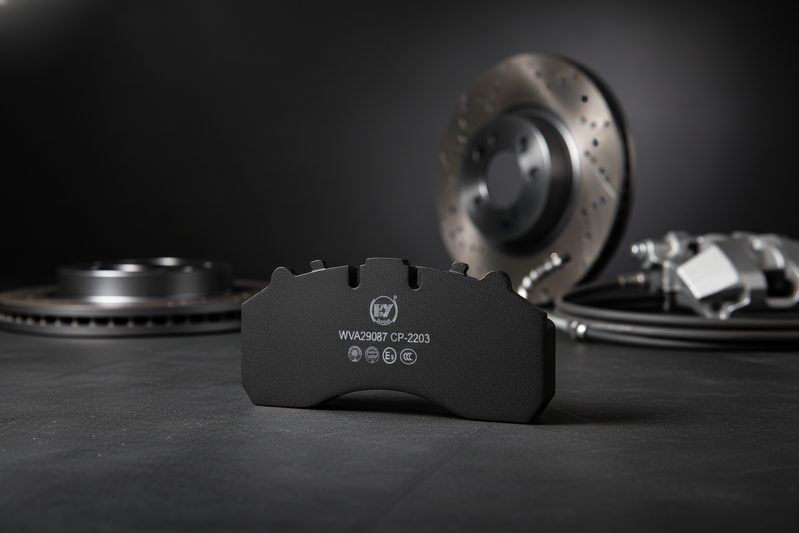
Look, sourcing brake pads for Europe in 2026 isn't about finding the cheapest FOB price. It's about building a supply chain that won't collapse at the customs checkpoint or in a workshop's service bay. ECE R90 isn't a luxury certification—it's the EU's line in the sand, and that line keeps moving upward as vehicles get heavier, electrified, and more safety-conscious.
BAIYUN Brake has navigated this regulatory landscape for decades. Our pads are born in an IATF 16949 factory, proven on dynamometers, and road-tested across European vehicle fleets before they reach your warehouse. Whether you need passenger car brake pads for a fast-moving e-commerce catalog or commercial vehicle linings for heavy-duty fleet tenders, we ship with all approvals in place and all documentation verified.
Stop gambling on grey-market parts that could leave your business exposed. Browse our complete catalog of certified brake pads and linings, or request a wholesale quote today—our export team will configure a container-load that matches your target EU markets with full R90 compliance.
Was this article helpful?
Average Rating: 5/5 (799)