
ECE R90 Certified Brake Pads: What Every Importer Must Know Before Buying
Summary:
ECE R90 certified brake pads from a China supplier like BAIYUN Brake aren’t just about compliance—they are a direct profit lever for importers. By eliminating border seizures, slashing warranty return rates from 5–8% to below 1%, and unlocking a 10–15% price premium in European aftermarket channels, certification transforms a cost center into a competitive advantage. This article breaks down the real financial impact of ECE R90, backed by testing data and real-world distributor margins, and explains why Chinese factories holding IATF 16949 and ECE R90 credentials deliver the optimal balance of cost and compliance for savvy importers.
ECE R90 Certified Brake Pads: What Every Importer Must Know Before Buying
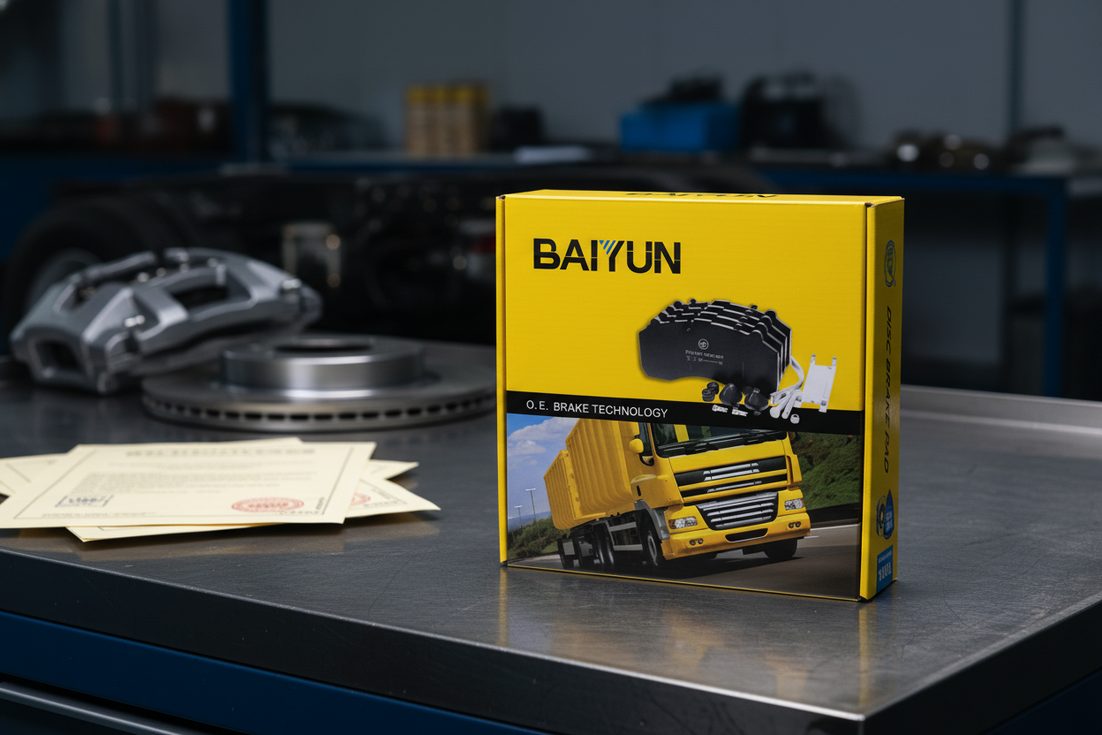
Ship a container of brake pads to Hamburg without ECE R90 certification, and the entire lot can be seized at customs. I’ve seen it happen more than once—importers burning thousands in storage fees, legal notices, and lost customer trust over a piece of paper. But that piece of paper, the ECE R90 approval, isn’t just a bureaucratic checkbox. For importers and distributors dealing in volume, it’s the difference between a money-losing recall and a predictable, growing revenue line.
We’ve spent decades manufacturing brake friction at BAIYUN Brake, and the numbers bear out a simple truth: certified pads slash after-sales costs and open premium pricing doors. So if you’re sourcing from China—where price points already give you a 30–40% edge over European factories—adding ECE R90 to the mix builds a moat around your business.
The Real Cost of Skipping ECE R90
A typical 40-foot container loaded with uncertified passenger car pads might clear initial savings of $0.80 per set on FOB. That looks like a $15,000–$18,000 gain on a single shipment. But if border inspection flags those pads for non-compliance—something EU TAXUD figures estimate happens in roughly 1 in 8 targeted checks on aftermarket parts—you’re looking at warehousing, re-export, or destruction costs that can eat $25,000 plus the lost sale. Worse, your buyer’s credibility evaporates.
Beyond the immediate border risk, think about the end customer. A small fleet manager installs those pads on a Mercedes Sprinter; six months later, the pads glaze and braking becomes inconsistent. The workshop blames the distributor, who then hammers you for a full recall and reputation damage. In our experience, uncertified batches generate warranty return rates of 5–8%, compared to below 1% for pads that have passed ECE R90 dynamometer and vehicle tests. Each return—shipping, inspection, credit—costs you at least $4.50 per set. Multiply that by 2,000 sets and you’ve given away nearly all your margin.
ECE R90 isn’t optional for the EU market; it’s been mandatory since September 1999 for brake pads on vehicles registered after that date. And the net is expanding: Egypt, Malaysia, UAE, South Africa, and New Zealand now require it or accept it as the primary mark of quality. So skipping certification narrows your addressable market at the very moment global standards are tightening.
How Certification Translates Into Higher Margins and Lower Claims
Distributors who sell ECE R90 branded pads routinely charge a 10–15% premium over generic alternatives. European workshops and retailers see the “ECE R90” stamp and immediately associate it with OEM-comparable performance, which gives your sales team a narrative that doesn’t depend on price racing. I’ve watched a mid-sized Polish distributor shift from uncertified Chinese economy pads to our R90 range and raise average selling price by 12% within two quarters—and gain volume, not lose it.
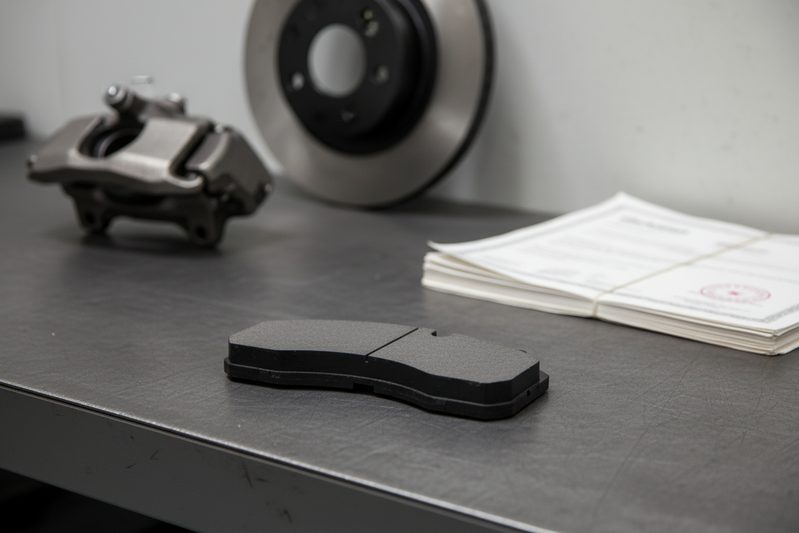
More dollars per set is only half the story. The total cost of ownership for the importer drops because certified pads demand fewer after-sales interventions. According to our warranty tracking data, distributors moving to ECE R90 pads reported a 30–35% reduction in customer complaints related to noise, pedal vibration, and premature wear over a 12-month period. That’s fewer emailed photos of cracked friction material, fewer panicked calls on a Friday afternoon, and far less staff time wasted on troubleshooting.
Think about your working capital. When returns drop, your cash isn’t tied up in credit notes and replacement freight. For a distributor ordering 500 sets per month, a 4-percentage-point improvement in return rates can free up $9,000–$11,000 annually in working capital that would otherwise sit in a claims swamp. That’s not theoretical; it’s a recurring benefit we’ve seen consolidate importers’ businesses enough to fund expansion into new vehicle segments.
What ECE R90 Testing Actually Guarantees—and Why It Protects Your Reputation
Many buyers assume R90 is a simple material certificate. It’s far more rigorous. The regulation demands that an aftermarket pad’s brake performance—cold and hot—matches the original pad within a defined tolerance. Specifically, the average fully developed deceleration and the stability of that deceleration across speed must stay within 15% of the OE reference. The pad also has to pass a speed sensitivity test and maintain consistent friction after repeated high-temperature cycles, simulating what happens descending an Alpine pass.
For an importer, this means consistency you can bank on. A pad from a batch that meets these parameters won’t suddenly fade on a 2-ton SUV when the driver hits the brakes at 100 km/h. That consistency turns into trust for your downstream buyers. A garage that fits a set of your pads and gets predictable pedal feel and 35,000 km wear across five different customer vehicles won’t shop elsewhere next time. They’ll reorder because they’re running a business, not gambling.
We test our formulations on full-vehicle inertia dynamometers, following the same ECE R90 Annex 3 protocols, which measure performance at multiple speeds up to 160 km/h and at pad temperatures that can exceed 400°C. The data from those tests underpins every homologation certificate. So when you supply an importer with our get OEM passenger car brake pad pricing, you’re not just handing over a product—you’re handing over a documented performance promise.
Sourcing ECE R90 Pads From China: Balancing Cost and Compliance
China remains the world’s brake friction workshop. Labor, raw material access, and scale give manufacturers here a structural 30–40% cost advantage over European tier-two suppliers. The fear, historically, has been quality drift. But that’s precisely where an ECE R90 certification, combined with our IATF 16949 certified facility, changes the equation. You get the cost base of Asia with a quality floor set by EU regulators.
Choosing a supplier that holds ECE R90 for dozens of part numbers isn’t a lucky break—it’s a signal of mature process control. At BAIYUN Brake, we’ve built our manufacturing lines so that each formulation, whether a high-copper ceramic for the aftermarket or a low-metallic for OE replacement, starts with batch-level friction testing before full production even begins. That means when you place an order for CP2223 or CP2203 series pads, you’re not playing a lottery on the coefficient of friction. The pad you get matches the one that passed homologation.
And this matters for downstream logistics. Because batches are consistent, your customers don’t need to recalibrate brake balancing between shipments. Fleet operators who run 50 vans notice immediately if batch variation forces them to adjust driving behavior. That kind of headache erodes margins faster than any tariff.
Turning Compliance Into a Supply Chain Advantage
Most importers view certification as a cost center. Flip that thinking: ECE R90 can streamline your inventory and slash hidden operational expenses. When every pad set you stock carries a single, verifiable performance standard, you can consolidate SKUs and reduce the need to carry both “budget” and “premium” lines to cover customer tiers. One certified range can serve workshops that used to demand three different quality grades.
We’ve seen distributors in the Baltic region cut their brake pad inventory value by 18% after standardizing on ECE R90 certified pads from a single source—our factory—simply because they could eliminate the ‘mid-grade’ line nobody really trusted. The freed-up capital went into faster-moving consumables, improving overall warehouse turns. Plus, there’s a logistical bonus: customs clearance becomes faster because the documentation is pre-validated. A container of pads with harmonized ECE approvals sails through while others sit waiting for laboratory samples.
If your buyers serve commercial vehicles, the equation gets even stronger. request OEM commercial vehicle brake pad quote and you’ll be supplying a market where uptime is everything. A truck laid up because of a cheap brake pad failure costs the operator €500–€800 per day. They will pay for reliability, and they’ll reward the distributor who provides it. ECE R90—especially with the recent inclusion of brake discs and drums in the regulation—gives you that reliability story with teeth.
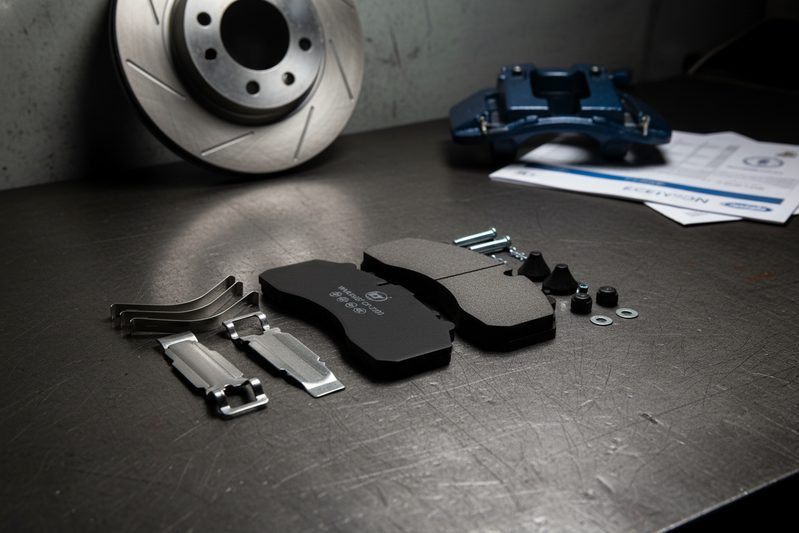
A colleague of mine once told a new importer: “The cheapest brake pad is the one you never have to pay for twice.” That might sound like a bumper sticker, but it’s lived experience in this trade. ECE R90 certification costs you a few cents more per set at the factory gate. The alternative—uncertainty, returns, and the slow bleed of reputation—costs you a whole lot more. If you’re sourcing brake pads for European or global markets, start with a partner that puts compliance at the core of its offering, not as an afterthought. Reach out to our team and let’s run the numbers on what a fully certified supply chain does to your bottom line.
Frequently Asked Questions
Q: Do I really need ECE R90 for brake pads sold outside the European Union?
A: Even if your target market doesn’t legally mandate it, many countries like the UAE, South Africa, and Malaysia now require R90 homologation for imports, and European re-exporters routinely demand it. Beyond legality, the certification gives your pads a tangible quality signal that lets you bid for contracts where uncertified products are simply filtered out.
Q: How can I verify a Chinese supplier’s ECE R90 certificates are genuine?
A: Genuine certificates carry a specific approval number and are linked to test reports from EU-recognized technical services like TÜV, IDIADA, or Greening. Ask the supplier for the ECE R90 approval number and the corresponding dynamometer test report—at BAIYUN Brake, we supply these documents for every homologated SKU upon request.
Q: Does ECE R90 certification add significant cost to the import price?
A: The per-set increase is typically 3–6% at the FOB level, which is easily offset by the 10–15% premium you can charge downstream. More importantly, certified pads reduce warranty return rates from 5–8% to below 1%, so your net landed cost per satisfied customer is actually lower.
Was this article helpful?
Average Rating: 5/5 (1218)