
ECE R90 Certified Brake Pads China Supplier: A Step-by-Step Guide for Importers
Summary:
ECE R90 certified brake pads China supplier: this step-by-step guide explains the mandatory testing standards European importers must verify before sourcing. Learn about cold performance, speed sensitivity, thermal fade, and mechanical requirements that R90 enforces, and how to avoid costly customs delays by choosing a factory with IATF 16949 and full homologation documentation.
ECE R90 Certified Brake Pads China Supplier: A Step-by-Step Guide for Importers
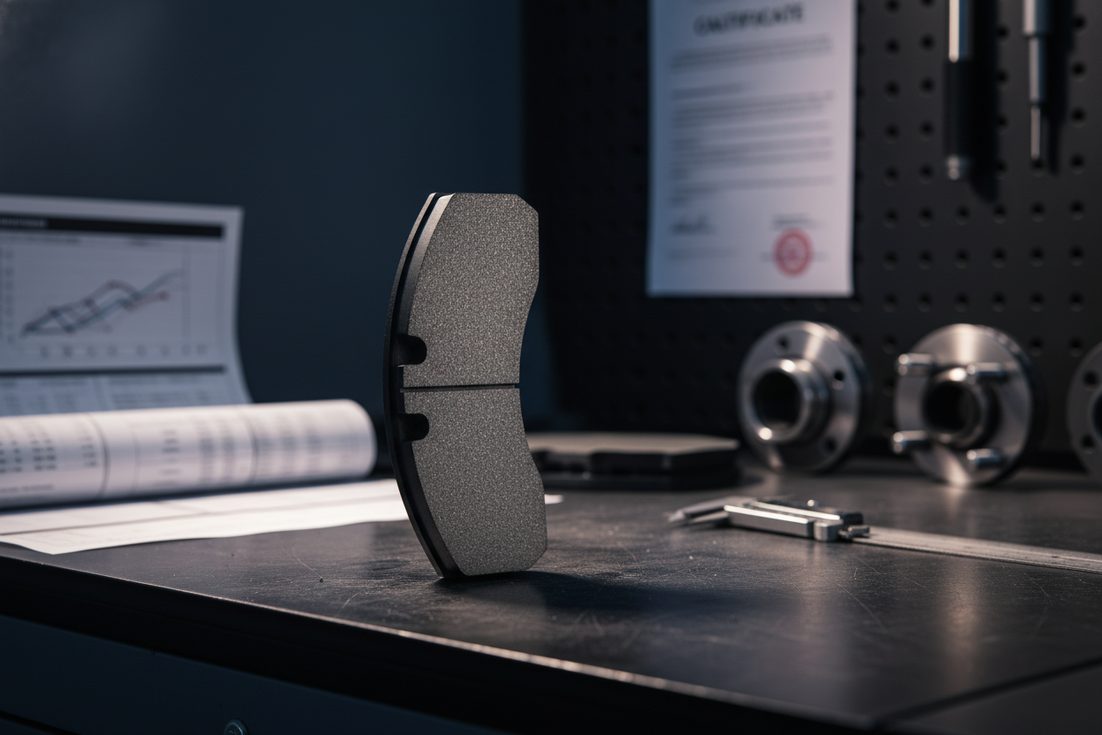
A container of brake pads stuck at Rotterdam customs because the paperwork didn't include ECE R90 homologation numbers. That's not a hypothetical scenario—it happens to unprepared importers every month. You don't just lose shipping time; you risk contract penalties, warehouse fees, and a damaged reputation with your European distributors. Getting the certification details right before your order leaves the factory floor is the only way to avoid that mess.
The aftermarket brake pad market in Europe passed a major milestone in 2025: over 80% of replacement pad sales in the EU now require ECE R90 approval by law. So if you're sourcing from China, you need a supplier who not only claims compliance but can back it up with batch-level test data and a documented homologation trail. That's exactly what we'll unpack here—no fluff, just the technical standards, testing requirements, and compliance steps that matter for your business.
What Exactly Does ECE R90 Certification Cover?
ECE Regulation 90 isn't a single test; it's a whole suite of performance benchmarks that compare aftermarket brake pads to the original equipment (OE) parts they're meant to replace. Introduced in 1999 and expanded to include discs and drums in later revisions, the regulation sets minimum thresholds for cold performance, speed sensitivity, friction stability, compressibility, shear strength, and hardness.
Here's the part that catches most first-time importers off guard: R90 doesn't just measure whether the pad stops the car. It verifies the pad performs within a tight tolerance of the OE pad's behavior. That means if the original pad's friction coefficient peaks at 0.42 at 300°C, the aftermarket replacement must stay within ±15% of that curve across the full operating temperature range. You're not just buying a pad that "works"—you're buying a pad that mimics the exact braking character the vehicle engineers designed. Any deviation can trigger ABS calibration errors or uneven brake wear on the axle.
For a deeper look at how pad compositions affect this behavior, you can review our brake pad composition guide, which breaks down the material science behind friction stability.
Which Tests Are Part of the R90 Approval Process?
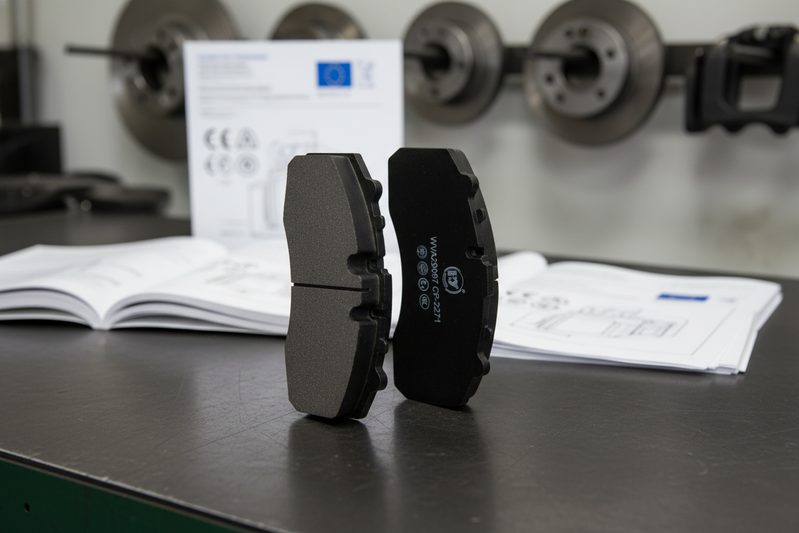
The testing sequence follows ECE Regulation 90 Annex 3 (for pads) and Annex 9 (for discs). A certified laboratory runs the candidate pad through a dynamometer protocol that simulates real-world driving cycles. I'll walk you through the key test phases, because knowing them helps you spot a supplier who actually understands compliance versus one who just prints an E-mark on the box.
Cold performance equivalence: The pad is tested at an initial temperature of 100°C with a specified brake pressure. The mean fully developed deceleration (MFDD) must fall between 85% and 115% of the OE pad's value. If the OE pad delivers 8.5 m/s², your aftermarket pad can't drop below 7.23 m/s². That sounds generous, but achieving it consistently across production batches requires tight control over the friction material mix ratio and curing cycle.
Speed sensitivity test: Braking performance is measured at three different initial speeds: typically 60 km/h, 100 km/h, and 160 km/h. The ratio of deceleration at the highest speed to the lowest speed must not exceed 1.20. This weeds out cheap formulations that fade dramatically at highway speeds—a common issue with uncertified budget pads.
Thermal fade and recovery: The pad undergoes repeated high-energy stops to raise the disc temperature past 400°C, then its hot performance is measured. After a cooling period, the recovery stop must show that the pad regains at least 70% of its initial cold performance. We've seen substandard pads lose 40% of their friction after just 8-10 heavy stops, which puts a driver in a dangerous situation on a long mountain descent.
Mechanical properties: The lab also checks compressibility (how much the pad material squishes under hydraulic pressure), shear strength between the friction material and the backing plate, and Rockwell hardness. These numbers matter for pedal feel and long-term noise performance. Too much compressibility gives a mushy pedal; too little transmits vibration directly to the caliper.
All these data points are documented in an approval report that links to a specific vehicle make and model. A pad certified for a 2024 Volkswagen Golf won't automatically be legal for a 2024 Audi A3, even if they share a platform. You'll need separate approval for each vehicle application. That's why many importers prefer to work with a factory like BAIYUN Brake, which maintains an extensive homologation database covering hundreds of European vehicle references.
Why ECE R90 Compliance Matters Beyond Customs Clearance
Customs clearance is the obvious checkpoint, but the real commercial impact runs deeper. In 2024, Germany's KBA fined three aftermarket distributors a combined €2.1 million for selling non-R90 pads to garages. The legal liability doesn't stop at the border—it follows the supply chain right to the retailer. If you're the importer of record, you carry the burden of proving compliance. An ECE R90 test report from an accredited laboratory (with the E11, E1, or E4 country code marking) is your primary defense.
But here's the nuance many suppliers gloss over: R90 approval doesn't guarantee identical wear life. It doesn't test dust generation or noise characteristics beyond a basic cold squeal check. So even with an E-mark, you need to verify those parameters separately through your own quality audits. That's where factory certifications like IATF 16949 become critical. IATF 16949 certified facilities have the process controls to deliver consistent wear rates and low NVH (noise, vibration, harshness) performance batch after batch, not just on the samples they sent to the lab.
For importers stocking both passenger car and commercial vehicle lines, it's worth noting that R90 requirements for trucks and buses are even stricter on thermal capacity. If you're sourcing pads for heavy-duty applications, check out our commercial vehicle brake pads range, which carries full ECE R90 approval for a variety of MAN, DAF, and Iveco models.
How Do You Verify a Chinese Supplier's ECE R90 Certification?
Don't just accept a JPEG of a certificate. I've seen forged E-marks on Chinese supplier catalogs—it happens. Here's how you verify properly: Ask for the complete test report, not just the approval number. The report must come from an EU-accredited technical service such as TÜV, DEKRA, IDIADA, or UTAC. The ECE R90 approval number follows the format e1*90R02*90R02/02*XXXX*YY, where the digits after "e" indicate the country of approval (1 for Germany, 4 for Netherlands, 11 for UK). Cross-check this number on the pad itself—the approval number must be stamped or printed on the friction material edge or on the backing plate.
Next, verify that the approval covers the exact friction material formulation you're buying. A supplier might have R90 approval for a premium NAO ceramic formulation but ship you a semi-metallic mix that was never tested. That's a common bait-and-switch among low-cost factories. Request a signed declaration of conformity that lists the specific compound code and batch number range. BAIYUN Brake provides a traceability file that links each shipping lot back to the original R90 test report and production quality records—a practice we've maintained through our 49+ years of manufacturing experience.
Finally, look for independent validation. The supplier should be able to show you their IATF 16949 certification scope and the latest audit findings. This quality management system standard requires annual external audits of the manufacturing process, not just the final product. If a factory can't produce a clean IATF surveillance audit report, that's a red flag regardless of what E-mark stickers they have lying around.
Frequently Asked Questions
Q: Is ECE R90 mandatory for all European countries?
A: ECE R90 applies to the 28 EU member states plus non-EU countries that are signatories to the UNECE 1958 Agreement, including Switzerland, Norway, and Turkey. All brake pads sold for vehicles registered after September 1999 in these markets must carry R90 approval. Some Eastern European countries outside the EU may accept non-R90 pads, but most major distributors and retail chains now insist on it.
Q: Can I sell non-certified brake pads for off-road or classic cars?
A: Generally, yes—classic vehicles registered before 1999 and certain off-road-only vehicles are exempt from R90 requirements. However, the burden of proving the vehicle exemption falls on the seller, not the buyer. Most importers avoid the gray area and stick to certified pads for all aftermarket sales to simplify liability management.
Q: How much does ECE R90 testing add to brake pad pricing?
A: The cost of certification isn't a simple per-unit markup—it's amortized over the production run. A full R90 test campaign for a single vehicle application can cost between €8,000 and €15,000 including lab fees and homologation administration. For high-volume pad references selling 50,000 sets per year, that's about €0.20 per set. For lower-volume niche applications, the per-unit cost is higher. Factories that maintain their own in-house dynamometer labs, like BAIYUN Brake's R&D center, can reduce external testing costs and pass those savings on to importers ordering large quantities. To get a quote for your specific volume, get in touch with our export team.
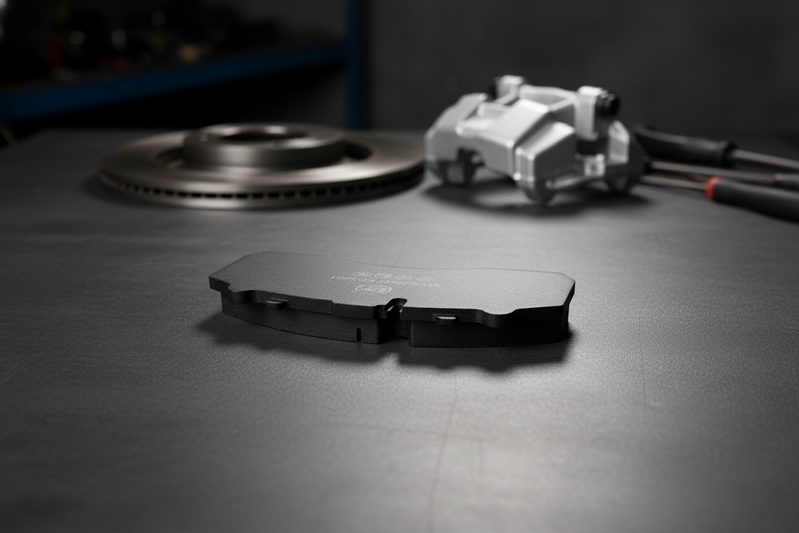
Pulling all this together: ECE R90 isn't just a checkbox on a shipping manifest. It's the technical backbone of your market access in Europe and, increasingly, in other regions that adopt UNECE regulations. The real cost of cutting corners shows up months later—as warranty returns, distributor disputes, or worse. Choose a supplier that treats compliance as an engineering discipline, not a paperwork exercise. Ready to source pads that survive the dynamometer and the customs inspector? Browse our passenger car brake pad range with full ECE R90 documentation ready for your next shipment. And if you need commercial vehicle applications, request a quote for commercial vehicle brake pads tailored to your fleet customers.
Still have questions about certification specifics? Contact us for a quote and our technical team will walk you through the homologation details for your target market.
Was this article helpful?
Average Rating: 5/5 (1482)