
Commercial Vehicle Brake Parts OEM Supplier: What Buyers Should Verify
Summary:
When vetting a commercial vehicle brake parts OEM supplier, verify certifications like IATF 16949 and ECE R90, production consistency via batch test reports, and realistic logistics details. Reliable Chinese brake factories like BAIYUN Brake deliver the documentation and traceability importers need to avoid field failures and customs headaches.
Commercial Vehicle Brake Parts OEM Supplier: What Buyers Should Verify
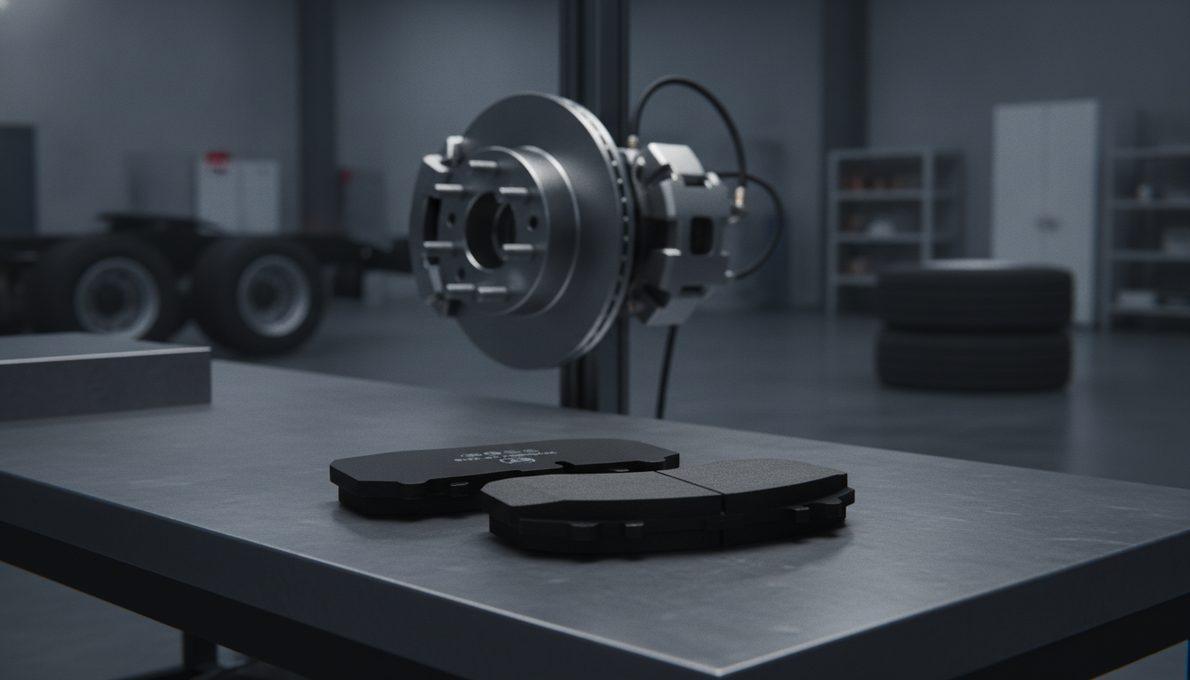
Quick answer: When vetting a commercial vehicle brake parts OEM supplier, verify at least three things: certifications that match your market (IATF 16949 for quality management, ECE R90 for European approval), production consistency backed by lab test reports across multiple batches, and transparent logistics capabilities including realistic lead times and minimum order quantities (MOQs). A reliable Chinese brake factory like BAIYUN Brake, with 49+ years of experience, provides all three, helping you avoid underperforming or illegal parts and reducing total cost of ownership.
Why Verification Trips Even Experienced Importers
A distributor sourcing 500 sets of truck brake pads monthly can't afford inconsistent friction coefficients batch to batch. Yet we still see buyers focus solely on unit price, only to face field failures, warranty claims, and container delays that erode margins. One European aftermarket buyer told us they lost €45,000 in revenue because a shipped batch of commercial vehicle brake pads didn't meet ECE R90 hot-stop limits. The factory had a photocopied certificate. It wasn't worth the paper it was printed on.
That's harsh. But it's real. So what actually minimizes your sourcing risk? It's not chasing the absolute lowest price. It's verifying the supplier's ability to deliver consistent, certified, and legally compliant brake parts – shipment after shipment. This article walks you through the checks that matter, from factory floor audit to logistics terms, so your procurement team has a clear playbook.
Manufacturing Capability: Beyond the Showroom
Many Chinese brake factories maintain a presentable showroom. Fewer can demonstrate large-scale, stable production of heavy-duty brake linings and disc pads meeting OEM-level tolerances. As a buyer, you need proof of capacity, not a brochure.
Look for a production facility that runs automated mixing, hot pressing, and grinding lines. At BAIYUN Brake, the compounding stage alone uses a fully automated batch mixing system that ensures formulation accuracy within 0.5% by weight – critical because a 2% variance in resin content can shift friction behaviour at 300°C by 15%. Request videos of the actual production process, not just the finished goods warehouse. Watch our production process to see what real commercial vehicle pad forming looks like.
Also ask for the factory's internal testing rhythm. For each production batch, a trustworthy OEM supplier runs full SAE J2522 (AK Master) dynamometer tests on samples. In our own lab, every batch of commercial vehicle brake pads undergoes a 15-stop hot performance sequence, with data archived for 10 years. That's not luxury; it's liability protection.
Certifications: Which Ones Actually Protect You?
Certifications aren't wall art. They're your legal safety net. For commercial vehicle braking components, two standards carry real weight.
IATF 16949 is the automotive quality management system baseline. A supplier claiming to be an OEM partner must hold a valid, current IATF 16949 certificate issued by a recognized body. Don't accept ISO 9001 as a substitute for heavy‑duty brake parts; IATF 16949 adds specific requirements for risk management, traceability, and product safety that ISO 9001 lacks. You can verify the certificate number online through the certification body's database. Our IATF 16949 certified facility undergoes annual surveillance audits, and we provide certificate copies in every supplier qualification pack.
ECE R90 is the European standard for replacement brake pads and linings. It's mandatory for aftermarket parts sold in EU and many ECE‑adopting countries. ECE R90 approval means a product matches the original OEM part's cold and hot friction behaviour within defined tolerance bands and meets structural integrity requirements. To verify a supplier's ECE R90 claim, ask for the approval number (e.g., E4 90R‑02XXXX). You can then cross‑check it on the issuing country's type‑approval register. Fake ECE R90 markings are a real problem; one container seizure for uncertified brake linings can trigger recall costs that dwarf any price savings.
MOQ, Lead Time & Logistics: Real Numbers, Not Promises
When you're importing pallets of commercial vehicle brake parts, inventory planning matters as much as unit price. Every supplier will claim “flexible MOQ,” but you need specifics.
For commercial vehicle disc brake pads, expect an MOQ around 200–500 sets per part number for standard products, with lower trial quantities for first‑time buyers (often 50–100 sets). Brake linings for heavy‑duty trucks might start at 200 sets per size. At BAIYUN Brake, we offer initial sample orders of 50 sets to help you validate fitment and friction class before committing to volume. That's a small but crucial risk‑reduction step.
Lead time depends on raw material stock and production scheduling. A factory with in‑house mixing and a stable supply of certified friction materials can ship standard orders in 25–35 days. Custom private‑label orders add 7–15 days for packaging design and approval. Always confirm logistics terms: whether the supplier quotes FOB, CIF, or DDP, and which shipping line they use. Some suppliers lowball the unit price but shift freight costs onto the buyer later. A good OEM partner provides a full landed‑cost breakdown before you place the purchase order.
OEM vs. Private Label: Which Route Fits Your Business?
If you're a distributor building your own brand in the commercial vehicle aftermarket, a private‑label program can strengthen customer loyalty and margin. But it adds compliance responsibility.
Under a private‑label arrangement, you decide the packaging, branding, and sometimes the friction formulation grade. The supplier handles production and the technical file needed for ECE R90 approval. Make sure the supplier can transfer the ECE R90 approval to your brand name – this often involves a formal “extension of approval” process with the certifying body. Our team has guided over 30 private‑label clients through this process in Europe, the Middle East, and South America, so we're not just guessing – the paperwork has real deadlines and rejection risks if not handled correctly. If you're not ready for that overhead, straight OEM‑grade products with the factory's own approval might be quicker. You can request OEM commercial vehicle brake pad quote options with or without private labeling.
For those who want a ready‑to‑sell range, browse our brake lining product range with existing ECE R90 approvals covering most popular truck and trailer applications.
Buyer Verification Checklist
Before signing an agreement, go through this checklist. It's not theoretical. It's what procurement managers in our distribution network use.
- Request current IATF 16949 and ECE R90 certificates. Validate certificate numbers online. Check expiration dates.
- Ask for at least 12 months of random‑batch dynamometer test reports. Look for friction coefficient stability across temperature (µ 0.32–0.42 range typical for ECE R90 commercial pads).
- Confirm MOQ per part number and sample‑order flexibility. A supplier unwilling to ship 50‑set trial quantities is either hiding high scrap rates or lacks export logistics setup.
- Review lead‑time commitment. Standard production 25–35 days; seasonal surges (pre‑winter in Europe) can stretch to 45 days – the factory should warn you.
- Inspect packaging compliance. Does the supplier label pads with the ECE R90 approval number, WVA number, and friction code as required by regulation? Missing markings can cause customs hold-ups.
- Verify logistics capability. Ask for FOB and CIF quotes to your nearest major port, and proof of past container loads shipped to your target region.
- Test after‑sales response. Send a technical question on a weekend and time the reply. Good suppliers answer within 24 hours, even for non‑urgent queries.
Verification Criteria at a Glance
| Criteria | Minimum Requirement | How to Verify |
|---|---|---|
| Certification | IATF 16949 + ECE R90 | Check cert body online databases |
| Production capacity | Automated mixing, ≥500,000 sets/year for CV pads | Live video tour, capacity statement |
| Friction consistency | µ deviation <0.04 at 200–350°C across 10 batches | SAE J2522 dynamometer report series |
| MOQ | 200 sets per part number (standard) / 50 sets (trial) | Written sales contract |
| Lead time | 25–35 days for standard order | Production schedule confirmation |
| Logistics | FOB/CIF/DDP quoting, established freight forwarder | Bill of lading samples from recent shipments |
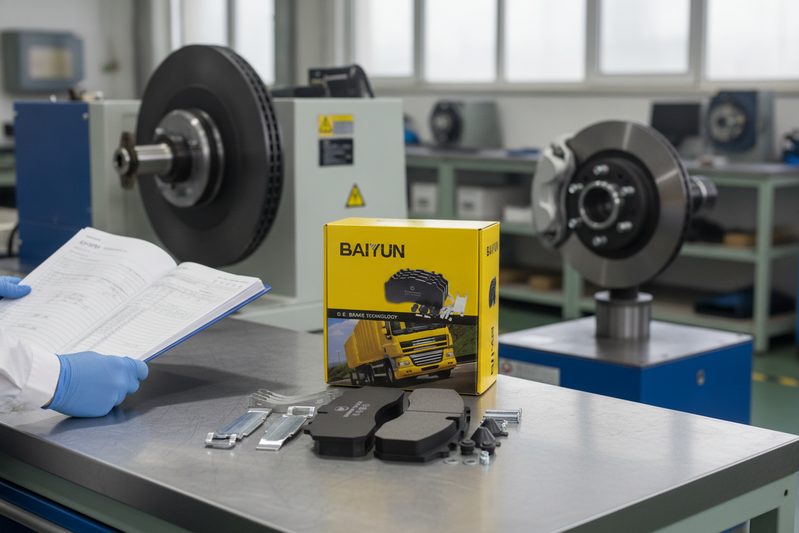
These criteria are not aspirational; they are the baseline we meet at BAIYUN Brake. When a potential client asks whether our pads can handle the temperature spikes of a fully loaded bus descending a 7% grade, we don't give a verbal assurance. We send the dyno graphs. That's the level of verification that builds sourcing confidence.
Frequently Asked Questions
Q: What is the typical MOQ for commercial vehicle brake pads from China?
A: Standard MOQ is 200–500 sets per part number. However, many factories – including BAIYUN Brake – accept trial orders as low as 50 sets so you can validate fitment and friction class before committing to a container load.
Q: How do I verify an ECE R90 certificate is genuine?
A: Contact the approval authority of the issuing country (for example, Germany's KBA, UK's VCA) with the ECE R90 approval number. You can also ask the supplier to provide the test report from the accredited laboratory that performed the testing. The lab report's reference number must match the approval document.
Q: Can I get custom private label packaging for commercial vehicle brake parts?
A: Yes, most OEM suppliers offer private label services. However, if your target market requires ECE R90, the approval must be extended to your brand name. This involves submitting a conformity of production declaration and, in some cases, additional testing. The process normally takes 6–8 weeks. Verify that your supplier has experience managing these extensions.
Q: What lead time should I expect for bulk orders of truck brake linings?
A: 25–35 days is standard for production, plus ocean transit time (20–35 days depending on destination). Always build in 10–14 days of buffer for customs clearance and potential port delays. Plan your purchases 70–80 days ahead of needed delivery to avoid air‑freight emergency costs.
Q: Are OEM-quality brake pads worth the extra cost over generic aftermarket pads?
A: In commercial vehicle fleets, brake pad quality directly affects vehicle downtime and safety. OEM‑level pads with consistent friction materials (µ stable within 0.04 across temperature cycles) typically deliver 20–30% longer service life and prevent hot judder that accelerates disc wear. The higher upfront price is often recovered within the first set of disc rotors saved.
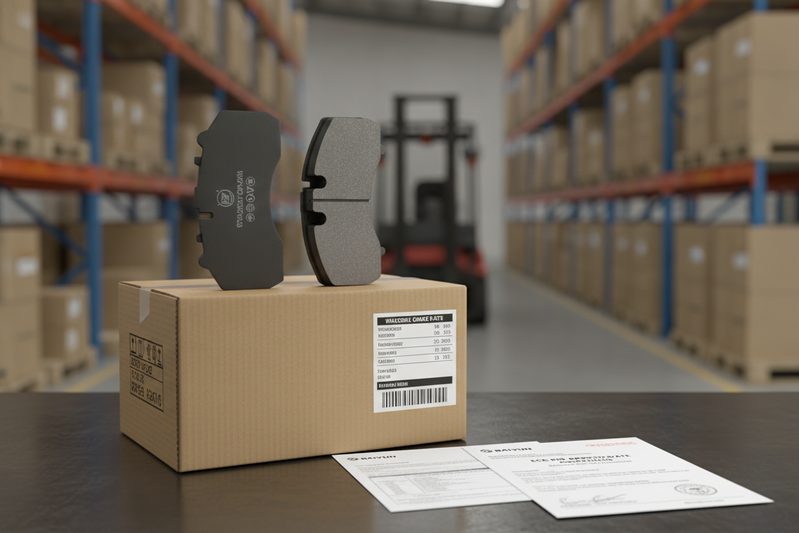
Build Your Sourcing Confidence – Start with a Verification Conversation
Buying commercial vehicle brake parts from a Chinese OEM supplier doesn't have to be a gamble. When you verify certifications, test data, production capacity, and logistics transparency up front, you're not just checking boxes – you're building a supply chain that keeps trucks on the road and your customers safe. At BAIYUN Brake, we've spent 49 years earning that trust with distributors and fleet operators across 20 countries. But don't take our word for it. Contact our export team with your target part numbers, and we'll reply with all the verification documents you need to move forward confidently – no guessing, no excuses.
This article was produced by the BAIYUN Brake editorial team, combining 49+ years of brake manufacturing expertise with current industry research. For product inquiries or technical questions, contact our team.
Was this article helpful?
Average Rating: 5/5 (682)