
Bus Brake Pad Supplier China: Fleet and Distributor Guide
Summary:
Finding a reliable bus brake pad supplier China fleets and distributors can trust requires more than a price list. This guide shows you exactly how to verify IATF 16949 and ECE R90 certifications, demand genuine dynamometer data, and negotiate MOQ and logistics to cut your cost per kilometer by up to 40%. With real examples from BAIYUN Brake’s commercial vehicle production line, you’ll learn the buyer verification steps that separate a certified factory from a trading company, and how to secure a supply chain that keeps your buses running with consistent stopping power batch after batch.
Bus Brake Pad Supplier China: Fleet and Distributor Guide
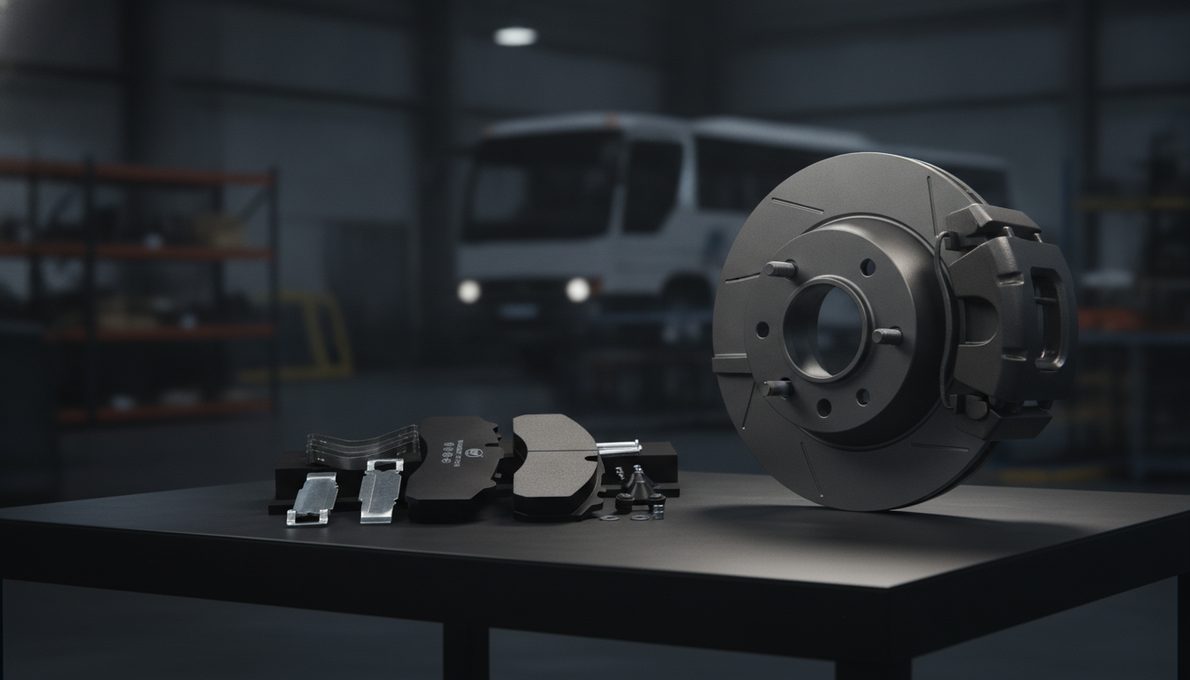
Quick answer: Finding the right bus brake pad supplier in China directly cuts your cost per axle by 30–45% compared to European brands, but only if you verify IATF 16949 and ECE R90 certifications upfront. A factory audit or third-party inspection that confirms friction consistency, thermal resistance to 650°C, and low wear rates saves you from warranty nightmares. BAIYUN Brake, for instance, ships over 3 million commercial vehicle sets annually with full batch traceability. This guide walks you through exactly what questions to ask, which documents to demand, and how to spot a supplier who actually understands fleet duty cycles—not just a middleman with a website.
Why Direct Sourcing from a Chinese Bus Brake Pad Factory Makes Sense
The math is simple. A European-branded bus pad set that retails at €85–110 often comes from a factory in Shandong or Hubei with the same pressing line, same friction material, and same chamfer geometry. The markup isn't for performance—it's for warehouse stock, regional branding, and multi-tier distribution. We've seen fleets save over €15,000 annually on a 50-bus operation just by switching to direct OEM-grade supply.
But it's not just about price. Lead times from a Chinese factory that holds raw material stock can be 14–22 days for standard references, versus 45–60 days from some EU distributors who order as-needed. When you're maintaining a city bus fleet with 12-hour pull-out schedules, that responsiveness matters. A decent supplier will keep semi-finished blanks for your top-three part numbers, so you're never grounded.
What holds buyers back is trust. Fair enough. I've seen distributors burned by false certification claims and inconsistent friction coefficients. That's why the rest of this guide doesn't just tell you to check boxes—it shows you how to test those claims with real data, the way a procurement engineer would.
What Certifications Prove a Supplier Is Legitimate?
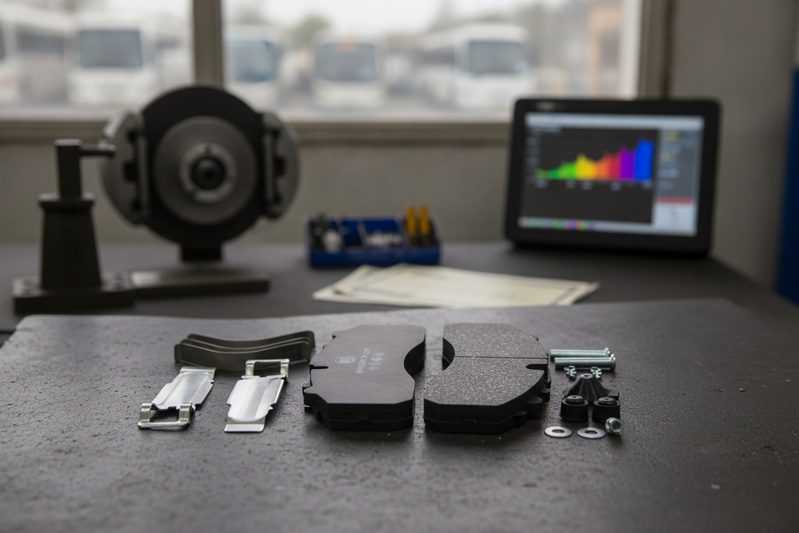
IATF 16949 is the gold standard for automotive series production. If a factory claims it, ask for the certificate number and verify it on the IATF database. Don't settle for an expired ISO/TS 16949—the transition deadline has passed. A current IATF 16949 certificate means the plant's quality management system covers everything from incoming raw material inspection to final hardness testing.
ECE R90 is your homologation passport for Europe. It's not just a paper; it requires dynamometer testing under regulation Annex 3 that proves the pad maintains at least 80% of its cold effectiveness after hot performance tests up to 650°C disc temperature. For a bus brake pad supplier in China, holding ECE R90 on multiple references signals that they've invested in a dedicated dyno lab—not a one-off outsourced test.
Some fleets also ask for GB5763-2018 data (the Chinese national standard). That's a useful baseline, but honestly, if a supplier can't show you ECE R90 test reports alongside GB5763, their thermal fade behavior might be hiding under the low-speed test protocol. Ask for the actual dynamometer chart, not just the pass certificate. A trustworthy supplier won't hesitate.
Certification alone doesn't guarantee batch consistency. You need to combine paperwork with the physical steps in the next section.
How to Verify Manufacturing Quality Before Placing an Order
Start with a sample order of 50–100 sets, but don't just install them and hope. Send a sample to an independent lab like Link Engineering or IDIADA for a comparative dynamometer test against your current OE pad. Test according to SAE J2522 or ECE R90 protocol—whichever your region requires. Focus on three parameters: cold friction (mu at 100°C), hot friction (mu after 500°C recovery), and wear rate (grams lost per stop). If the hot friction drops below 0.25, walk away.
While the lab does its job, tour the factory via video call—live, not pre-recorded. Ask to see the mixing station. A bus pad containing 12–18 components needs a fully automatic weight dosing system with ±0.5% accuracy; if they're manually scooping barium sulfate into a bucket, you'll get friction variation from batch to batch. Look at the hot press tonnage capacity. Bus pads require 400–800 tons of specific pressure to achieve correct density. Under-cured pads will glaze and fade within 5,000 km.
Request shear strength test data. For commercial vehicle disc pads, the bond between friction material and backing plate must withstand at least 2.5 MPa at ambient and 1.8 MPa at 300°C. A supplier who can't provide that data is guessing.
Cost Breakdown: What Affects Wholesale Bus Brake Pad Pricing?
Don't fixate on a per-set price. The smart buyer looks at cost per kilometer. A €25 set that wears out in 35,000 km costs you 0.071 cents per km. A €38 set that lasts 65,000 km costs 0.058 cents per km. This is where material formulation matters more than the invoice number.
Pricing drivers for a China brake factory include:
- Friction material choice: ceramic-metallic hybrid formulations with high graphite content cost more but reduce disc wear and noise. Semi-metallic with steel fiber is cheaper but aggressive on rotors.
- Backing plate finish: electrophoretic coating (E-coat) adds about 8–12% to the base cost but eliminates corrosion flaking that can jam caliper slides.
- Mechanical attachments: weight-optimized shims, piston clips, and wear indicator wires all add cost. Be specific in your RFQ: "with integrated spring clip, without wear sensor" so quotes are comparable.
- Packaging: bulk-packed in master cartons saves 6–8% over individual box with color sleeve. If you're a fleet running your own service bays, bulk is fine. For distributors, the box is part of the value you're reselling.
A request for OEM commercial vehicle brake pad quote should include your annual volume and preferred incoterms. Ex-works pricing from a Chinese factory is typically 25–35% lower than FOB, but you handle the freight. For first-time buyers, FOB Qingdao or Shanghai is safer.
MOQ, Lead Times, and Logistics for Fleet and Distributor Orders
Minimum order quantities vary. A bus brake pad supplier in China running a dedicated commercial vehicle line often sets MOQ at 200–500 sets per reference. For mixed container orders (20–30 different part numbers), you can usually negotiate down to 50 sets per SKU if you hit a total container volume of 10–12 pallets. That's perfect for a distributor building initial inventory.
Lead time from confirmed proforma invoice to shipment is typically 18–25 working days for standard formulations. If you need a custom-compound pad (e.g., low-metallic for Scandinavian winter conditions), add 10–15 days for formula adjustment and first-article approval. Always ask if the factory maintains a "flexi-blank" program: semi-finished pads that can be finished-machined to final specification in 5–7 days. That reduces rush-order stress dramatically.
For logistics, a 40-ft HC container holds about 1,800–2,200 bus pad sets depending on packaging. Ocean freight from China to Rotterdam takes 28–32 days; to Los Angeles around 16–20 days. Factor in 2–3 days for customs clearance once the vessel docks. Air freight is absurdly expensive for brake pads unless you're covering a supply gap—stick to sea freight and keep 45 days of safety stock.
Private Label and OEM Options: Building Your Own Brand
If you're a distributor, the real margin isn't in reselling a factory's generic box. It's in your own brand with custom packaging and laser-engraved part numbers. Most Chinese brake factories offer private label programs with MOQs starting at 1,000–2,000 sets per design. You'll need to provide print-ready artwork for the box sleeve, and they'll usually absorb the plate-making cost if you commit to annual volumes above 5,000 sets.
For OEM supply, the factory takes your drawing or sample pad, reverse-engineers it, produces 50 test sets, and ships them against a development agreement. Expect tooling costs of $800–$2,500 per reference for the press mold and clamping fixture. That's amortized over the first order—so if you're planning a 10,000-set annual program, tooling is negligible per unit. Browse our heavy-duty brake pad range to see what's already in production; you might find your exact reference without any tooling investment.
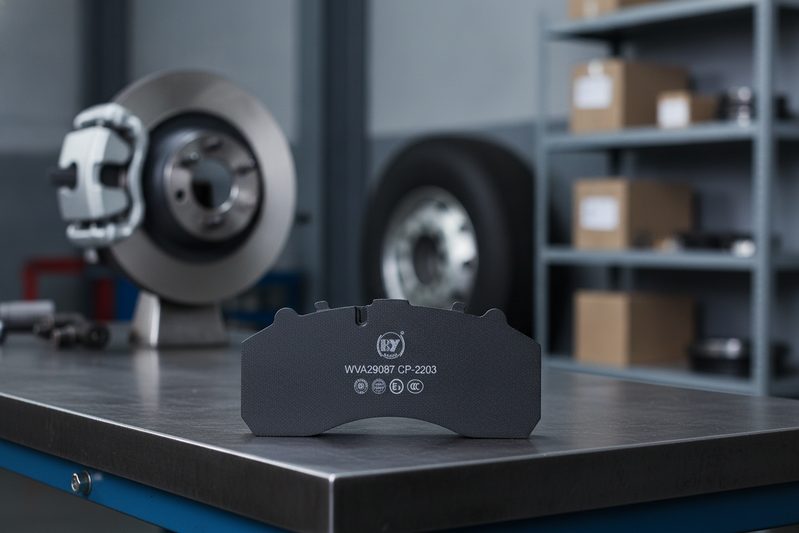
The real value of an OEM relationship with a trusted brake pad supplier is traceability. Every BAIYUN pad carries a date code and batch number linked to raw material lot records. If there's ever a field claim, you can trace back to the specific mixer batch and press cycle. That's the difference between a supplier who does automotive-quality work and one who just makes black rectangles.
Buyer Verification Checklist for Bus Brake Pad Sourcing
Before you wire a deposit, run through this list. If a supplier hesitates on any of these points, that hesitation is data.
| Verification Step | What to Ask | Red Flag |
|---|---|---|
| 1. Certification Authenticity | IATF 16949 certificate number and ECE R90 approval numbers | Expired certificate, refusal to share number, "self-declared" compliance |
| 2. Factory Audit | Live video tour of mixing, pressing, curing, and testing stations | Pre-recorded video, unwilling to show mixing room, no dynamometer on site |
| 3. Friction Data | Dynamometer report per ECE R90 Annex 3 or SAE J2522 showing hot and cold mu | Only GB5763 report, mu graph with flat-line recovery phase, missing temperature axis |
| 4. Batch Traceability | Sample of batch code structure and raw material lot traceability report | No date code on pad, generic lot number that doesn't link to mixing record |
| 5. Shear Strength | Test report showing bond strength at ambient and 300°C | No shear test data at elevated temperature, inconsistent units |
| 6. Packaging & Shipment Samples | Request photos of actual shipment-ready pallets from last export | No photos, blurry images, reluctance to share previous consignee (with permission) |
| 7. Reference Contacts | Ask to speak with two existing fleet or distributor customers | None available, only domestic references, generic email addresses |
Trust is built on verified data, not on sales promises.
Frequently Asked Questions for Bus Brake Pad Buyers
What is the typical minimum order quantity for bus brake pads from a Chinese factory?
For standard bus references, MOQ is often 300–500 sets per part number. However, for a mixed container shipment with 25+ different part numbers, many factories accept 50 sets per SKU as long as the total container volume reaches 10–12 pallets. Start with a sample order of 50–100 sets of your highest-volume pad to validate quality before committing to a full container.
How do I confirm that a China brake pad supplier’s ECE R90 certification is valid?
Request the approval number (e.g., E1 90R-03 3456) and verify it on the UNECE database or directly with the issuing technical service. A genuine certificate will show the specific pad reference and the authorized representative’s contact. If the supplier only sends a scanned certificate without a verifiable number, it’s likely a re-used document or outright fake.
What friction material composition works best for city bus stop-start duty cycles?
For urban buses making 200+ stops per day, a semi-metallic formulation with 8–12% graphite content and a stable friction coefficient between 0.35 and 0.42 across 150–450°C is ideal. This composition resists fade during repeated braking, keeps disc temperatures below 400°C in normal operation, and limits pad wear to around 0.25–0.35 mm per 1,000 km. Confirm with your supplier’s dynamometer wear rate report.
Can I get a custom brake pad compound for my specific route profile (hilly, high-load)?
Yes. Factories with in-house R&D, like BAIYUN Brake, can adjust the friction material formulation to increase high-temperature stability (mu above 0.38 at 550°C) or reduce sensitivity to mountain descent heat buildup. Expect a 4–6 week development cycle that includes formulation, small-batch press trials, in-house dynamometer validation, and third-party test at an independent lab before bulk production.
What is the lead time for a 20-ft container of bus brake pads from China to Europe?
From confirmed order, production takes 18–25 working days. Sea freight from Qingdao or Shanghai to major European ports (Rotterdam, Hamburg, Felixstowe) adds 28–32 days transit, plus 2–4 days for customs clearance and final delivery. So budget about 8–10 weeks from order to warehouse receipt. Always build in a buffer for Chinese national holidays (especially Chinese New Year) when factories shut down for 2–3 weeks.
Sourcing Confidence Comes from the Right Questions
You don’t need to be a tribologist to buy good brake pads. You need a checklist, some independent test data, and a supplier who answers your questions with reports instead of excuses. The best bus brake pad supplier in China for your fleet is the one that treats your repeated heavy-duty braking as an engineering problem, not just a transaction.
If you’re ready to move from sampling to supply, request a wholesale quote today—include your top three part numbers, annual volume, and destination port. Our team will return a detailed proposal with friction data, lead time, and shipping cost within two working days. Or download our product catalogue to browse over 1,500 commercial vehicle brake pad references already in production.
Was this article helpful?
Average Rating: 5/5 (674)