
Commercial brake pads OEM ODM supplier: Importer and Distributor Buying Guide
Summary:
Commercial brake pads OEM ODM supplier selection is a make-or-break decision for importers and distributors in the commercial vehicle aftermarket. This buying guide covers practical supplier verification, certification checks (IATF 16949, ECE R90), wholesale pricing structures, and MOQ/lead time realities. Learn how to compare OEM vs ODM programs, audit a factory, and avoid sourcing mistakes that cost thousands per container. BAIYUN Brake offers 49+ years of friction material manufacturing experience and supports truck, bus, and trailer brake pad programs with export-ready packaging and batch-level testing. Use the included buyer checklist to qualify suppliers before signing a contract. For importers targeting EU, Middle East, or African fleets, this guide explains how ECE R90 approvals, factory audit findings, and tooling ownership clauses affect your landed cost and warranty exposure.
Commercial brake pads OEM ODM supplier: Importer and Distributor Buying Guide
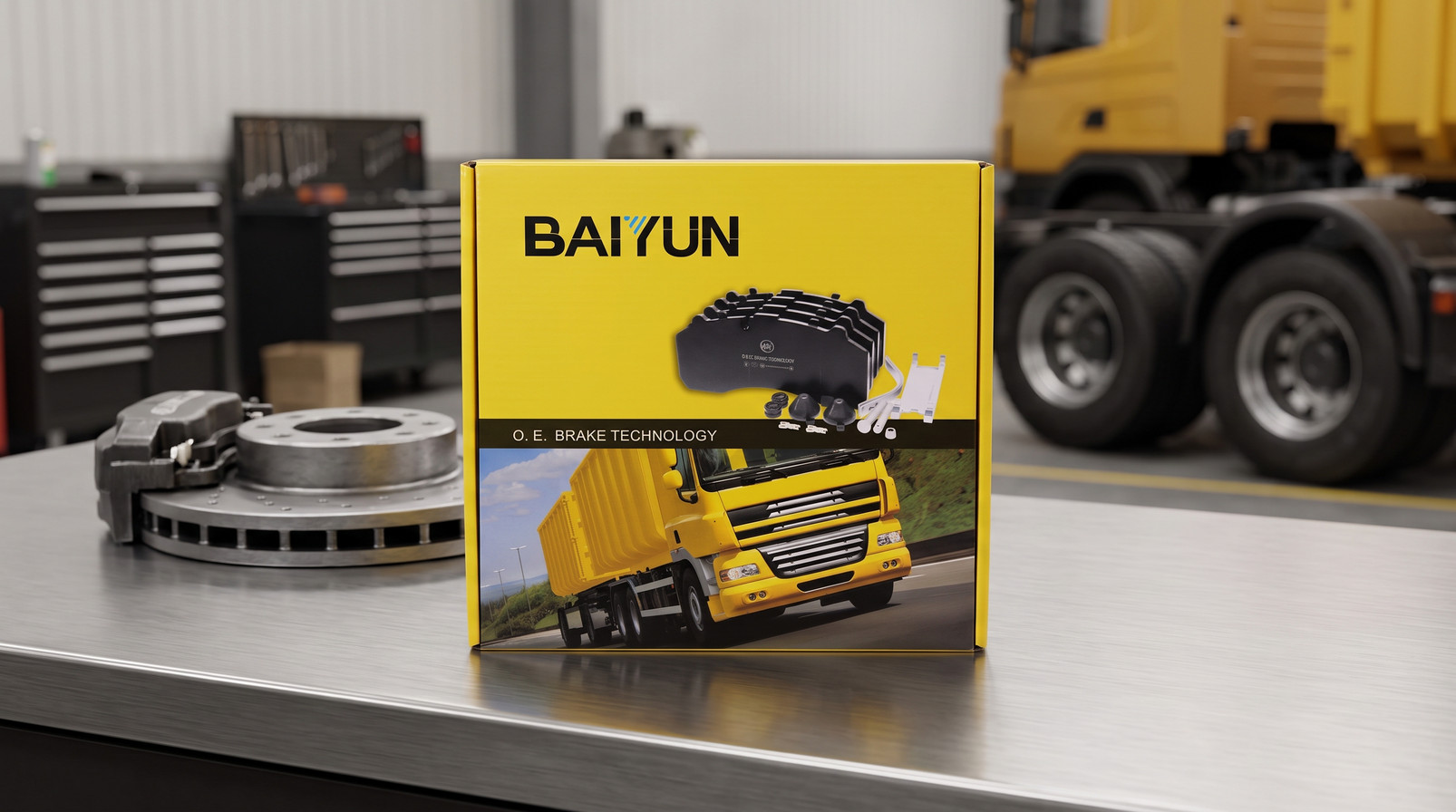
Quick answer: A commercial brake pads OEM ODM supplier produces brake pads under your brand, to your specifications, or from your designs. For importers and distributors, the right partner should hold IATF 16949 and ECE R90 certifications, offer factory audit transparency, and support MOQs that match your cash flow. BAIYUN Brake, with 49+ years in friction materials, supplies truck, bus, and trailer brake pads through OEM and ODM programs. This guide covers supplier verification, certification checks, wholesale pricing structure, and a buyer checklist to help you avoid costly sourcing mistakes.
The real cost of picking the wrong commercial brake pad supplier
A distributor importing 1,000 truck brake pad sets each quarter can lose $18,000 in a single batch if friction coefficients drift outside ECE R90 tolerances. That number doesn't include return freight, customs re-clearance, or a fleet customer switching vendors after two brake-related roadside failures. Commercial vehicle aftermarket buyers don't get second chances. Truck and bus operators measure brake pad quality in uptime, not just price.
That's why supplier verification beats price shopping every time. A factory that invests in dynamometer testing, raw material traceability, and batch-level friction coefficient checks will rarely surprise you. Look for pads that consistently hit 0.34–0.42 μ across working temperatures, as verified by independent test reports. Ask for the actual test sheets, not marketing summaries.
OEM or ODM? How to decide what your import business needs
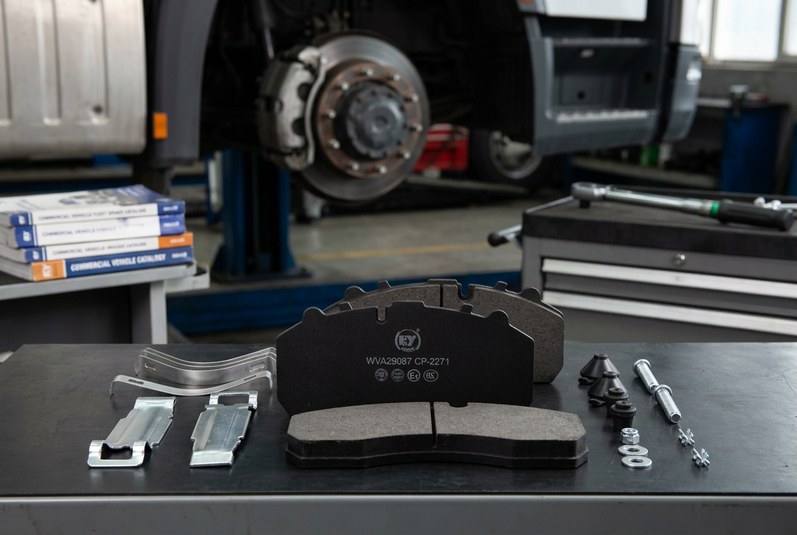
Picture this: you've built a regional brand for bus fleets in South America. Your customers trust your name, but you don't have a friction lab or a brake pad production line. That's an ODM scenario. The supplier develops the pad formulation, runs the testing, and packages the product with your logo. You bring the distribution network and fleet relationships.
OEM works differently. You supply the technical drawings, material specs, or a sample to reverse-engineer. The factory manufactures to your exact parameters. For importers who already hold their own ECE R90 approvals, OEM protects your intellectual property and locks in performance you've already validated with your own dyno data.
Most distributors start with ODM, then migrate to OEM once monthly volume exceeds 2,000–3,000 axle sets. That threshold gives you enough buying power to justify mold fees and minimum production runs. Ask any commercial vehicle brake pads supplier about hybrid programs: some factories will run your box design on existing validated formulations, cutting your tooling cost by 40–60%.
Which certifications should you actually verify?
Don't accept a PDF certificate at face value. Ask for the certification number, issuing body, and expiry date. IATF 16949 proves the factory runs a quality management system specific to automotive production. ECE R90 means the exact brake pad formulation passed European regulatory testing for replacement pads. That's the one your EU and Middle East fleet customers will demand.
Use the certificate number to check the issuing body's public database. A surprising number of suppliers display expired or mismatched certificates. If the factory won't share the certificate number, walk away. You can also request a copy of the latest surveillance audit summary. Any IATF 16949 facility gets audited annually, and the audit report will show non-conformities and corrective actions. Zero non-conformities over five years is rare — a few minor findings every year actually signals an honest quality system.
BAIYUN Brake maintains both IATF 16949 and ECE R90 certifications across its commercial vehicle pad range. Our quality assurance process includes batch-level friction coefficient testing and shear strength checks on every production run. That's the kind of data you want before committing to a 20-foot container.
Factory audits and supplier verification: what to inspect
A $1,200 audit flight saves you a $60,000 container dispute. When you walk a brake pad factory, look at the raw material storage first. Are steel fibers, resins, and friction modifiers segregated and labeled with lot numbers? If the warehouse is messy, the production line will be messier.
Check the mixing room. Consistent brake pad performance starts with homogeneous mixing. Ask the plant manager how they monitor mix uniformity. A factory using automatic batch mixing systems with recipe control will produce fewer hot spots than one relying on manual scoop-and-dump methods. Then watch the hot press. Record cycle time, temperature, and pressure. If the operator can't tell you the target pressure in tons, that's a red flag.
You can view our factory photos or watch our production process before scheduling an in-person visit. BAIYUN Brake has been manufacturing friction materials for over 49 years, and our production floor reflects that. We'll also arrange third-party inspections through SGS or Bureau Veritas if you prefer independent verification.
MOQ, lead times, and landed cost: the numbers behind your quote
Typical MOQs for commercial brake pad OEM/ODM programs start at 500–1,000 axle sets per SKU, depending on pad size and backing plate tooling. If a supplier quotes you 100 sets with custom packaging, expect the unit price to be 25–35% higher — the factory loses money on setup. For standard catalogue parts without private labeling, many Chinese manufacturers accept mixed-container orders from 300 sets.
Lead times break down like this: sample development takes 25–40 days if you're starting from scratch, production runs take 20–30 days after sample approval, and container shipping from Shanghai to Rotterdam adds 28–35 days. Air freight cuts transit to 5–7 days but costs 4–6 times sea freight per kilogram. Plan your reorder point at 1.5 times your monthly sales volume to avoid stockouts.
When you download our product catalogue, you'll see standard commercial pad part numbers with dimensions and friction ratings. That speeds up quoting. For brake linings, we also run OEM programs for riveted and bonded truck applications — request a quote for commercial vehicle brake linings after you've reviewed the catalogue.
Buyer checklist for commercial brake pad sourcing
Print this checklist or save it on your phone before you contact any supplier. It covers the five areas where sourcing deals fall apart.
- Certification verification: Request IATF 16949 and ECE R90 certificate numbers, then check them online. Confirm the certificate covers the specific brake pad formulations you're buying, not just the factory.
- Sample testing: Order 4–6 sets per SKU, send two sets to an independent lab (Link Testing, TUV, or similar) for friction coefficient, shear strength, and wear rate. Keep two sets as reference for future batch comparisons.
- Factory audit: Book an on-site visit or hire a third-party auditor. Inspect raw material storage, mixing control, hot press parameters, and the quality lab's dynamometer test logs.
- Tooling and IP ownership: Clarify who owns the backing plate molds and friction material formulation. Write it into the contract. If you've paid for tooling, get a physical tooling custody receipt.
- Packing and labeling: Specify box artwork, barcode format, and pallet configuration. A supplier that ships loose pads in generic boxes will destroy your retail presentation.
- Payment terms: Stick to T/T with 30% deposit, 70% before shipment for first orders. After three successful orders, negotiate 60- or 90-day L/C terms.
What's the difference between OEM, ODM, and standard catalogue supply?
| Factor | OEM | ODM | Standard Catalogue |
|---|---|---|---|
| Product design | Buyer provides drawings/specs | Supplier designs, buyer brands | Supplier's existing part numbers |
| Tooling cost | Buyer pays full mold fee | Shared or reduced, sometimes amortized | None, tooling already exists |
| MOQ per SKU | 1,000–3,000 axle sets | 500–1,500 axle sets | 100–300 sets mixed |
| Lead time (first order) | 45–60 days plus sampling | 35–50 days | 15–25 days |
| Unit price (index) | 1.0x (base) | 0.9x–1.1x | 0.7x–0.9x |
| Certification ownership | Buyer or supplier, negotiable | Supplier, can transfer | Supplier |
Don't assume ODM is cheaper than OEM. If a supplier already runs a validated ODM formulation that matches your market's requirements, you'll skip the development cost and still get your brand on the box. That's where most importers find the best return on investment.
Common sourcing mistakes that cost importers money
Mistake one: selecting a supplier based only on the lowest FOB quote. You'll pay for that 5% saving later in inconsistent friction coefficients and higher wear. A reputable supplier's price includes batch testing, proper packaging, and after-sales support. That's worth 8–12% more on the invoice.
Mistake two: skipping the sample-to-production bridge. Some factories send hand-picked samples that pass every test, then ship mass production with lower-grade raw materials. Always request a pre-production sample from the actual production line, and include a clause that allows random third-party testing of each container.
Mistake three: ignoring lead time variability. Chinese manufacturers shut down for Chinese New Year (typically 2–3 weeks in February) and sometimes for national holidays in October. If your reorder lands during a shutdown, you'll wait an extra 15–20 days. Build that into your inventory calendar.
Frequently asked questions from importers and distributors
Q: What does an ODM brake pad supplier actually deliver?
A: An ODM supplier provides a complete, tested brake pad design that you brand as your own. You get the formulation, backing plate, shim, and packaging artwork with your logo. The supplier retains the technical know-how, but you save 30–50% on development time versus starting from scratch.
Q: How do I verify ECE R90 approval for commercial brake pads?
A: Ask for the ECE R90 approval number and check it against the issuing authority's database. The approval applies to a specific pad formulation, not the factory as a whole. If you're importing into the EU, each SKU you sell must have its own approval number or fall under a group approval. Confirm with your supplier's catalogue before ordering.
Q: What's a reasonable MOQ for a first OEM container order?
A: Most Chinese commercial brake pad factories quote 800–1,200 axle sets per SKU for OEM programs. If that's too high, start with ODM catalogue parts at 300–500 sets per SKU, then step up once you validate market demand. Ask your supplier about mixed-SKU containers to reduce inventory risk.
Q: Can I use my own friction material formulation with an OEM supplier?
A: Yes, but you'll need to share your full material data sheet and pass a development trial. The factory will test your formula on their mixers and hot presses, then run dynamometer tests. Expect 45–60 days and a one-time tooling fee of $3,000–$8,000 per backing plate design. If the formula fails, you eat the development cost, so make sure your spec is production-ready.
Q: What's the typical defect rate for commercial brake pads from a certified factory?
A: A well-run IATF 16949 facility should keep defect rates below 0.3% across a 12-month period. That means in a 10,000-set shipment, fewer than 30 sets would require replacement. If your incoming inspection finds higher rates, request the supplier's corrective action report and consider a third-party audit before placing another order.
Your next step: turn supplier verification into a purchase order
You've seen the checklist, the numbers, and the common pitfalls. Now it's time to put that information to work. Start by requesting production-ready samples from two or three suppliers, then compare their test data side by side. Don't settle for a supplier who can't show you batch-level friction coefficient reports.
If you're ready to source commercial brake pads from a factory that's been making them for 49+ years, request OEM commercial vehicle brake pad quote and include your target volumes and destination port. Our export team will respond within 24 hours with pricing, lead time, and packaging options. Or submit your inquiry to our sales team for a tailored wholesale program.
Was this article helpful?
Average Rating: 5/5 (72)