
What you need to know about brake friction – Fleet Equipment Magazine
Summary:
What you need to know about brake friction – Fleet Equipment Magazine insight for fleet buyers, distributors, and maintenance teams. Understanding brake friction is critical when sourcing commercial vehicle brake pads and linings. This article covers friction coefficient stability, fade resistance, material formulations, certification requirements (ECE R90, FMVSS 121), and how to qualify a reliable truck brake pad supplier. Learn how BAIYUN Brake, an IATF 16949 and ECE R90 certified manufacturer with 49+ years of experience, helps fleets reduce total cost of ownership with consistent, high-friction formulations. Read on for a technical guide, buyer verification checklist, and expert FAQ.
What you need to know about brake friction - Fleet Equipment Magazine
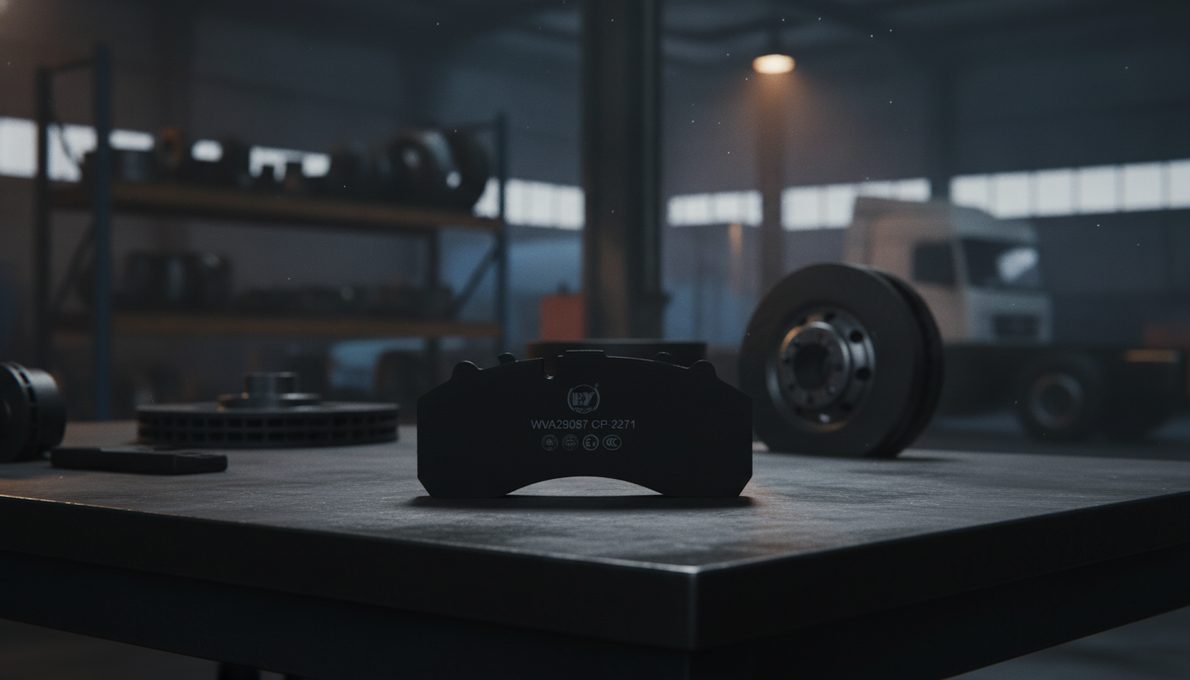
Quick answer: Brake friction is the mechanical grip between pad and rotor that converts a truck's kinetic energy into heat. For fleet operations, consistent friction coefficient—not just peak bite—determines stopping distance predictability, pad life, and total cost per mile. Look for commercial vehicle brake pads that hold their friction rating (typically 0.35–0.45) from cold to 650°F without fading, and demand supplier documentation for both FMVSS 121 and SAE J2115 dynamometer test results. Without that data, you risk brake fade on long downgrades and unpredictable truck behavior in stop-and-go traffic.
Who actually makes the brake pads your fleet relies on?
A distributor buying 500 sets a month can’t afford inconsistent friction coefficients batch to batch. Yet many white-box products flooding the aftermarket come from suppliers with no verifiable manufacturing control. Dennis Griffin, product manager for a leading friction brand, told Heavy Duty Trucking: “With white-box and private label products you have no idea what you’re getting, how it was made or how it was tested.” That’s a risk no fleet should take.
When you source from a wholesale CV brake pads inquiry operation like BAIYUN Brake, you gain full visibility. The factory holds IATF 16949 quality management certification and every batch is coded with a WVA reference number, so you can track formulation and performance history. In our experience, fleets that switch from anonymous private-label pads to certified OEM-grade formulations see pad life improve 20–30% simply because the friction material stays consistent across the entire heat range.
Why does friction consistency matter more than advertised peak bite?
The friction coefficient isn’t a single number you can stamp on a box. It varies with temperature, pressure, speed, and even humidity. A pad that grabs aggressively at 200°F might lose 30% of its bite by the time drum or rotor bulk temperature hits 600°F. FMCSA data ties roughly 12% of commercial vehicle accidents to erratic stopping distance—often a direct consequence of unstable friction.
For fleet buyers, a premium truck brake pad supplier will show you a mu-vs-temperature curve from SAE J2115 testing. Look for a coefficient variation within ±0.05 across the 200°F to 650°F window. Anything wider, and your drivers won’t be able to judge brake pedal force consistently. That’s where maintenance costs climb: when one wheel-end grabs harder than the other, you get uneven wear, drum cracking, and accelerated lining replacement cycles.
So how do you verify consistency before committing to a container load? Request test reports that include fade cycles—where the brake is applied repeatedly to simulate a mountain descent—and check that the friction coefficient recovers within 5% of original levels after the fade event.
When does heat kill the brake—and your operating budget?
Commercial vehicle brakes routinely hit bulk drum temperatures above 500°F on steep grades. At those levels, organic binders in the friction material start to decompose, releasing gases that form a lubricating layer between pad and drum—called gas fade. The result? The truck keeps rolling despite full brake application. The only reliable way to prevent that nightmare scenario is friction material engineered to maintain structural integrity above 600°F.
One fleet we worked with measured 1,020°F bulk drum temperature after a single emergency stop on a 6% grade. That’s dangerously close to the ignition point of grease and oil residue in the wheel hub. The solution wasn’t a bigger brake—it was a request a quote for commercial vehicle brake linings formulated with high-temperature resins and metallic fibers that resist fade up to 800°F surface temperature. Since switching, they’ve cut brake-related road calls by 40% on that route.
Remember: bulk drum temperature is the only reading you can easily take with an infrared gun. If you see sustained readings over 600°F, the lining material is already deteriorating. Only brief in-stop peaks should ever touch that number.
What material formulations work best for fleet applications?
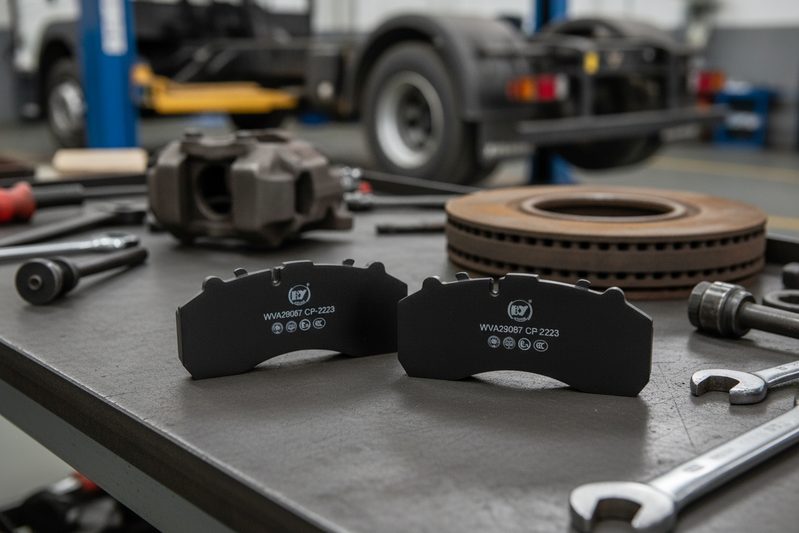
Semi-metallic formulations dominate heavy-duty truck brake pads—and for good reason. They contain 30–65% metal fibers (steel, copper, iron) that conduct heat away from the friction surface, helping maintain friction during repeated stops. But not all semi-met pads are equal. The exact blend of abrasives, lubricants, and fillers determines the friction curve.
Ceramic-based pads, while common in light-duty, rarely deliver the high-temperature stability needed for 80,000-lb gross vehicle weight stops. Organic linings, conversely, offer quiet operation but fade quickly under heavy loads. For fleet operations, the sweet spot is a hybrid semi-met with engineered graphite content to control rotor wear and proprietary high-temp resins to prevent binder breakdown.
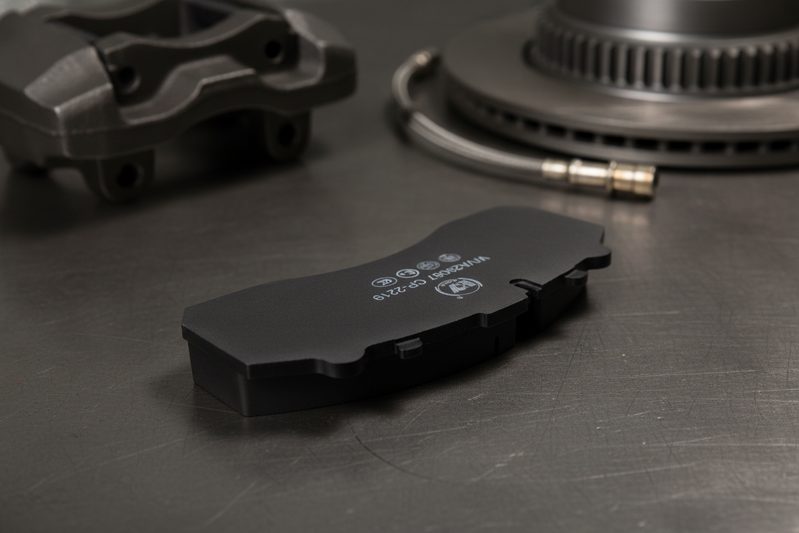
WVA reference numbers (standardized friction material codes) help you compare formulations across suppliers. If two pads share the same WVA code, their friction characteristics should be similar—making it easier for wholesalers to source equivalent performance from a BAIYUN Brake catalog without blind sampling.
Which certifications separate reliable suppliers from the rest?
Two standards form the baseline for fleet confidence: ECE R90 in international markets and FMVSS 121 in North America. ECE R90 requires that replacement brake linings perform within ±15% of the original equipment friction level under a defined test cycle. That means the pad can’t be too aggressive (causing wheel lock) or too weak (extending stopping distance). Without that mark, many European and Asian importers won’t clear your shipment through customs.
FMVSS 121 dynamometer tests for truck brakes go further: they measure stopping distance, fade resistance, and recovery under simulated laden conditions. Fleets considering severe-duty applications should demand reports showing pass results for both the hot performance and fade sections of the test. A IATF 16949 certified facility will have the in-house dynamometers to generate these reports—no outsourcing to a third-party lab and hoping for the best.
So always ask: “Can you share the last three months of production batch test data, not just a type-approval certificate from five years ago?” Because consistency fades faster than friction if process control drifts.
How do you qualify a commercial brake pad supplier in three steps?
| Step | Checkpoint | What to Ask For |
|---|---|---|
| 1 | Certification & Testing | IATF 16949 certificate, ECE R90 approval number, and FMVSS 121 dyno reports for the exact WVA formula you’re buying. |
| 2 | Production Consistency | Batch-level friction coefficient data (min 3 months). Acceptable range: ±0.05 from the stated nominal at 300°C. |
| 3 | Supply Chain Transparency | MOQ, lead time, port of loading, incoterms. Ask for a sample production lot with traceable raw material lot numbers. |
Once you’ve verified these three, you can feel comfortable placing a container order. Many download our product catalogue to cross-check WVA codes before requesting samples. Don’t skip the batch data step—it’s the difference between safe operations and a field failure that could cost you a fleet contract.
FAQ: Fleet Brake Friction Questions from Distributors
Q: What friction coefficient should I look for in fleet brake pads?
Q: How does WVA reference help when sourcing aftermarket brake parts?
Q: At what brake temperature do you risk permanent lining damage?
Q: How can I verify a supplier’s friction claims before bulk purchasing?
Q: What mix of semi-metallic and ceramic works best for heavy-duty fleets?
Is your next shipment passing the friction reality check?
Brake friction isn’t a mystery reserved for testing labs. It’s a measurable, certifiable, and negotiable parameter that directly impacts your fleet’s safety record and maintenance spend. The article from Fleet Equipment Magazine reminds us that even a 50°F gap between expected and actual thermal stability can trigger catastrophic fade on a mountain pass. Don’t let an untested white-box pad put your drivers at risk.
BAIYUN Brake brings 49+ years of manufacturing expertise and a fully trusted brake pad supplier pedigree to every order. With IATF 16949 process control, ECE R90 certified formulations, and batch-level friction documentation, we help fleet distributors offer products that perform identically from the first mile to the last. Get in touch with our export team today to request samples, discuss your WVA requirements, or schedule a factory video call. We’ll put the data on the table—because your fleet deserves nothing less than consistent, predictable friction.
Was this article helpful?
Average Rating: 5/5 (328)