
Commercial trailer brake shoe supplier: Importer and Distributor Buying Guide
Summary:
Finding a reliable commercial trailer brake shoe supplier means separating verified factories from low-price trading companies. Importers and distributors need ECE R90 certification, IATF 16949 process control, batch-level friction data, and a clear understanding of MOQ, lead time, and private label options for BPW trailer axle, SAF, and Fuwa applications. This buying guide covers factory audit steps, supplier verification checklists, hidden lining quality traps, and logistics cost calculations. You'll learn standard MOQ ranges between 300 and 600 sets, typical 25–40 day production lead times, and why stable friction coefficients matter more than the cheapest quote. BAIYUN Brake offers certified manufacturing with batch inspection reports, pre-shipment inspection, and export support. Use this guide before placing your next container order.
Commercial trailer brake shoe supplier: Importer and Distributor Buying Guide
Quick answer: The right commercial trailer brake shoe supplier gives you more than a low quote. You want ECE R90 certification, IATF 16949 manufacturing control, batch-level inspection data, and a factory that understands BPW trailer axle, SAF, and Fuwa fitment. Standard MOQs for container orders typically range from 300 to 600 sets, while lead times run 25–40 days after deposit. Verified suppliers should offer private label, pre-shipment inspection, and consistent drum brake lining friction coefficients around 0.35–0.42 µ. This guide walks through supplier qualification, factory audits, pricing checks, and hidden risk points before you place a PO.
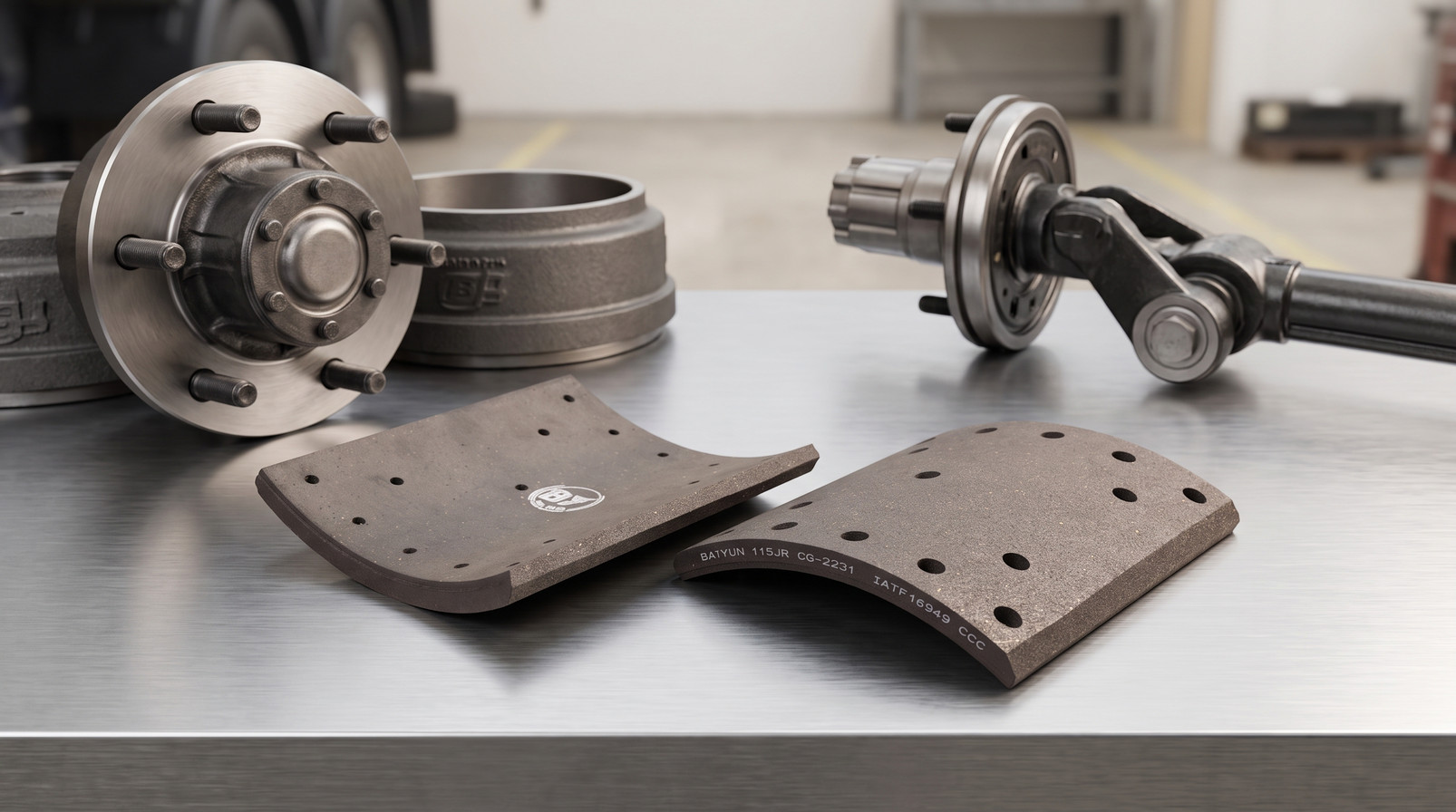
Why Supplier Qualification Usually Beats the Lowest Trailer Brake Shoe Price
A distributor sourcing 500 sets per month can't afford inconsistent friction coefficients from batch to batch. One underperforming lining will show up as longer stopping distances, early glazing, or heat checking on a BPW trailer axle drum. That's a warranty claim waiting to happen.
Price still matters. I get that. But the spread between a certified factory and an unvetted trading company often sits around 8–15% on landed cost. That margin can disappear quickly with one rejected container or one missing ECE R90 audit trail.
When you compare suppliers, ask for the actual friction formulation and its temperature window. For heavy-duty drum brake linings, a stable µ of 0.35–0.42 across 100–300°C is the practical range most trailer fleets expect. If a factory can't tell you their cold and hot friction numbers, that's a signal. You're not buying metal; you're buying predictable friction. For a wider view of available material grades, browse our brake lining product range.
What Certifications Should a Commercial Trailer Brake Shoe Supplier Hold?
ECE R90 is the non-negotiable for most European and UN regulation markets. It means the replacement brake shoe lining has passed on-road performance equivalence tests against the original part. Without it, customs clearance and fleet acceptance both get harder.
IATF 16949 matters for repeat buyers. It's not a piece of paper. It tells you the plant runs production part approval, material traceability, and process audits the way automotive OEMs require. Pair that with ISO 9001 for baseline quality systems and you have a supplier worth shortlisting.
Don't accept a certificate at face value. Ask for the audit scope and the production site address. Then cross-check. A supplier with one IATF certificate covering a different facility or only a trading office isn't what you need. BAIYUN Brake runs an IATF 16949 certified facility and can share batch-level reports before shipment.
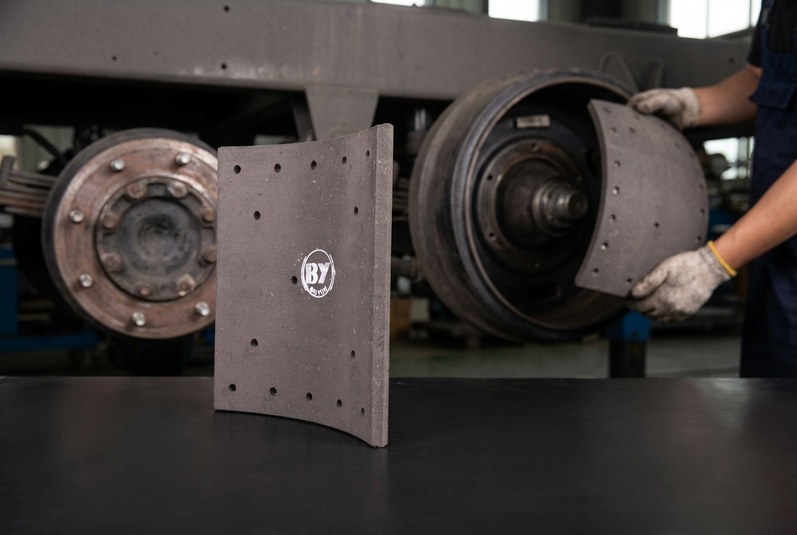
What Does a Factory Audit Actually Reveal for Trailer Brake Shoe Sourcing?
You don't need to visit every factory, but someone should. A one-day audit reveals more than twenty email threads. Look at mixing, curing, riveting, and grinding stations. If the factory skips paint marking, stamps, or edge finishing, the savings usually show up in your returns.
The table below is the short version of what I'd check before signing with any commercial trailer brake shoe supplier.
| Audit Area | What to Verify | Red Flag |
|---|---|---|
| Friction material | Batch mixing records, raw material suppliers, asbestos-free declaration | No batch traceability or pre-mixed powder from unknown source |
| Curing process | Temperature curves, dwell time, lot tracking | Short curing cycles to push volume |
| Bonding/riveting | Bond strength tests, rivet torque, visual inspection SOP | No documented pull-out or shear tests |
| Geometric checks | Radius, cam profile, anchor slot position, shoe table flatness | No CMM or go/no-go fixtures |
| Packaging | Moisture barrier, axle labels, WVA marking, carton strength | Loose shoes in bulk with no rust protection |
One more thing. Ask to see the pre-shipment inspection format. If the supplier won't define an AQL, you'll be negotiating quality claims after the container is on the water.
Here's a practical buyer verification checklist to keep on your desk:
- Confirm ECE R90 homologation number matches the exact brake shoe part number.
- Request the last three batch inspection reports, not one sample file.
- Check raw material certificates for friction powder and steel shoe table.
- Verify WVA and axle fitment against your order spec; confirm with supplier catalogue if any number is missing.
- Request photos or a live video of the curing ovens and grinding line.
- Confirm MOQ, tooling fees, and private label lead time in writing.
MOQ, Lead Time, and Logistics: What Importers Need to Calculate
Most commercial trailer brake shoe suppliers quote MOQs from 200 to 600 sets for standard BPW, SAF, or Fuwa axle patterns. Private label orders typically start higher, often 1,000 sets or more per axle family, because the stamping, box printing, and lining code setup cost has to amortize.
Lead time is the part buyers underestimate. A made-to-order drum brake lining run can take 25–40 days after deposit. Then add 3–7 days for pre-shipment inspection and 18–35 days of ocean freight depending on destination. If you're ordering before a peak season, add two weeks to be safe.
Freight cost per set moves a lot with carton density. Brake shoes are heavy. A 20-foot container might hold roughly 1,200–1,800 sets depending on shoe size and packaging. Get the gross weight per carton early so you don't surprise your landed cost model. For deeper technical fitting support, you can check the brake lining installation guide when preparing your workshop or customer-facing material.
OEM and Private Label Trailer Brake Shoe Programs
Distributors building a house brand need more than a logo on a box. The supplier must control the lining edge code, WVA number, axle family marking, and country-of-origin labels. If you're selling into the commercial vehicle aftermarket, those markings affect fleet purchasing decisions.
BAIYUN Brake has supplied drum brake linings and related commercial friction components to international distributors for decades. That experience means you can ask for axle-specific references, homogeneous batch colors, and stable pack weights without getting a blank stare.
If you also carry disc brake pads for mixed trailer and truck fleets, you might want to request OEM commercial vehicle brake pad quote from the same supplier to consolidate container volume. For shoe linings specifically, you can request a quote for commercial vehicle brake linings with your axle family and annual volume.
How to Spot Lining Quality Traps Before Your First Container Lands
Some low-cost trailer brake shoes look fine in photos and fail after 5,000 km. The usual culprits are reground friction material, short curing, poor rivet clinch tension, or a shoe table that's warped by 0.3 mm before it ever meets a drum. A few cheap lots will cost you a distribution contract.
I've seen importers focus so hard on unit price that they forget about total cost per axle set. If the lining glazes quickly or the shoe rusts in storage, your customer returns eat the margin. Ask the supplier to provide salt spray test data or at least packaging with VCI bags and solid carton liners.
WVA numbers can be messy in the trailer aftermarket. One axle platform can have multiple cam designs and shoe widths. If a WVA number isn't on your supplier's drawing, don't invent it. Confirm with supplier catalogue and get a signed drawing before deposit. You can also download our product catalogue to check the format and typical fitment examples for commercial components.
Frequently Asked Questions for Trailer Brake Shoe Importers
Q: What is the minimum order quantity for commercial trailer brake shoes from a Chinese supplier?
A: Standard MOQs usually run 300–600 sets per axle family for aftermarket stock. Private label programs often start at 1,000 sets or more because stamping and packaging artwork costs need recovery. Some suppliers will accept a 200-set trial order if the axle specification is standard.
Q: How do I verify a trailer brake shoe supplier's ECE R90 and IATF 16949 certifications?
A: Request the certificate number, production site address, and audit scope. Cross-check that the certificate covers the factory actually producing the brake shoes, not just a trading office. Ask for one batch inspection report linked to the same site.
Q: What's the typical lead time for container orders of trailer brake shoes?
A: Made-to-order drum brake linings usually take 25–40 days after deposit. Add 3–7 days for pre-shipment inspection and 18–35 days for ocean freight. During peak logistics periods, add at least two weeks to your planning.
Q: Can a supplier provide both branded and private label trailer brake shoes?
A: Yes, many certified suppliers offer mixed programs. Private label runs normally require higher MOQs, often 1,000 sets or more per axle family. You'll need to approve lining edge codes, WVA marking, box design, and country-of-origin labels.
Q: How do I compare wholesale pricing without sacrificing lining quality?
A: Ask for the friction coefficient window, curing process, and bond strength data along with the unit price. A stable µ of 0.35–0.42 across 100–300°C and documented rivet pull-out tests matter more than an 8–15% price difference. Request three consecutive batch reports before choosing.
Final Sourcing Checklist Before You Send the PO
Let's put this together in one pass. You need a commercial trailer brake shoe supplier who talks in axle families, batch numbers, and curing cycles, not just "we can make it." Get the following in writing:
- ECE R90 homologation reference and IATF 16949 certificate scope.
- Three batch inspection reports with friction coefficient and bond strength.
- MOQ, private label tooling cost, and stacking/packing plan.
- Partial shipment option for first trial container.
- After-sales replacement policy for defective rivets, lining separation, or rust.
- Contact name at the factory, not just a trading desk.
If a supplier hesitates on the trial order or the batch reports, keep looking. The best relationship starts with verified data, not good photos.
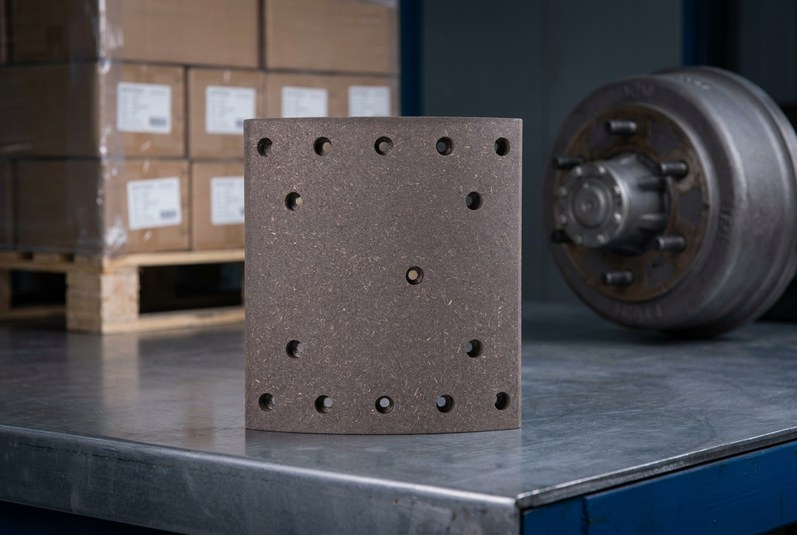
You don't need to overcomplicate the first step. Send your axle family, annual volume, and target market to a factory that already understands commercial trailer applications. BAIYUN Brake can support your container program with certified production, private label options, and pre-shipment data. When you're ready, request a quote for commercial vehicle brake linings or submit your inquiry to our sales team to talk MOQ and lead time.
Was this article helpful?
Average Rating: 5/5 (58)