
Disc brake pads for heavy commercial trucks: Practical Guide for Commercial Vehicle Buyers
Summary:
Disc brake pads for heavy commercial trucks demand more than a low unit price. Buyers need correct WVA/OE fitment, ECE R90 certification, and a semi-metallic friction formulation matched to axle duty cycles. This guide covers practical fitment verification, a specification table, hidden cost risks, and a replacement checklist for importers and distributors. BAIYUN Brake's IATF 16949 certified facility supports wholesale commercial vehicle brake pad sourcing with batch traceability and ECE R90 approvals. Use pilot testing and total cost of ownership analysis to protect rotors, reduce downtime, and build sourcing confidence in the commercial vehicle aftermarket.
Disc brake pads for heavy commercial trucks: Practical Guide for Commercial Vehicle Buyers
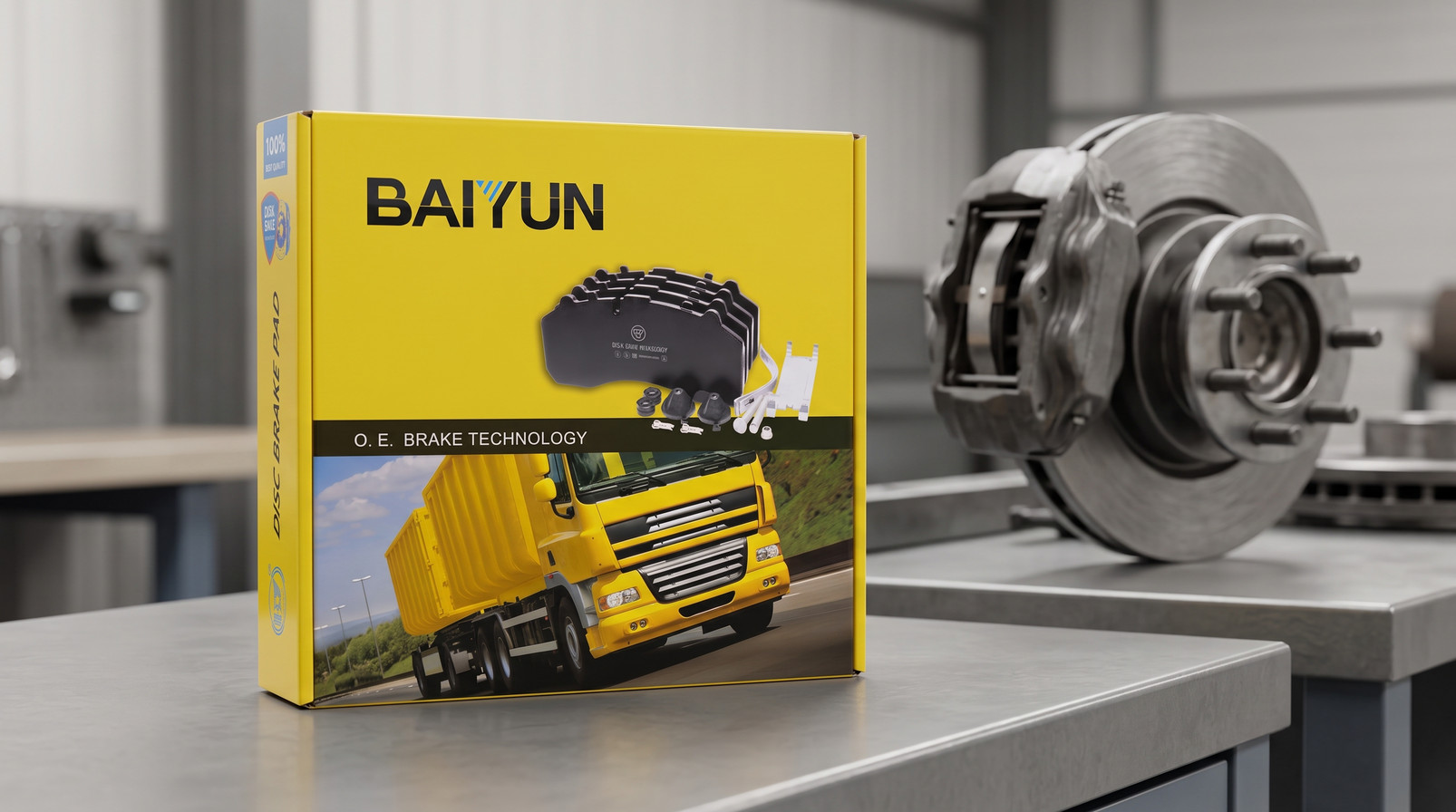
Quick answer: Heavy commercial truck disc brake pads need three things before you commit: correct WVA/OE fitment (confirm with supplier catalogue), ECE R90 certification for European fleets, and a semi-metallic friction formulation matched to your axle duty cycle. Most importers lose more money through wrong first-fit and inconsistent batch friction than through unit price differences. You'll protect rotors and extend pad life by verifying backing plate dimensions, wear indicators, and packaging batch traceability before buying.
What makes air disc brake pads different on heavy commercial trucks?
A fully loaded tractor-trailer can weigh 40 tonnes or more. One long downhill braking event puts massive heat into the wheel end. Air disc brake pads for this segment use a thicker friction block and a stiff steel backing plate built for a heavy caliper. Buyers who treat commercial truck brake pads as a low-cost commodity often see irregular wear and cracked friction material before the first service interval.
Most heavy-duty air disc systems run semi-metallic friction. That blend combines metallic fibers with high-temperature binders. The result is predictable friction and acceptable rotor life across the 100–350°C working range truck axles see in normal and severe duty. If your application includes long-haul tractors, concrete mixers, mining trucks, or refuse fleets, the pad formulation has to stay consistent from batch to batch. Air disc brakes now account for more than 70% of new heavy truck axles in Western Europe, which makes commercial truck disc brake pad sourcing a high-volume aftermarket category.
This is where sourcing discipline matters. Browse our heavy-duty brake pad range to see how raw material control and pressing consistency affect the finished pad. Don't choose by price alone. A pad that fades after 300°C will cost you rotors and roadside calls.
How do commercial vehicle buyers verify disc brake pad fitment without OE catalog access?
You receive a quote from a new supplier. The drawing looks close. But 'close' in a commercial axle can mean the difference between a two-hour fit and a truck off the road for three days waiting on parts. Fitment verification starts with the WVA number, the axle application listing, and the backing plate geometry. Never rely on a visual match from a photo.
Ask the supplier for the WVA reference and the commercial vehicle application range. Even within one axle brand, pad spring clip location, backing plate thickness, and wear indicator style change between model years. Without the correct reference, you'll end up with pads that don't sit flat in the caliper abutments.
If your fleet runs drum brakes on trailers or mixed axles, plan the order together. Request a quote for commercial vehicle brake linings at the same time. That reduces freight cost per pallet and gives you one supplier for both disc pads and linings.
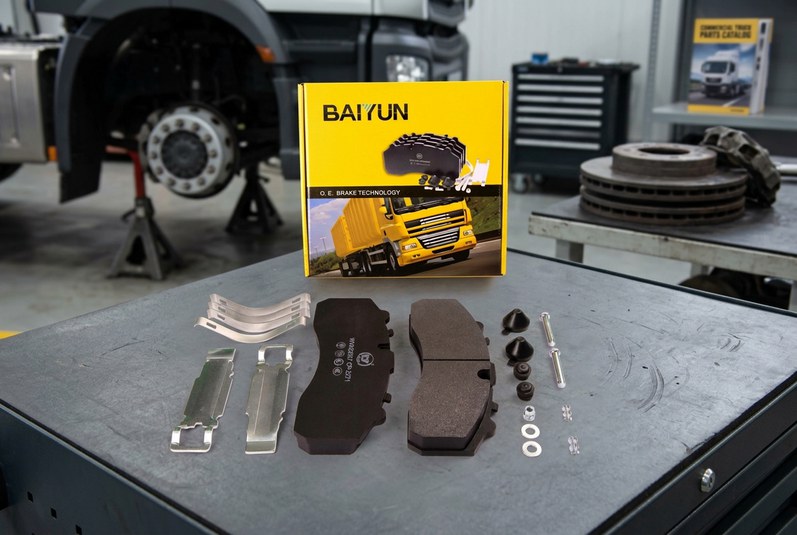
Commercial truck brake pad specification table
| Parameter | What to verify | Why it matters for buyers |
|---|---|---|
| WVA number / OE reference | Confirm with supplier catalogue | Prevents first-fit rejection and axle downtime |
| Friction material family | Semi-metallic formulation | Matches air-disc brake temperature and duty cycle |
| Backing plate thickness / coating | Minimum thickness and corrosion treatment | Affects caliper clearance and rust jacking in winter markets |
| Wear indicator style | Mechanical clip or electronic sensor | Fleet telematics and service intervals depend on this |
| ECE R90 approval number | Valid approval for EU/UNECE markets | Legal fitment in ECE R90 member countries |
WVA and OE numbers must come from the supplier catalogue. If a supplier cannot produce a clear cross-reference, walk away. The risk isn't a bad batch; it's the wrong part in the right box.
What hidden costs show up when the wrong heavy truck brake pad enters the fleet?
Procurement teams often compare only invoice price per set. That's a trap. A heavy commercial truck disc brake pad that wears 20% faster forces an extra service visit, adds labour, and increases vehicle downtime. Rotor replacement on a heavy axle can run three to five times the cost of the pad set. So a cheap pad that saves $10 per set can cost the fleet several hundred dollars in rotor life and lost availability.
Performance consistency matters even more. A distributor sourcing 500 sets monthly can't afford inconsistent friction coefficients batch to batch. Large fleets notice when pads from two pallets with the same part number stop differently. That's why certification and batch traceability are part of sourcing confidence, not paperwork.
BAIYUN Brake manufactures in an IATF 16949 certified facility and holds ECE R90 approvals for relevant commercial vehicle pad references. Total cost of ownership analysis should include pad life, rotor wear, labour, and vehicle downtime, not just unit price.
A practical replacement and procurement checklist for commercial truck brake pads
Use this checklist when comparing suppliers or approving a new brake pad for fleet trials. It's built for importers and distributors who need first-fit confidence and repeatable quality.
- Request the WVA number and axle application range. Confirm with supplier catalogue.
- Compare backing plate thickness, abutment geometry, and spring clip position with the old pad.
- Confirm friction material type: semi-metallic for most heavy-duty air disc systems.
- Ask for the ECE R90 approval number and a copy of the certificate if the fleet runs in Europe.
- Request a batch friction test report using SAE J2522 or GB5763 methodology.
- Check wear indicator type: mechanical clip or electronic sensor cable.
- Review packaging for batch code, production date, and private label options.
- Order a pilot batch and run it on three to five trucks for 15,000–20,000 km before fleet rollout.
This process takes a few days up front, but it prevents the kind of failure that erodes distributor reputation and kills repeat orders. For service-side fitment, use commercial vehicle brake service guidance.
Frequently asked questions for importers and distributors
Q: What certifications should I require when importing commercial truck disc brake pads?
A: Ask for ECE R90 approval for European and UNECE markets, plus IATF 16949 certification for factory quality management. A supplier without these may not meet legal fitment or batch traceability expectations. BAIYUN Brake's facility holds both.
Q: How do I confirm fitment for Meritor, BPW, SAF, Volvo, Scania, or Mercedes-Benz axles?
A: Request the supplier's WVA number and axle-specific application listing. You should never rely on visual similarity. Confirm with supplier catalogue if you lack OE numbers.
Q: What friction material works best for heavy-duty air disc brakes?
A: Semi-metallic formulations remain the standard choice for most heavy-duty air disc systems. They offer stable friction across a broad temperature range and acceptable rotor compatibility. Some severe-duty vocational applications may require a high-metal variant.
Q: What is a realistic replacement interval for heavy commercial truck brake pads?
A: It depends on route, load, and driver braking style. On-highway tractors often run 180,000–350,000 km between pad replacements, while city distribution and mining trucks can need replacement much sooner. Use pad wear indicators and rotor condition, not mileage alone.
Q: Can I reduce cost per kilometre without increasing downtime?
A: Test a pilot batch of certified pads on three to five trucks for 15,000–20,000 km before switching the whole fleet. Compare wear rate, rotor condition, and noise. A slightly higher unit price with longer pad life usually lowers total cost per kilometre.
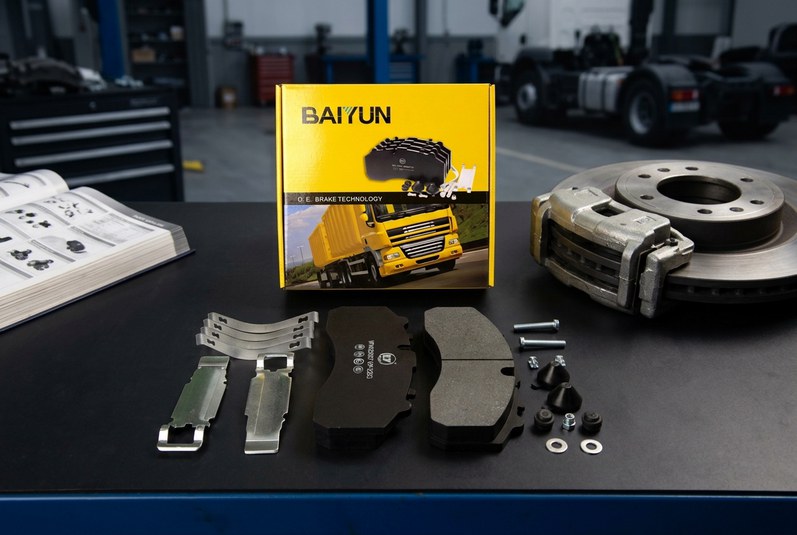
The practical route to lowering brake cost per kilometre isn't chasing the cheapest FOB quote. It's locking in certified pads that fit right the first time and behave the same in every box. Request OEM commercial vehicle brake pad quote from BAIYUN Brake. Include your axle make, WVA reference if you have it, and monthly volume. Our team will check the application and arrange a sample before you commit. Submit your inquiry to our sales team.
Was this article helpful?
Average Rating: 5/5 (59)