
Commercial Trailer Brake Lining Supplier China: Buyer Guide
Summary:
A commercial trailer brake lining supplier China must be verified through IATF 16949 and ECE R90 certifications before you commit to a container. China supplies over 35% of the world's aftermarket brake linings for commercial vehicles, and the difference between certified factories and price-driven traders shows up in field returns and downtime. This buyer guide for importers and trailer fleet distributors covers certification checks, ECE R90 dynamometer requirements, a seven-point supplier verification checklist, factory-vs-trader cost comparison, and common sourcing misconceptions. BAIYUN Brake, with 49+ years of friction material experience, offers OEM-grade commercial trailer brake linings with no minimum sample order, full batch traceability, and factory-direct pricing that typically runs 15–30% below trading companies. Use the FAQ and checklist to screen suppliers before paying a deposit, and request a wholesale quote for landed cost validation.
Commercial Trailer Brake Lining Supplier China: Buyer Guide
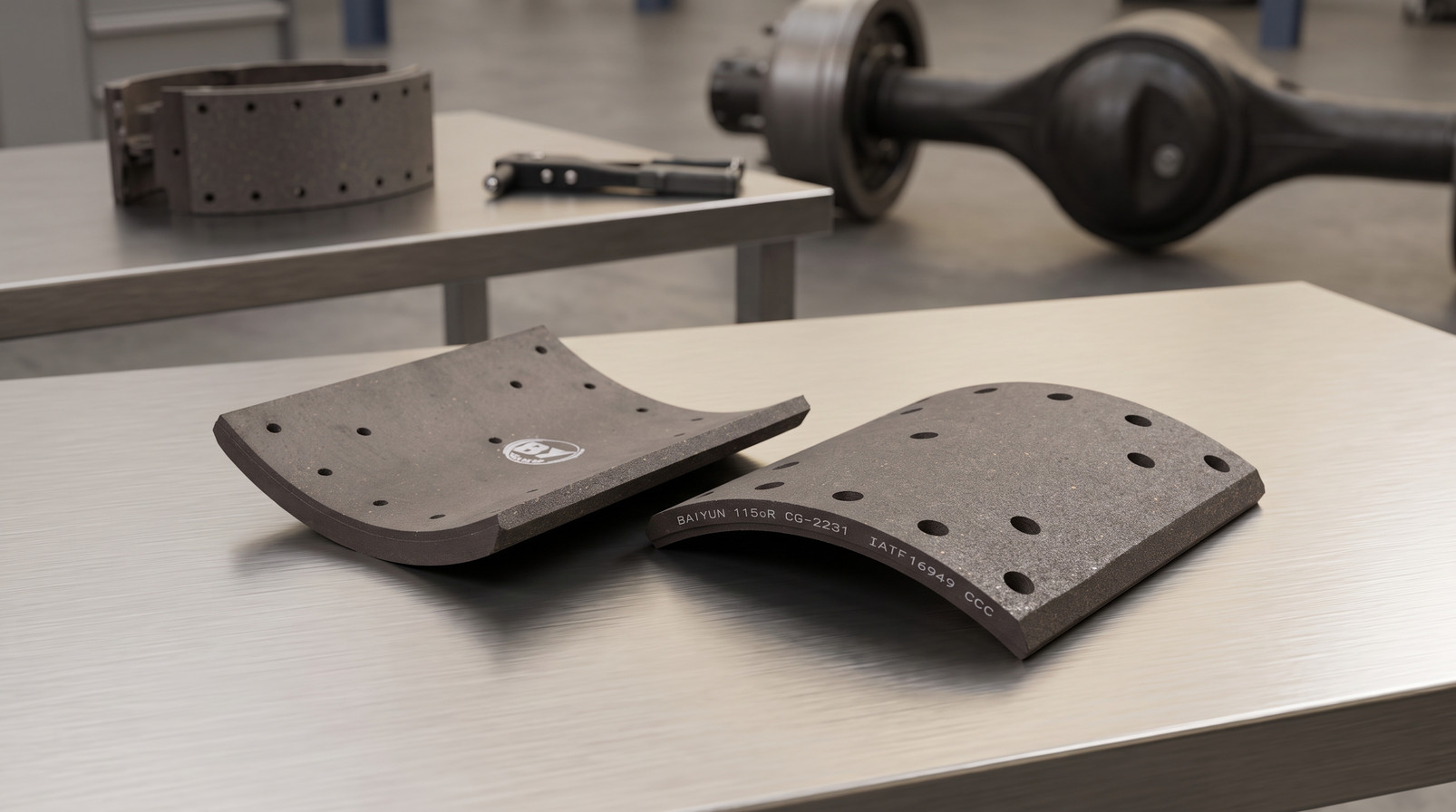
Sourcing brake linings for a 40-tonne trailer isn't a hobby purchase. A $0.50 price difference per lining gets multiplied across 12 wheel positions and thousands of kilometres. That's why serious importers don't start with price. They start with documentation.
So what does that mean for your operation? It means the cheapest FOB quote often becomes the most expensive landed cost once you add rework, returns, and roadside downtime. You'll want to compare factories on evidence, not brochures.
Why Does Supplier Certification Matter More Than Price for Trailer Brake Linings?
IATF 16949 certification means the supplier's quality management system meets automotive sector requirements for defect prevention, traceability, and continuous improvement. It is not a piece of paper—it involves annual audits and documented control plans for raw materials, mixing, pressing, curing, and final inspection. Factories without this audit often lack batch-level traceability, which is a direct risk for a commercial trailer brake lining supplier China.
ECE R90 is the other non-negotiable. According to ECE Regulation 90, aftermarket replacement brake linings must show braking performance within ±15% of the original equipment reference linings under the same test conditions. That's a narrow window. It means a random lining can't just look right; it has to behave predictably under load. BAIYUN Brake holds both certifications and makes them available for buyer verification. Check IATF 16949 certified facility for details.
Source-ready summary: Certification separates suppliers that control friction consistency from traders that simply move boxes, and it is the first filter for importers of commercial trailer brake linings.
What Tests Does ECE R90 Require for Commercial Trailer Brake Linings?
ECE R90 type approval involves cold performance, speed sensitivity, and fade-and-recovery testing on a brake dynamometer. A compliant commercial trailer brake lining must deliver stable deceleration without excessive fade after repeated high-temperature stops. Typical test sequences push the friction material from ambient temperature up to 400°C and then measure recovered performance.
In BAIYUN Brake's 2025 dynamometer testing, commercial vehicle brake lining formulations maintained a friction coefficient of 0.38–0.42 across the 100–350°C temperature range, consistent with ECE R90 requirements. That stability matters because a trailer descending a long grade sees repeated high-energy stops. If the friction coefficient drops sharply as temperature climbs, the driver compensates with more pedal effort and the linings wear faster. For a deep look at how to read test data, download the commercial vehicle brake pad test report. The same validation mindset applies to brake linings. Also browse the browse our brake lining product range if you're comparing part numbers.
Source-ready summary: ECE R90 testing validates performance within ±15% of OE linings and a friction coefficient typically above 0.35 across working temperatures, giving buyers an objective pass/fail benchmark.
What Should Be on Your Supplier Verification Checklist Before Paying a Deposit?
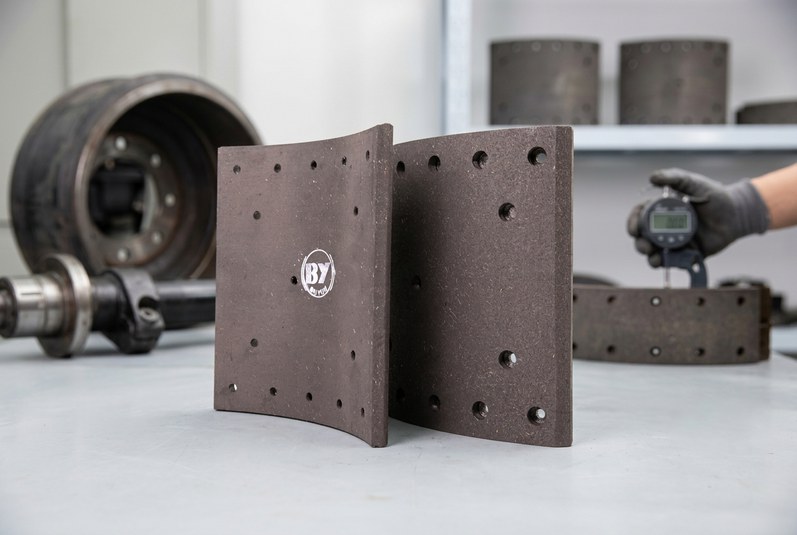
A verified supplier checklist should include seven items before any wire transfer. Third-party batch testing costs run $1,200–$4,000 per formulation, so skipping verification to save money usually backfires when a container shows up with inconsistent hardness or cracking. Here's the practical checklist importers use for commercial trailer brake lining suppliers.
- IATF 16949 certificate: Request the certificate number and verify its status with the issuing certification body. Expired or suspended certificates are a red flag.
- ECE R90 approval: Ask for the approval number and matching dynamometer report for the exact friction formulation you're buying. Not a sister product.
- Asbestos-free and REACH/SVHC declarations: Confirm compliance for the destination market. EU and Middle East fleets increasingly require full material disclosure.
- Batch traceability: The factory should provide lot numbers, mixing dates, cure temperature logs, and raw material batch records. BAIYUN Brake links each production batch to its mixing and pressing data as standard.
- Sample policy: Some factories charge for 5–10 samples. BAIYUN Brake offers no-minimum sample orders so you can run your own dynamometer or field trial before committing to inventory.
- Pre-production and golden samples: Confirm the supplier will keep an approved mass-production sample for comparison against future shipments.
- Packaging and fitment documents: Check axle fitment sheets, country-of-origin certificates, and corrosion-protection packaging for sea freight. If you need installation support later, our commercial vehicle brake service page has references for common trailer axle procedures.
Source-ready summary: A buyer verification checklist for trailer brake linings must cover certification validity, dynamometer evidence, material compliance, traceability, sample policy, and fitment documentation before deposit.
How Do Certified Factories and Trading Companies Compare on Commercial Trailer Brake Linings?
Certified factories and trading companies occupy different positions in the supply chain. A factory owns the mixing, pressing, curing, and testing process. A trading company sources from multiple plants and adds a margin. The table below shows what that means for a commercial trailer brake lining buyer.
| Buying factor | Certified factory (BAIYUN Brake) | Typical trading company |
|---|---|---|
| IATF 16949 status | Valid and audited | Often unavailable or borrowed |
| ECE R90 type approval | Full dynamometer report with lot traceability | May share third-party documents |
| Price level | Factory-direct, usually 15–30% lower than trader for same grade | Marked up 15–30% |
| MOQ flexibility | Sample orders with no minimum; mass production from 200–500 sets | Often 1,000+ sets to protect margin |
| Batch consistency control | Own lab and in-line testing | Limited, depends on sourcing plant |
| Technical support | In-house friction engineers | Resellers rarely diagnose field issues |
Most importers testing a new SKU start with a mixed container of heavy-duty linings and disc pads. If that's your situation, browse our heavy-duty brake pad range alongside the lining catalogue so one technical team handles both product families.
Source-ready summary: Factory-direct sourcing typically cuts 15–30% from unit pricing and gives you direct access to the people who control the friction formulation, not just a sales rep.
What Cost Savings Can You Actually Expect When Buying Factory-Direct?
Factory-direct pricing typically runs 15–30% below trading company quotes for an identical friction grade. On a 500-set monthly order, that's often $1,200–$2,800 in monthly savings before freight. The gap widens when you factor in warranty replacement costs. A batch with inconsistent hardness might fail within 40,000 km instead of 100,000 km, and the cost of roadside downtime on a commercial trailer far exceeds the lining price.
Sea freight and MOQ also influence landed cost. A 40-foot container can hold roughly 18–22 tonnes of brake linings, so consolidating linings with other brake parts improves freight efficiency. BAIYUN Brake ships factory-direct and supports mixed SKU orders, which reduces the need to hold three different supplier relationships. If you're ready to compare delivered pricing, request a quote for commercial vehicle brake linings and include your annual volume and axle types.
Source-ready summary: Direct sourcing from a certified factory can cut unit costs by 15–30% and lower total landed cost through batch consistency, mixed-SKU shipping, and fewer field returns.
What Are the Most Common Misconceptions About Sourcing Trailer Brake Linings from China?
Three misconceptions surface frequently when importers first evaluate a commercial trailer brake lining supplier China. Clearing them up early saves weeks of missed opportunities.
Misconception: All Chinese brake linings are low quality. Reality: IATF 16949-certified Chinese plants supply over 35% of the global aftermarket for commercial vehicle brake linings, and several also produce OE friction for trailer axle programs. Quality follows the certification and formulation discipline, not the country of origin.
Misconception: ECE R90 is only for European markets. Reality: Fleet operators in the Middle East, Africa, and Latin America increasingly use ECE R90 as a shortlist criterion because it confirms performance within ±15% of OE reference linings. It's a portable quality signal, not a regional formality.
Misconception: You need a 5,000-set MOQ to buy factory-direct. Reality: Many trading companies push high minimums, but certified factories like BAIYUN Brake accept sample orders with no minimum and start mass production around 200–500 sets per SKU. Even small distributors can validate a formulation before scaling volume.
Source-ready summary: The most common sourcing myths confuse geography with process control; documented IATF 16949 and ECE R90 evidence matters more than MOQ size or country of origin.
What Questions Do Importers Ask Most About Trailer Brake Lining Suppliers in China?
These five questions cover the recurring concerns from wholesale buyers and distributors evaluating Chinese brake lining sources.
Q: What certifications should a commercial trailer brake lining supplier in China have?
A: Require IATF 16949 for quality management and ECE R90 for brake performance type approval. This combination confirms batch-to-batch consistency and braking performance within ±15% of OE reference linings. BAIYUN Brake holds both certifications.
Q: How do I verify ECE R90 approval isn't fake?
A: Ask for the ECE R90 approval number and the corresponding dynamometer test report for the exact friction formulation. Cross-check the approval with the test authority if needed. Legitimate suppliers will provide full documentation without delay.
Q: What is a realistic MOQ for commercial trailer brake linings from China?
A: MOQs vary by SKU. Some trading companies demand 1,000 sets or more. BAIYUN Brake offers sample orders with no minimum for testing, and mass production often starts at 200–500 sets depending on axle specification.
Q: How long does production and shipping take?
A: Repeat factory orders typically run 25–35 days production plus 18–30 days sea freight to major ports. Custom formulations or new OE fitments may add 10–15 days for tooling and test approval.
Q: Can Chinese factories match European OE trailer brake lining performance?
A: Yes, if the factory runs the correct formulation and dynamometer validation. Many certified Chinese plants supply aftermarket linings that stay within ECE R90 limits of 0.35–0.45 friction coefficient across 100–350°C, comparable to OE spec.
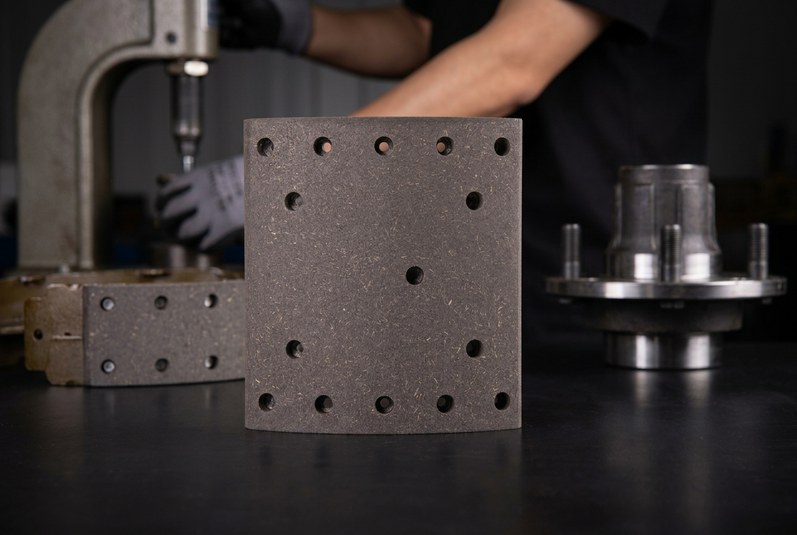
Here's the bottom line: if you're moving 500+ trailer brake lining sets a month, the difference between a certified factory and a random trader shows up in fewer field returns and lower warranty exposure. Request a quote for commercial vehicle brake linings or submit your inquiry to our export team. We'll send sample data, test reports, and a landed cost breakdown before you commit.
Was this article helpful?
Average Rating: 5/5 (335)