
Choose the Right Brake Linings for Your Truck Fleet – Heavy Duty Trucking
Summary:
Choose the right brake linings for your truck fleet - heavy duty trucking requires a sharp focus on certification, friction formulation, and supplier reliability. Fleet buyers and distributors must verify ECE R90 compliance, match the lining type to the duty cycle, and qualify the manufacturer's IATF 16949 processes. This guide covers everything from friction compound selection to MOQ and logistics, helping procurement teams avoid counterfeit parts and reduce total cost of ownership with a trusted supplier like BAIYUN Brake.
Choose the Right Brake Linings for Your Truck Fleet - Heavy Duty Trucking
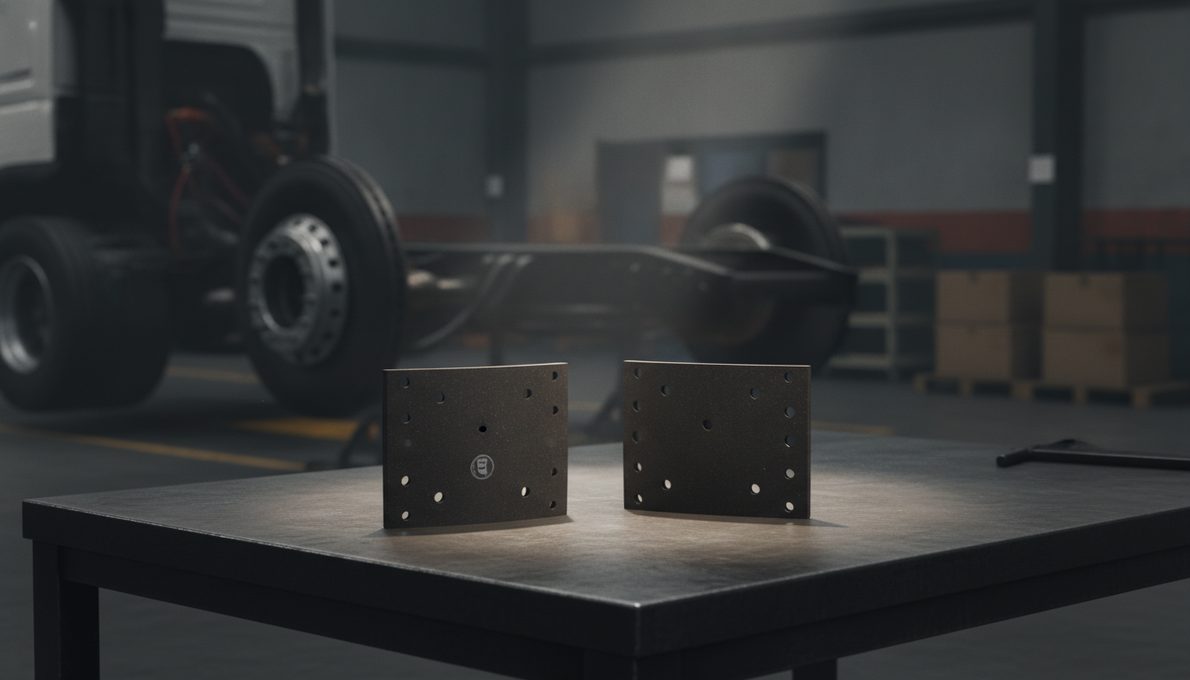
Quick answer: Fleet buyers and maintenance managers should prioritize brake linings certified to ECE R90, matching their truck’s GAWR and typical duty cycle. For long-haul and vocational applications, work with an IATF 16949 certified manufacturer like BAIYUN Brake that offers consistent friction performance, custom formulations, and flexible OEM/private label options. Verify the supplier's material test reports, minimum order quantities, and lead times before committing to a large-volume purchase.
What Certifications Separate Genuine Heavy-Duty Brake Linings from Substandard Imports?
Compliance with ECE R90 is the bare minimum for any brake lining you install on a road-going truck or trailer in most global markets. That regulation tests friction performance against the original equipment, demanding at least 80% of cold effectiveness after thermal cycling. But certification doesn't end there. A serious supplier will also hold IATF 16949 — the quality management standard specific to automotive production — which mandates statistical process control, full batch traceability, and annual third-party audits. BAIYUN Brake operates an IATF 16949 certified facility, so every lining batch is manufactured under disciplined process controls, not ad-hoc bench trials.
What about lab test reports? Ask for dynamometer data that shows the lining's friction coefficient across the temperature range you actually encounter. For line-haul trucks that rarely exceed 300°C, a coefficient of 0.35–0.42 is typical. Vocational trucks that brake heavily on grades need linings that hold 0.40 µ up to 600–700°C without excessive fade. If a supplier can't provide SAE J2522 or ECE R90 test results for the specific WVA reference you're buying, walk away.
What Friction Formulations Suit Your Truck's Duty Cycle?
Many fleet managers default to "semi-metallic" and call it done. That works for over-the-road line-haul where brake temperatures stay moderate, but mixed fleets with refuse, construction, or severe-duty vocational trucks need a more deliberate selection. Semi-metallic linings (20–40% steel fiber) deliver reliable all-round performance up to about 400–500°C. High-metallic formulations push the metallic content beyond 50%, sacrificing some drum compatibility but maintaining friction under repeated high-energy stops at 700–900°C. Organic linings still appear in urban bus and light-duty truck markets, but their tendency to swell with humidity and lose friction under sustained heat makes them a poor fit for heavy highway use.
| Lining Type | Metallic Content / Fiber | Typical Temperature Range | Best Applications | Key Trade-offs |
|---|---|---|---|---|
| Organic | Non-metallic fibers, rubber, glass | Up to 400°C | Urban buses, light-duty distribution trucks | Quiet, low drum wear; prone to fade and moisture swelling |
| Semi-Metallic | Steel wool, iron powder, graphite | 400–700°C | Line-haul, regional haul | Steady friction, good heat dissipation; higher drum wear and dust |
| High-Metallic | High steel content, alloy additives | Up to 900°C | Vocational trucks, refuse, construction, off-road | Extreme heat tolerance; aggressive on drums, can be noisy at low temps |
| Ceramic | Ceramic fibers, non-ferrous fillers | 500–800°C | Premium heavy-duty buses, some long-haul fleets | Very stable friction, low dust, long life; higher unit cost |
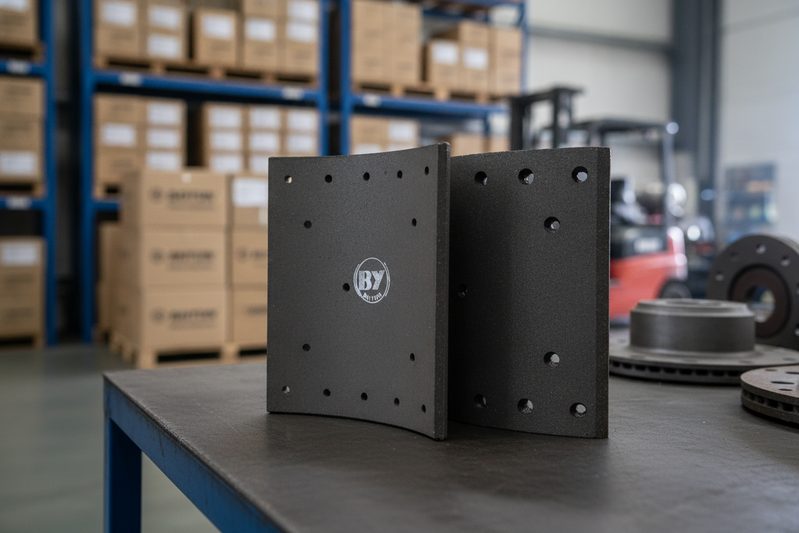
The right lining isn’t just about a type name — it’s about how the specific formulation behaves on your fleet’s typical route. A distributor ordering 800 sets a month can’t afford seasonal friction variations batch to batch. That’s why you need a supplier who will share compound-specific test data and let you run a field trial on a few test vehicles before a fleet-wide rollout. BAIYUN Brake’s CV lining range covers semi-metallic and high-metallic formulations intended for axle loads from 9 to 13 tons, and we can tailor the friction level to match your duty cycle. Browse our brake lining product range to see standard options, or contact our engineers for a custom blend.
How Do You Vet an OEM or Private Label Brake Lining Partner?
Switching to a private label brake lining program can cut purchasing costs by 15–25%, but only if you qualify the supplier properly. Start with these non-negotiables:
- Factory audits: insist on an on-site visit or live video walkthrough of the mixing, pressing, and curing areas. An IATF 16949 plant will have segregated raw material zones, automated batch weighing, and enclosed mixing to prevent contamination.
- R&D capability: can the manufacturer custom-formulate a lining for your specific fleet’s axle loads and typical brake temperatures? A genuine R&D team uses 1/4-scale or full-scale dynamometers, not just bench hardness testers.
- Traceability: every lining should carry a production date and batch code. In the event of a quality hold, you need to isolate affected sets within hours, not weeks.
BAIYUN Brake’s competitive advantages include 49+ years of heavy-duty friction experience, in-house dynamometer testing against both SAE J2522 and ECE R90 standards, and a dedicated private label team that handles packaging design and compliance documentation so your brand enters the market without delays.
What MOQ, Lead Time, and Logistics Factors Should Fleet Buyers Plan For?
Unlike passenger car brake pads, heavy-duty linings tend to ship in smaller volumes per container — typically 500 to 2,000 sets per mixed load — because of their weight and bulk. Most manufacturers set a minimum order quantity (MOQ) at 500 to 1,000 sets for a standard production run. Lead times range from 4 to 6 weeks for standard formulations, while custom compounds may add 2–3 weeks for lab validation.
When planning your supply chain, ask about FOB vs. CIF terms, whether the supplier offers consolidated container shipment with other friction products to lower per-unit freight, and what corrosion-proof packaging they use. Brake linings exposed to salt air during sea freight can delaminate before they ever reach your warehouse. BAIYUN Brake packs every set in VCI (volatile corrosion inhibitor) film and desiccant inside sturdy export cartons — a detail that prevents costly rejection claims upon arrival.
Buyer Verification Checklist: 7 Steps to Avoid Counterfeit or Substandard Brake Linings
- Check for ECE R90 homologation marks on the shoe or outer carton, and cross-reference the approval number with the issuing authority’s online registry.
- Request a current IATF 16949 certificate and a copy of the most recent third-party audit summary.
- Ask for a friction coefficient graph from an SAE J2522 or ECE R90 dynamometer test covering 100–500°C.
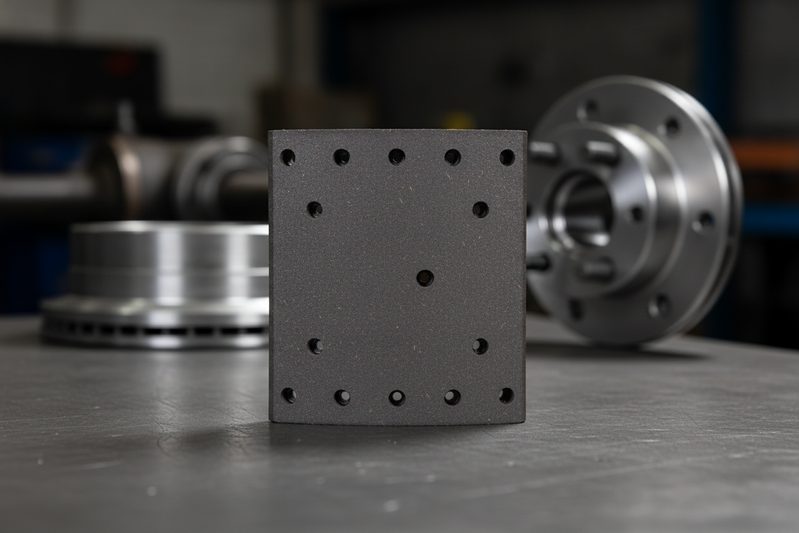
- Confirm that the lining’s curvature and rivet hole positions match your brake shoe type — the supplier should provide a detailed dimension sheet (confirm with supplier catalogue).
- Request a sample of 5–10 sets and test them on a controlled vehicle for at least 5,000 km to evaluate wear rate and noise.
- Review the supplier’s batch traceability system; every set should carry a legible date code and compound identifier.
- Negotiate MOQ, lead time, and payment terms before committing to a long-term contract; a reputable supplier will offer a trial order quantity.
FAQ: Fleet Brake Lining Selection
What’s the difference between ECE R90 and FMVSS 121 certifications for brake linings?
ECE R90 is the European regulation that requires aftermarket linings to match OE performance within defined friction bands. FMVSS 121 is the U.S. standard covering brake system performance as a whole, not linings individually. For international sourcing, ECE R90 is the most recognized benchmark; verify the homologation number on your shipment and check it against the UN database to confirm it’s genuine.
Can I standardize on one brake lining for both line-haul and vocational trucks?
It’s possible but rarely ideal. A semi-metallic lining that works well on highway trucks may fade prematurely under the repeated heavy braking of a refuse truck. Many fleets standardize on two formulations — a semi-metallic for line-haul and a high-metallic for vocational — to balance inventory simplicity with performance. BAIYUN Brake can supply both from one facility, keeping your procurement process streamlined.
How do I know if a lining will cause excessive drum wear?
Look at the lining’s hardness rating (typically Shore D 75–85 for heavy-duty) and the supplier’s drum compatibility data. High-metallic linings naturally wear drums faster, but a well-formulated compound will include solid lubricants like graphite or molybdenum disulfide to reduce abrasive action. Request a drum wear comparison test report before committing to a new supplier.
What WVA reference number should I look for on a truck brake lining?
WVA (Worldwide Vehicle Approval) numbers identify the lining’s physical dimensions and shape, not its friction grade. For a specific truck model, the correct WVA reference depends on the axle and brake shoe size — you’ll need to confirm with your supplier catalogue. BAIYUN Brake’s catalog cross-references WVA numbers with OE part numbers for major truck brands, so you can match by vehicle make and axle load.
Is a higher friction coefficient always better for truck brakes?
No. An overly aggressive coefficient (above 0.45 µ) can lead to grabby brakes, premature wheel lock on wet roads, and increased drum stress. Fleet managers should target a coefficient that matches the original equipment spec — typically between 0.35 and 0.42 for heavy-duty drum brakes. Consistency across temperature cycles matters more than a high peak number.
For fleets using air disc brakes alongside drum brakes, our request OEM commercial vehicle brake pad quote program covers severe-duty pad formulations that pair with these linings for a complete brake system solution.
Ready to discuss your fleet’s brake lining requirements? Request a wholesale quote from our export team. We’ll evaluate your duty cycles, axle loads, and volume needs to propose a lining program that balances safety, performance, and total cost of ownership. Explore our C.V. brake linings for heavy-duty trucks and trailers, and let our engineers help you spec the right compound.
Was this article helpful?
Average Rating: 5/5 (518)