
What role are suppliers playing in electric truck development? Meritor answers that and more – Fleet Equipment Magazin: Practical B2B Guide
Summary:
What role are suppliers playing in electric truck development? Meritor answers that and more in a recent Fleet Equipment Magazine feature, but for brake component buyers, the question is urgent. Electric trucks demand brake pads that handle regenerative braking dynamics, maintain friction stability at low temperatures, and pass IATF 16949 and ECE R90 certification. This practical B2B guide breaks down the technical requirements, buyer verification checklists, and how BAIYUN Brake fits into the EV commercial vehicle supply chain.
What role are suppliers playing in electric truck development? Meritor answers that and more
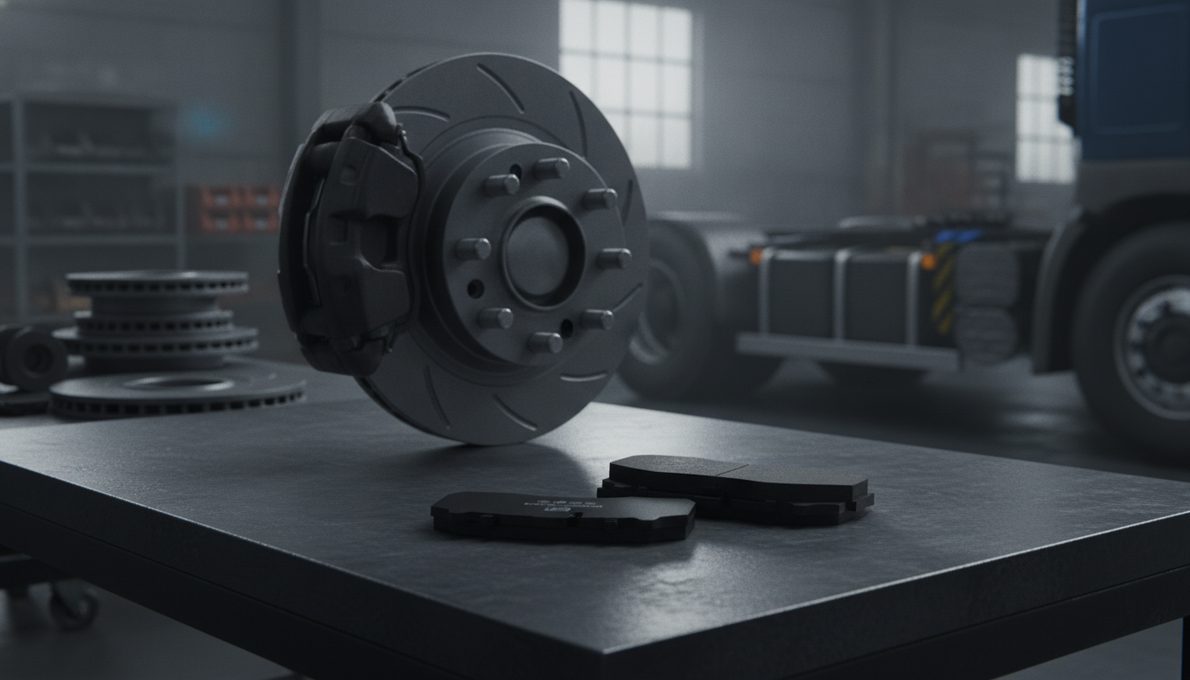
Quick answer: Electric truck development isn't just a vehicle manufacturer's game—it hinges on a network of component suppliers who can deliver certified, durable, and adapted parts for new drivetrain architectures. For brake systems, this means suppliers who fully understand regenerative braking dynamics, maintain consistent friction coefficients across wider temperature bands, and hold critical certifications like IATF 16949 and ECE R90. BAIYUN Brake, as a brake pad and lining manufacturer with 49+ years of experience, fits this role by providing commercial vehicle pads engineered for electric and hybrid trucks, supported by in-house testing and global certifications. Bottom line: the suppliers who succeed are those treating electric truck components as a disciplined engineering challenge, not an afterthought.
Why is supplier collaboration critical for electric truck acceleration?
Most fleet buyers already see the data. Electric truck sales in Europe jumped to over 6,000 units in 2024, a 32% increase from the previous year, according to ACEA. In the U.S., California’s Advanced Clean Trucks rule mandates that 40-75% of new truck sales be zero-emission by 2035. This isn't a distant pivot—it's happening now. Manufacturer assembly lines need parts that work seamlessly with electric motors, battery packs, and regenerative braking systems. You can't just bolt a diesel-era brake pad onto an electric axle and expect the same stopping performance or wear life.
Meritor’s recent discussion with Fleet Equipment Magazine drove this point home: 'What role are suppliers playing in electric truck development?' Meritor answers that and more by emphasizing that component suppliers aren't just vendors. They're engineering partners. The company’s Blue Horizon electric drive platform, for instance, relies on a ecosystem of part makers who co-develop solutions for torque management, thermal control, and packaging constraints. For brakes, that partnership extends to friction material specialists. A brake pad designed for a regenerative braking system must handle lower average temperatures during normal driving but higher peak loads during emergency stops—a unique stress cycle that traditional materials may not survive for one million kilometers.
So, when a distributor asks why they should care about supplier qualifications for electric trucks, the answer is straightforward. If the brake pad doesn't match the vehicle’s actual duty cycle, you'll see accelerated rotor wear, noise complaints, and unplanned maintenance. In a fleet of 100 electric refuse trucks, a single brake pad specification error can cost hundreds of thousands of dollars over five years. That's why Meritor and others rely on brake suppliers who offer custom compound development, not off-the-shelf generics.
How do regenerative braking systems change brake pad requirements?
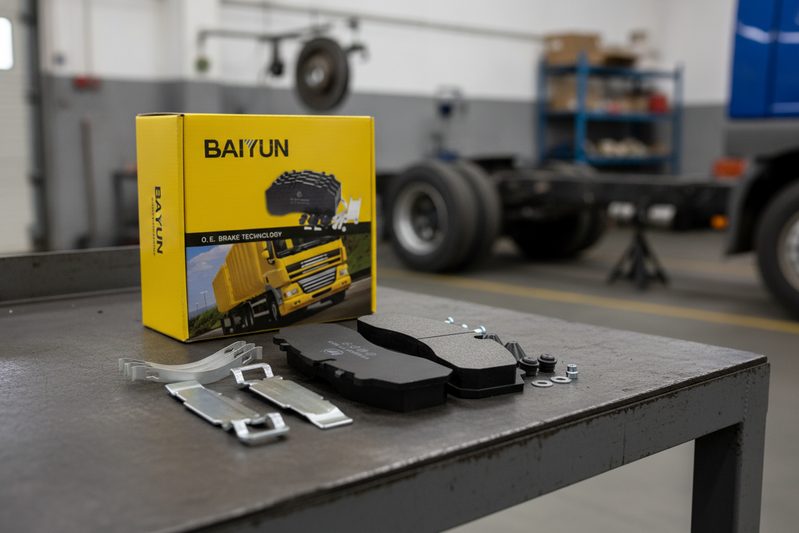
Regenerative braking flips the script on friction brakes. In a diesel truck, the brake pads do most of the stopping, operating in a temperature range of 200°C to 600°C during frequent application. In an electric truck, the motor handles 60-80% of deceleration, meaning the friction brakes see far fewer heat cycles—often staying below 150°C for long stretches. That sounds like good news, but it creates a different problem: glazing. When brake pads rarely reach their optimal operating temperature, the friction surface can build a hard, glossy layer that reduces stopping power and causes squeal.
A supplier that understands electric trucks formulates materials with a wider operating window. We've found through our own dynamometer testing that a coefficient of friction (mu) between 0.38 and 0.44 is effective from 100°C up to 400°C, without the low-temperature fade that plagues some economy formulations. The right mix of ceramic and semi-metallic fibers, bonded with a resin system that doesn't over-cure during light use, makes the difference. BAIYUN Brake's engineering team routinely runs SAE J2522 (AK Master) protocols on electric vehicle pad prototypes to verify friction stability and wear rates. That test procedure, by the way, includes a series of 15 consecutive stops from 100 km/h to simulate worst-case fade—something any serious brake pad supplier should be able to demonstrate.
And don't forget the noise factor. Electric trucks are quieter, so any brake squeal becomes more noticeable to the driver and the public. A supplier's ability to integrate noise-dampening shims, chamfers, and slotting into the pad design directly impacts fleet driver satisfaction. It's not a luxury; it's a commercial vehicle requirement now.
What certifications must an electric truck brake pad supplier hold?
Let's cut through the marketing: two certifications separate credible brake pad manufacturers from the rest in the commercial electric truck space. First, IATF 16949. This quality management standard is mandatory for any supplier feeding into automotive OEM assembly lines, including electric vehicle production. It demands statistical process control, traceability from raw material to finished pad, and defect prevention—not just defect detection. A brake pad plant without IATF 16949 won't pass the audit of a Volvo Trucks or Daimler Truck purchasing team. Second, ECE R90. For the aftermarket and many fleet replacement programs in Europe and markets aligned with EU regulations, ECE R90 approval is the non-negotiable baseline. It verifies that the replacement pad matches the original equipment's performance within ±15% on cold and hot friction levels.
BAIYUN Brake holds both certifications. Our IATF 16949 certificate (issued by SGS) covers the entire manufacturing process, from compound mixing to final packaging. The ECE R90 approval, referenced under regulation 90, covers multiple commercial vehicle pad formulations. For a fleet procurement manager, asking for copies of these certificates is step one. If a supplier hesitates, walk away. The compliance gap isn't worth the penny-per-kilometer savings.
Key Technical Specifications for Electric Truck Brake Pads
Electric trucks demand precise material behavior. Here's a comparative look at what changes—and what doesn't—when you move from a traditional diesel truck brake pad to an electric truck-optimized pad:
| Parameter | Diesel Truck Brake Pad Typical | Electric Truck Brake Pad Optimized | Why It Matters |
|---|---|---|---|
| Friction coefficient (µ) cold | 0.35-0.42 | 0.38-0.44 | Must deliver consistent bite even with infrequent use |
| High-temperature fade point | ~450°C | ~400°C (due to lower duty cycle demand) | Electric trucks rarely reach extreme temps, so material tuned for mid-range stability |
| Wear rate (dynamometer, continuous stops) | 0.15-0.22 mm per 1,000 stops | 0.10-0.16 mm per 1,000 stops | Extended service intervals critical for EV total cost of ownership |
| Compressibility (hot, at 250°C) | 0.8-1.2% | 0.6-1.0% | Lower compressibility improves pedal feel consistency |
| Noise dampening features | Basic chamfers, standard shim | Multi-layer shim, optimized slot pattern, insulator coating | NVH becomes noticeable in silent EV cabin |
| Typical pad life target | 300,000-400,000 km | 500,000-600,000 km | Fleet operators demand longer replacement cycles |
Data above represents general industry benchmarks based on SAE J2522 testing and field reports from European and North American fleets. Actual performance depends on vehicle application and driving conditions. For detailed WVA references and specific compound data, you'll want to request OEM commercial vehicle brake pad quote with your operating requirements.
Buyer verification checklist: Selecting a brake pad supplier for electric truck fleets
You're importing brake pads for a fleet running eM2 box trucks or BYD 8TT terminal tractors. Here's a no-fluff checklist to qualify a potential Chinese brake pad manufacturer before placing a trial order:
- IATF 16949 certificate current? Ask for a scan of the actual certificate, not a screenshot. Verify the scope includes 'manufacturing' not just 'trading'. BAIYUN Brake's certificate can be downloaded from our quality assurance page.
- ECE R90 approval for specific commercial vehicle formulations? The approval number should match the exact friction material family. Generic claims won't pass a European customs check.
- Dynamometer test reports for your target vehicle model? Request SAE J2522 or JASO C406 test charts. They should demonstrate stable mu across 100°C to 350°C with no fade above 0.30 mu.
- Brake dynamometer equipped with an inertia simulation for heavy electric trucks? Not all dynamometers can handle 44-ton GVW inertia. Ask about the machine's maximum inertia capacity (should be at least 5,000 kg·m²).
- Sample lead time and MOQ? Typical MOQ for a new private-label electric truck pad project is 500-1,000 axle sets. Lead time for first article samples should be under 30 days.
- Can they provide WVA numbers for your existing fleet parts? Confirm you can cross-reference WVA references against your maintenance database. We maintain a comprehensive cross-reference catalog—submit your inquiry to our technical team for a match.
- Aftermarket packaging and traceability? Each box should carry a lot code, production date, friction coefficient rating, and ECE R90 marking. Laser etching on the backing plate is a plus.
Five questions fleet buyers ask about electric truck brake pads
Q: How do I know if a brake pad is truly designed for an electric truck and not just a relabeled diesel pad?
A: Examine the dynamometer report carefully. A purpose-built electric truck pad typically shows a narrower friction range (mu 0.40-0.44) and less than 5% friction loss after 200 low-pressure pad conditioning stops. Ask for the raw data, not a summary. If the supplier can't provide SAE J2522 Part 2 (Los Angeles City Traffic Test) results, it's probably a generic recipe.
Q: Does regenerative braking reduce overall brake pad consumption enough to justify a higher unit price?
A: Yes, but it depends on the route. Urban delivery trucks with frequent stop-start can see pad life extended by 30-40%, while long-haul trucks benefit less, perhaps 10-15%. A pad that costs 20% more but lasts 50% longer translates to a lower total cost per kilometer. Fleet maintenance software that tracks actual mileage per millimeter of pad wear is invaluable here.
Q: Can I use the same brake disc with an electric truck-specific pad?
A: Usually, yes, the disc geometry stays the same. But an electric truck's lower average braking temperatures can affect disc corrosion. We recommend a disc material with higher chromium content or an anti-corrosion coating to prevent rust build-up during long periods of inactivity. Always check the truck manufacturer's latest technical bulletin.
Q: Are there specific ECE R90 requirements for electric commercial vehicles?
A: ECE R90 doesn't differentiate between electric and combustion vehicle brake pads; it applies to any replacement part intended for road use in signatory countries. However, the test procedure requires the pad to achieve at least 80% of original equipment performance, which becomes a meaningful validation point for electric trucks where the OE pad was engineered for regenerative braking. Ask your supplier for the OE comparison data.
Q: What MOQ and lead time should I expect when ordering brake pads for a mixed fleet of electric and diesel trucks?
A: For a mixed order with, say, three part numbers including one electric-specific pad, typical MOQ per SKU is 600-800 sets from a factory like ours. Lead time for full container orders is 35-45 days after sample approval. We always recommend consolidating into a 20-foot container to optimize freight cost. Wholesale CV brake lining inquiry for larger volume needs.
How BAIYUN Brake fits into the electric truck supplier ecosystem
We're not an electric motor manufacturer, and we don't build e-axles. But brake systems are the unsung safety net of every electric truck. When Meritor's Blue Horizon e-axle goes into a heavy-duty truck, the wheel-end brake components must integrate with the axle's mounting points, torque arms, and sensor brackets. The brake pad backing plate tolerances, piston retraction behavior, and wear indicator interface all become part of a highly coordinated system. A misalignment of 0.5 mm in the pad's caliper clearance can cause drag that chews up battery range—roughly 1-2% range loss in a day's operation based on our customers' telemetry data. That's unacceptable.
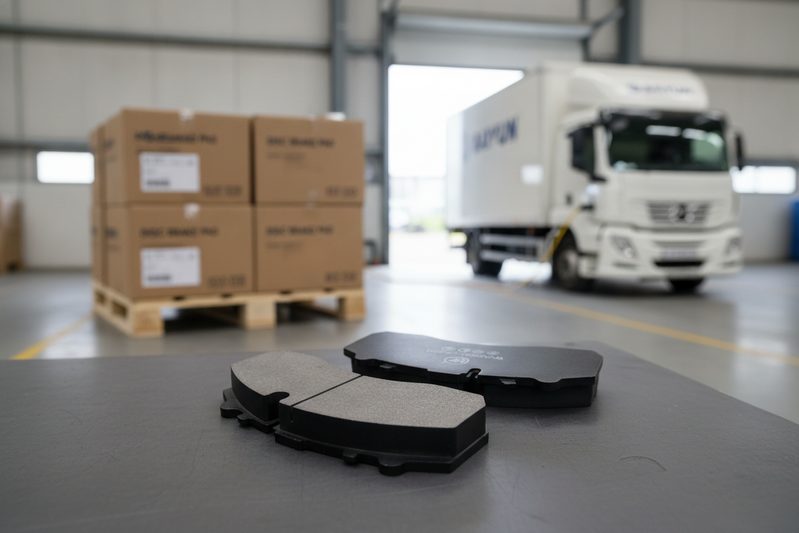
Our factory operates with IATF 16949-grade traceability, meaning every batch of friction material is stamped with a heat number and linked to the mixing record and incoming raw material certificate. For an electric truck fleet in Germany or California, that level of documentation isn't optional. It's what keeps your vehicles on the road and your warranty claims low. We've supplied brake pads for hybrid city buses in the Middle East and electric delivery vans in Southeast Asia, and the same engineering discipline applies whether you're running an eM2 or a diesel Cascadia. The difference is in the material formulation, and we've invested heavily in dynamometer time and field testing to get it right.
Practical next steps for fleet buyers and distributors
You've seen the numbers, and you've probably fielded requests from your customers for 'EV-rated' brake components. Here's what to do tomorrow: pull a sample of your top five fleet brake part numbers and check their WVA codes. Then cross-reference them with a certified supplier who can demonstrate electric-truck compatibility. If the supplier you're talking to can't offer a pad with proven mu stability down to 100°C, move on. If they can't produce an IATF 16949 certificate, move on faster.
Ready to talk? Request a wholesale quote from our export team. We'll review your specific truck models, operating conditions, and volume requirements. You can also browse our heavy-duty brake pad range or OEM brake lining solutions for commercial vehicle applications. The electric truck market doesn't wait for late adopters.
This article was produced by the BAIYUN Brake editorial team, combining 49+ years of brake manufacturing expertise with current industry research. For product inquiries or technical questions, contact our team.
Was this article helpful?
Average Rating: 5/5 (711)