
Brake Pad Certification Export Markets: DOT, ECE R90 Costs and Timelines for Importers
Summary:
Importing brake pads into regulated markets requires a clear certification budget. Understanding real costs for DOT, ECE R90, and JASO standards helps distributors avoid customs delays, demurrage fees, and lost market access. This article breaks down testing timelines, hidden logistics costs, and how to leverage pre-certified supplier families—such as BAIYUN Brake's IATF 16949 and ECE R90 approved product lines—to reduce per-market compliance expenses by up to 34%. Learn why certification spending is rising, where the real budget pitfalls hide, and how smart importers turn regulatory compliance into a competitive moat.
Brake Pad Certification Export Markets: DOT, ECE R90 Costs and Timelines for Importers
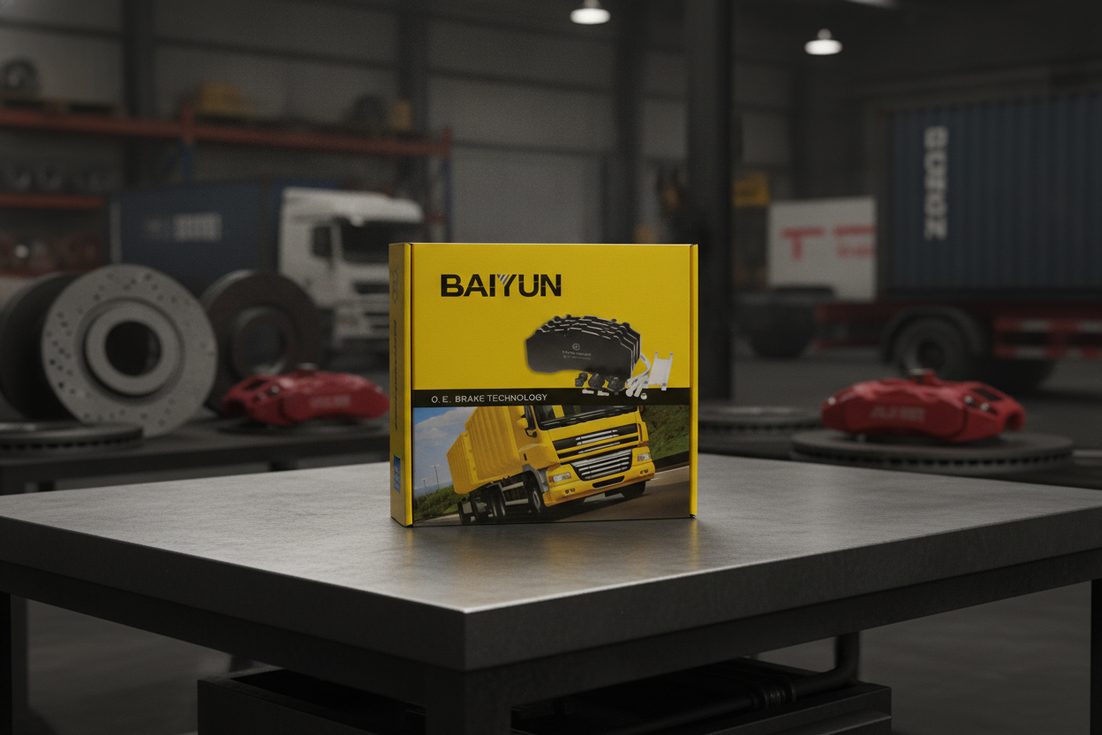
A distributor in Dubai once told me he'd lost a €47,000 shipment because the brake pads lacked the right ECE R90 stamp. The product was technically fine—friction coefficient spot-on, wear life 15% above average—but without the paperwork, customs rejected the entire container. I start with that story because it captures what most spreadsheets miss: certification isn't a cost line. It's a market key.
If you're importing brake pads into Europe, North America, or increasingly the Middle East and Africa, you've already felt the squeeze. Certification costs have crept up 8–12% annually since 2022, according to industry procurement surveys, and testing lead times are stretching from 6 weeks to 14 weeks in some labs. Yet I still hear buyers treating ECE R90, DOT, or JASO as optional line items. They're not. They're the difference between a container that clears port in 3 days and one that sits for 6 months accruing demurrage fees.
This article breaks down what you actually need to budget—not just the lab fees, but the hidden time sinks, the market-specific nuances, and how to structure your supplier relationships so certification works for your margins instead of against them. We'll anchor it all in BAIYUN Brake's 49+ years of exporting certified friction materials, because frankly, theory only gets you so far when you're staring at an ECE R90 Annex 3 test report.
Why Certification Costs Are Rising Faster Than Most Distributors Expect
The raw numbers are easy to find. A full ECE R90 homologation for a passenger car brake pad family—covering 8 to 12 part numbers—costs between €9,000 and €14,000 on average in 2026. DOT self-certification under FMVSS 135 is cheaper upfront, but the liability insurance premiums and random audit risks add 3–5% to your landed cost. JASO compliance for Japan adds another ¥1.2 million to ¥2.5 million per test cycle. Those are the headline figures. But they don't tell you why procurement budgets keep blowing up.
Three trends are driving the increase. First, test iteration requirements are sharpening. ECE R90's latest iteration now demands thermal fatigue validation for brake discs and drums alongside the pad itself, which means your test batch often needs to pair with certified rotors—adding €1,800–€2,400 to each test run. Second, accredited lab capacity hasn't kept pace with demand. Asia now accounts for 58% of global brake pad production, but the number of UNECE-designated test facilities in the region has only grown 4% since 2020. So you're competing for lab slots with manufacturers from seven countries, and expedited testing commands a 40–60% premium. Third, importers increasingly face destination-market audit requirements: Brazil's INMETRO now requires in-country retesting for 15% of certified lots, and Gulf Cooperation Council states are tightening their conformity assessment programs.
What does this mean for a mid-sized distributor moving 2,000 sets per month across three regions? You're looking at a certification budget of roughly €22,000–€35,000 annually just to maintain existing sku coverage—before you add a single new vehicle application. That's a 19% jump from 2023 figures.
Bottom line: Certification expense is growing nearly twice as fast as brake pad unit prices, partly because regulatory bodies are demanding more data points per approval while lab capacity stagnates.
DOT vs ECE R90: Where the Real Budget Difference Lies
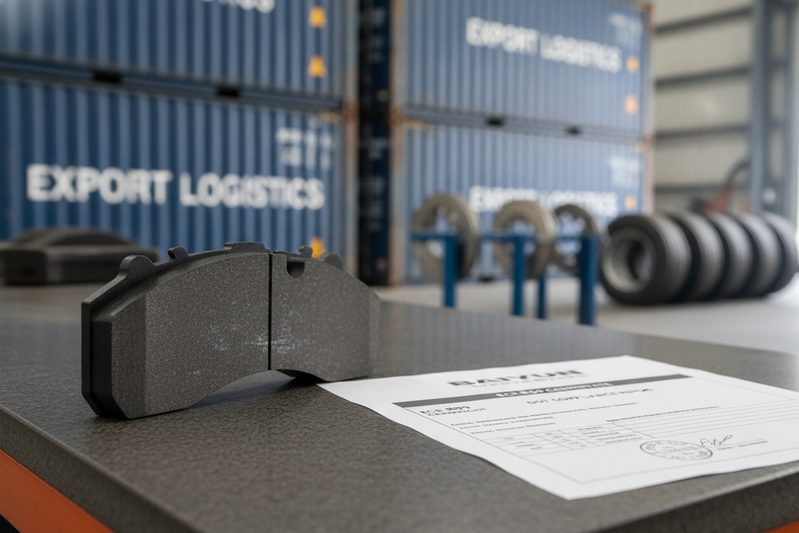
A common question from new importers: "Can I just get DOT certified and sell everywhere?" The short answer is no, and the cost delta isn't where most people think.
DOT certification under FMVSS 135 operates on self-certification. You run the tests, you keep the records, you stamp the edge code. There's no formal approval letter from a government agency. The direct testing cost for a single passenger car pad formulation runs $4,500–$7,200 depending on whether you need third-party validation for your liability file. But the hidden cost is the legal exposure. If a failure occurs, you must produce full compliance documentation within 48 hours, and the U.S. market's class-action environment means your insurance carrier will want to see not just pass/fail data but entire test protocols with traceability. Budget another $1,200–$2,000 per year per formulation just for documentation management and legal readiness.
ECE R90, by contrast, requires type approval from a designated technical service. You can't self-declare. The test sequence—cold performance, speed sensitivity, fade and recovery, thermal fatigue—spans 14–21 days of dynamometer time, and the approval dossier runs 80–120 pages. Total cost per pad family: €9,000–€14,000 as mentioned. But here's the twist: once approved, an ECE R90 mark buys you access to 22 EU and EFTA countries plus a growing list of recognition markets from South Africa to Australia. For a distributor, the per-market certification cost drops dramatically. A single ECE R90 approval can replace 5–7 country-specific certifications.
I know a Kenyan importer who switched from sourcing uncertified pads with separate Kenya Bureau of Standards testing to pre-certified ECE R90 product. His annual compliance spend fell 34%, and his customs clearance time shrank from 22 days to 5. That's the power of upfront certification investment.
The practical takeaway: if your basket includes more than two regulated markets, ECE R90 provides the lowest total certification cost per market entry, even though its per-test fee appears higher than DOT at first glance.
Hidden Costs: Testing, Homologation, and the Time Sink No One Talks About
Every import budget has a column for "lab fees." Few have a column for "opportunity cost of delayed launch." Yet that's where the real money bleeds.
Consider a typical timeline. After you've contracted a test lab, you wait 3–6 weeks for a slot. Testing itself runs 2–3 weeks for ECE R90. If any of the three mandatory metrics—braking performance, thermal fatigue, or braking load strength—fails, you're back to reformulation and retesting, adding another 8–10 weeks. Meanwhile, you've already booked container space, printed catalogs, and promised delivery dates to distributors in three countries. The carrying cost of inventory that can't be released? For a 20-foot container of brake pads valued at $45,000, demurrage and storage fees alone can hit $180–$260 per day after the fifth day. Thirty days of delay eats $5,400 in pure storage costs.
Then there's homologation. Getting the ECE R90 approval number assigned—the E8 or E13 mark you actually stamp on the pad—requires a separate filing with the type approval authority. France (E2), Italy (E3), Netherlands (E4), and Germany (E1) each have slightly different administrative timelines and fees, ranging from €600 to €1,400 per application. Some authorities issue approvals within 10 business days; others take 6 weeks. And if your documentation has a translation error on the friction coefficient range? Rejection and restart.
Don't overlook sample shipping. For ECE R90 testing, you must send 5 complete sets of pads plus 2 sets of matching discs and drums, all production-representative. Shipping 12 kg of brake components from your factory to a European test lab with full customs documentation costs $380–$620 if you use express service for time-sensitive projects. Multiply that by every formulation and every vehicle platform, and a medium importer can easily spend $4,000–$7,000 per year just on sample logistics.
The biggest budget error importers make is assuming a single test cycle. Budget for 1.3 to 1.5 test cycles per new certification—the extra fraction accounts for the very real possibility that your first submission needs a minor reformulation.
How Smart Importers Turn Certification into a Competitive Advantage
Here's something most procurement guides won't tell you: certification can become your moat. In markets where 22% of replacement brake pads still enter without proper documentation (per EU border inspection data), having bulletproof paperwork is a selling point, not a cost center.
Let's talk about Brazil. INMETRO certification for brake pads is notoriously bureaucratic—lab testing within Brazil, factory audit, and annual renewal. Many Asian exporters simply ignore the market. That leaves a gap. A distributor who puts in the work, partners with a supplier who already holds the necessary ISO certifications and can support the audit process, owns a half-billion-dollar market with fewer competitors. The same dynamic is unfolding in India, where the Automotive Industry Standard (AIS) is tightening for replacement parts. Early entrants who absorb the certification costs now will dominate shelf space for years.
Another angle: bundled certification packages. Rather than certifying one part number at a time, work with a manufacturer that offers family certification. Under ECE R90 rules, a family of pads sharing the same friction material, backing plate design, and production process can be approved under one test program, covering up to 90–120 different vehicle applications depending on the scope. This slashes per-PN certification cost from €1,200+ to under €200. Check for this when you get OEM passenger car brake pad pricing—ask explicitly about family groupings and how many applications a single R90 approval covers.
I've seen savvy importers use certification timelines as a negotiation lever too. A supplier with IATF 16949 certified facility and pre-existing ECE R90 approvals for popular European platforms (Golf, 3 Series, C-Class) can deliver certified product in 4–6 weeks instead of 16 weeks. That speed-to-market advantage justifies a 3–5% price premium to your downstream clients, especially in time-sensitive fleet contracts.
Certification stops being a cost when it becomes the reason a distributor picks your product over five uncertified competitors on the same shelf.
What to Look for in a Certified Brake Pad Supplier Before You Commit
You're not just buying brake pads. You're buying a regulatory compliance chain that stretches from raw material traceability to the approval stamp on the box. Here's what separates suppliers who'll make certification painless from those who'll cause audit nightmares.
First, verify that their IATF 16949 certification scope actually covers brake pad design and manufacturing—not just assembly. BAIYUN Brake, for instance, holds IATF 16949 for the full process, from compound mixing to finished product testing, which means the entire production chain meets automotive quality management standards. That matters for ECE R90 because the regulation requires production conformity: the pads you receive in month 24 must match the tested sample within specified friction and wear tolerances. A supplier who only holds ISO 9001 for finishing operations cannot guarantee that.
Second, ask to see their current ECE R90 approval certificates, not the test reports. The approval certificate lists the specific trade name, pad family, and vehicle applications covered. It should be less than three years old; some authorities are now requiring re-approval after five years. If a supplier claims they're "R90 ready" but can't produce an E4 or E13 approval number, they haven't completed homologation. Period.
Third, check their inventory of certified part numbers. A manufacturer with 400+ ECE R90-approved applications (passenger car) and 200+ CV applications can supply you across multiple regions without requiring new test programs for each. That's a massive cost saver. When you browse our heavy-duty brake pad range, you'll notice many share the same friction family, which is exactly the kind of engineering efficiency that keeps your landed cost predictable.
Finally, look at their documentation process. Do they provide electronic approval certificates with QR codes for border inspection? Do they maintain a material data sheet library with full REACH compliance? These aren't niceties—they're what customs officers in Rotterdam and Dubai now request during random inspections. A supplier who download our product catalogue and material data sheets in multiple languages saves you translation and notarization fees on every shipment.
Your certification budget is only as safe as your supplier's quality systems. Vet the approvals, not the promises.
Frequently Asked Questions About Brake Pad Certification Budgets
Q: How much should I budget for ECE R90 certification for a new passenger car brake pad line?
A: Expect €9,000–€14,000 for the initial test program covering an 8–12 part number family. This includes dynamometer testing, report preparation, and authority filing fees. Budget an additional €1,500–€3,000 for sample shipping and documentation translation into the required language (typically English, French, or German depending on the approving country).
Q: Can I combine DOT and ECE R90 testing to save money?
A: Partially. While the test procedures differ—DOT FMVSS 135 emphasizes fade and recovery under U.S.-specific conditions, while ECE R90 tests cold performance and speed sensitivity—both require dynamometer runs on the same friction couple. A lab can often run the sequences back-to-back on the same test sample, reducing setup fees by 15–20%. However, each approval remains separate; you'll still pay both filing fees.
Q: How long does the full certification process take from factory sample to approved stamp?
A: A realistic timeline is 18–24 weeks. This breaks down as: 3–4 weeks for sample preparation and shipping, 3–6 weeks waiting for a test lab slot, 3 weeks for testing, 2–4 weeks for report writing and translation, and 4–8 weeks for the type approval authority to issue the certificate. Factor in 8 additional weeks if your first test fails and reformulation is required. Working with a supplier who already holds approved families can shrink this to 6–8 weeks for applications already covered.
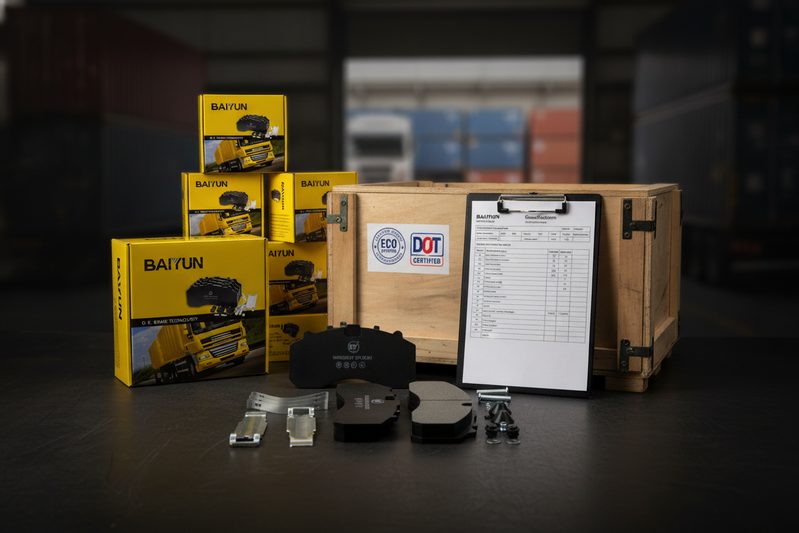
If you're building your 2027 import plan, certification shouldn't be the afterthought in column Z of your spreadsheet. It's the gatekeeper that determines which containers get unloaded and which get returned. The margins you lose to demurrage, the market share you cede to pre-certified competitors, the relationships that sour when promised delivery dates slip—those are the true costs of underestimating this line item.
Over 49 years of putting friction materials into containers bound for 45+ countries, BAIYUN Brake has learned that the most valuable export document isn't the invoice or the bill of lading. It's the approval certificate that clears customs before the vessel even docks. Our technical team can walk you through the certification pathways for any market on your target list, and we'll show you exactly which cost elements you can eliminate by plugging into our existing approval library.
If you're ready to turn certification from a headache into a competitive tool, contact our export team for a detailed quote on your specific vehicle coverage needs. Or wholesale car brake pads inquiry that come with the paperwork you actually need—not the paperwork you'll have to create from scratch.
Was this article helpful?
Average Rating: 5/5 (635)