
Ceramic Brake Pads: The Importer’s Complete Buying Guide
Summary:
This complete guide for importers details how to source high-quality ceramic brake pads from a ceramic brake pads manufacturer China. It focuses on decoding technical specifications like friction coefficients and compressibility, navigating essential compliance standards including ECE R90 and IATF 16949, and performing critical quality checks before ordering. Learn the key tests and business considerations for building a profitable and reliable ceramic brake pad supply line.
Ceramic Brake Pads: The Importer's Complete Buying Guide
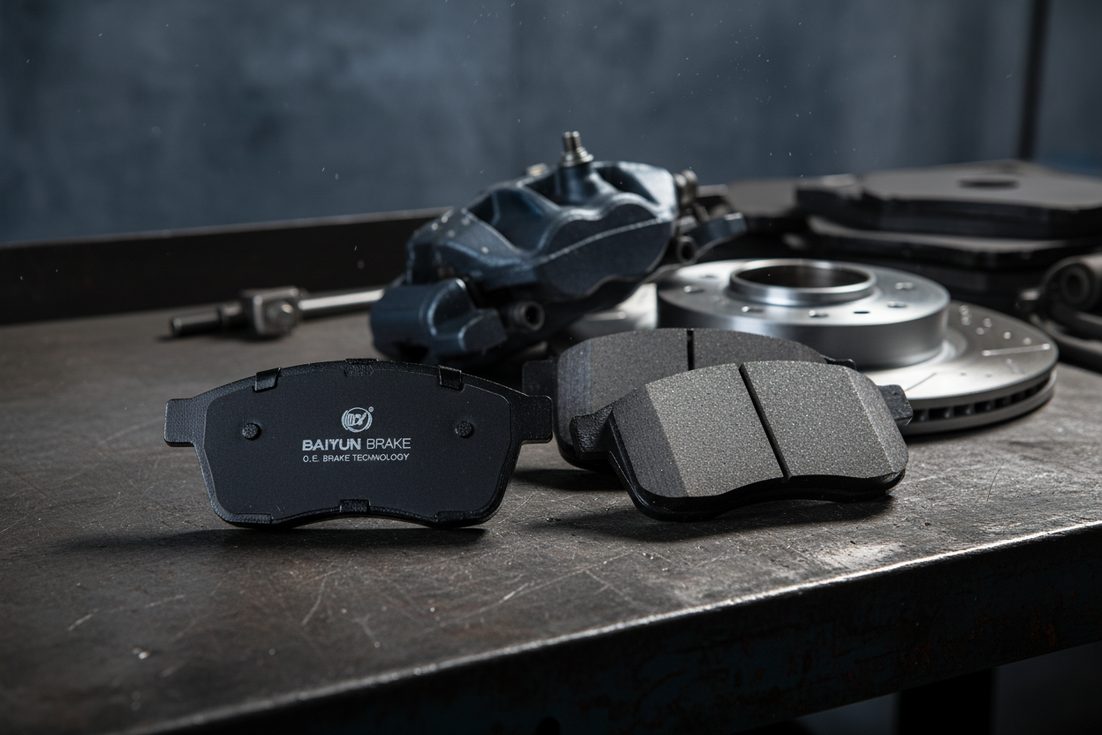
If you're sourcing brake pads for the global aftermarket, you've seen the demand for ceramic formulas surge. It's not just a trend; it's a shift in consumer preference driven by performance and cleanliness. But not all ceramic brake pads are created equal. The difference between a profitable, high-return line and a costly headache of returns often lies in the technical specifications and compliance details most catalogs gloss over.
This guide cuts through the marketing to focus on what matters for your business: understanding the technical benchmarks, test standards, and manufacturing quality that define a superior ceramic brake pad from a ceramic brake pads manufacturer China. We'll give you the checklist you need to evaluate suppliers confidently.
Beyond the Marketing: Decoding Ceramic Pad Specifications
Every supplier talks about low dust and quiet operation. You need to ask for the data that proves it. The core of a ceramic pad's performance is its friction material formulation and how it's tested.
Start with the friction coefficient (μ). A true ceramic formula for passenger cars typically operates in the "EF" or "GG" friction rating range per the SAE J866 standard. This translates to a μ between 0.35–0.45 for normal operating temperatures. Why does this range matter? Pads below 0.35 can feel weak and increase stopping distances, especially when wet. Pads pushed too high above 0.45 for a street application can be grabby, increase rotor wear, and generate excessive heat. Ask your potential ceramic brake pads manufacturer China partner for the official friction rating and the test report showing the curve across temperatures.
Then, look at compressibility. High-quality ceramic compounds have low compressibility (often below 3%). This is critical for pedal feel. A pad that compresses too much gives a spongy, inconsistent pedal—a top complaint from installers and end-users. It's a spec many factories don't test, but leaders like BAIYUN Brake monitor it rigorously in our quality assurance process.
Finally, examine the formulation details. Premium ceramics use a dense ceramic-fiber composite with embedded copper or other non-ferrous fibers for thermal conductivity. The exact composition affects noise, wear, and rotor compatibility. A good supplier should be transparent about their base material philosophy. You can learn more about the science behind these materials in our guide on understanding brake pad materials.
The Compliance Landscape: ECE R90, IATF 16949, and What They Mean for You
Certifications are your safety net. They're not just plaques on a wall; they're evidence of a controlled, repeatable manufacturing process. For the European market, ECE R90 certification is non-negotiable. This regulation means the replacement pad has been tested against the vehicle manufacturer's original equipment (OE) performance standards for friction, wear, and noise.
Here's the importer's reality: an ECE R90 certified pad from an IATF 16949 certified facility like ours has undergone validated testing on an inertia dynamometer. The test simulates real-world conditions—multiple stops from high speed, fade cycles, recovery—and compares results directly to the OE part. Sourcing non-certified pads might save a few cents per set upfront, but it exposes you to liability and brand damage if performance fails. The certification is your proof of due diligence.
IATF 16949 goes deeper. It's the global technical specification for automotive quality management systems. It mandates advanced product quality planning (APQP), production part approval processes (PPAP), and strict control over every production step. A factory with this certification isn't just making brake pads; it's managing risk, traceability, and continuous improvement at an automotive OE level. When you partner with a BAIYUN Brake, you're leveraging our 49+ years of manufacturing experience within this disciplined framework.

Ceramic vs. Metallic & Organic: A Performance & Business Analysis
You know the basic sales points: ceramics are quiet and clean, metallics are durable and heat-tolerant, organics are soft and cheap. Let's translate that into inventory and margin strategy.
Ceramic pads excel in the high-volume, high-margin passenger car segment—especially for sedans, SUVs, and crossovers where drivers prioritize comfort. They generate up to 70% less dust than semi-metallics. That's not just a clean wheel claim; it means fewer corrosive deposits on expensive alloy wheels and less abrasive dust wearing on the pad and rotor surface. The result? You'll see longer pad and rotor life, which reduces comebacks for your installer customers. The trade-off is they generally have a higher initial cost and can be less ideal for severe-duty towing or constant aggressive driving where extreme, sustained heat is a factor.
Semi-metallic pads, with their higher metal content, dissipate heat faster. They're the workhorse for performance-oriented drivers, heavier vehicles, or markets with mountainous terrain. However, they're noisier, dustier, and more abrasive on rotors. Organic (NAO) pads are your entry-level option. They're quiet and rotor-friendly but wear quickly and can fade under moderate heat.
So what's the smart play? Stocking a premium ceramic line for 80% of your passenger car applications covers most customer needs profitably. Supplement it with a performance semi-metallic line for specific models and a value organic line for price-sensitive segments. This tiered approach maximizes your coverage and margin. To see how this applies to heavier vehicles, explore our dedicated C.V. brake pads range.
Key Tests & Quality Checks Before You Place an Order
Don't just take a sample and eyeball it. You need a systematic evaluation process. Here's what to request from your shortlisted ceramic brake pads manufacturer China:
- Third-Party Test Reports: Ask for a recent ECE R90 test report or an equivalent SAE J2522/ISO 26867 dynamometer test. Look for consistent friction levels, low wear rates, and acceptable noise levels throughout the test cycle.
- Material Data Sheets (MSDS/SDS): These documents list the composition. Ensure they are free from restricted substances like asbestos, heavy metals (lead, chromium VI), and copper below regulated thresholds (moving towards <0.5% in many regions).
- Sample Inspection: Check for precise chamfers and slots (they reduce noise), consistent application of shims (if included), and clean, even bonding between the friction material and the backing plate. Any rust on the backing plate or uneven adhesive is a major red flag. For a deeper dive into potential issues, our contaminated brake pad diagnosis guide is useful.
- Packaging & Labeling: Packaging should be robust to prevent damage in transit. Labels must be clear, legible, and include all legally required information: part number, friction code, manufacturer details, and certifications. Professional packaging protects your brand's image.
Requesting a passenger car brake pad test report is a standard and reasonable step for any serious buyer.
FAQ for Brake Pad Importers & Distributors
What's the typical minimum order quantity (MOQ) for ceramic pads from a Chinese manufacturer?
MOQs vary widely. For a standard passenger car part number, expect an MOQ between 100–500 sets per SKU from a reputable factory. Smaller factories might accept 50 sets, but be wary of quality consistency. Larger manufacturers may require 500–1000 sets but offer better pricing, full certification, and reliable supply. Always clarify if the MOQ is for a single SKU or can be mixed across a container.
How do I ensure the ceramic pads I import are truly ECE R90 certified?
First, ask for the official ECE R90 test certificate, which will have a unique approval number (e.g., E1 90R-XXXXXX). Second, verify that the manufacturer's factory code is listed on the certificate. Third, check that the packaging and the pad backing plate are marked with the "E" mark and the approval number. The mark should be permanently stamped or etched, not just a sticker.
What's the lead time I should expect, and how can I manage supply chain risk?
Standard lead times range from 30–60 days after order confirmation, depending on the factory's schedule and whether the parts are in stock. For new tooling, add 4–6 weeks. To manage risk, diversify your sourcing for critical SKUs, maintain a safety stock of fast-moving parts, and work with manufacturers who provide transparent production updates. Building a partnership with a manufacturer like BAIYUN, with our own brake manufacturing machinery, gives more control over the production timeline.
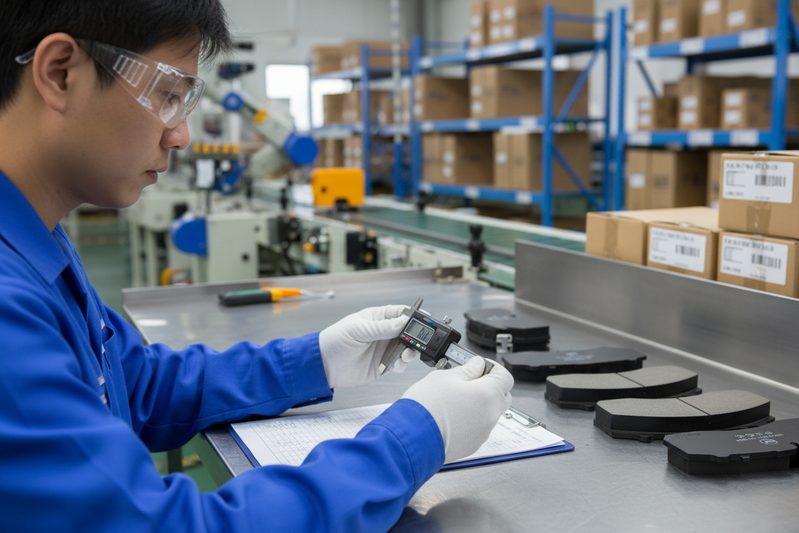
Choosing the right ceramic brake pad supplier is a technical and strategic decision. It impacts your product quality, brand reputation, and long-term profitability. Look beyond the price per set. Prioritize manufacturers who can provide hard data, legitimate certifications, and transparent communication. A partner invested in quality control and R&D, like BAIYUN Brake, becomes an extension of your own quality promise to the market.
Ready to evaluate a truly qualified partner? Contact us today to request certified samples, detailed test reports, and a quote for your target market. Let's discuss how our ECE R90 certified, IATF 16949 manufactured ceramic pads can strengthen your product lineup.
Was this article helpful?
Average Rating: 5/5 (2615)