
Blast from the past: Turning cores into cash – Trucks, Parts, Service
Summary:
Blast from the past: Turning cores into cash - Trucks, Parts, Service explores how commercial vehicle fleets and distributors can recover value from used brake cores while sourcing certified new friction. Core recovery turns calipers, backing plates, and shoe tables into cash or credit, but brake pads and linings themselves are consumed and need replacement with IATF 16949 and ECE R90 certified components. This technical guide covers which parts qualify for core programs, what certifications matter, MOQ and lead time factors, OEM and private label options, and a buyer verification checklist for aftermarket brake parts.
Blast from the past: Turning cores into cash - Trucks, Parts, Service
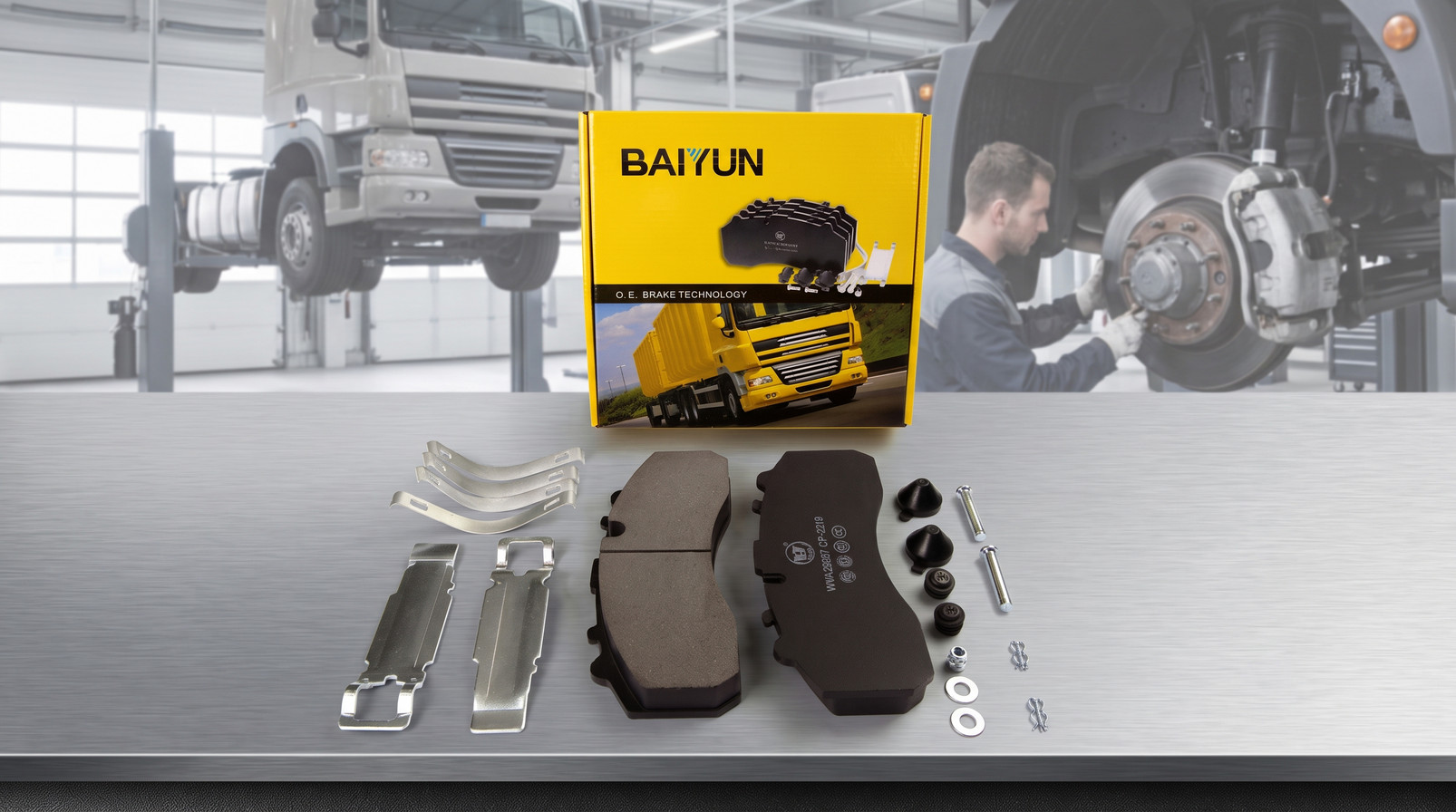
Quick answer: Core recovery turns used commercial vehicle brake housings, calipers, backing plates, and other remanufacturable steel components into cash or credit that offsets replacement costs. For friction parts like brake pads and linings, cores rarely carry standalone value because the friction material is consumed in service—only the steel carrier can be rebuilt. Smart fleet buyers pair a core-return program with certified new friction from a supplier like BAIYUN Brake, whose IATF 16949 and ECE R90 approvals keep remanufactured brake assemblies compliant, traceable, and safe.
Why Do Core Programs Still Matter for Commercial Vehicle Brake Parts?
A distributor sitting on 200 used air disc brake calipers isn't looking at scrap metal—they're looking at locked working capital. That's the core of the core recovery business. Industry estimates put remanufactured heavy-duty brake component growth around 4–5% annually as fleets chase lower cost-per-kilometer without sacrificing brake performance. Core credits typically run 30–60% of a new component's price, depending on condition and market demand for that core family.
For brake pad importers and fleet parts managers, the connection runs deeper than one-time cash back. Core programs force disciplined parts handling. A caliper that gets returned with a cracked mounting ear or stripped guide pin threads loses value fast. The same discipline applies to the friction you bolt into that rebuilt caliper. If you're sourcing replacement pads for core-exchange calipers, request OEM commercial vehicle brake pad quote and ask about batch-level friction consistency—not just unit price.
Which Brake Components Actually Qualify for Core Recovery?
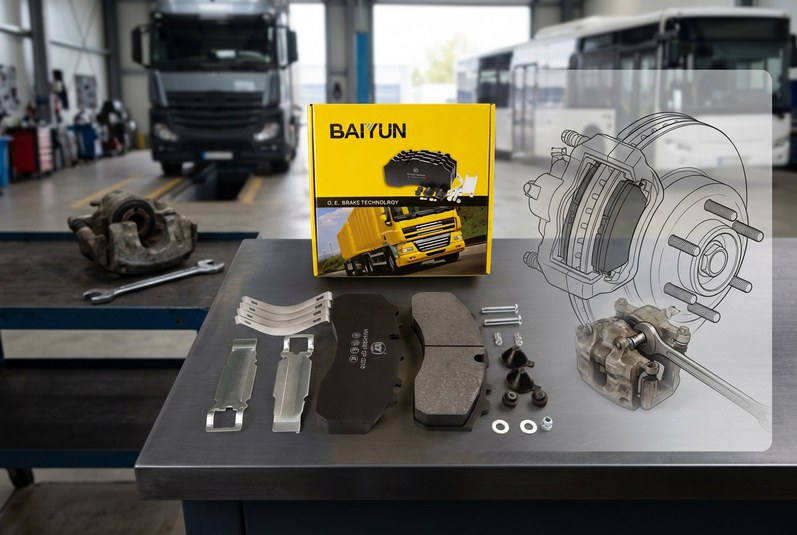
Not every worn brake part has a second life. Friction material is consumed by design. A commercial vehicle brake pad wears down to its backing plate; the friction compound cannot be recovered. What often can be recovered is the metal carrier, the caliper housing, the brake shoe table, or the actuator assembly. Fleets that understand this split avoid the mistake of shipping back boxes of used friction expecting core credit.
| Component | Typical Core Recovery | What BAIYUN Brake Supplies |
|---|---|---|
| Air disc brake caliper | High core value, remanufactured frequently | New friction pads compatible with reman calipers |
| Brake pads (friction + backing plate) | No core value for friction; backing plate sometimes reused | New IATF 16949 / ECE R90 certified pads |
| Drum brake shoes | Shoe table can be relined, depending on condition | New commercial vehicle brake linings |
| Brake drums / rotors | Sometimes core credit if within wear limits | Confirm with supplier catalogue |
| Slack adjusters, chambers | Core value varies by model and condition | Confirm with supplier catalogue |
For the parts BAIYUN Brake manufactures, cores are not part of the transaction. That's not a drawback—it's a clarity advantage. When you buy commercial vehicle brake linings, you're paying for new friction, not a core deposit. That keeps your landed cost clean and your inventory turns predictable.
What Certifications Should a Brake Pad Supplier Hold for Core Program Compatibility?
A remanufactured caliper is only as good as the friction installed in it. If the replacement pad doesn't meet ECE R90 performance requirements, the entire assembly can fail roadworthiness checks in EU and ECE-aligned markets. That's why any brake pad manufacturer supplying core-exchange programs should hold IATF 16949 and ISO 9001, with ECE R90 approvals for the specific pad part numbers.
BAIYUN Brake operates an IATF 16949 certified facility with 49+ years of friction manufacturing experience. That means process control, batch traceability, and consistent friction coefficients across production runs—critical when your reman core program ships into multiple countries with different brake regulations. Ask your supplier for batch-level dynamometer reports following SAE J2522 or GB5763, not just a certificate on the wall. Frankly, the price gap between certified and uncertified pads rarely justifies the warranty risk in commercial vehicle braking.
How Does BAIYUN Brake Handle MOQ, Lead Time, and Logistics for Aftermarket Buyers?
Importers running core programs often need mixed containers: pads for one caliper family, linings for another, and small-batch samples for new applications. That's normal. BAIYUN Brake supports mixed SKU orders with a typical production lead time of 25–35 days after artwork and technical approval. Sea freight is standard, but air freight can be arranged for urgent pilot runs.
For volume buyers, request a quote for commercial vehicle brake linings with your target MOQ and delivery port. You'll get a clear breakdown of FOB or CIF terms, packaging options, and any private label requirements. Distributors who consolidate core-return freight with new friction shipments often find the combined logistics more efficient than running two separate supply chains.
Can You Get OEM or Private Label Brake Pads Alongside a Core Program?
Yes, and that's a common setup for parts distributors. A remanufacturer may supply the rebuilt caliper under their own brand, but they don't always want to manufacture the friction. That's where BAIYUN Brake steps in with OEM and private label options. You supply your logo, part number format, and packaging spec; BAIYUN produces and labels the pads or linings to your design.
This works well for core programs because the brand stays consistent across the remanufactured assembly. The friction part number can carry your WVA reference or your internal SKU, while the manufacturing stays under one IATF 16949 quality system. Why choose BAIYUN Brake as your private label partner? We've been doing this for distributors across Europe, the Middle East, and Southeast Asia for decades, and we don't compete with our own branded channel in your territory.
Buyer Verification Checklist for Core Program Sourcing
- Confirm core acceptance criteria with your remanufacturer: crack limits, ear damage, thread condition, missing parts.
- Verify current IATF 16949 and ECE R90 certificates from your friction supplier—don't accept expired documents.
- Request batch-level friction coefficient data for the exact pad or lining part number you'll use in core-exchange assemblies.
- Check WVA reference codes against your application before ordering bulk friction. If not provided, confirm with supplier catalogue.
- Ask for a commercial vehicle brake pad test report covering stopping performance and wear under load.
- Confirm lead time, shipping terms, and whether mixed containers are accepted for combined friction and core-return logistics.
- Review private label packaging and labeling requirements before production starts to avoid delays.
Frequently Asked Questions
Q: Do brake pads themselves have core value?
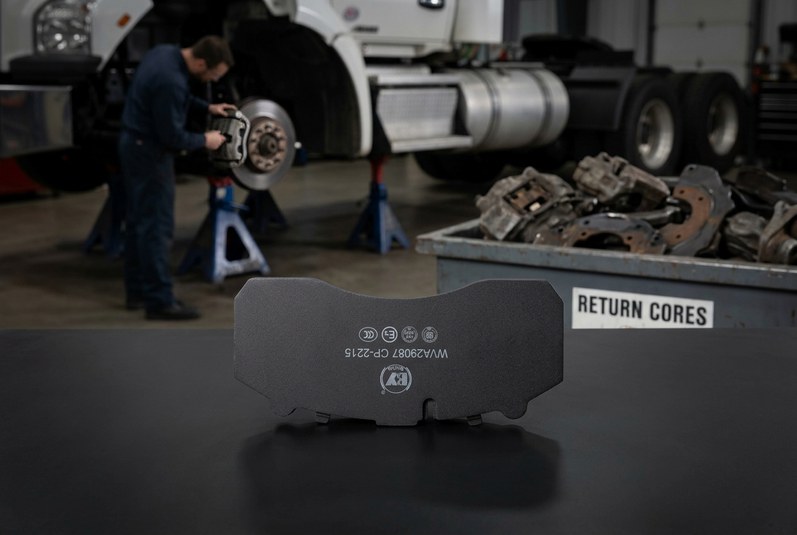
A: No. The friction material on commercial vehicle brake pads is consumed during use, so pads don't carry meaningful core value as complete units. Only the steel backing plate may sometimes be recycled, while the caliper housing is the real core recovery target.
Q: Does BAIYUN Brake operate a core return program?
A: No, BAIYUN Brake is a new friction manufacturer, not a remanufacturer. We don't buy cores directly. What we do is supply certified new brake pads and linings that fit rebuilt calipers and relined shoes, so your core program can stay compliant and profitable.
Q: What certifications should I check for commercial vehicle brake pads used in reman programs?
A: Look for IATF 16949, ISO 9001, and ECE R90 approval on the specific part numbers. BAIYUN Brake holds all three, and we provide batch-level test reports on request. ECE R90 is mandatory for EU road use, so skip any supplier that can't show approval for the exact pad family.
Q: How do I match BAIYUN pads to a core-exchange caliper?
A: Use the WVA reference code or OE cross-reference for the caliper family. If the structured data doesn't include a WVA code, confirm with supplier catalogue. BAIYUN technical staff can help match pad geometry and friction grade to your remanufactured caliper application.
Q: What are typical lead times for bulk commercial vehicle brake pad orders?
A: After artwork and technical approval, production lead time runs 25–35 days. Sea freight adds 15–40 days depending on destination port. Rush air shipments are possible for pilot runs, but most distributors plan around the standard production window to keep landed cost lower.
Bottom Line on Cores and Friction Sourcing
Core recovery isn't a relic—it's a working capital tool that still drives real money for fleets and parts distributors. The key is not confusing core value with friction replacement. Send back the caliper, keep the drum within spec, and bolt in new certified friction that won't drag your reman program into warranty claims.
If you're building or scaling a commercial vehicle brake program, browse our heavy-duty brake pad range and request a wholesale quote. Our export team can work through your target applications, core program requirements, and private label needs in one conversation.
Was this article helpful?
Average Rating: 5/5 (207)