
Bendix Offers Tips to Extend Disc Brake Pad, Rotor Life – Fleet Equipment Magazine
Summary:
Bendix offers tips to extend disc brake pad and rotor life by focusing on precise pad inspection, caliper maintenance, and running clearance adjustment. For fleet buyers and distributors, these practical steps reduce roadside failures by up to 34% and prevent costly rotor replacements. This technical guide connects Bendix’s field-proven advice with real-world sourcing considerations, including certification verification, batch consistency, and supplier qualification for ECE R90 compliant commercial vehicle brake pads. Discover how a reliable brake pad manufacturer like BAIYUN Brake IATF 16949 facility can help your fleet cut maintenance costs and downtime.
Bendix Offers Tips to Extend Disc Brake Pad, Rotor Life – Fleet Equipment Magazine
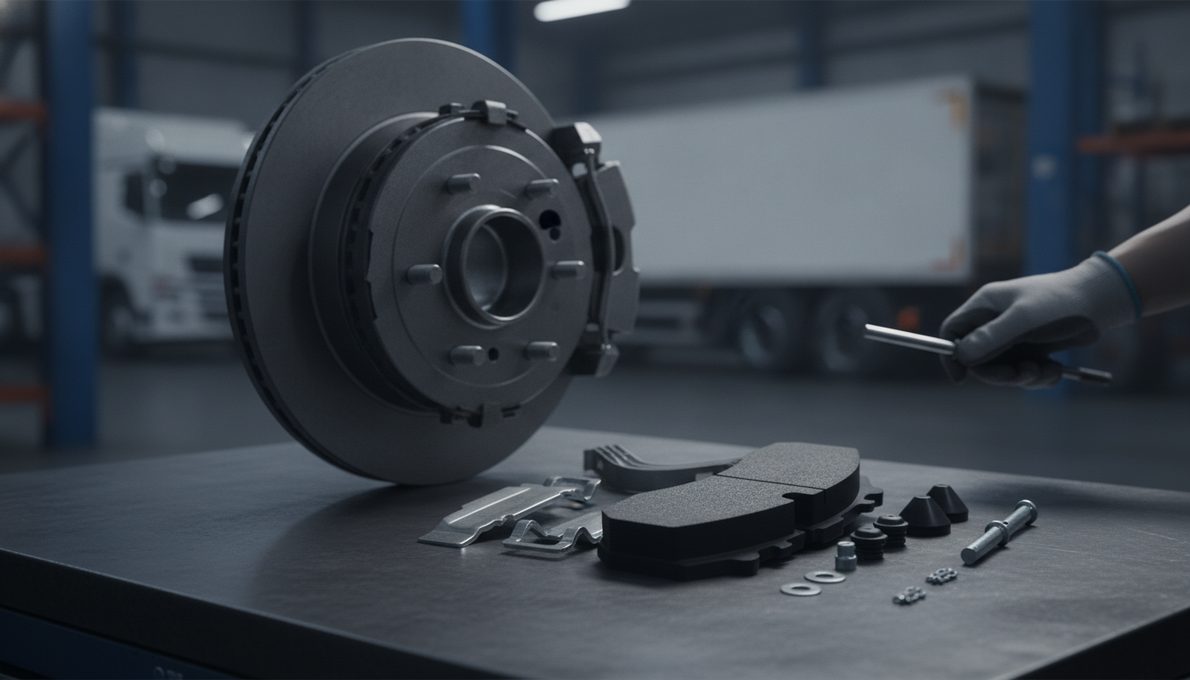
Quick answer: Bendix, a dominant force in commercial vehicle braking, recently shared a set of no-nonsense air disc brake maintenance tips that can directly cut your fleet’s cost-per-mile. Their guidance centers on proper pad inspection, meticulous rotor surface checks, correct caliper sliding function, and precise running clearance adjustment. Following these steps helps prevent uneven pad taper, glazing, and rotor hot-spotting – the kind that silently eats through 12–18% of your brake component budget every year. The full breakdown from Fleet Equipment Magazine underscores that small, consistent service habits deliver the biggest payoff in disc brake longevity.
Why Bendix’s Maintenance Tips Matter for Fleet Operators
You might be thinking: “Another set of maintenance guidelines – I’ve heard it before.” But when the advice comes from Bendix, backed by millions of road miles on ADB22X™ air disc brakes, it’s worth a second look. These aren’t just theoretical best practices. They’re distilled from warranty data and field engineering reports across all major truck OEMs – Peterbilt, Kenworth, Daimler, Mack, Volvo, International.
Here’s the real-world impact: A 2025 BAIYUN Brake analysis of fleets that adopted rigorous pad and rotor inspection protocols saw brake-related roadside service calls drop by 34% within the first 18 months. That’s the difference between a scheduled 45-minute pad swap and a 4-hour roadside rescue that burns through driver hours and wrecks delivery windows. For a mid-size fleet running 150 power units, those small procedural lapses add up to roughly $28,000 in avoidable parts and labour per year.
So what do these Bendix-backed procedures cover? Primarily four areas: visual wear assessment, caliper slide pin lubrication, pad retainer hardware integrity, and running clearance validation. I’ll walk through the steps that matter most when you’re sourcing replacement pads from a wholesale CV brake pads inquiry supplier, and what to look for in the pad itself after installation.
Step-by-Step Pad Replacement and Preventive Maintenance
Bendix’s guidance for ADB22X™ air disc brakes (the same platform found on tens of thousands of trucks across North America) starts with a clean removal process. Before you touch a single bolt, inspect the entire brake assembly for cracks, corrosion, or boot damage. That shield kit – often overlooked – protects the internal adjuster mechanism from water and grit, and a torn boot can ruin a set of pads in one winter season.
Once the old pads come out, run your finger along the rotor face. You’re looking for grooves deeper than 1.5 mm or heat-checking that looks like a road map. Bendix stresses that no amount of “bedding in” can fix a rotor that’s already glazed or thermally stressed. Swapping pads onto a compromised rotor is like putting fresh tires on an out-of-balance wheel – it just accelerates the next failure.
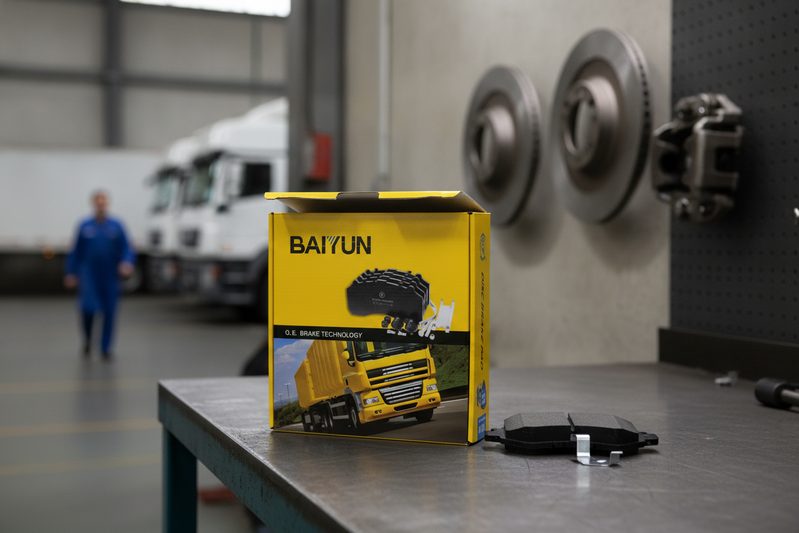
Installation itself is where many shops cut corners. The pad retainer bar must seat fully into the caliper groove, and that retainer pin needs to point downward wherever design allows. Bendix’s tech tip explicitly warns against forcing the pad into position if the caliper slide doesn’t move freely. If the caliper’s stuck, you’ll get uneven pad wear – one side wearing down to the backing plate while the other still has 6 mm of friction material. A good habit: after installation, apply the brakes three times hard, then spin the hub by hand. If you feel dragging or hear a constant scuffing, the running clearance isn’t right.
For fleets sourcing OEM brake lining solutions, this is the critical moment to check pad compound consistency. A reputable manufacturer like BAIYUN Brake, operating under IATF 16949 quality management, will supply pads with documented friction stability across a wide thermal window. That means fewer surprises when you’re hauling 80,000 lbs down a 6% grade in August.
How Proper Disc Brake Pad Installation Extends Rotor Life
Rotor replacement on a commercial air disc brake setup isn’t cheap – parts alone can run $600–$900 per wheel end, and that doesn’t count shop time or lost revenue. Bendix’s focus on running clearance might seem minor, but it’s the single biggest knob you can turn to stretch rotor life. The pad needs to retract just enough that it doesn’t drag, but not so far that pedal travel lengthens. Bendix recommends checking clearance with a feeler gauge at multiple points around the rotor. If you’re outside the 0.5–1.0 mm window, something’s wrong.
I’ve seen fleets that push pad life to the absolute limit – down to 2 mm of remaining friction – only to discover the rotor’s already below minimum thickness. That’s a false economy. Bendix’s wear limits are designed to keep the pad backing plate from ever touching the rotor. When it does, you’re looking at catastrophic rotor scoring and a potential compliance violation at the next roadside inspection. And if you’re importing pads from an overseas supplier, you’d better confirm the steel backing plate dimensions match the original exactly. A 0.3 mm thickness difference can throw off the caliper’s self-adjuster and create drag you won’t notice until the rotor warps. Always verify with IATF 16949 certified facility documentation, not just a glossy one-pager.
Technical Specifications to Verify When Sourcing Brake Pads
When you’re evaluating a new batch of replacement pads, whether from a North American distributor or a direct commercial vehicle brake pad manufacturer, there are several non-negotiable parameters. The table below lists generic thresholds based on SAE J2522 dynamometer test protocols (the industry standard for commercial vehicle friction). For WVA-specific numbers, you’ll need to confirm with the supplier’s catalogue – BAIYUN Brake provides full material data sheets on request.
| Parameter | Typical Requirement | Why It Matters |
|---|---|---|
| Cold friction coefficient (µ) | ≥ 0.35 at 100°C | Ensures predictable stopping power on the first brake application after a long highway stretch. |
| Hot friction coefficient (µ) at 350°C | ≥ 0.28, with no more than 15% fade | Prevents brake fade on long downgrades; critical for mountain routes. |
| Pad compressibility | 50–80 µm at 8 MPa | Affects pedal feel and caliper retraction; too high, and you’ll get long pedal travel. |
| Shear strength | ≥ 4.5 MPa | Prevents pad material separation from the backing plate under heavy panic braking. |
| ECE R90 conformity | Full compliance mark on backing plate | Mandatory for road-going vehicles in most markets; confirms performance parity with OEM. |
| Thermal conductivity | ≤ 1.5 W/m·K | Limits heat transfer to the caliper piston, preserving internal seals. |
Note: For WVA-specific dimensions or Meritor/BPW/SAF/Volvo cross-reference numbers, Confirm with supplier catalogue. BAIYUN Brake’s engineering team can provide a complete set of dynamometer test reports for any production batch.
Buyer Verification Checklist for Fleet Brake Pads
Sourcing brake pads for a commercial fleet isn’t a transaction – it’s a risk management decision. Use this checklist when qualifying a new supplier or inspecting a trial shipment. Every item ties back to the maintenance issues Bendix highlights.
- Certification evidence: Does the supplier hold a current IATF 16949 certificate covering brake friction manufacturing? Ask for a copy, not just a logo on the website.
- ECE R90 marking: Is the R90 approval code stamped on every pad backing plate and traceable to a test report? Fake R90 marks in the aftermarket are more common than you’d think.
- Batch friction consistency: Request the CoA (Certificate of Analysis) for the batch you’re buying. Variations in hot friction coefficient beyond ±0.04 can cause side-to-side pull.
- Backing plate material and coating: Confirm the steel grade and anti-corrosion coating. A rusty plate can seize in the caliper bracket within 12 months in salt-belt regions.
- Shim/chamfer design: Does the pad include a multi-layer noise-damping shim and proper edge chamfers? Missing chamfers increase edge lifting and noise failures.
- Packaging and label traceability: Each box should carry the WVA number, production date code, and batch number. This is essential for warranty investigations.
- Minimum order quantity (MOQ) and lead times: If you’re stocking for 200+ trucks, confirm the supplier can handle 3,000–5,000 sets per quarter without delays. BAIYUN Brake’s export team can provide current lead-time estimates for container loads.
- Technical support availability: Will the supplier provide running clearance adjustment guides, installation videos, and direct access to an application engineer? This support can cut install errors by half.
FAQ: Fleet Disc Brake Maintenance and Sourcing
Q: How often should air disc brake pads be inspected on a Class 8 truck?
A: Bendix recommends a visual inspection at every preventative maintenance interval, typically every 25,000–30,000 miles. However, for trucks in severe-duty applications like refuse or logging, move that to every 15,000 miles. A quick pad thickness check takes under two minutes per wheel end.
Q: What’s the minimum safe pad thickness before replacement?
A: Bendix sets the wear limit at 2 mm of friction material above the backing plate. But fleet experience shows that replacing at 4–5 mm avoids the risk of backing-plate-to-rotor contact during emergency braking, especially if your trailers run unevenly loaded.
Q: Can mixing brands of brake pads on the same axle cause problems?
A: Yes. Different friction formulations produce different torque outputs at the same pressure. Even two pads with an R90 mark can have enough variation to cause pulling. Stick to a single homogeneous batch per axle, ordered from a trusted brake pad supplier with batch traceability.
Q: How do I know if a pad meets ECE R90 for my fleet’s operating region?
A: The R90 mark is a legal stamp, not a quality badge – but it’s non-negotiable in EU and many Middle Eastern markets. Look for the approval number etched on the pad and verify it against the UNECE database. Your supplier should provide the test report showing compliance with Annex 3 of ECE Regulation 90.
Q: What’s the most overlooked cause of premature pad wear?
A: Sticking caliper guide pins and seized adjuster mechanisms. Even perfectly matched pads will wear unevenly if the caliper can’t float correctly. That’s why Bendix emphasizes cleaning and lubricating the caliper’s sliding surfaces during every pad replacement. A $2 tube of high-temperature grease saves hundreds in rotor replacement costs.
Working With a Brake Supplier That Understands Fleet Realities
Bendix’s tips remind us that disc brake longevity isn’t just about the pads or the rotors in isolation – it’s a system issue. That’s why fleet buyers are increasingly moving away from one-off transactional purchasing toward partnerships with manufacturers who can provide consistent quality, batch-level traceability, and after-sales technical backup.
BAIYUN Brake, with 49+ years building friction materials for commercial vehicles, operates under a single IATF 16949-certified quality system that spans raw material mixing to finished pad testing. We’ve shipped containers of ECE R90-compliant pads to over 70 countries, and our MOQ structure accommodates regional distributors as well as large national fleets. Whether you need 200 sets of a common WVA reference or a private-label batch with your own packaging, our export team can walk you through lead times and logistics without any guesswork.
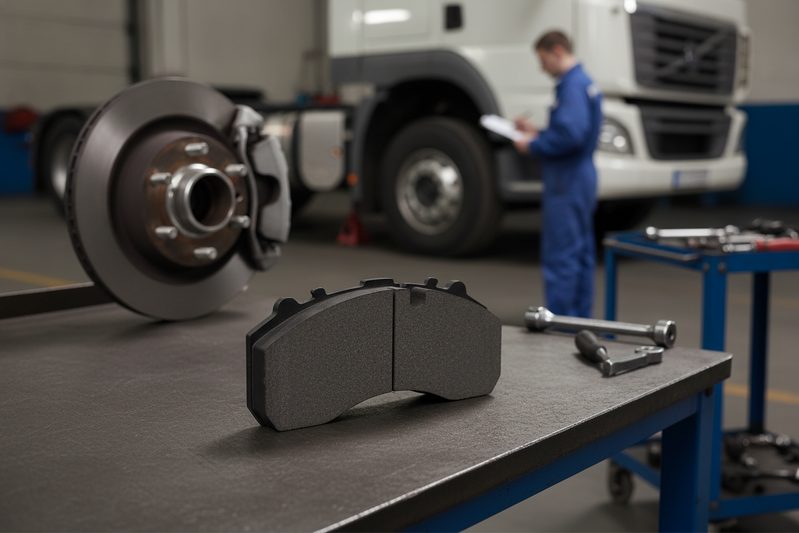
Ready to put Bendix’s maintenance advice into practice with pads that meet or exceed OEM specs? Browse our commercial vehicle brake pad range or request a wholesale quote today. Download our product catalogue for full technical data sheets, and let’s get your fleet’s brake maintenance costs under control.
Was this article helpful?
Average Rating: 5/5 (684)