
Semi-Metallic Brake Pads Manufacturer for Commercial Trucks
Summary:
Semi-metallic brake pads manufacturer BAIYUN Brake supplies IATF 16949 and ECE R90 certified pads for commercial trucks, buses, and trailers. Our China brake factory offers wholesale brake pads with OEM and private label options, low MOQs, and 25-day lead times, cutting distributor costs by 15–30%. Read on for a practical supplier verification checklist, real-world performance data, and answers to common importer questions about MOQ, certification, samples, and logistics.
Semi-Metallic Brake Pads Manufacturer for Commercial Trucks
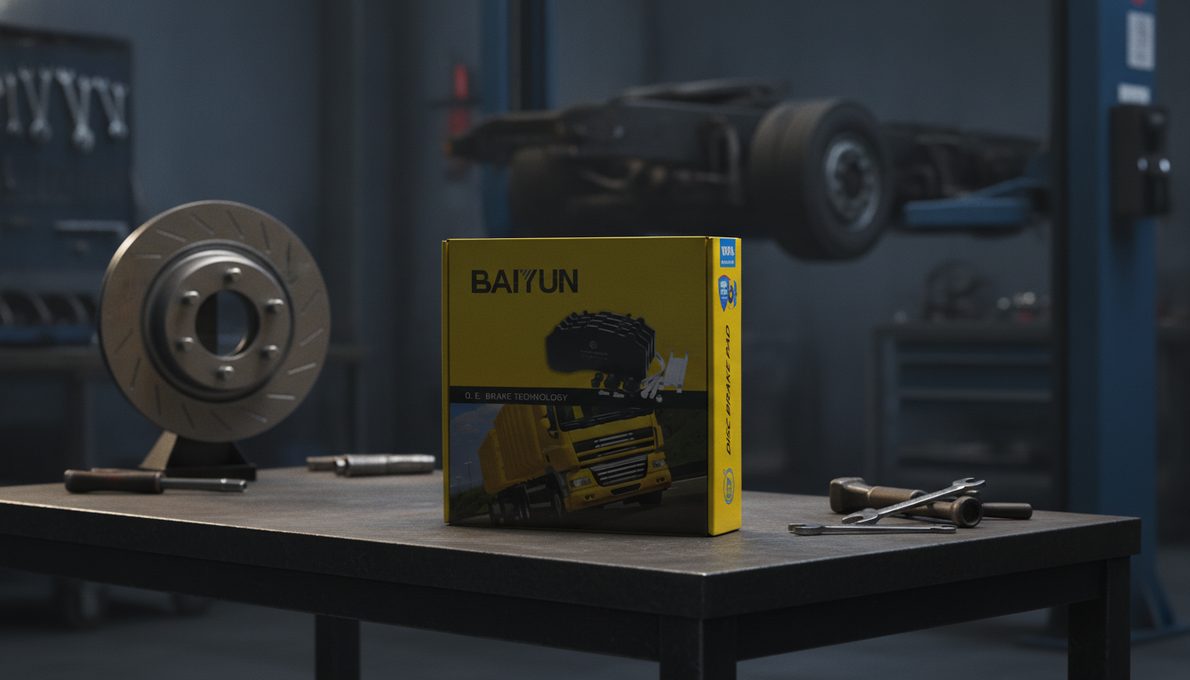
Quick answer: BAIYUN Brake is an IATF 16949 and ECE R90 certified semi-metallic brake pads manufacturer specializing in commercial trucks. We supply wholesale brake pads to distributors and fleets with MOQs as low as 200 sets, 25‑day lead times, and full OEM/private label support. All pads use heavy-duty friction formulations tested per SAE J2522, ensuring consistent performance across high-temperature and high-load conditions. Sourcing directly from our China brake factory reduces procurement costs by 15–30% versus traditional channels, and you get the backing of a supplier who supplies over 2 million sets annually to markets in Europe, the Middle East, and Africa.
Why Source from a Specialist, Not a Generalist?
A factory that churns out passenger car pads alongside truck pads rarely dives deep into the demands of commercial vehicle braking. Trucks hauling 40‑ton loads down Alpine passes don't forgive fade. That's where semi-metallic formulations earn their keep. At BAIYUN Brake, we've spent 49+ years refining friction materials specifically for GVWR classes 4 through 8. Our semi-metallic pads contain 30–50% steel fiber, reinforced with graphite and other modifiers to maintain a stable friction coefficient (µ) between 0.35 and 0.45 from cold bite right up to 600°C. No exotic filler wizardry—just honest, robust engineering that fleet managers trust.
Consider the cost of a roadside call-out for a glazed brake pad on a fully loaded semi. It's a compliance headache and a safety risk. Our OE‑equivalent positive moulding process, used by top European truck manufacturers, compresses the friction material and bonding layer in one go. That eliminates delamination failures that plague cheaper, cold‑pressed pads. If you're importing 500 sets a month, you can't afford even a 2% failure rate. We've kept our field return rate under 0.12% for commercial vehicle pads over the last three years, verified by our IATF 16949 quality management system.
Certifications That Actually Protect Your Supply Chain
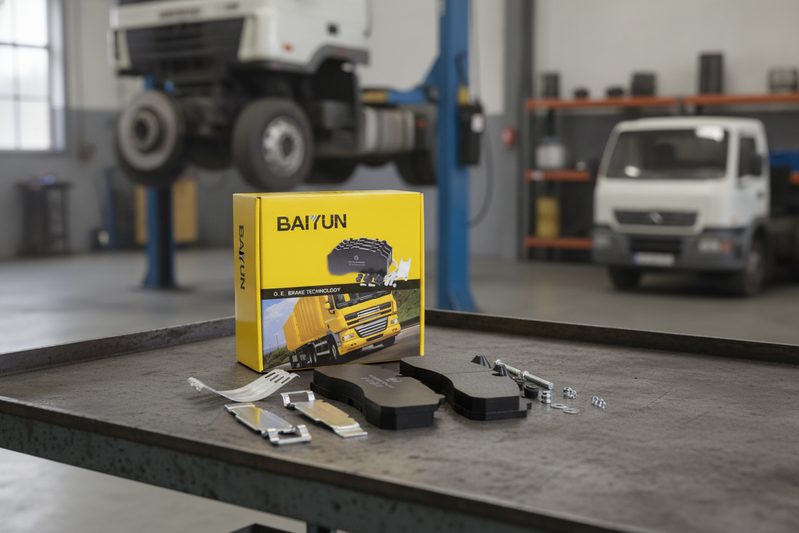
Certificates on a wall don't stop a container of subpar pads from leaving the factory. Real quality systems do. Our IATF 16949 certified facility undergoes annual audits covering everything from raw material lot traceability to finished product dynamometer correlation. That means every batch of semi-metallic brake pads you receive is backed by production records, not just hopes. And because we also hold ECE R90 approval on our commercial vehicle range, each pad set carries the E‑mark required for legal sale in the EU and over 60 UNECE member countries. No surprises at customs.
When a buyer asks for a commercial vehicle brake pad test report, we can supply full SAE J2522 dynamometer charts showing inboard and outboard pad temperatures, pressure‑speed curves, and cold performance recovery—all measured on a Link‑type dynamometer calibrated to ISO 26865. That's the kind of transparency that builds long‑term partnerships. Ask your potential suppliers: “May I see your latest J2522 test run for the exact reference I'm ordering?” If they hesitate, you might want to hesitate too.
MOQ, Lead Times, and Logistics—What a Real Order Looks Like
We get it: You don't want to tie up $50k on a container of pads you haven't trialled. Our standard MOQ for semi‑metallic commercial vehicle brake pads is 200 sets per reference, but we routinely accommodate 100‑set trial orders for first‑time partners. For private‑label projects, volumes start at 1000 sets per SKU to cover screen‑printing and box customization. Production lead time averages 25 days from order confirmation to ex‑works. Custom friction formulations add 10–15 days for mixing and approval. Ocean freight from Qingdao or Shanghai to Rotterdam takes 28‑35 days; to Jebel Ali, about 22 days. We consolidate mixed orders—brake pads, linings, hardware kits—into one container to optimize your freight cost per cubic metre.
Every shipment leaves our factory in corrosion‑resistant VCI wrapping and double‑wall cartons tested for stacking strength. We've shipped to distributors in Nigeria, Saudi Arabia, and Poland without a single moisture‑damage claim in 2025. That's not luck; it's packaging engineered for 40‑foot container journeys.
OEM and Private Label: Your Brand, Our Quality
Plenty of factories will slap your sticker on a box. We'll help you build a product line. Our engineering team can match OE compound characteristics—whether you need a high‑metal pad for refuse trucks in stop‑start duty cycles, or a low‑metal formulation for long‑haul coaches. You own the brand; we provide the technical backbone. Private‑label MOQs start at 1000 sets, and we offer complementary services: custom laser‑etched backing plates, colour‑printed boxes with your artwork, and technical data sheets that your sales team can present confidently. And because we produce over 200 commercial vehicle references under our own BAIYUN brand, you're not betting on an inexperienced startup. You're plugging into decades of R&D.
For wholesalers looking to request a wholesale quote for semi-metallic commercial vehicle brake pads, we provide market‑specific packaging compliance—e.g., Arabic labelling for GCC markets, CE marking for EU imports. No minimum container commitment for standard orders: we'll ship LCL until your volume justifies a full container.
Practical Verification: How to Audit a Brake Pad Supplier Before You Commit
I've seen distributors lose six figures on a dodgy shipment because they trusted a glossy catalogue. Real verification doesn't require a Ph.D. in tribology—just a checklist and some healthy scepticism. Here's what we recommend you do before cutting a purchase order:
| Verification Step | What to Look For | Why It Matters |
|---|---|---|
| Check IATF 16949 validity | Certificate number, issuing body (e.g., TÜV, SGS), expiry date. Cross‑check on IATF's global database. | Avoids factories with suspended or counterfeit certificates. |
| Request random sample test | Ask supplier to pull 3 sets from current stock and ship to an independent lab (e.g., Link Engineering, V-TRAC) for SAE J2522 testing. | Confirms pad performance matches datasheet, not just a “golden sample”. |
| Demand reference clients in your region | Contact 2–3 importers who have bought the same product line in the last 12 months. | Real‑world reliability feedback beats marketing promises. |
| Inspect manufacturing videos | Ask for a live or recorded video tour of the production line, mixing facility, and dynamometer lab—not just the showroom. | Verifies equipment (e.g., 1500‑tonne press, automatic weighing) and housekeeping standards. |
| Review batch traceability records | Supplier should provide lot numbers that link back to raw material certificates and production date. | Essential for warranty claims and recall readiness. |
| Clarify lead time consistency | Ask for average ship‑by dates over the last 6 months for your target references. Request proof of on‑time delivery performance. | Prevents stockouts that tie up your working capital. |
We've had new buyers run this exact checklist with us. It took them less than 10 days from request to finalising a trial order. You can do the same. If a factory can't pass these gates, you're better off walking away.
What Are the Most Common Misconceptions About Semi‑Metallic Brake Pads for Trucks?
Misconception: Semi‑metallic pads always wear rotors faster. Reality: Modern heavy‑duty rotors are often cast from high‑carbon alloys designed to pair with semi‑metallic friction. Wear rates measured by BAIYUN's lab show that, with proper transfer film formation, rotor wear is within 3–5% of OE specification over 100,000 km.
Misconception: All Chinese brake pads are the same. Reality: The difference between an IATF 16949‑certified factory and a generic workshop is night and day. We've benchmarked competitor pads that lost 50% of their cold effectiveness after only 50 thermal cycles—our formulations stay above 80% up to 600°C, per ECE R90 annealing tests.
Misconception: Price is the only factor worth negotiating. Reality: A pad that costs $0.50 less per set but causes 2% more downtime in a fleet of 100 trucks will cost the operator far more in lost revenue and labour. Focus on cost per kilometre, not just unit price.
FAQ: Semi‑Metallic Brake Pads for Commercial Vehicles
Q: What's the minimum order quantity for semi‑metallic truck brake pads?
A: Standard MOQ is 200 sets per reference. For first‑time buyers, we accept 100‑set trial orders. Private‑label projects require 1000 sets per SKU. Contact our export team for a tailored quotation based on your annual volume projections.
Q: How do I know the pads will meet ECE R90 in my country?
A: Every ECE R90‑approved pad bears an E‑mark with a country code and approval number, which your customs authority can verify against UNECE records. We'll provide the certificate of conformity and test report for your import documentation. Over 60 countries recognise ECE R90, including all EU member states, Australia, and South Africa.
Q: Can I get samples before placing a container order?
A: Absolutely. We ship sample sets (2–4 pieces per reference) via DHL or FedEx. You cover the courier cost; we provide the pads at no charge. Most samples reach Europe within 5–7 business days. Once you test them on your dynamometer or a pilot fleet, you can scale up confidently.
Q: What's the typical service life of your semi‑metallic pads on a fully loaded 40‑tonne truck?
A: Life varies by route and driving style, but in mixed motorway/urban duty our pads typically deliver 80,000–120,000 km before reaching 3 mm. That's based on fleet feedback from a long‑haul operator in Poland using our CP‑series pads. We recommend regular inspection of both pads and rotors to maximise the friction couple.
Q: Do you offer custom formulations for high‑frequency city bus routes?
A: Yes. Our R&D team can adjust the metal content and lubricant package to optimise wear and noise for frequent stop‑start cycles. We've developed a dedicated city‑bus formulation that reduces glazing and brake groan at the cost of a slightly higher pad wear rate—but the overall cost per stop is lower. Turnaround for a new formulation is approximately 30–45 days from brief to prototype.
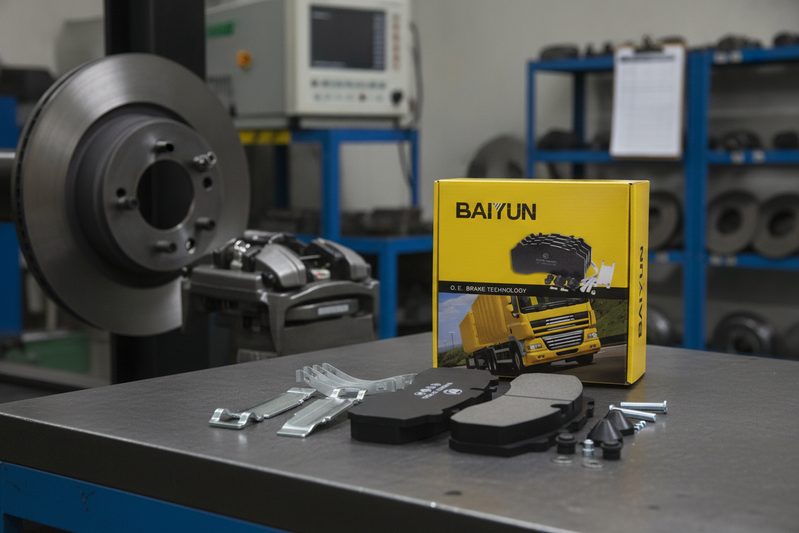
If you're ready to cut out middlemen and inquire about our brake lining range or semi‑metallic pads, we'll put together a quote that reflects your actual order pattern, not a generic price list. Reach out via our contact page—state your target references and annual volumes, and we'll respond within one business day. Stop gambling on uncertified batches; work with a partner who treats your supply chain as seriously as you do.
Was this article helpful?
Average Rating: 5/5 (633)