Bendix Expands Heavy-Duty Aftermarket Brake Shoe Line: What Fleet Buyers Need to Know
Summary:
Bendix Expands Heavy-Duty Aftermarket Brake Shoe Line: Heavy Duty Trucking reports a new steel/coreless aftermarket brake shoe with e-coat corrosion protection and no core charges. For fleet buyers, distributors, and maintenance teams, this announcement highlights the shift toward corrosion-resistant, core-free friction. Learn what to verify when sourcing commercial vehicle brake pads and linings, including ECE R90 and IATF 16949 certifications, WVA references, and OEM/private label options. BAIYUN Brake offers IATF 16949 and ECE R90 certified commercial vehicle brake pads and linings with flexible MOQ and logistics support.
Bendix Expands Heavy-Duty Aftermarket Brake Shoe Line: What Fleet Buyers Need to Know
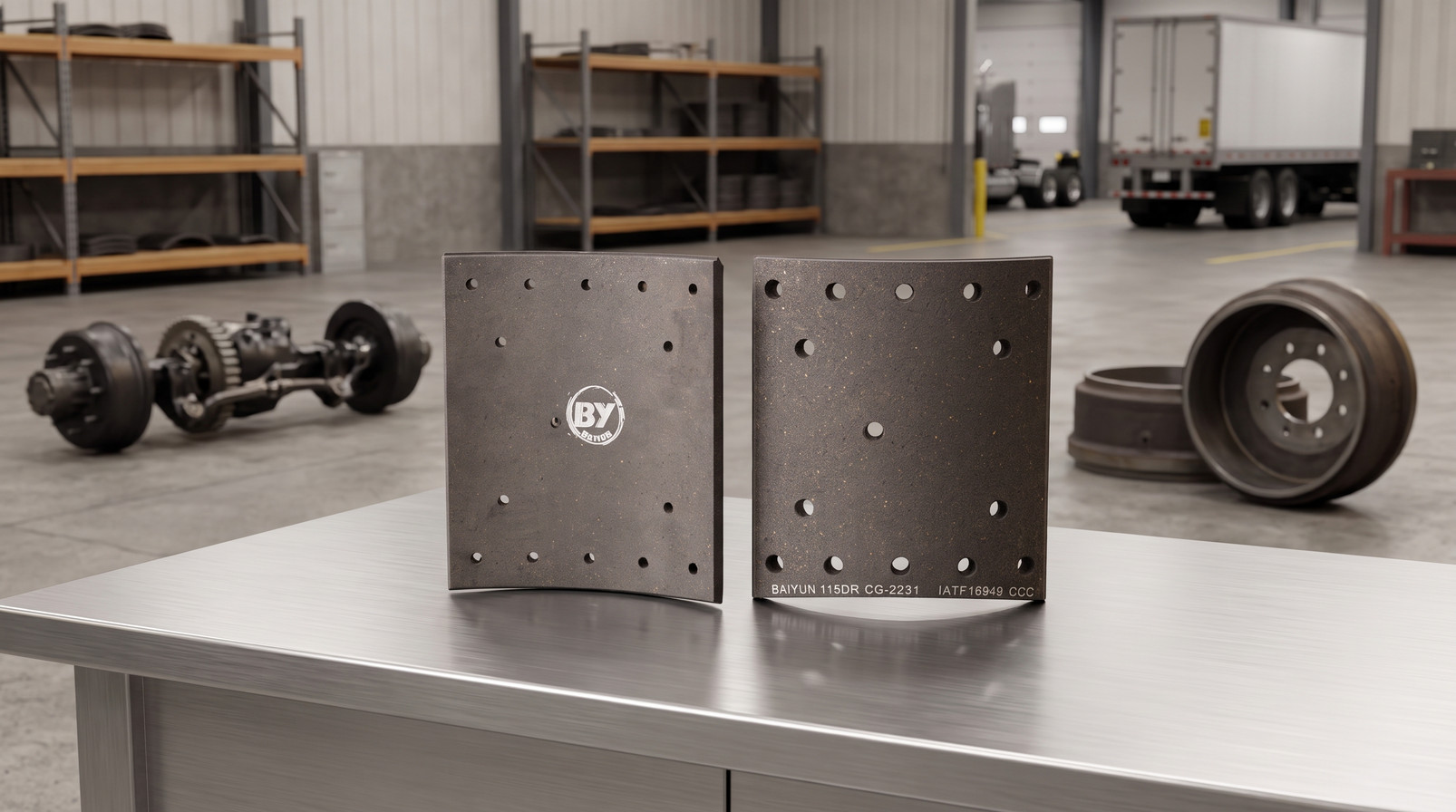
Quick answer: Bendix announced a new steel/coreless aftermarket brake shoe at Heavy Duty Aftermarket Week in Las Vegas. The shoe eliminates core charges and uses an e-coat process to reduce rust jacking, a failure mode where corrosion under the lining cracks the friction material. For fleet buyers and distributors, this shifts aftermarket sourcing toward corrosion-resistant designs and core-free logistics. BAIYUN Brake offers IATF 16949 and ECE R90 certified commercial vehicle brake pads and linings with similar corrosion-control priorities, plus OEM and private label options for distributors who need reliable heavy-duty friction without chasing core returns.
Rust jacking isn't a new headache. Maintenance teams in coastal or winter-heavy regions see it constantly: moisture wicks between the steel shoe table and the friction lining, corrosion builds, and the lining lifts or cracks. Bendix's move to a coreless steel shoe with e-coat addresses that directly. But the announcement also signals a broader aftermarket shift—one where fleet buyers should question old assumptions about reman cores, coating quality, and supplier qualification.
What Exactly Did Bendix Announce at Heavy Duty Aftermarket Week?
Bendix expanded its aftermarket brake shoe lineup with a new steel/coreless shoe available in Bendix Basic Friction or Bendix Advanced Friction lines. The company says the design eliminates core charges entirely. For distributors, that's a logistics win: no more tracking core credits, no more sorting used shoes, no more customer disputes over core condition. The new shoe also features an e-coat process for corrosion protection. Bendix specifically called out rust jacking prevention as the goal.
Rust jacking happens when rust builds up on the steel beneath a brake lining. That rust exerts upward pressure on the friction material, eventually cracking it. On a heavy-duty truck or trailer, a cracked lining can mean uneven braking, premature wear, and a roadside inspection failure. Fleet buyers don't need to be metallurgists to see why a coated shoe table matters.
Why Does Coreless Design and E-Coating Matter for Fleet Maintenance Budgets?
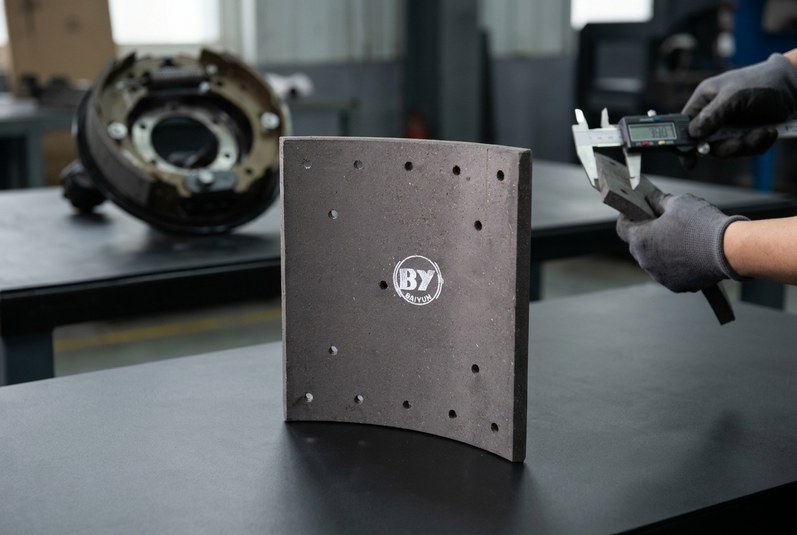
Core charges have always been a hidden tax on brake shoe inventory. You pay a deposit, you hope the return process goes smoothly, and you fight over whether a core is reusable. Bendix removing core charges from this line means fewer working capital dollars tied up in core floats. For a distributor stocking 500 sets, that's real cash flow relief.
The e-coat angle is less visible but more important for total cost of ownership. Brake shoe tables on commercial vehicles live in a harsh environment: road salt, washout from pressure washers, condensation from air brake systems. Uncoated steel rusts. Once rust starts, lining adhesion fails. E-coat isn't paint—it's an electrodeposition coating that reaches recesses and edges better than spray coatings. That's why OEMs have used it on chassis components for decades. Seeing it on an aftermarket shoe is a sign that the aftermarket is finally adopting OEM-level corrosion control.
So what does this mean for your bottom line? Fewer premature lining failures, fewer roadside calls, and less downtime. A truck sitting at a shop for a brake shoe replacement costs far more than the part itself.
How Should Distributors and Fleet Buyers Evaluate Aftermarket Brake Shoe Suppliers?
Bendix makes a good product. But no fleet should single-source a wear item as critical as brake friction. Smart buyers qualify at least two or three suppliers, comparing not just price but certifications, friction consistency, coating quality, and lead time reliability. Here's what actually moves the needle when you're comparing suppliers:
- ECE R90 certification: In many markets, aftermarket brake linings and pads must carry ECE R90 approval to be legally fitted. Confirm the supplier's homologation covers your specific commercial vehicle applications.
- IATF 16949 quality management: This isn't a marketing badge. It means the manufacturer runs statistical process control on friction material mixing, curing, and dimensional checks. You need batch-to-batch consistency.
- Friction material options: Some fleets need high-friction linings for severe-duty refuse trucks. Others want long-life formulations for line-haul trailers. A supplier with multiple friction codes gives you flexibility without changing vendors.
- Corrosion protection on the shoe table: Ask whether the steel receives e-coat, powder coat, or no coating. Coatings aren't free, but they're cheaper than a warranty claim for rust-jacked linings.
- Core policy: Core-free or core-charge? Both models work, but you need clarity on return windows, core condition criteria, and freight responsibility.
BAIYUN Brake, for example, has been manufacturing commercial vehicle brake pads and linings for over 49 years. Our facility holds IATF 16949 and ISO 9001 certifications, and our aftermarket friction products meet ECE R90 requirements. We don't run a reman core program—our shoes and linings are new production, which sidesteps the core return headache entirely. That's an option many distributors overlook when they default to legacy reman suppliers.
Comparison: Bendix Coreless Shoe vs. Typical Aftermarket Requirements
| Feature | Bendix New Steel/Coreless Shoe (as announced) | Buyer Verification Checklist |
|---|---|---|
| Core charge | Eliminated | Confirm core policy in writing before first order |
| Corrosion protection | E-coat process | Ask for coating specification and salt spray test data |
| Friction lines | Bendix Basic or Advanced Friction | Request friction coefficient curves for your duty cycle |
| WVA reference | Not disclosed in announcement | Confirm with supplier catalogue |
| Certifications | Not disclosed in announcement | Verify ECE R90 approval for target market |
| Lead time / MOQ | Not disclosed in announcement | Confirm MOQ and shipping terms for your region |
Summary: Bendix removed a core charge and added an OEM-grade coating, but buyers still need to verify certifications, friction data, and logistics terms before switching suppliers.
BAIYUN Brake's Position in the Heavy-Duty Aftermarket Brake Segment
We're not Bendix. We don't pretend to be. But for importers and distributors who need a second source for commercial vehicle brake pads, linings, and shoes, BAIYUN Brake fills a specific gap: factory-direct pricing with IATF 16949 and ECE R90 documentation, without the core return complexity. Our commercial vehicle brake pads cover a wide range of truck and bus applications, and our commercial vehicle brake linings include heavy-duty formulations for trailers and severe-service fleets. We offer OEM and private label programs, so you can build your own brand on a proven manufacturing base.
One thing we hear from distributors is that core charges eat margin and admin time. We don't have them. Another thing we hear is that coating quality varies wildly between low-cost Asian suppliers. Our e-coat and powder coat options are specified per customer requirement, with salt spray test data available on request. If you're tired of wrestling with reman cores or inconsistent friction batches, it's worth asking for our material data sheets and test reports. Check our quality assurance page for certifications and inspection protocols.
Buyer Verification Checklist for Heavy-Duty Brake Shoes and Linings
Before you commit to any aftermarket brake shoe or lining supplier, run through this list. It'll save you from expensive field failures later.
- Request a copy of the supplier's ECE R90 approval certificate for the exact part numbers you're ordering.
- Ask for the IATF 16949 certificate and latest audit summary.
- Confirm WVA reference numbers for each lining or shoe. If not provided immediately, mark as Confirm with supplier catalogue.
- Request coefficient of friction data across operating temperature ranges (typically 100°C to 350°C for heavy-duty disc brakes).
- Check the steel shoe table coating: e-coat, powder coat, or bare steel? Request salt spray test hours if available.
- Clarify MOQ, lead time, packaging, and shipping Incoterms for your route.
- Ask about core charges or core-free terms, including any return freight responsibility.
- Get a sample batch and run it in your own fleet or on a dynamometer before volume orders.
Don't skip the sample step. A slick brochure doesn't stop a 40-tonne truck. Friction testing does.
Frequently Asked Questions for Wholesale Importers and Distributors
Q: Does Bendix's new coreless shoe mean I should stop stocking reman shoes?
A: Not necessarily. Coreless new shoes work well for fleets that hate core return admin, but reman still makes sense in some price-sensitive segments. Evaluate your customer base: if they complain about core charges, a coreless line is a strong addition. BAIYUN Brake's new production shoes also avoid core charges, giving you another core-free option.
Q: What's the difference between Bendix Basic Friction and Advanced Friction?
A: Bendix hasn't published detailed friction curves in the announcement. Typically, Basic lines target standard line-haul duty, while Advanced lines use higher-friction formulations for severe service. Always request the friction coefficient curve from your supplier before matching to a duty cycle. For BAIYUN Brake, we provide commercial vehicle brake pad and lining friction data on request.
Q: How do I confirm a WVA reference number for a brake shoe or lining?
A: The WVA number is a standardized identification code for friction materials. If a supplier doesn't list it, ask for their catalogue or technical data sheet. Without a WVA reference, cross-referencing and homologation checks become much harder. BAIYUN Brake lists WVA references for our commercial vehicle products in our downloadable catalogue.
Q: Are ECE R90 and IATF 16949 mandatory for aftermarket commercial vehicle brake parts?
A: In many regions, ECE R90 is legally required for aftermarket brake pads and linings fitted to on-road vehicles. IATF 16949 isn't a legal requirement but it's the quality management standard for automotive production, and most reputable OEM and Tier-1 buyers expect it. Always verify the homologation applies to your specific market.
Q: Can BAIYUN Brake supply private label brake shoes or linings with our branding?
A: Yes. We offer OEM and private label programs for commercial vehicle brake pads and linings. Minimum order quantities depend on the product line and friction formulation, but we regularly work with distributors who need custom packaging and part numbering. Contact our export team for a tailored quote.
What This Bendix Move Really Signals for the Aftermarket
Bendix isn't making this change for fun. They're responding to fleets fed up with core return hassles and rust-related lining failures. That pressure flows downstream: distributors who can't offer core-free, corrosion-resistant options will lose orders to those who can. It also pushes the whole supply chain toward OEM-grade corrosion control—which is overdue. For importers, the message is simple: don't wait for your current supplier to catch up. Start qualifying alternative sources now, before your customers ask.
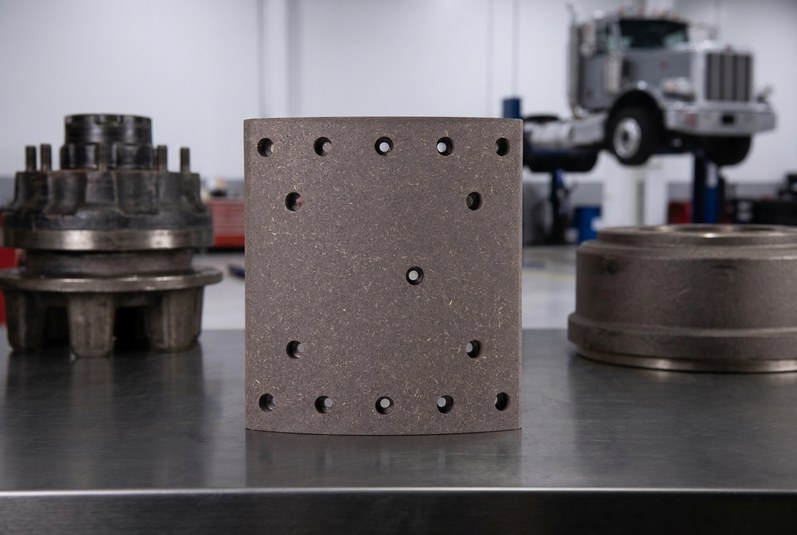
At BAIYUN Brake, we've been building commercial vehicle friction for nearly five decades. We know what fleets actually need: consistent friction, clean documentation, and no surprise core charges. If you're a distributor looking for a second source or a private label program, contact us for a quote today. You can also browse our complete catalog to see our full range of commercial vehicle brake pads and linings.
For manufacturer and company information, see About BAIYUN.
Was this article helpful?
Average Rating: 5/5 (184)