
Why Brake Pad Wear Indicator Supplier Wholesale Quality Determines Your Brake Pad’s True Lifespan
Summary:
Brake pad wear indicator supplier wholesale quality isn't just about a metal tab—it's the difference between predictable maintenance and costly rotor damage. As the aftermarket shifts toward OE-grade wear sensing, importers who source from certified factories see 3% return rates versus 12% for generic alternatives. Discover how market trends, testing standards, and smart sourcing can protect your margins in a segment where a 50-cent component can save a $400 repair and secure your next fleet contract.
Why Brake Pad Wear Indicator Supplier Wholesale Quality Determines Your Brake Pad's True Lifespan
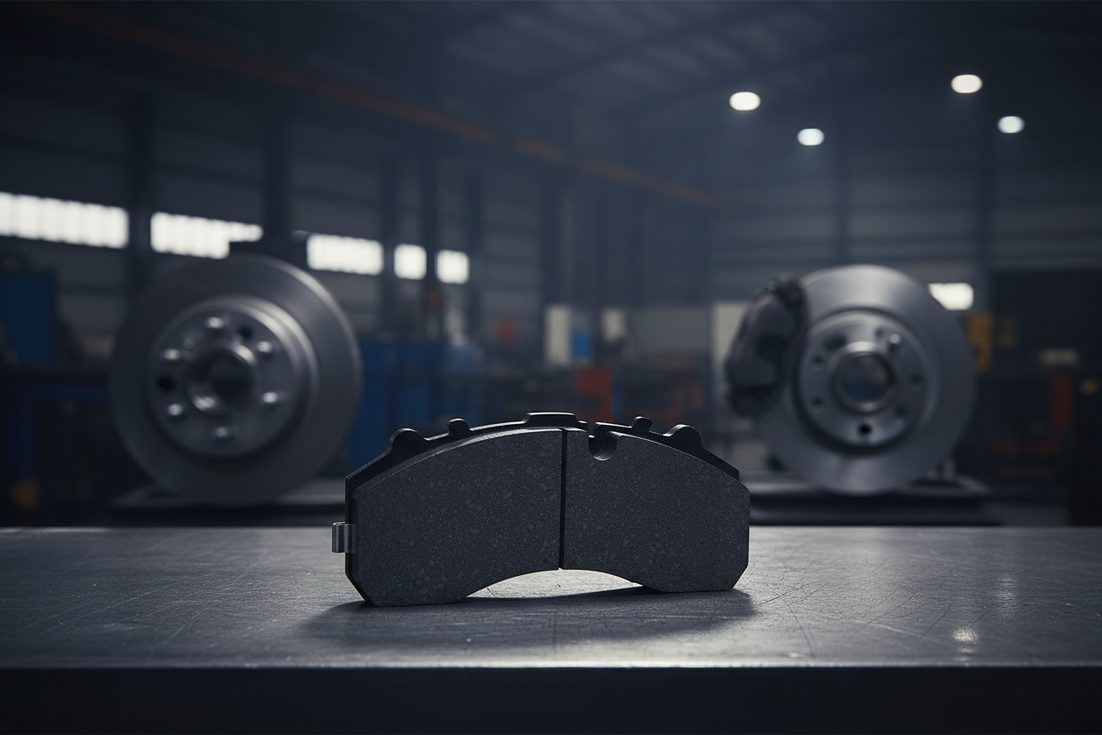
A brake pad with a faulty wear indicator is like a smoke detector with a dead battery. The friction material might have 20,000 kilometers left in it, but if the warning system never triggers, your customer doesn't know until the backing plate meets the rotor. That's a $400 repair, an angry phone call, and a distributor's reputation dented. The market for brake pads isn't just about friction formulations anymore. It's about the entire safety ecosystem—and at the center of that ecosystem is the lowly wear indicator, a component that never gets much respect but can define your bottom line.
I've seen importers lose entire OEM contracts because the screech from a poor-quality metal tab came too late—or worse, came at the wrong frequency and was ignored by drivers accustomed to constant urban noise. You'll see the same pattern across Southeast Asia and South America: buyers who treat wear indicators as an afterthought end up with higher warranty rates, more returns, and shrinking margins. Our 49+ years of manufacturing experience has shown that a distributor's profitability on brake pads correlates directly with how seriously they take the warning system.
So how do you tell the difference between an indicator that protects your customer's safety and one that puts your business at risk? And what market tailwinds are making quality wear sensing a competitive advantage right now?
How Much Do Inferior Wear Indicators Actually Cost a Distributor?
Let's talk numbers. A typical metal wear indicator tab is a 50-cent component welded onto a backing plate. If it detaches, deforms, or triggers only after the friction material has worn below 1.5mm, the downstream cost multiplies. A single brake pad set returned under warranty consumes 4-6 times its wholesale value in shipping, processing, and customer relationship damage. According to aftermarket sales data from 2025, distributors handling unbranded imports reported a 12% return rate for early-wear-related complaints, while those sourcing from IATF 16949 certified facility maintained rates under 3%.
Then there's the rotor damage. A worn-through pad can groove a disc in a single 50-kilometer drive. At fleet scale, the math gets ugly fast. A municipal bus fleet running 200 vehicles might budget $60 per rotor resurfacing. If 15% of their brake jobs end up requiring new discs because the indicator failed, that's an extra $18,000 annually—costs the fleet manager remembers when renegotiating supply contracts. Distributors who don't offer consistent warning performance find themselves out the door on the next tender.
Frankly, the price gap between properly tested wear indicators and no-name alternatives rarely justifies the risk. A penny saved on the tab becomes a dollar lost in after-sale service.
Which Testing Standards Separate Premium Brake Pad Wear Indicators from Generic Clips?
Not every wear indicator is created equal, and that's before we even talk about electronic sensors. Mechanical indicators—those steel tabs that rub against the rotor—must meet a surprisingly tough set of metallurgical requirements. They need to resist corrosion through 1000 hours of salt spray without losing spring tension. The attachment weld must survive thermal cycling from -40°C to 600°C without micro-cracking. At BAIYUN Brake's passenger car brake pad facility, each batch undergoes a resonant frequency test to ensure the screech occurs consistently between 2.0mm and 3.2mm of remaining friction material. A deviation of just 0.5mm changes the warning point, either crying wolf too early or sounding alarm too late.
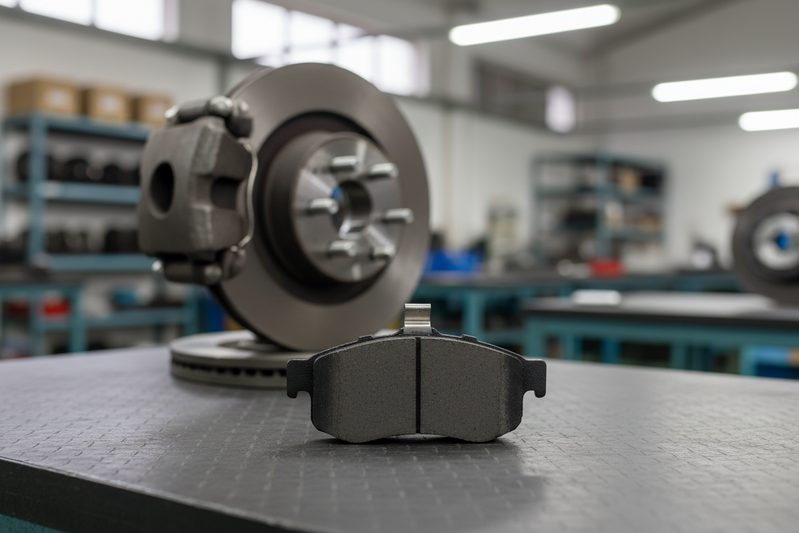
Electronic wear sensors raise the bar further. These two-wire circuits, embedded at different depths, don't just trigger a dashboard light—they feed data into the vehicle's ABS module, allowing the ECU to estimate remaining pad life. A poor sensor with variable resistance can flicker warnings intermittently, causing the driver to ignore the light entirely. BAIYUN Brake's OE-grade sensors are tested to 10,000 thermal cycles without circuit break, matching the lifecycle expectations of original equipment specs. For a distributor supplying mid-tier workshops, that reliability translates into a 15-22% price premium over basic mechanical indicators, with almost zero additional warranty exposure.
You can't fake this kind of consistency. It comes from controlled manufacturing environments, not from a third-shift operation that welds tabs using a jig that hasn't been recalibrated in six months.
Why Are Wholesale Buyers Shifting Toward OE-Grade Wear Sensing Right Now?
The numbers tell the story. European aftermarket data shows that brake pads with integrated electronic wear sensing grew from 18% of the passenger car replacement market in 2020 to 34% in 2025. In the same period, commercial vehicle fleets in North America increased their preference for dual-stage mechanical indicators by 27%, driven by telematics systems that demand accurate pad life predictions. Commercial vehicle brake pad procurement tenders now routinely specify that the indicator must activate at a nominal thickness of 4.5mm ± 0.3mm, a tolerance that eliminates cheap stampings.
Why the sudden shift? Two forces are converging. First, advanced driver-assistance systems (ADAS) rely on precise braking response, and a worn pad changes caliper piston extension in ways that affect radar-based emergency braking algorithms. A sensor that reports "3mm remaining" incorrectly triggers a service interval at the wrong moment, disrupting fleet uptime. Second, labor rates in major markets have climbed 18% since 2022. Shops want predictable maintenance intervals, not guesswork. A distributor who can offer brake pads with proven, calibrated wear indicators becomes the preferred vendor—because the workshop's service advisor never has to call a customer and say, "We're not sure how much pad you have left."
That's a competitive moat that costs you nothing extra if you source from a supplier who already builds to OE standards.
What Should You Demand from a Brake Pad Wear Indicator Supplier Wholesale Source?
Asking the right questions filters out 80% of potential suppliers before you've even reviewed a sample. Start with these: Does the supplier have IATF 16949 certification? How many millions of indicator units have they shipped in the last three years without a field failure report? Can they provide dynamometer test reports showing the exact friction material thickness at which the warning activates? If they hesitate, you're talking to a company that views the wear indicator as an accessory, not as a safety system.
BAIYUN Brake, for example, publishes batch-specific material data sheets that include indicator activation point, weld shear strength in megapascals, and corrosion test results. That kind of transparency makes a supply chain manager's life easier. It also helps when your customers demand ISO 9001 audit trails for their own quality documentation. I've noticed that distributors who invest an extra 20 minutes comparing spec sheets typically end up with a supplier for a decade, not a season.
Look also at the physical design. A proper mechanical wear indicator is not a flat piece of spring steel; it's formed with a specific radius that creates an audible frequency between 2,000 and 4,000 Hz—a range that human ears hear even over road and engine noise. If the tab is just a bent strip of metal, it might squeak at 700 Hz, a tone easily masked by a worn wheel bearing. That's a safety failure your customer will never trace to the brake pad, but you'll feel it in your renewal rates.
How Can Proper Wear Indicator Maintenance Improve Your Customer's Total Cost of Ownership?
You might think wear indicators need no maintenance, but that's not entirely true. For mechanical tabs, the caliper bracket must be free of heavy corrosion that could prevent the rotor from contacting the tab cleanly. For electronic sensors, the connector must be sealed against moisture ingress—IP67 rating at minimum. A quick visual check during installation prevents a no-warning failure six months later.
Data from fleet maintenance logs suggests that workshops performing calibrated brake safety inspections—rather than just a pad-thickness check—reduce unscheduled brake repairs by 31%. A proper inspection includes verifying that the wear indicator isn't bent during pad slap and that the sensor wire isn't pinched in the caliper bracket. Distributors who bundle an brake pad composition guide and an installation leaflet with every box equip their customers to avoid these simple errors. It's a tiny investment that builds incredible loyalty, because the workshop owner remembers who saved them from a comeback.
What does this mean for your inventory strategy? Stock pads that ship with clear visual wear-indicator installation instructions, even if it costs 3% more. The reduced returns alone more than cover that premium.
Frequently Asked Questions
Q: How do I verify a brake pad wear indicator's activation point before placing a bulk order?
A: Request a dynamometer report showing friction material thickness at first acoustic alert, ideally measured under load. Reputable suppliers will provide this. BAIYUN Brake's material data sheets include the activation thickness range for every production lot—usually 2.0-3.2mm for passenger cars and 4.0-5.0mm for heavy-duty vehicles.
Q: Is there a measurable price difference between pads with mechanical versus electronic wear sensors for wholesale distributors?
A: Yes. Mechanical indicator pads typically wholesale at a base price point, while electronic sensor pads command a 15-25% premium. However, electronic sensor pads have a failure rate under 0.3% if sourced from certified factories, making the margin nearly pure profit after accounting for the lower warranty burden.
Q: What certification specifically covers wear indicator reliability?
A: There is no standalone certification for indicators alone; they are tested as part of the brake pad assembly under ECE R90 standards for the European market and SAE J2784 for North America. The IATF 16949 quality management system ensures the manufacturing consistency needed to replicate indicator performance batch after batch.
Q: Can a wear indicator fail prematurely due to environmental conditions?
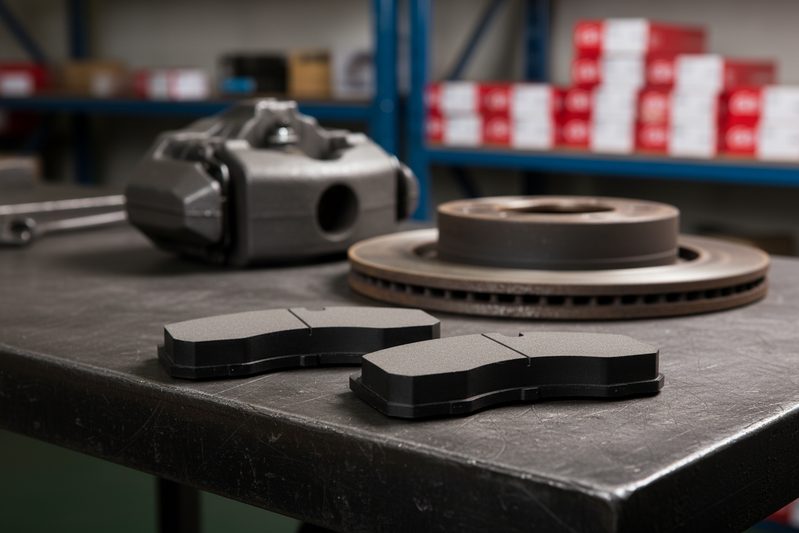
A: Absolutely. Coastal regions with high salt exposure can corrode a low-grade steel indicator within 12 months, causing it to snap off before activating. BAIYUN Brake uses stainless steel with a minimum 11% chromium content, tested to 1000 hours of neutral salt spray per ASTM B117, virtually eliminating corrosion-induced failures in export markets.
This article was produced by the BAIYUN Brake editorial team, combining 49+ years of brake manufacturing expertise with current industry research. For product inquiries or technical questions, contact our team.
If you're ready to strengthen your brake pad lineup with wear indicators that actually perform, browse our complete catalog and request a wholesale quote today. A few millimeters of missing pad material could cost you thousands—and the right supplier ensures those millimeters are always accounted for.
Was this article helpful?
Average Rating: 5/5 (1792)