Trailer axle brake lining replacement guide: Practical Guide for Commercial Vehicle Buyers
Summary:
Trailer axle brake lining replacement guide for commercial vehicle buyers. This practical guide focuses on fitment verification, cost control, and sourcing confidence for truck, trailer, and fleet operators. Learn how to check axle model, drum diameter, lining width, friction class, and mounting pattern before ordering. Understand why ECE R90 and IATF 16949 certifications matter more than price alone. Get a replacement checklist and see how BAIYUN Brake helps distributors and importers reduce rejections, downtime, and total axle maintenance cost. Request a wholesale quote for commercial vehicle brake linings and brake pads from our export team.
Trailer axle brake lining replacement guide: Practical Guide for Commercial Vehicle Buyers
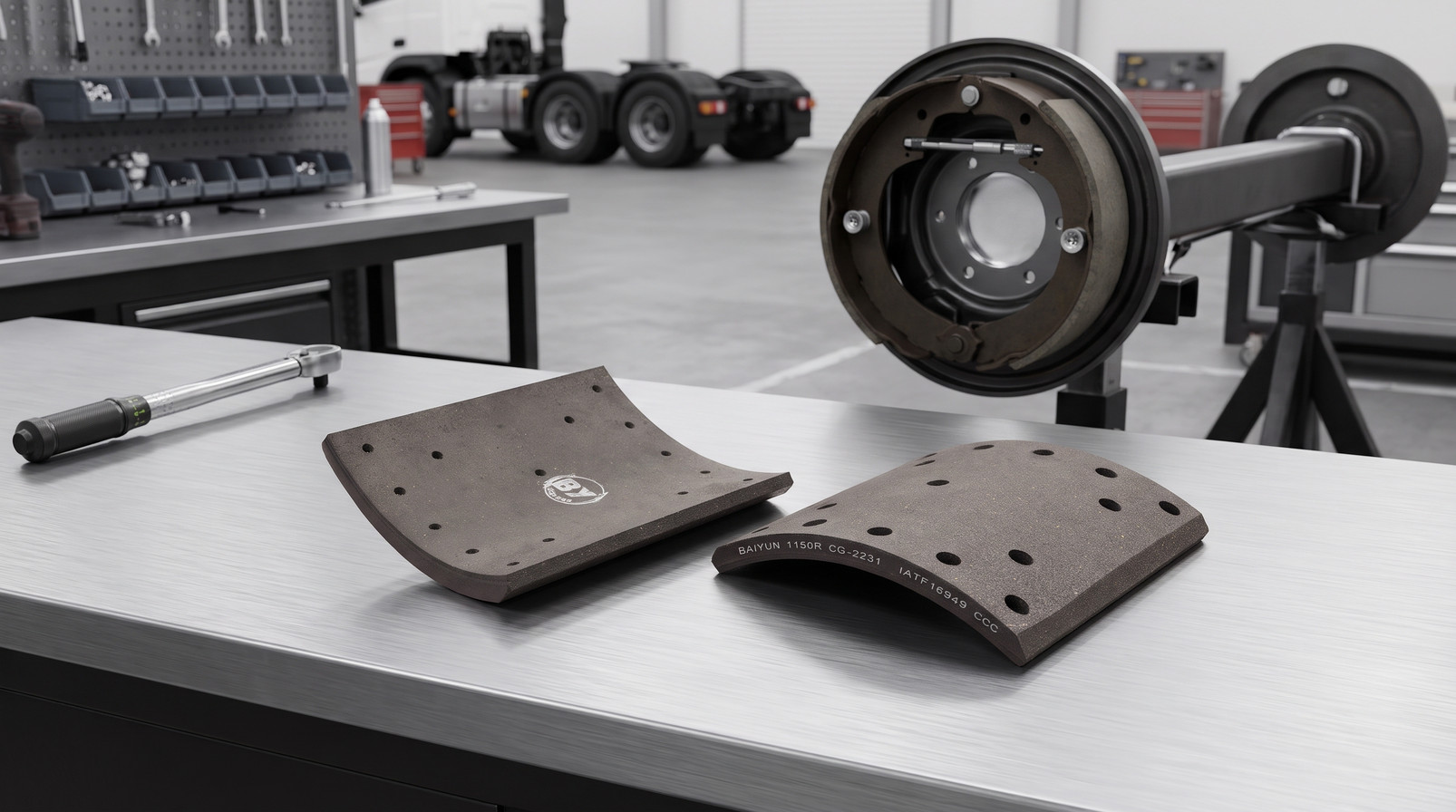
Quick answer: A trailer axle brake lining replacement guide for commercial buyers should prioritize fitment verification, ECE R90 compliance, and total cost per axle before workshop labour. For a typical drum brake trailer axle, replacement means removing the wheel and hub, pulling the drum, inspecting the brake shoe and camshaft, replacing the lining or shoe set, adjusting running clearance, and torquing the hub nut to specification. Buyers need to confirm axle model, drum diameter, lining width, mounting pattern, and friction class before ordering. This guide covers selection, verification, and sourcing discipline, and shows how distributors cut rejections using IATF 16949 and ECE R90 certified commercial vehicle brake linings.
Why Most Trailer Axle Brake Lining Replacement Decisions Start at the Purchase Order
A distributor in East Africa once told me about a container of replacement linings that arrived without a single axle tag check. The drums were 420 mm, the linings were 410 mm, and the whole shipment sat in a warehouse for two months. The workshop team wasn't the problem. The buyer's missing verification step was.
When you buy trailer axle brake linings, you're not just buying friction material. You're buying fitment data. A BPW ECO drum axle, a SAF INTRA axle, and a Meritor Q+ axle can look similar from a distance, but their lining arcs, widths, camshaft positions, and mounting patterns don't always interchange. BAIYUN Brake's commercial vehicle brake linings are produced to match the axle tag and drum specification, not just the shape of the old shoe.
So before you think about torque specs or shoe return springs, ask yourself one question: do I have the axle data to order correctly? If not, stop and collect it. That single habit saves more money than negotiating five cents off a set.
Fitment Verification Before You Pay for the Container
Fitment errors in trailer brake linings rarely come from a bad factory. They come from incomplete buyer data. You might know the trailer brand, but that doesn't tell you the axle model. A Schmitz trailer can run BPW, SAF, or other axles depending on the order year and market.
The verification sequence is straightforward. Start with the axle manufacturer plate. Then check the old lining dimensions and the drum inner diameter. For riveted shoes, confirm rivet spacing and hole pattern. For bolted shoes, confirm thread size and bolt circle. Then ask your supplier to confirm against their specification table. Don't accept a visual match. A lining that is 5 mm too narrow will overheat and glaze within weeks.
For detailed workshop procedures after the parts arrive, our brake lining installation guide walks through shoe replacement, camshaft inspection, and running clearance adjustment on commercial drum brakes.
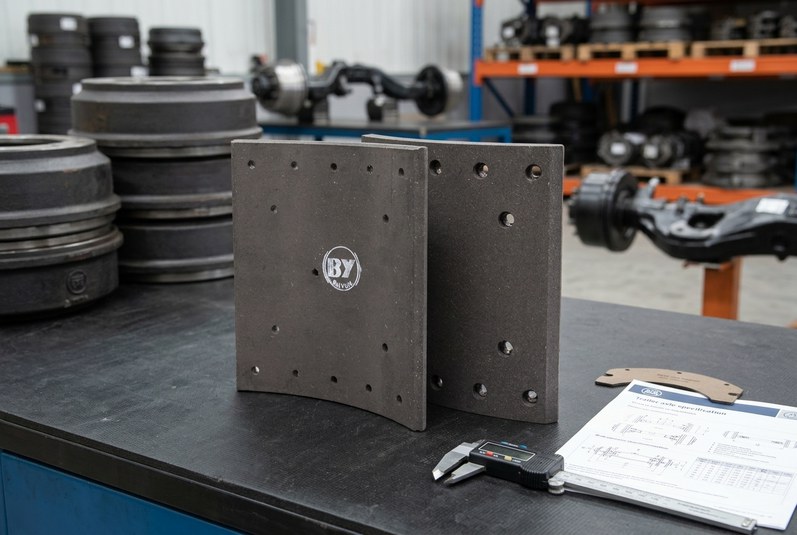
Key Fitment Data Worth Putting in Your Purchase Order
| Verification point | Why it matters | What you need from the supplier |
|---|---|---|
| Axle manufacturer and model | Different axle brands use different drum offsets and shoe geometries | BPW, SAF, Meritor, Fuwa, or other axle tag data |
| Original OE part number or WVA reference | Cross-reference basis for the replacement lining set | Confirm with supplier catalogue |
| Drum inner diameter | Lining arc and radius must match the drum curve | Exact mm measurement from the drum or axle plate |
| Lining width and thickness | Width affects contact area and heat dissipation | New lining width and minimum thickness before replacement |
| Friction class and edge code | Edge code marks friction level and temperature range | ECE R90 marked friction class, such as FF or GG |
| Mounting style | Rivet pattern and bolt circle must match the shoe table | Riveted or bolted, plus hole spacing |
If your supplier can't answer these points in writing, that's a red flag. You'll end up paying for brakes twice.
The Replacement Checklist That Keeps Your Fleet Rollers Turning
Fleet maintenance managers don't need another 40-page technical manual. They need a repeatable checklist that prevents a trailer from rolling out with half-finished brake work. Here's the sequence that catches most failures before they hit the road.
- Chock the wheels and release the parking brake on the axle you're servicing.
- Raise the trailer axle and support it on rated jack stands.
- Remove the wheel assembly and hub cap. Check for metal shavings or water contamination.
- Pull the hub and drum as one unit, if the axle design allows it. Inspect the drum for heat cracks, scoring, and diameter wear.
- Mark the position of each brake shoe before removal. This matters on S-cam axles because the shoes aren't always identical.
- Inspect the camshaft, bushings, anchor pins, and return springs. A new lining won't fix a seized camshaft.
- Install the replacement linings or complete shoe assemblies. For riveted linings, use the correct rivet length and mandrel.
- Set running clearance using the axle manufacturer's spec. Too tight overheats the drum; too loose increases stopping distance.
- Reinstall the hub, torque the spindle nut to the axle maker's spec, and spin the wheel to check for drag.
- After the first loaded run, re-check clearance and re-torque the hub nut. Heat cycling settles the assembly.
For operations moving some trailers to disc brake axles, the verification path is different. If you're sourcing pads for that fleet segment, a wholesale CV brake pads inquiry covers disc brake trailer axles separately, because drum shoe data and disc pad data don't transfer.
Where the Real Cost Savings Hide in Trailer Brake Lining Sourcing
Buyers who chase the lowest invoice price for trailer brake linings often miss the bigger cost drivers. A set that costs $12 but fails after 40,000 km costs more than a set at $16 that runs 90,000 km. That's basic lifecycle math, but it's easy to forget when a purchasing target is forcing line-item savings.
The hidden costs are usually downtime, rejections, and fitment disputes. A grounded trailer can cost $150 to $300 per day in lost haulage, depending on the market. If the wrong lining set arrives, you lose days before the trailer earns again. Certified, specification-matched linings reduce that risk. BAIYUN Brake produces commercial vehicle brake linings in an IATF 16949 certified facility, which means the friction formulation and dimensional control are built into the manufacturing process, not inspected after the fact.
Another saving sits in consolidation. Importers who buy brake linings and brake pads from one factory reduce freight charges, customs documentation, and supplier management time. That operational efficiency often outperforms a two percent price reduction from a fragmented supply chain. It's one reason distributors keep returning to why choose BAIYUN Brake for expandable trailer axle programs.
BAIYUN Brake Testing and Certification Signals for Commercial Buyers
You can't trust a brake lining certificate until you know what it actually covers. ECE R90 isn't a piece of paper. It requires the friction material to maintain performance within defined tolerances after temperature cycling and load testing. For trailer buyers, that translates into predictable stopping behaviour from the first loaded trip to the last millimetre of lining.
IATF 16949 adds another layer. It's not just an ISO 9001 sibling; it's the automotive quality management standard built around defect prevention and production consistency. A factory that holds IATF 16949 has passed audits covering process control, supplier management, and traceability. That matters when you're importing 500 sets a month and can't afford batch-to-batch friction variation.
Ask your supplier for the edge code on the lining. That code tells you the cold and hot friction coefficient class. Don't accept generic statements like 'high friction' or 'premium material.' Request the actual markings, batch inspection data, and the ECE R90 approval reference. If the supplier hesitates, you're probably looking at an uncertified batch dressed up as premium product. Frankly, the price gap between certified and uncertified trailer linings rarely justifies the warranty and safety exposure.
If you already have fitted linings and need to diagnose running clearance or uneven wear, our brake running clearance tips can help you isolate whether the problem is the lining, the camshaft, or the drum condition.
FAQ: Trailer Axle Brake Lining Replacement Questions From Buyers
Q: How do I know if my trailer axle brake linings need replacement, not just adjustment?
A: Inspect the thinnest point of the friction material. If remaining lining is below 3 mm on a riveted shoe, or the lining is cracked, oil contaminated, or glazed, replace the set. For drum brakes, uneven wear usually points to camshaft or anchor pin wear, not just shoe misalignment. Always replace linings axle-by-axle, not wheel-by-wheel, to keep braking balanced.
Q: Can I order trailer axle brake linings without removing the old ones first?
A: Yes, if you have the axle tag, original part number, drum diameter, and lining width. Send those to the supplier and ask for a written fitment confirmation. For mixed fleets, do a pilot order on one axle model before committing to a full container to reduce risk.
Q: What certifications should I look for in replacement trailer brake linings?
A: For most export markets, ECE R90 is the minimum approval for replacement brake linings. The manufacturing plant should also hold IATF 16949 and ISO 9001. These certifications indicate controlled friction formulation, dimensional consistency, and traceability across batches.
Q: How much can I save by sourcing trailer brake linings directly from a manufacturer like BAIYUN Brake?
A: Distributors can often reduce unit cost by 15 to 30 percent by removing middlemen and consolidating freight. The larger saving is operational: fewer fitment rejections and less trailer downtime. Certified linings from a single supplier also reduce the cost of managing multiple vendor quality files.
Q: Do you supply brake linings for BPW, SAF, and Fuwa trailer axles?
A: Yes. BAIYUN Brake matches the axle model and OE reference to the correct lining set. Exact cross-reference data varies by drum size and axle variant, so send your axle tag or old part number. Our export team confirms fitment against the supplier catalogue before quotation.
If you're ready to replace trailer axle brake linings with certified, fitment-matched commercial vehicle linings, submit a wholesale trailer axle brake lining inquiry or request a wholesale quote from our export team. We'll walk you through the verification data and give you pricing based on your actual axle mix, not a guess.
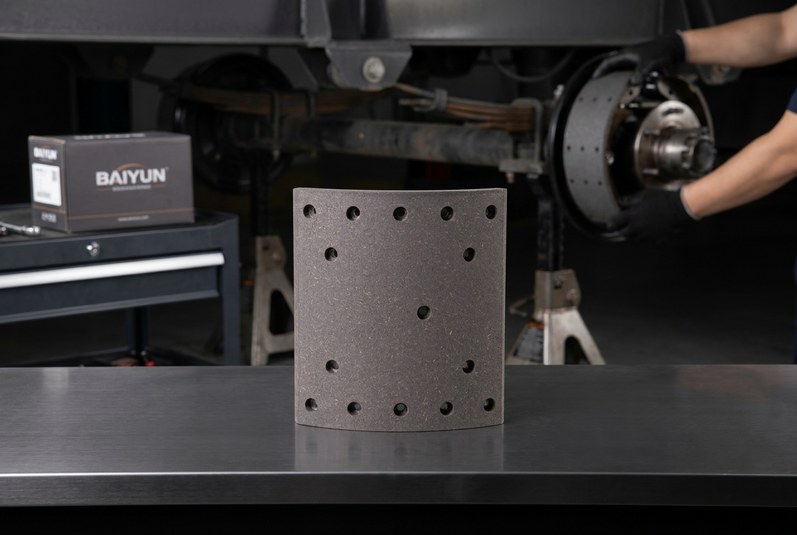
For manufacturer and company information, see About BAIYUN.
Was this article helpful?
Average Rating: 5/5 (225)