Bus brake pad wholesale supplier for fleets: Importer and Distributor Buying Guide
Summary:
Bus brake pad wholesale supplier for fleets sourcing requires more than a low quote. This importer and distributor buying guide covers ECE R90 and IATF 16949 verification, factory audit checklists, MOQ and lead time expectations, private label and OEM options, and technical specification checks that prevent warranty risk. Fleet operators and distributors face hidden costs from inconsistent friction, premature wear, and missing homologation, so the guide explains how to request dynamometer test data, compare suppliers by cost per kilometer, and run fleet trials before committing. BAIYUN Brake, with 49+ years of commercial vehicle friction experience, holds IATF 16949, ISO 9001, and ECE R90 certifications and supports wholesale, OEM, and private label programs from one factory. Use the buyer verification checklist and FAQ to source with confidence.
Bus brake pad wholesale supplier for fleets: Importer and Distributor Buying Guide
Quick answer: A dependable bus brake pad wholesale supplier for fleets combines IATF 16949 and ECE R90 certification with consistent friction performance, clear MOQ terms, and export documentation support. You should verify factory audits, request dynamometer and wear test data, and confirm fitment for your fleet's bus models before signing a supply agreement. BAIYUN Brake, with 49+ years of manufacturing experience and an IATF 16949 certified facility, supplies distributors and commercial fleet buyers through OEM, private label, and wholesale programs.
Why Fleet Buyers Are Rethinking Their Bus Brake Pad Supply Chain
Fleet managers don't buy brake pads the way a retail shop does. You're not filling a shelf; you're managing uptime, warranty exposure, and cost per kilometer across hundreds of buses. A pad that fails early on a city bus doesn't just mean a warranty claim. It can take a vehicle out of service for a full day, force an emergency rotor replacement, and create a safety audit trail no one wants to explain.
Price pressure is real, but so is the hidden cost of cheap friction material. Some importers chase the lowest quote and end up with pads that wear unevenly, glaze the rotor, or produce unpredictable cold bite. That's a serious problem for buses operating early morning routes or steep downhill runs.
Unlike truck brake pads, bus pads often see repeated stop-start cycles with full passenger loads. The thermal load alone can push cheap formulations beyond their stable range. So what does that mean for your bottom line? A pad priced 15% lower can cost 40% more per kilometer once shortened service intervals and rotor damage are counted. That's why fleet buyers are shifting toward manufacturers who can demonstrate batch-level consistency and homologation, not just a good sample.
What Certifications Actually Matter for Bus Brake Pads?
ECE R90 sits at the top of the list for many importers. It's a regulatory approval that confirms the brake pad performs within tight limits compared with the original part. If you're selling into the EU, Turkey, or a range of Middle Eastern and Asian markets, ECE R90 homologation is often non-negotiable. Ask for the approval number and the test report, not just a logo on a box.
IATF 16949 is the next part of the puzzle. This isn't a pad performance test; it's a quality management standard for automotive series production. A supplier with an IATF 16949 certified facility has systems for raw material traceability, process control, and continuous improvement. ISO 9001 is useful, but by itself it won't tell you if the factory can hold friction coefficient within a narrow range across 50,000 sets.
BAIYUN Brake holds IATF 16949, ISO 9001, and ECE R90 certifications. For bus fleet buyers, that combination means you get a documented quality system behind every container, not just a certificate on a website.
How Should You Verify a Bus Brake Pad Wholesale Supplier for Fleets?
Supplier verification starts before you pay for tooling or samples. Ask for the factory's business license, export history, and a list of bus or commercial vehicle distributors they currently serve. A supplier that mostly handles passenger car pads may not understand the thermal load and axle mass of a 12-meter city bus.
Then request a third-party audit report, ideally no older than 12 months. If that's not available, schedule a video audit: walk the production line, look at the mixing system, check batch traceability, and ask how they handle non-conforming material. You don't need to be a tribologist to spot a clean, controlled process.
Compare commercial vehicle brake pads across at least three part numbers you plan to stock. Ask for dynamometer test data, not a marketing brochure. A serious supplier will send friction traces, wear test results, and shear strength measurements for the exact part numbers you're quoting.
One more thing: references. Talk to at least one existing importer who moves 1,000–5,000 sets a year. Ask about batch consistency, packaging damage, and how the supplier handled a quality claim.
What MOQs, Lead Times, and Logistics Should Importers Expect?
Bus brake pad wholesale orders usually carry MOQs of 300 to 1,000 sets per part number, but this varies widely by factory and part complexity. Before you negotiate, clarify whether the MOQ applies per SKU or per container. A mixed container with 20 bus pad references often gets better pricing than five boxes each.
Production lead time for commercial vehicle pads typically runs 25 to 45 days after artwork and specification sign-off. Add 15 to 35 days for sea freight, depending on destination and port congestion. Working with a trusted brake pad supplier reduces the risk of late shipments eating into your fleet service schedule.
On logistics, decide your incoterms early. FOB gives you control over freight but also responsibility for documentation and customs clearance. CIF or DDP can simplify the first order. Make sure the supplier provides a commercial invoice, packing list, certificate of origin, and ECE R90 homologation copies. For some African and South American markets, you'll also need pre-shipment inspection certificates.
How Do OEM and Private Label Programs Work for Fleet Brake Pads?
Private labeling is standard in the commercial vehicle aftermarket. You may want your own brand on the box, your part number system, and maybe a laser-marked logo on the backing plate. A manufacturer that already runs OEM and private label programs can handle this without slowing down production.
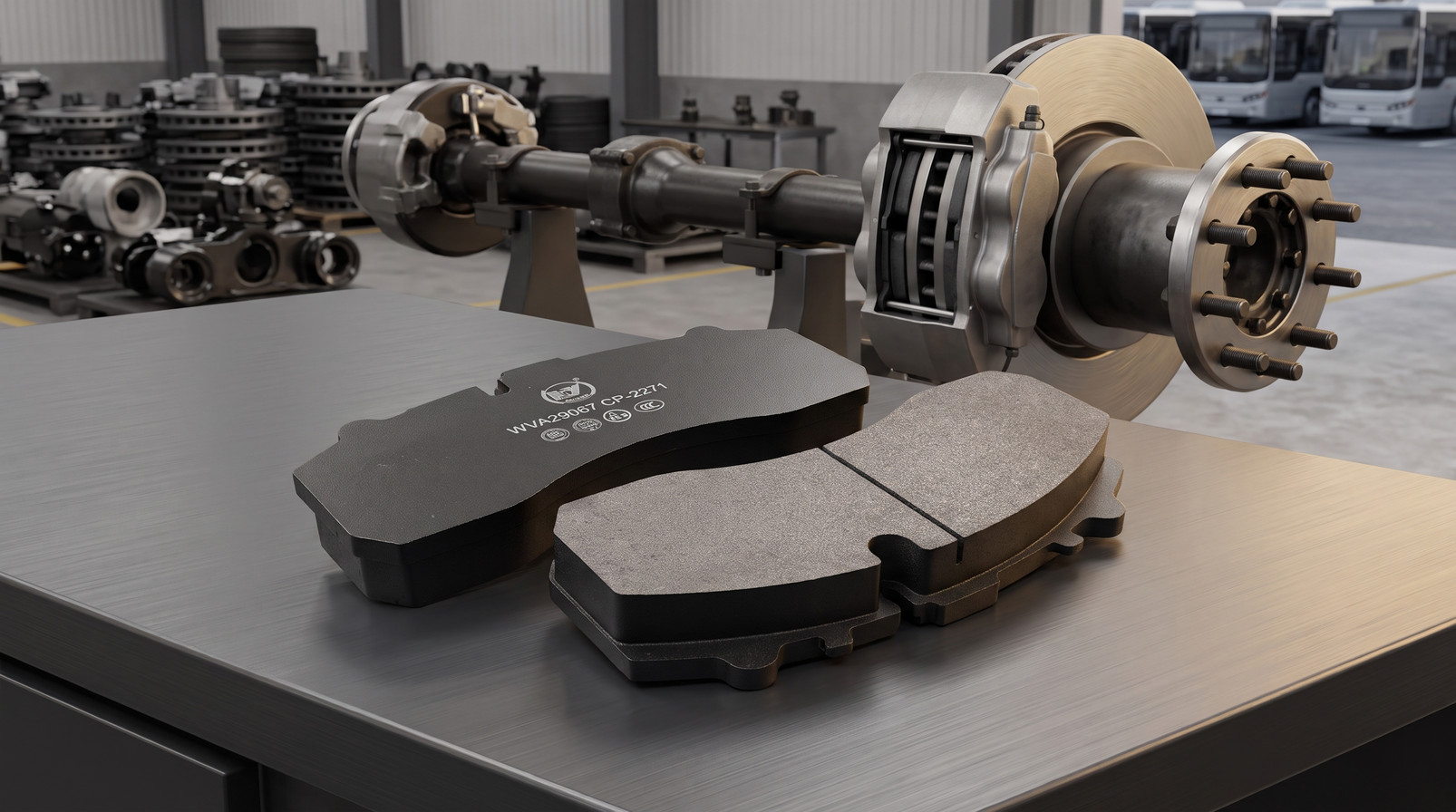
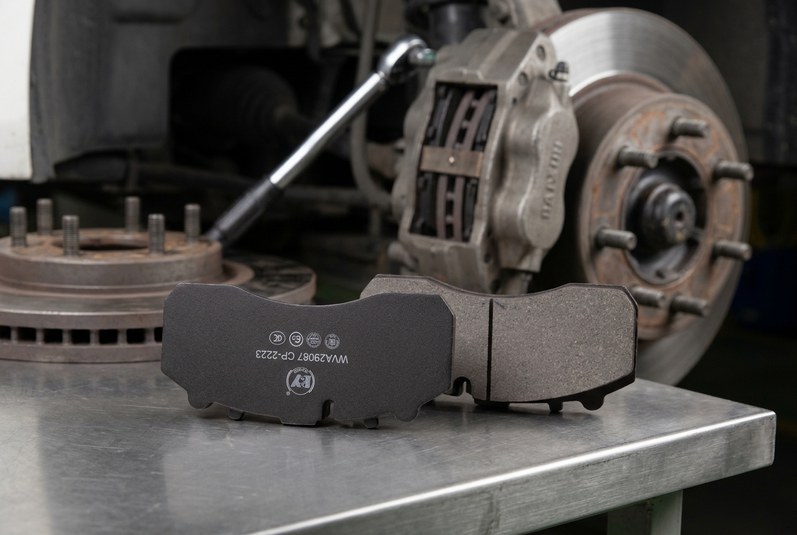
BAIYUN Brake supports private label and OEM programs for bus brake pad wholesalers. You can specify packaging design, pad marking, and the technical data sheet format. Popular bus references in the BAIYUN range include CP2271, CP2223, and CP2219, but you should confirm exact fitment with the OEM brake lining solutions team before ordering.
Custom packaging typically adds 10 to 15 days to lead time, so plan your first private label order with that buffer. Also ask whether the supplier can hold safety stock for your top five part numbers. That's what separates a true distribution partner from a one-off factory sale.
What Technical Specifications Should You Check Before Buying?
Don't just compare price per set. Bus brake pads live or die by friction stability, shear strength, and wear rate. Here's a practical table to use when evaluating quotes.
| Specification | Why it matters for bus fleets | How to verify |
|---|---|---|
| Friction coefficient (µ) | Controls braking torque consistency across hot and cold cycles | Request dynamometer test report; compare with ECE R90 homologation data |
| Wear rate | Drives pad life and service interval | Ask for wear test data; Confirm with supplier catalogue for exact values |
| Shear strength | Prevents pad delamination under heavy bus loads | Request material test certificate |
| Pad thickness and backing plate steel grade | Affects heat dissipation and caliper fitment | Confirm dimensions against your OE part drawing |
| WVA/OE cross reference | Ensures correct part matching | Confirm with supplier catalogue |
Ask for the relevant pages from the product catalogue before issuing a purchase order. If a supplier can't provide technical data for the exact part number you're quoting, walk away.
Buyer Verification Checklist for Bus Brake Pad Wholesale Sourcing
Use this checklist before signing any supply agreement.
- Confirm current IATF 16949 and ISO 9001 certificates cover brake pad production, not just corporate registration.
- Request ECE R90 homologation numbers and verify them against the approval authority database.
- Obtain a factory audit report or third-party inspection report dated within the last 12 months.
- Review batch-level dynamometer, wear, and shear strength test data for your chosen part numbers.
- Contact at least two existing bus fleet or commercial vehicle distributors who import from the supplier.
- Clarify MOQ, lead time, packaging options, and incoterms in writing before placing a purchase order.
- Order 3–5 sample sets per part number for fitment and fleet wear trials before committing to a full container.
Frequently Asked Questions
Q: What is the minimum order quantity for bus brake pad wholesale orders?
A: MOQs vary by manufacturer and part number. Many suppliers set MOQs between 300 and 1,000 sets per SKU, but exact terms should be confirmed with the supplier catalogue. BAIYUN Brake offers flexible terms for distributors and fleet buyers depending on mix and destination.
Q: How do I verify that a supplier's ECE R90 certificate is genuine?
A: Ask for the ECE R90 approval number printed on each pad or its packaging, then check the approval against the issuing authority's database. A reliable supplier will provide copies of the homologation test report and batch traceability records.
Q: Can I order private label bus brake pads with my own brand?
A: Yes, many manufacturers support private label programs. You can specify box design, pad marking, and technical documentation; BAIYUN Brake offers OEM and private label solutions for commercial vehicle brake linings and pads. Production lead times typically extend by 10–15 days for custom packaging.
Q: What is the typical lead time for a container of bus brake pads?
A: After artwork and part numbers are confirmed, production usually takes 25–45 days, plus 15–35 days for sea freight depending on destination. Buyers should confirm current lead times with their supplier and build buffer into their inventory plan.
Q: How do I compare bus brake pad quality between two suppliers?
A: Compare dynamometer friction traces, wear rates, shear strength, and pad-to-disc compatibility across the same test standard. Price per set matters less than cost per kilometer; a 10% lower pad price often leads to 20–30% higher cost per kilometer if wear life is shorter. Run your own fleet trial before committing.
Sourcing Confidence Starts With a Verified Supplier
Your fleet buyers don't care about the price you paid; they care that the bus stops predictably every single time. That's the standard you should apply to your brake pad supplier. A low quote that comes with inconsistent friction, missing certification, or vague MOQ terms will cost you far more than it saves.
BAIYUN Brake has supplied commercial vehicle friction products to distributors and fleet operators for over 49 years. The factory runs IATF 16949 and ISO 9001 systems, holds ECE R90 homologation, and supports OEM, private label, and wholesale programs from a single source. If you're building a bus brake pad supply chain, that's the kind of partner worth shortlisting.
If you're ready to compare bus brake pad wholesale options, browse our heavy-duty brake pad range and request a wholesale quote.
For manufacturer and company information, see About BAIYUN.
Was this article helpful?
Average Rating: 5/5 (245)