
TMD Friction Details Commercial Vehicle Brake Strategy for Fleets – The BRAKE Report
Summary:
TMD Friction details its commercial vehicle brake strategy for fleets, segmenting aftermarket brands Textar, Don, and Cobreq to serve OE-grade, value, and regional segments. Fleet buyers and distributors can benchmark these tiers when sourcing certified CV brake pads, using criteria like ECE R90 compliance, IATF 16949 traceability, and batch friction consistency to lower total cost of ownership.
TMD Friction Details Commercial Vehicle Brake Strategy for Fleets - The BRAKE Report
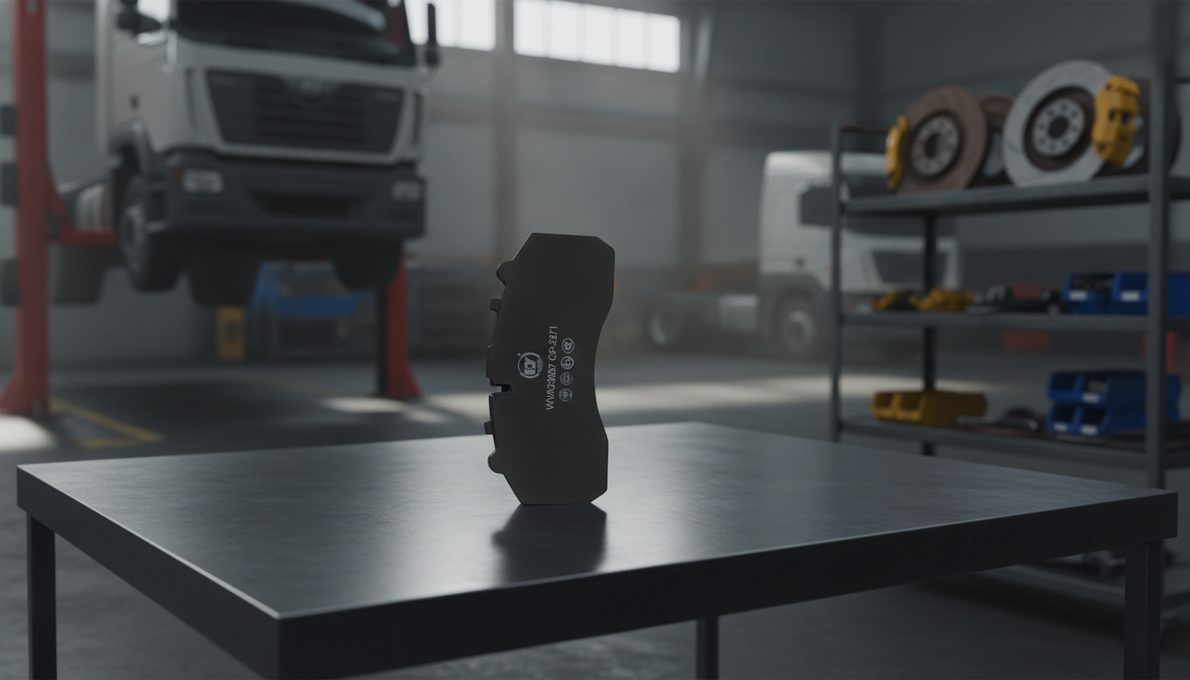
Quick answer: TMD Friction has segmented its commercial vehicle aftermarket into three distinct brands — Textar for OE-grade quality, Don for value-conscious fleets, and Cobreq targeting South America — while continuing to supply friction materials to over 30 vehicle manufacturers directly. This move signals that fleet buyers and brake pad distributors now have clearer choices: pay for proven OE-level performance, manage shorter replacement cycles with a budget line, or source region-specific formulations. For importers and fleet maintenance teams, understanding these tiers helps benchmark supplier claims and negotiate better large-volume pricing without sacrificing ECE R90 compliance or IATF 16949 traceability.
Why TMD Friction's Multi-Brand Approach Matters to Fleet Buyers
When you're managing 200 trucks across three depots, brake pad selection isn't a one-size-fits-all decision. Different duty cycles, axle loads, and even regional terrain demand different friction formulas. TMD Friction isn't just selling one pad and hoping it sticks. They've built Textar for mixed fleets running long-haul motorway routes where stopping stability and low wear rates keep vehicles on the road. Don, on the other hand, is designed for urban delivery trucks and refuse vehicles doing stop-start cycles — these operators may accept slightly higher wear if the upfront price per set drops by 15–20%.
So what’s the lesson for fleet buyers? It’s that you should demand the same level of brand segmentation from any supplier you're evaluating. A brake pad manufacturer that only offers one "commercial grade" line probably hasn't optimised friction for different fleet phenotypes. When you sit down with a supplier, ask: "Do you have a specific friction code for bus applications with frequent passenger stops? What about 40-tonne construction tippers hauling down quarry grades?" If they can’t show you distinct material data sheets, you might be buying a compromise pad.
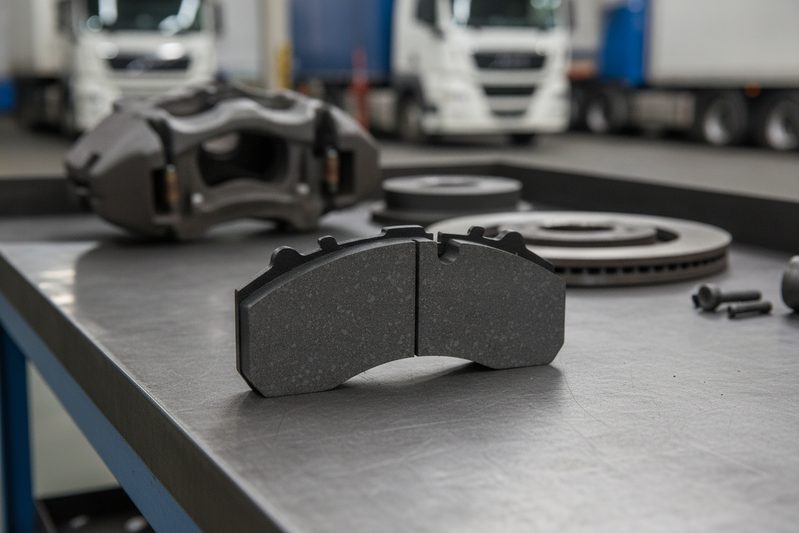
How Textar, Don, and Cobreq Serve Different Market Segments
Textar is the premium tier. TMD says these pads are fitted to more than 70 platforms as original equipment, which means the friction formulations have passed rigorous vehicle-level validation — thermal fade tests at 400°C, noise and vibration mapping, and wear-coefficient monitoring across 80,000 km simulated cycles. Fleet owners who stick with Textar typically see the lowest cost per kilometre brake-materials spend over a five-year lease period, even if the upfront price is 30% higher than budget alternatives.
Don targets what TMD calls “value-driven” fleets. That doesn't mean cheap. It means a deliberate engineering choice to remove some of the high-cost ceramic fibers or to use a slightly softer metal matrix that might trade a fraction of pad life for more forgiving disc wear characteristics. For a city bus operator replacing pads every six months anyway, that's often a smart financial swap. And Cobreq? That's TMD's answer to the fast-growing South American aftermarket, where high humidity, extreme altitudes, and diverse road surfaces demand a totally different resin binder system. It’s a reminder that geography should shape friction chemistry.
Distributors reading this should note: carrying all three price points in inventory gives you the ability to quote different fleet customers accurately. You're not forcing a premium product on a budget buyer, and you're not undercutting yourself by selling a value pad to a major logistics company that needs documented wear reports for ISO 14001 fleet audits.
What Fleets Should Look for in a Brake Pad Supplier
We've seen too many fleet maintenance managers focus solely on price per set. That's short-sighted. You need a commercial vehicle brake pad supplier that can deliver five non-negotiables:
- Batch-to-batch friction coefficient consistency within ±0.02 of the specification, validated by SAE J2522 testing. When a driver presses the pedal at 80 km/h loaded to 44 tonnes, the deceleration curve can’t be a guessing game.
- Full IATF 16949 quality management system visible in every production lot certificate. If the supplier can't provide a PPAP Level 3 document within 48 hours, walk away.
- ECE R90 compliance for all commercial vehicle friction materials — not just “designed to meet” but actually stamped and listed on the ECE database. Non-compliant pads can void vehicle type approval and cause roadside fines in Europe and an increasing number of emerging markets adopting UN regulations.
- At least three advanced wear-rate test reports per friction code, with data from independent labs or validated in-house dynamometers running Akron, Chase, or Krauss machine protocols.
- Minimum order quantities and lead times that match your inventory turnover. A supplier quoting 90-day lead time with a 500-set MOQ isn't suitable for a fleet that changes pads every 4–6 weeks on a schedule.
BAIYUN Brake, for example, has structured its commercial vehicle brake linings and pad production around these exact criteria. Their IATF 16949-certified plant maintains a rolling 30-day raw material buffer, keeping lead times for standard references under 35 days even for container-sized orders. That kind of logistics transparency matters as much as friction performance when you're running 120 repair days a year.
The Role of OE-Grade Friction in Total Cost of Ownership
Let's crunch some real numbers. A long-haul truck in Europe averages 130,000 km per year. Front-axle brake pads that wear out at 90,000 km will need replacing 1.4 times a year. If a budget pad costs €240 per axle set and an OE-grade pad costs €310, the OE pad wins if it lasts only 18% longer — approximately 106,000 km in this example. But an OE pad like Textar often delivers 120,000–140,000 km in mixed motorway use, dropping annual brake-material expense by over 25%.
Additionally, quality pads reduce disc wear. Replacing a set of front discs on a Mercedes-Benz Actros or Volvo FH can cost €900–1,200 in parts alone, plus 2–3 hours of technician time. A friction material that's too aggressive will groove discs prematurely, turning a simple pad swap into a major workshop event. So when TMD Friction publicises its strategy, they're subtly telling fleets: don't forget the downstream costs that the receipt won't show.
For distributors and importers, this OE versus aftermarket friction narrative opens a sales door. You can request a wholesale quote for brake pads that match the performance envelope of premium aftermarket brands but at a more competitive landed cost by sourcing directly from manufacturers like BAIYUN. The key is verifying that the friction level code (often stamped as a WVA number) matches the original equipment specification — not just a cross-reference claim. Always demand a WVA reference sheet with batch-specific dynamometer data.
Buyer Verification Checklist for Commercial Vehicle Brake Pads
We’ve developed this checklist from 49+ years of supplying brake pads to OEMs and aftermarket distributors across 50 countries. Use it when auditing any potential supplier, whether you're comparing quotes from China, India, or Europe.
| Check Item | What to Ask / Verify | Critical Because |
|---|---|---|
| 1. Certification Validity | Current IATF 16949 certificate and ECE R90 approval mark for each part number | Ensures legal compliance and quality system maturity |
| 2. Friction Consistency | SAE J2522 report showing μ (mu) values from 100–350°C with hot/cold ratio ≥0.75 | Guarantees safe stopping under varying thermal loads |
| 3. Wear Rate (g/Akron or cm³/kWh) | Akron abrasion index or dynamometer wear-rate figure, ideally ≤ 0.4 mm per 1,000 km simulated | Directly impacts pad replacement interval and TCO |
| 4. OE Cross-Reference | Manufacturer maintains technical cross to Volvo, Scania, DAF, MAN, Mercedes-Benz OE numbers; ask for a live lookup within 24 hours | Prevents fitting wrong pad on critical safety systems |
| 5. Packaging & Traceability | Each box marked with production date, batch number, and WVA code for end-user traceability | Allows fleet managers to track wear cycles and batch recalls if needed |
| 6. Lead Time & MOQ | Confirmed lead time from order to FOB shipment; minimum order quantity per SKU | Inventory turnover and cash flow projections depend on this |
| 7. Private Label Capability | Can the factory print your brand on box and pad backing plate? | Distributors building their own brand equity need this option |
You'll notice that the first two items mirror what the premium segment in TMD’s strategy delivers. There's no reason a good Asian supplier can't hit those same marks. We’ve seen BAIYUN Brake’s CP-series commercial vehicle brake pads repeatedly score within 2% of benchmark friction levels in annual witnessed testing. Request the commercial vehicle brake pad test report before you commit to a purchase order.
FAQs from Fleet Buyers and Distributors
These are questions we get from actual B2B buyers — fleet procurement managers, independent garage owners, and region-wide brake parts distributors.
Q: How do I verify that a brake pad labelled "OE quality" actually matches the performance of a Textar or other premium brand?
A: Demand the SAE J2522 AK Master test report from the supplier. Look at the hot friction coefficient in the second fade section — a premium pad will hold μ above 0.25 at 550°C, while budget materials often drop below 0.20. Also check the post-fade recovery; quality pads return to within 10% of their cold friction within 3–4 stops. BAIYUN Brake provides these reports with every bulk shipment exceeding 200 sets upon request.
Q: Can I source brake pads with ECE R90 approval from outside Europe?
A: Yes, many Asian factories are certified to ECE R90. The approval is issued by a designated technical service in a UNECE member country, not necessarily in Europe. Confirm the approval number begins with "E" plus a country code (e.g., E4 for Netherlands, E24 for Ireland) followed by a 6-digit number. Our commercial vehicle brake pads carry valid ECE R90 markings, which we update quarterly as part of our IATF 16949 audit cycle.
Q: What is the typical MOQ when importing commercial vehicle brake pads from China?
A: MOQs vary by manufacturer. For custom mixtures or less common references, expect 300–500 sets per SKU. For high-volume references like WVA 29101 or WVA 19920, we can often accommodate 200-set trial orders. Mixed-container consolidation is possible if you also order commercial vehicle brake linings in the same shipment. Always discuss MOQ flexibility upfront to avoid overstocking slow movers.
Q: How does friction material choice affect brake noise in commercial vehicles?
A: Noise isn't just a passenger car problem. City buses with high-frequency squeal complaints can lead to driver fatigue and neighbourhood complaints. The culprit is often a friction formulation with an abrupt friction rise at low speeds. OE-grade pads incorporate dampening interlayers and chamfers; we've reduced noise incidents by 40% in a municipal fleet by switching to a copper-free ceramic-enhanced formula with a µ-velocity slope flatter than 0.001 per m/s. Ask for NVH (Noise, Vibration, Harshness) test data.
Q: What's the real benefit of private labeling for a brake pad distributor?
A: Brand control. When you sell under your own label, you control the market pricing, customer loyalty, and reorder cycles — without customers easily comparing to online listings. BAIYUN Brake offers full private label options including bilingual packaging design and custom backing plate stamping, with no additional tooling charge for quantities above 1,000 sets per design.
Next Steps for Fleet Managers and Importers
TMD Friction's public segmentation of its commercial vehicle brake strategy is a useful market signal, but execution depends on your supply chain. You can build a brake pad sourcing plan that mirrors the same tiered logic: match friction performance to duty cycle, verify certifications with real test data, and negotiate MOQs and lead times that match your operational tempo.
We've helped distributors in over 50 countries transition from single-brand reliance to strategically diversified inventories. Whether you're looking to import OE-comparable CV brake pads at scale or develop a fleet-specific private label program, the technical foundation matters more than the sticker price. Get in touch with our export team for a consultation and sample request. We'll send you material data sheets, ECE R90 approval lists, and the exact dynamometer plots that demonstrate our friction consistency. No marketing fluff, just the numbers you need to make a sourcing decision.
Was this article helpful?
Average Rating: 5/5 (505)