
Real-world data shows EVs cheaper to service and maintain – Fleet Europe
Summary:
Real-world data shows EVs cheaper to service and maintain, with a 50% reduction in lifetime repair costs compared to ICE vehicles according to Fleet Europe and Consumer Reports. For commercial fleet operators, that means brake pad replacement intervals stretch to 150,000–250,000 miles thanks to regenerative braking. This B2B guide explains how fleet buyers and distributors can adapt sourcing strategies, verify supplier certifications, and secure high-quality aftermarket brake parts from an IATF 16949 certified manufacturer.
Real-world data shows EVs cheaper to service and maintain - Fleet Europe
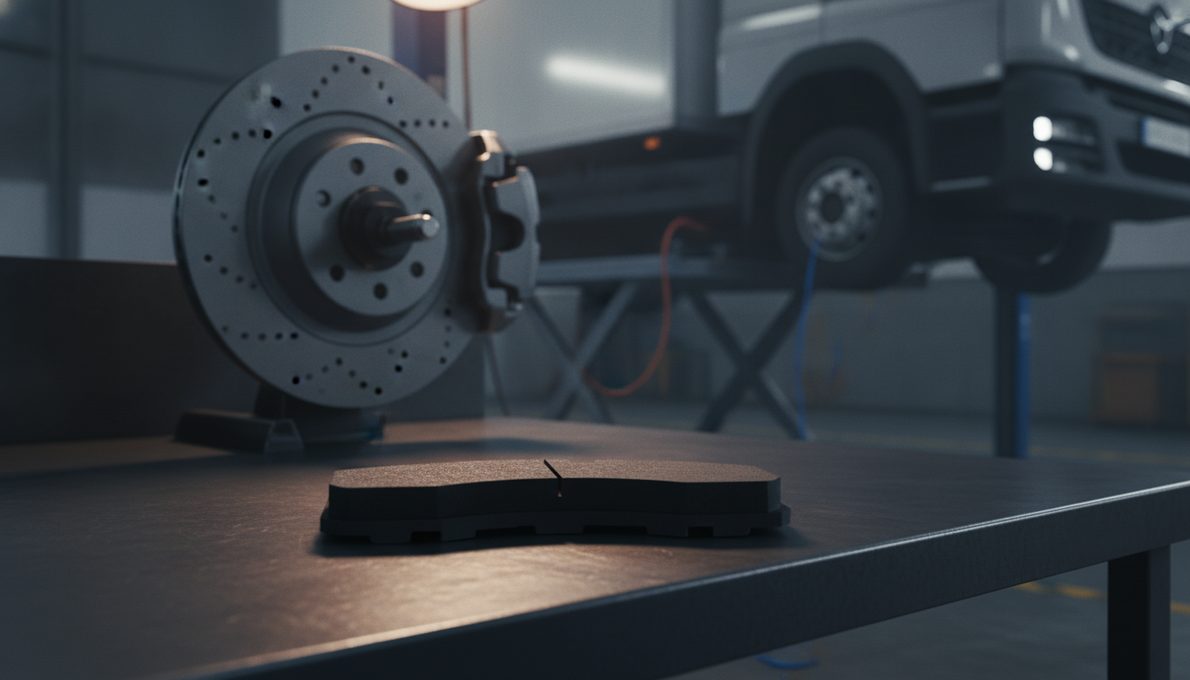
Quick answer: Real-world data consistently shows electric vehicles cost about 50% less to repair and maintain than their internal combustion counterparts. According to Real-world data shows EVs cheaper to service and maintain Fleet Europe, the absence of oil changes, fewer moving parts, and regenerative braking sharply reduce service demand. For commercial fleet operators, that translates to longer brake pad intervals and a lower total cost of ownership—but only if the replacement parts you spec meet rigorous quality standards from an IATF 16949 certified supplier.
How much lower are EV maintenance costs in real-world fleet operations?
Consumer Reports' analysis of thousands of vehicle owners found that battery electric vehicles (BEVs) rack up roughly $4,600 in lifetime repair and maintenance costs, while a comparable gasoline vehicle reaches $9,200. That's a 50% saving. Plug-in hybrids sit at $4,600 as well. On a per-mile basis, BEVs cost about $0.031 versus $0.061 for gas-powered cars.
Fleet telematics data reinforces the story. Geotab, which tracks one of the largest EV fleet datasets globally, reports average battery degradation of just 2.3% per year under typical duty cycles. Many packs are designed to outlast the vehicle's service life, backed by 8- to 10-year warranties. So the high-voltage system rarely burdens the maintenance budget.
Of course, commercial electric trucks aren't just oversized passenger cars. Medium- and heavy-duty EVs from Volvo, Daimler, and BYD are entering service with hub motors or e-axles that eliminate the traditional driveline. That means even fewer wear items: no transmission fluid, no differential oil, and a brake system that leans heavily on regenerative braking.
Key takeaway: Fleet maintenance data confirms EV lifecycle service costs are roughly half those of diesel equivalents, and the gap widens as operating mileage increases.
What does this shift mean for commercial fleet brake pad replacement intervals?
Regenerative braking changes the game. Instead of relying on friction material to scrub speed, the electric motor does most of the deceleration. Real-world data from municipal bus fleets shows friction brake usage drops by 60–70% in urban routes. That can push brake pad replacement intervals from a typical 60,000–80,000 miles on a diesel rigid truck to 150,000–250,000 miles on its electric counterpart.
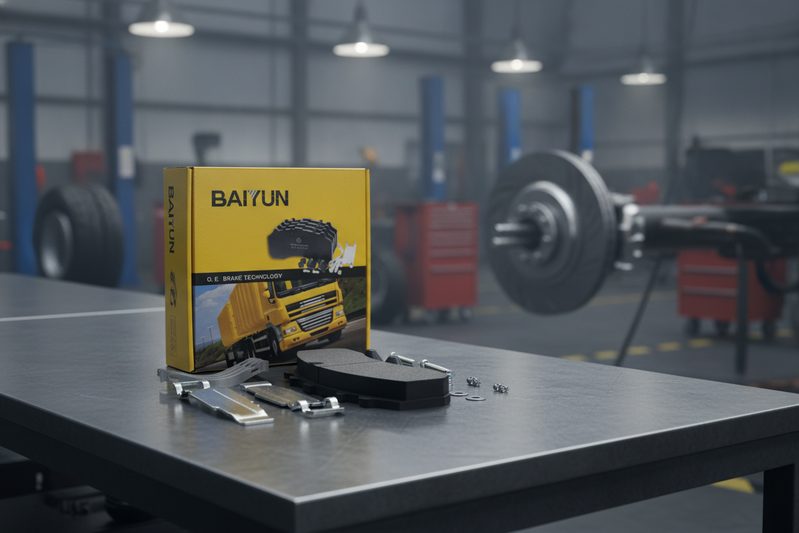
Longer intervals don't mean you can ignore pad quality—quite the opposite. Pads that sit idle for extended periods are prone to corrosion on backing plates and glazing if the friction material picks up moisture. When the foundation brake finally engages, inconsistent friction can cause uneven wear or judder. That's why fleet maintenance managers are turning to pads with stable friction coefficients across a wide temperature band, even at low wear rates.
BAIYUN Brake, an IATF 16949 certified facility, formulates its commercial vehicle pads to resist corrosion and maintain a µ of 0.38–0.42 from 100°C to 350°C, a range that copes with the sporadic, high-energy stops of an EV's foundation brake. All pads carry ECE R90 homologation, giving fleet buyers confidence in real-world performance.
How should fleet buyers and distributors choose a brake pad supplier for mixed ICE and EV fleets?
Most fleets aren't 100% electric yet. You're running a mixed environment, and you need one brake supplier that can cover both legacy diesel trucks and the growing EV rollout. That demand tests a supplier's catalog depth, certification consistency, and supply chain agility.
Look for these supplier qualifications first:
- IATF 16949 certification: Mandatory for OEM-quality production. BAiyun Brake has held this certification for over a decade, ensuring every batch meets automotive-grade traceability.
- ECE R90 approval: In most European and UNECE markets, you can't legally install aftermarket pads without it. All our commercial vehicle pads are ECE R90 tested and stamped.
- WVA reference database: A complete WVA numbering system guarantees exact fitment across thousands of truck and trailer configurations. Download our product catalogue to cross-check your fleet's WVA numbers.
- MOQ and lead time flexibility: For aftermarket distributors ordering 500 sets monthly, a rigid 10,000-unit MOQ is a dealbreaker. BAIYUN Brake tailors MOQs to your distribution model and ships FCL/LCL from Guangzhou within 4–6 weeks, depending on the mix.
| Criteria | What to Verify with Supplier | BAIYUN Brake Benchmark |
|---|---|---|
| Certification coverage | IATF 16949, ISO 9001, ECE R90 for commercial pads | All three, valid and current |
| Formulation range | Semi-metallic and ceramic options for mixed fleets | 20+ friction grades covering light-duty vans to heavy trailers |
| WVA database | Does the supplier publish complete WVA cross-reference? | Yes—check the wholesale CV brake pads inquiry page for search tools |
| Private label capability | Custom branding, box design, and laser marking | Standard offering with low setup costs and 3-week proofing |
| Logistics | Reliable FCL/LCL shipping, consolidated container options | Guangzhou port, 4–6 weeks typical transit to major European hubs |
Buyer verification checklist: Sourcing brake pads for an electric or mixed commercial fleet
Use this checklist before placing your next order. A “no” on any point should trigger a deeper supplier review.
- Supplier holds current IATF 16949 and ISO 9001 certificates—check the expiry date.
- Brake pads carry ECE R90 homologation numbers and markings, not just a claim of compliance.
- Supplier provides full WVA reference cross-match for your fleet's axle and caliper models.
- Friction material data sheet shows consistent µ from 100°C to at least 350°C, and a corrosion-resistance rating.
- Minimum order quantity (MOQ) aligns with your annual consumption—can you combine ICE and EV pad SKUs in one container?
- Lead time from order placement to port departure is confirmed in writing, with a grace period for custom packaging.
- Supplier offers sample shipment with test certification (SAE J2522 dynamometer report) for new formulations.
What are the most common misconceptions about EV brake maintenance?
Misconception: “Electric trucks don't need brake pads at all because of regenerative braking.”
Reality: Regenerative braking handles most routine stops, but at low speeds or in emergency situations, the friction brake must intervene. Pads still wear, albeit at a third of the rate. Neglecting pad inspection can lead to corroded backing plates and reduced stopping power.
Misconception: “Any cheap brake pad will do since they last so long.”
Reality: Long service intervals amplify the cost of a bad choice. Low-grade pads develop rust, friction material detaches, or thermal fade appears when you finally need a hard stop. Certified pads from an trusted brake pad supplier are essential.
Misconception: “EV maintenance savings are only about oil changes.”
Reality: The savings extend to the entire drivetrain. A study by Fleet Europe showed total service costs over 5 years were 45% lower for electric vans, factoring in brakes, suspension checks, and thermal management system servicing.
FAQ
Q: Do electric trucks really need less frequent brake pad changes?
A: Yes. Real-world telemetry from electric bus fleets shows friction brake applications drop by 60–70%, pushing pad replacement intervals to 150,000–250,000 miles. Diesel equivalents typically need pads every 60,000–80,000 miles.
Q: Is WVA reference critical when buying aftermarket pads for mixed fleets?
A: Absolutely. WVA numbers match pad dimensions and material codes to exact vehicle applications, eliminating fitment errors. BAIYUN Brake maintains a searchable WVA database; download the brake pad catalog PDF for your fleet's part list.
Q: What certifications should I demand from a brake pad supplier for commercial EVs?
A: IATF 16949 for manufacturing quality, ECE R90 for road-legal performance, and ISO 9001 for quality management. Verify certificates are current—BAIYUN Brake's certificates are available for review at any time.
Q: Can I get OEM-branded packaging for my distribution network?
A: Yes. BAIYUN Brake offers OEM brake lining solutions with custom box design, private labeling, and laser marking. Setup is quick, with a 3-week proofing cycle before mass production.
Q: How does the lower brake usage in EVs affect total cost of ownership?
A: It reduces parts spend, labor hours, and vehicle downtime. Over a 10-year truck life, our fleet customers estimate brake-related savings of $3,200–$4,800 per vehicle when switching from diesel to electric, based on reduced pad/shoe replacement cycles and fewer rotor resurfacing jobs.
The numbers don't lie—but your supplier choice still matters
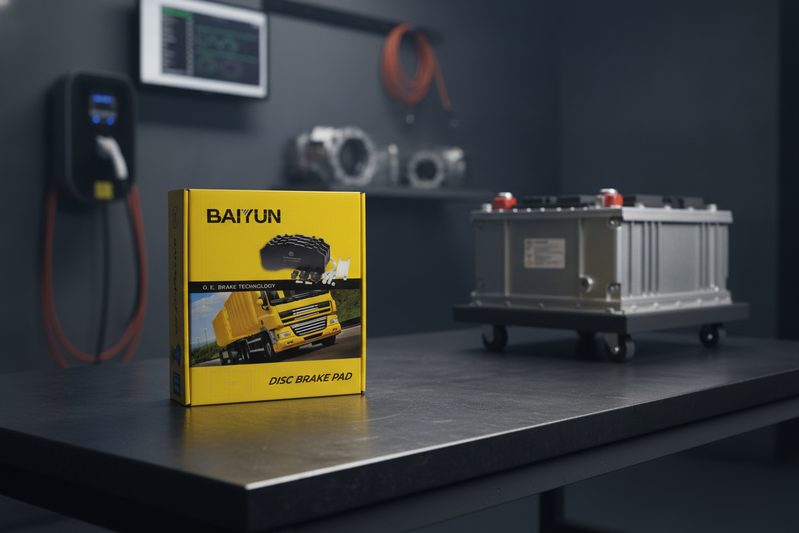
Real-world data makes a compelling case for electrification, but the aftermarket supply chain doesn't get a free ride. Fleet maintenance teams need brake pads that match the new duty cycles, and distributors need a supplier who can support both today's diesel orders and tomorrow's EV demand. That's exactly the position BAIYUN Brake occupies: 49+ years of manufacturing experience, ECE R90 and IATF 16949 certifications, and a deep catalog of commercial vehicle friction materials ready for mixed fleets.
If you're sourcing pads for a fleet transitioning to electric, or building a private-label line for EV aftermarket growth, request a wholesale quote today. Our export team will walk you through WVA matching, custom branding, and a trial order that fits your schedule.
Was this article helpful?
Average Rating: 5/5 (732)