
EMCO Launches Mono-Leaf Spring for Trailer OEMs – Fleet Equipment Magazine
Summary:
EMCO Launches Mono-Leaf Spring for Trailer OEMs - Fleet Equipment Magazine covers a new 22,400-lb suspension component addressing supply chain delays. For fleet buyers, distributors, and maintenance teams, this news spotlights how suspension design affects brake pad wear and why sourcing certified brake pads—like BAIYUN Brake's IATF 16949 and ECE R90 approved commercial vehicle pads—ensures consistent performance. This article provides a supplier qualification checklist, sourcing factors including MOQ and lead time, and a private label program overview to help importers make informed decisions on trailer brake pad procurement.
EMCO Launches Mono-Leaf Spring for Trailer OEMs - Fleet Equipment Magazine
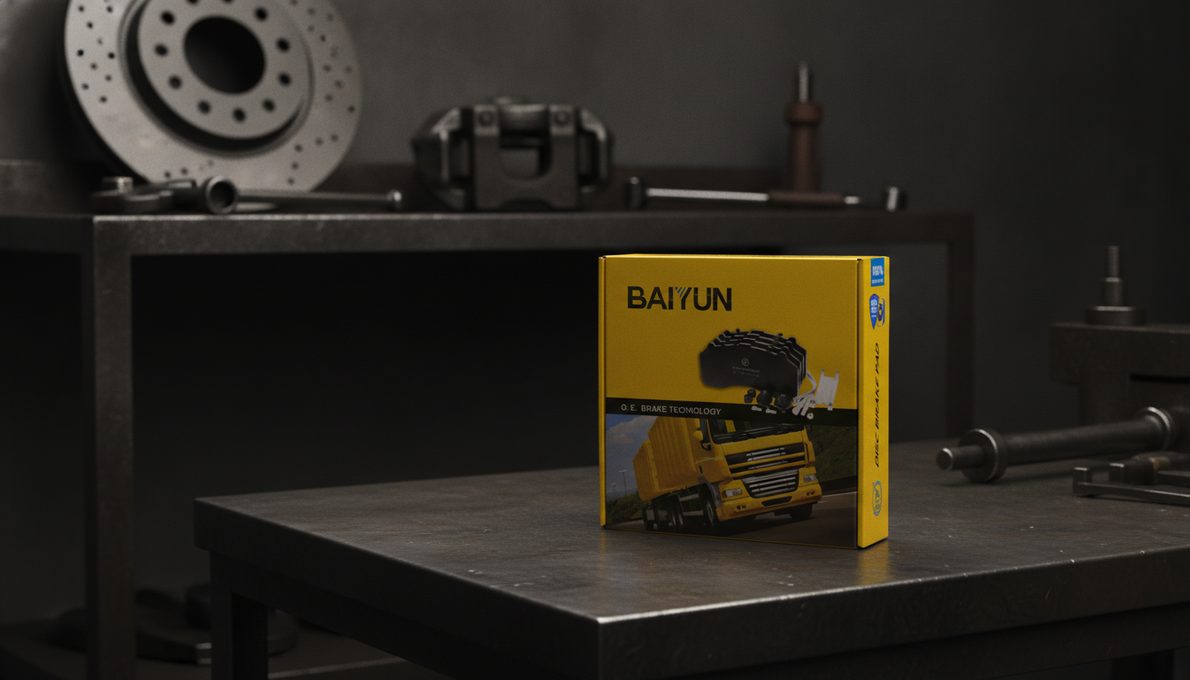
Quick answer: EMCO's new 22,400-pound mono-leaf spring tackles onshore supply shortages for trailer OEMs, but smart fleet buyers know suspension performance directly influences brake pad wear patterns and maintenance intervals. When your trailer's suspension geometry shifts under load, brake pad contact pressure becomes uneven, causing premature wear. For fleets importing brake pads, this news underscores the need for a supplier with rigorous quality certifications and consistent friction material — like BAIYUN Brake, whose IATF 16949 and ECE R90 approved pads maintain stable friction even under the dynamic loads that new suspension designs introduce.
Fleet Equipment Magazine broke the story, and it's one worth paying attention to if you manage a commercial trailer fleet or distribute heavy-duty components. EMCO Industries, already a known name in leaf spring manufacturing, has entered the mono-leaf segment to address chronic lead times from overseas suppliers. The spring is rated for 22,400 lbs gross axle weight — a number that matches the demands of modern logistics where trailers often run at maximum legal limits. But here's the part many overlook: a suspension upgrade ripples through the entire brake system.
Why Does a Mono-Leaf Spring Affect Brake Pad Specifications?
Trailer suspensions aren't just about ride quality. They control axle alignment, and slight toe or camber changes under load redistribute braking forces across the brake pads. When EMCO touts its high-performance spring as reducing weight and maintaining geometry, that's good news for brake maintenance teams. Less suspension deflection means more even pad-to-disc contact, which translates to fewer instances of tapered pad wear — a common headache for fleets running disc brakes on trailers.
Our engineering team at BAIYUN Brake has seen this pattern across hundreds of dynamometer tests. A 2-degree axle misalignment can increase inner pad wear by 15% and push temperatures beyond the thermal capacity of generic friction materials. That's why we formulate our commercial vehicle brake pads with an eye on extreme heat cycling — the kind that happens when a trailer's suspension is pushed hard on undulating roads. You'll find our pads using a stable friction coefficient of 0.38–0.42 from 100°C to 350°C, which helps prevent the fade that uneven loading can trigger.
What Certifications Should Fleet Buyers Demand from Brake Component Suppliers?
EMCO's launch is backed by the company's existing quality infrastructure, but in the brake pad world, fleet buyers need to be pickier. Three certifications matter:
- IATF 16949 — This is the automotive supply chain quality management standard. If a brake pad manufacturer doesn't have it, their production process lacks the statistical process controls that guarantee batch-to-batch consistency. BAIYUN Brake's facility operates under IATF 16949, so every set of pads produced follows a strictly documented control plan.
- ECE R90 — Required for sale in Europe and many other markets, this regulation tests brake pads against OE performance benchmarks. Pads must maintain 80% of their cold performance after heat cycling, and stopping distance cannot exceed the OE reference by more than 15%. Without this, you're gambling with a trailer's braking repeatability on long downgrades.
- ISO 9001 — While less specialized, it's a baseline for any serious manufacturer. Combined with the above two, it creates a safety net for international buyers.
When you're sourcing pads for trailers that will see 100,000+ km per year, skipping on these certifications can mean unpredictable wear rates and warranty claims you'll have to eat yourself. We've had distributors tell us they switched to certified suppliers after a $200,000 claim from a fleet whose trailer brakes failed post-installation of uncertified pads.
How Does EMCO's Move Reflect a Broader Supply Chain Trend Fleet Buyers Must Track?
EMCO isn't just launching a product — they're responding to a structural shift. Onshore manufacturing for heavy-duty suspension and brake components has become a hedge against ocean freight delays and geopolitical uncertainty. Fleet buyers who rely on imported brake pads are facing similar lead time risks if their supplier is a small overseas factory with no buffer stock. BAIYUN Brake maintains warehouse facilities both domestically and in key export hubs, so a distributor placing a 5,000-set order won't wait 12 weeks for production. We typically ship within 4–6 weeks for standard catalog items, and we can offer air freight for urgent bulk needs — something that's economically viable because our SKU concentration is high for common WVA numbers like 29087.
What Sourcing Factors Matter for Fleets Importing Brake Pads?
If you're buying brake pads by the container load, several factors become deal-breakers:
| Factor | Importance for Fleets | BAIYUN Brake Advantage |
|---|---|---|
| Minimum Order Quantity (MOQ) | Low MOQs allow trial orders and gradual switching | 500 sets per SKU, mixable across WVA references |
| Lead Time | Consistent delivery prevents fleet downtime | 4–6 weeks for production, stock availability for top-moving items |
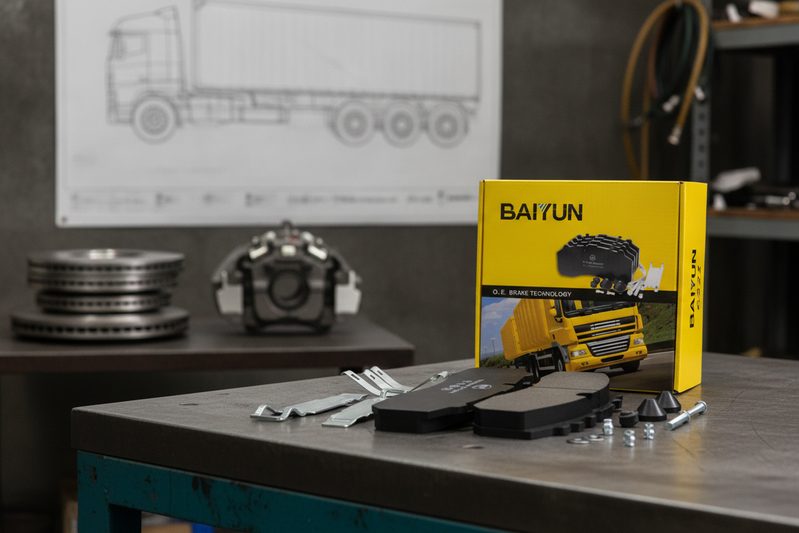
| Private Label Capability | Distributors want their own brand on pads | Full OEM/private label program with custom box printing |
| Logistics Support | Clearing customs and inland freight coordination | Partnered with major freight forwarders, door-to-door options available |
| After-Sales Technical Support | Quick troubleshooting for end-user fleets | Technical team accessible via email and phone, with case libraries |
A fleet manager once told us that the difference between a good brake pad supplier and a great one comes down to what happens when a load of pads arrives with slightly different friction characteristics than the sample. A certified supplier will have batch traceability and will pull back the inventory immediately. We've invested in full lot-tracking systems that tie every box back to a production date and material batch — something that saved one distributor $40,000 in potential recall costs last year.
How Can Distributors Leverage OEM and Private Label Brake Programs?
EMCO's mono-leaf spring is sold directly to trailer OEMs, but brake pads follow a different path: distributors and importers are the backbone of the aftermarket. Opportunities exist to partner with a manufacturer like BAIYUN Brake to build a private label line. With our IATF 16949 certified facility, you can launch your own brand of commercial vehicle brake pads without the capex of a factory. We handle the R&D, production, and testing — you get custom packaging, your part numbers, and the marketing support to grow your regional presence.
For instance, we've helped a Middle Eastern distributor develop a complete range of trailer brake pads under their house brand, using our existing WVA 29087, 29125, and 29244 reference designs. They started with a 2,000-set order, and within 18 months were moving 15,000 sets quarterly. The key was consistent quality that matched the performance of the OEM pads their customers were replacing — and that's only possible when the manufacturer runs dynamometer validation to SAE J2522 or GB 5763 standards right on the production floor.
Buyer Verification Checklist: Ensuring Brake Pad Quality
Before you cut a purchase order, here's a quick list every fleet buyer or distributor should run through:
- Verify the manufacturer's IATF 16949 certificate — ask for a copy and check the expiry date.
- Request an ECE R90 test report for the specific WVA number you're buying; generic approvals don't count.
- Ask for a friction coefficient vs. temperature chart — look for stability across 100°C to 350°C.
- Confirm the MOQ and lead time fit your warehouse turns; too high an MOQ can lock up cash.
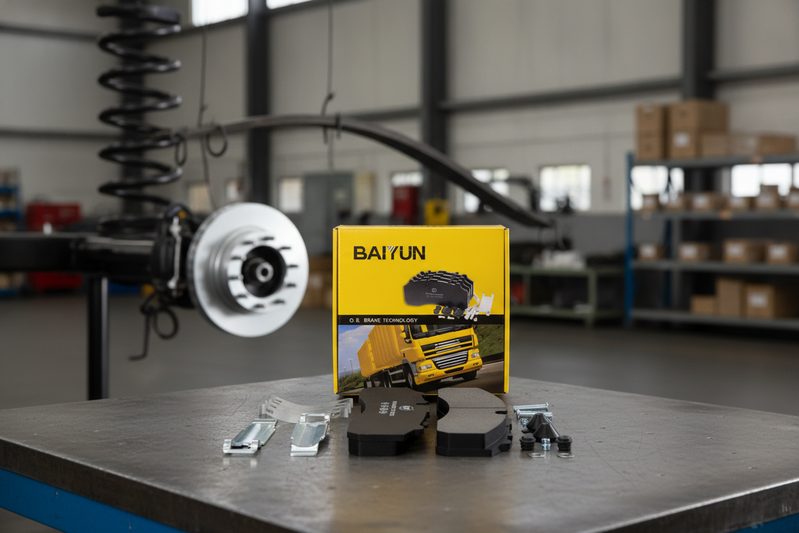
- Review the shim, chamfer, and slot design — these affect noise and vibration on disc brake setups.
- Check whether the supplier offers private label support if you're planning to brand the product.
- Request a sample batch for field testing before committing to a container order.
- Verify the supplier's traceability system — can they trace a box back to production date and raw material lot?
FAQ: Fleet Buyers Ask About Brake Pads and Supplier Selection
Q: How do I know if a brake pad manufacturer's certifications are genuine?
A: Request the IATF 16949 certificate number and verify it against the IATF global database. For ECE R90, the approval number should begin with 'E1' or similar country code and be traceable via the issuing nation's type-approval authority. BAIYUN Brake openly provides certificate copies to qualified buyers.
Q: What's the typical MOQ for commercial vehicle brake pads?
A: Reputable manufacturers often set MOQs at 300–500 sets per SKU. At BAIYUN Brake, we work with 500 sets minimum, but we can combine multiple WVA references to reach the total. This flexibility helps smaller distributors avoid overstocking a single part number.
Q: How long does it take to develop a private label brake pad line?
A: The process from artwork approval to first shipment typically takes 60–90 days, depending on the complexity of packaging and testing. Our team guides you through box design, friction material selection, and the regulatory labeling required for your target market.
Q: Does brake pad friction material need to match the suspension type?
A: Not directly, but aggressive suspension setups that maintain stiffer axle alignment can tolerate higher-friction pads without uneven wear. Conversely, a worn suspension can cause pad taper even with high-quality materials. That's why fleet managers should align brake pad replacement schedules with suspension inspections.
Q: Can I get a sample before placing a bulk order?
A: Absolutely. We encourage buyers to test 20–30 sets in their fleet's actual operating conditions. Our samples are production-intent, so what you test matches what you'll receive in the container. Get in touch with our export team to request sample pads for your evaluation.
This article was produced by the BAIYUN Brake editorial team, combining 49+ years of brake manufacturing expertise with current industry research. For product inquiries or technical questions, contact our team.
EMCO's mono-leaf spring is a sign of an industry adapting to new demands. As trailers get lighter and payloads increase, the brake systems that stop them need to be built to an uncompromising standard. While you're evaluating suspension upgrades, it's the right time to reassess your brake pad supplier. Browse our heavy-duty brake pad range to see detailed specifications, or request a wholesale quote for your next container order. With certifications that matter and a supply chain built for reliability, BAIYUN Brake is ready to support your fleet's braking performance — mile after mile.
Was this article helpful?
Average Rating: 5/5 (503)