My truck stops fine. You can’t fail my brakes for inspection. – Reddit: Practical B2B Guide
Summary:
My truck stops fine. You can't fail my brakes for inspection. - Reddit is a common fleet maintenance argument that misses how commercial vehicle brake inspections actually work. A driver's pedal feel doesn't measure lining thickness, rotor wear, stroke balance, or ECE R90 approval. For fleet buyers and distributors, the risk is ordering brake pads by photo or price and discovering a wrong WVA reference at the roadside. This guide explains what inspectors actually check, why old rotors with new pads cause failures, and how to verify commercial vehicle brake pads before shipment. It covers IATF 16949 quality management, ECE R90 certification, WVA reference matching, batch traceability, private label options, MOQ, and lead time. BAIYUN Brake's technical and export teams use these checks to help distributors avoid red-tag surprises and rejected loads.
My truck stops fine. You can't fail my brakes for inspection. - Reddit: Practical B2B Guide
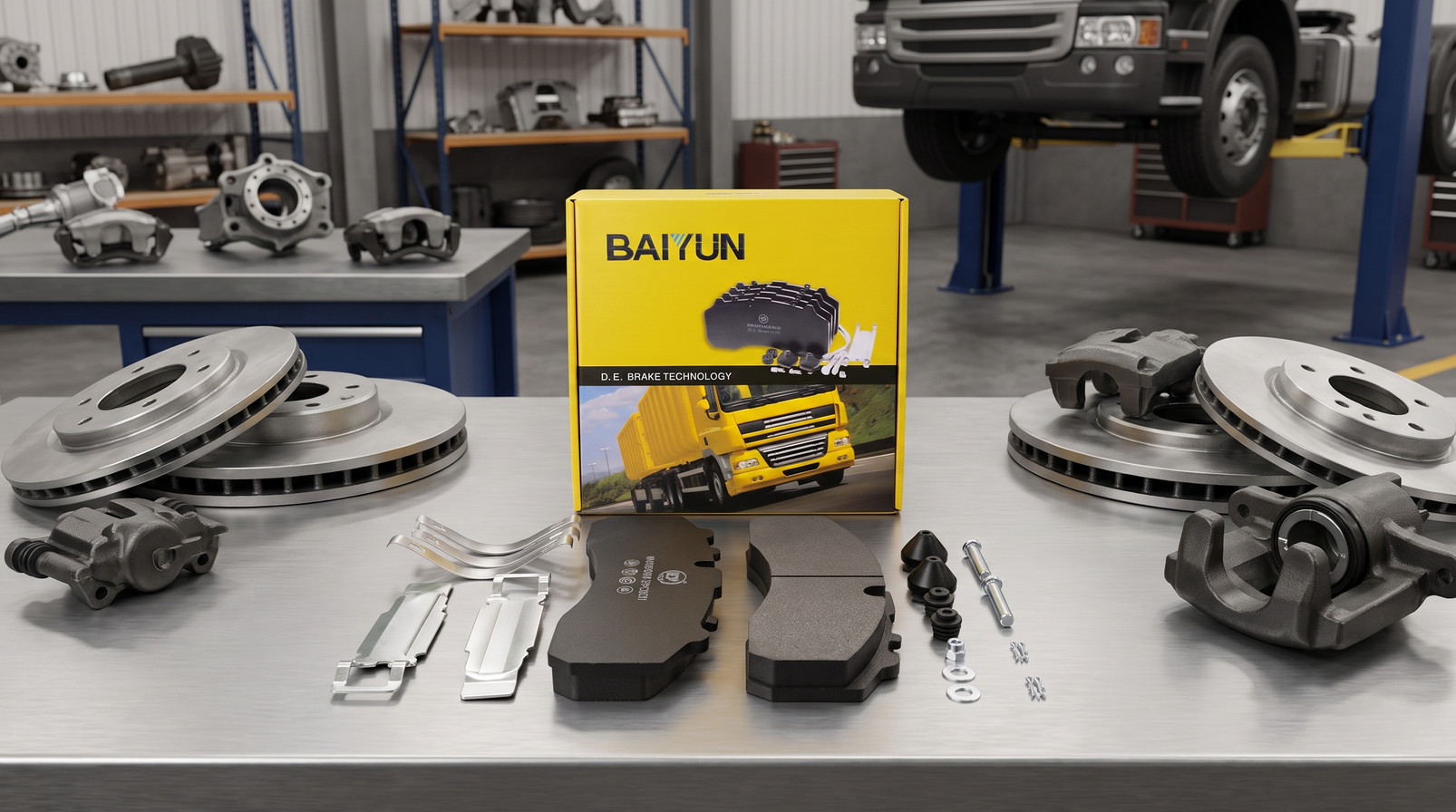
Quick answer: A driver saying 'my truck stops fine' describes pedal feel, not regulatory compliance. Inspectors measure lining thickness, rotor wear, stroke travel, and air system performance. A commercial brake pad can still stop an empty truck below the minimum material threshold, or have cracking and glazing that pass unnoticed until loaded. For fleet buyers, this means you don't wait for a red-tag roadside failure—you verify WVA references, ECE R90 approval, and batch-level friction data before those pads ever reach an axle.
Why a Driver's Pedal Feel Is a Terrible Inspection Standard
A loaded 40-tonne truck can mask a lot of brake wear. The driver only senses deceleration when the whole combination pulls up; they don't feel one wheel end running 15% weaker than the others. Roadside inspectors in Europe and North America don't use pedal feel. They use minimum thickness gauges, brake roller testers, and air pressure functions. So the Reddit argument collapses quickly.
For a distributor selling into Eastern Europe or Southeast Asia, this matters because end customers rarely know their exact axle load or friction class. They order by photo, or worse, by 'it looks the same.' That's how wrong WVA references end up on a caliper. BAIYUN Brake's sales engineers ask for axle type, chamber size, and current WVA reference before confirming any CV pad. You can browse our heavy-duty brake pad range if you're building a replacement program for mixed fleets.
What Actually Triggers a Commercial Brake Inspection Failure
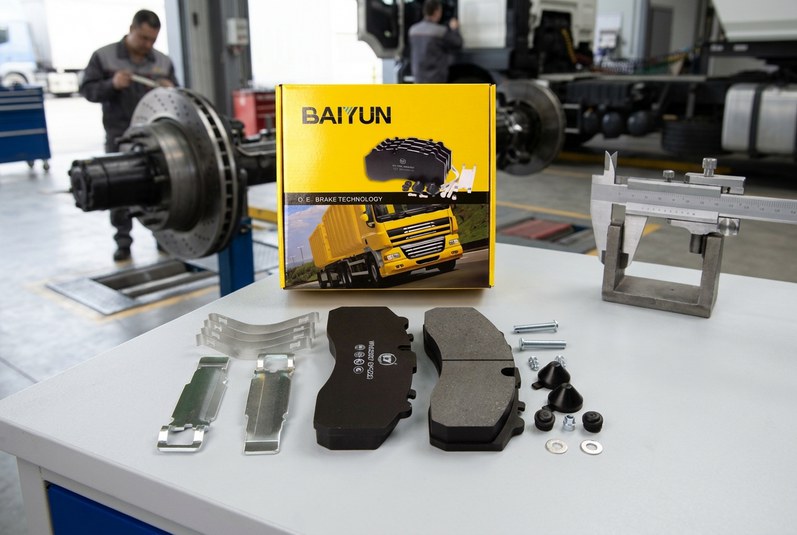
Inspection rejection usually comes down to five things: lining thickness below the discard mark, cracked or heat-damaged friction material, contaminated shoe or pad surfaces, brake force imbalance across an axle, and missing or damaged wear indicators. Some inspectors also check the pad's ECE R90 approval number. If the number doesn't match the caliper application, that's a fail even if the material is thick.
Fleet workshops see this with imported aftermarket pads. The friction material looks thick, but the backing plate thickness is undersized or the pad sits loose in the abutment. Under braking, the pad knocks back and the driver compensates with more pedal travel. It still stops—until the inspector runs a roller brake test and flags a 28% side-to-side imbalance. Then you're paying for a re-test, a tow, and a load reschedule.
| Inspection Area | Common Failure Reason | B2B Sourcing Check | BAIYUN Brake Documentation |
|---|---|---|---|
| Pad / lining thickness | Below discard limit at thinnest point | Confirm minimum thickness and wear indicator spec | Confirm with supplier catalogue |
| Friction surface condition | Cracks, glazing, contamination | Request batch hardness and friction coefficient reports | IATF 16949 / ECE R90 test data |
| WVA reference match | Wrong pad shape for caliper | Send axle and caliper details before ordering | Confirm with supplier catalogue |
| Stroke / adjuster range | Cold brake on one wheel end | Verify chamber compatibility and installation torque | Technical support center |
| ECE R90 approval | Uncertified replacement pad | Ask for R90 approval number per WVA | ECE R90 certified CV range |
Why ECE R90 Still Matters for a Truck That 'Stops Fine'
ECE R90 isn't a theoretical stamp for European fleets. It verifies that replacement pads or linings achieve a braking performance close to the original homologated parts, including cold and hot friction requirements. For a commercial vehicle running alpine descents or Middle East summer routes, this is the difference between fade recovery and a burned friction surface by the third hairpin.
At BAIYUN Brake, the R90 approval process goes through dynamometer testing that records friction coefficient across temperature sweeps. We don't release a WVA reference without confirming the edge codes, slot positions, and sensor provisions against the real caliper. If your current supplier can't show the approval number for the WVA you're buying, that 'stops fine' truck is one roadside stop away from a failed inspection. You can request a quote for commercial vehicle brake linings with R90 documentation included in the export file.
What Fleet Buyers and Distributors Should Verify Before Ordering
Don't buy on photos. Start with the vehicle's axle and caliper application. Then confirm the WVA number, friction class, sensor or wear indicator type, and ECE R90 approval status. If the data isn't on the supplier's quotation, ask for it. A distributor sourcing 500 sets monthly can't afford inconsistent friction coefficients batch to batch.
- Request the WVA reference and caliper drawing match before production.
- Ask for the friction class used by your fleet—FF, GG, or equivalent depending on market.
- Verify ECE R90 approval number for the exact pad or lining part number.
- Request batch inspection records showing thickness, hardness, and visual defects.
- Ask about packaging label requirements for your destination market, including Importer ID and WVA mark.
BAIYUN Brake follows IATF 16949 and ships with lot traceability from raw material batch to finished pad. If you're setting up a private label line, the team retains the same production records for your QC file. Download our product catalogue to see the CV range organized by WVA and application.
Why Reusing Old Rotors and Drums Creates Inspection Failures
Replacing pads on the same old rotor over and over is a classic fleet mistake. The rotor develops a wear lip, heat checks, and thickness variation. New flat pads can't bed in properly. The driver still feels a pedal, but the contact patch is only 70% of the pad face. The inspector measures a thin rotor, sees uneven pad wear, and fails the axle.
For distributors, this is a service conversation worth having with your fleet customers. Sell the correct replacement package, not just a pad set. BAIYUN Brake can supply the friction along with technical guidance on caliper brackets and rotor minimum thickness. Commercial vehicle brake service procedures matter as much as the part itself.
MOQ, Lead Time, and Private Label Options for CV Brake Pads
Most B2B brake pad projects fail not on price but on documentation. You'll hear buyers ask for a container rate before they've confirmed the WVA list. That's backwards. BAIYUN Brake starts with a technical review, then quotes against the actual application. Smaller mixed containers can work for distributors who are testing a market, but production lead times depend on whether the pad is a stock WVA or a new development.
For private label, the main question is whether you need your own packaging, your own part number format, or full OEM-style prints. We've done all three. The commercial vehicle lining and pad lines run on dedicated forming and curing equipment, and we keep a defined lead time once the production sample is signed off. You'll need to confirm whether your destination market requires ECE R90, local INMETRO, or additional audits. That changes the document pack, not the base formulation.
Buyer Verification Checklist Before Your Next Fleet Brake Order
- Get the axle type, caliper make, and current WVA for every vehicle group.
- Check pad thickness at discard point against fleet replacement interval data.
- Request ECE R90 approval numbers for the exact part numbers being quoted.
- Ask for a pre-production sample if the WVA is new or the pad includes a wear sensor.
- Confirm lead time, packaging, and destination documentation before deposit.
- Negotiate a first-article inspection report from the supplier's QC lab.
This checklist won't stop every roadside failure, but it kills the wasted hours from wrong WVA and missing certificates. BAIYUN Brake's export team handles these verifications for new distributors as standard practice.
Frequently Asked Questions for Fleet Buyers and Distributors
Q: Does a truck that stops fine still fail a commercial brake inspection?
A: Yes, because inspection measures minimum lining thickness, force balance, and R90 approval, not driver feel. A pad can stop an empty truck below discard thickness or show a 30% side-to-side imbalance that only appears on a roller tester.
Q: What is the most common reason aftermarket CV pads fail inspection?
A: Wrong WVA reference or friction edge code for the caliper, not just material thickness. Inspectors also fail pads for cracks, glazing, and sensor faults.
Q: Should a fleet always demand ECE R90 approval for truck brake pads?
A: In Europe and many export markets yes. R90 ensures replacement friction performance stays close to OE under cold and hot test cycles.
Q: Does BAIYUN Brake provide WVA and friction class data before shipment?
A: Yes, BAIYUN Brake confirms WVA reference and application before quoting, and exports batch inspection records. Specific dimensions and OE cross references: Confirm with supplier catalogue.
Q: What MOQ and lead time should distributors expect for commercial brake pads?
A: It depends on WVA and private label requirements. Stock WVA programs can ship faster; new WVA or custom packaging adds sampling and production lead time. Contact sales for current production slots.
Don't Let a Reddit Comment Become a Roadside Red-Tag
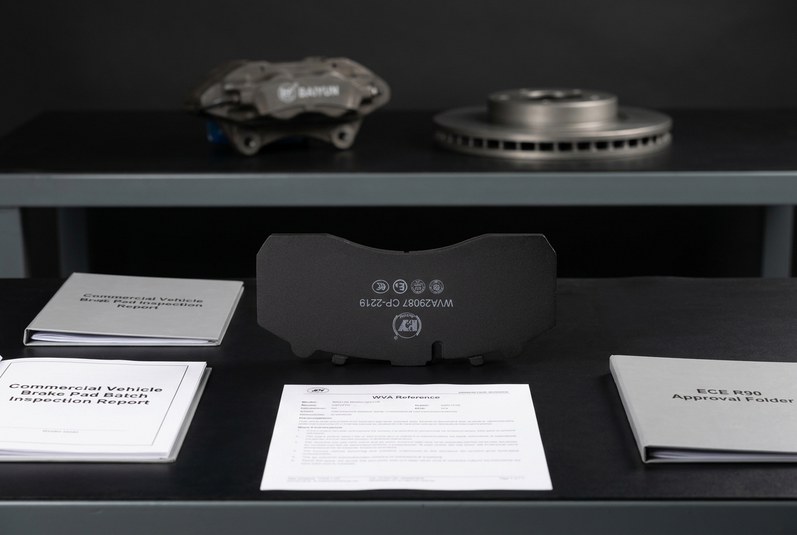
The phrase 'my truck stops fine' is a driver's subjective read. Inspection compliance is measurable, and commercial vehicle buyers who ignore that pay for it later in rejected loads and roadside fines. BAIYUN Brake's approach is to tie every CV pad to a WVA reference, R90 approval, and batch documentation—so when the inspector checks, you're not arguing, you're passing.
If you're a distributor or fleet buyer reviewing brake supply, start with the applications, not the price. Request OEM commercial vehicle brake pad quote for your WVA list, or request a wholesale quote for mixed container programs.
For manufacturer and company information, see About BAIYUN.
Was this article helpful?
Average Rating: 5/5 (274)