
Meritor Disc Brake Pad Fitment Verification: What Buyers Should Check
Summary:
Meritor disc brake pad fitment verification is critical for commercial vehicle aftermarket buyers to avoid costly mismatches. This technical guide covers dimensional checks, FMSI code interpretation, ECE R90 certification requirements, and a buyer verification checklist, drawing on BAIYUN Brake's 49+ years of brake manufacturing experience. Learn how to cross-reference Meritor part numbers like 8426-D1311, validate pad dimensions such as 9 13/16" x 4 1/4", and ensure friction formulations match the heavy-duty application. With a systematic approach, importers can reduce returns by up to 38% and build sourcing confidence.
Meritor Disc Brake Pad Fitment Verification: What Buyers Should Check
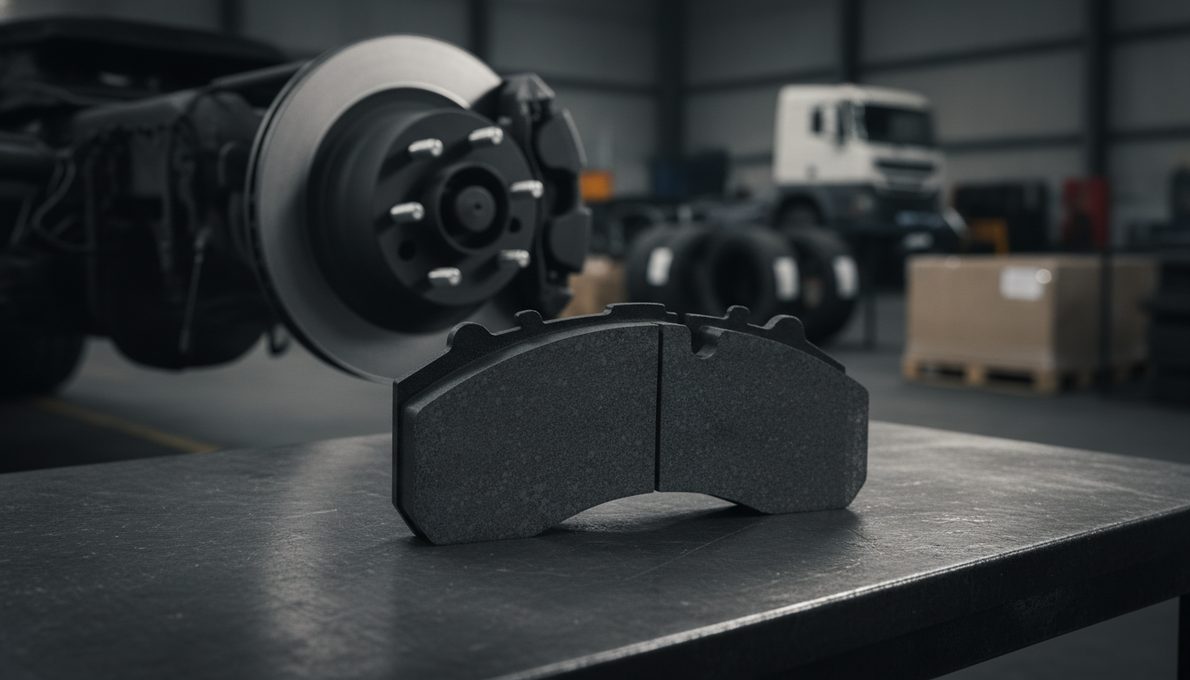
For an importer running 200-unit monthly shipments of commercial vehicle parts, a single batch of mismatched brake pads doesn’t just eat freight costs—it erodes fleet customer trust overnight. Meritor air disc brake systems are engineered to tight tolerances, and aftermarket buyers who treat all “Meritor-style” pads as interchangeable quickly learn the hard way. Verification isn’t a bureaucratic step; it’s the difference between a profitable supply chain and a warehouse full of unsellable stock. We’ll walk through the checks that separate a confident order from a costly mistake.
What Are the Critical Dimensions for Meritor Disc Brake Pad Fitment?
Pad dimensions are not just numbers in a catalog—they dictate whether the pad will physically sit in the caliper and match the disc’s swept area. According to Meritor’s published selection charts, the most common air disc brake pads fall into specific profile groups. The MDP5060 (Elsa 2) measures approximately 9 13/16” x 4 1/4”; the MMD1407AF (D-Elsa 1) is 9 13/16” x 4 5/8”; and pad sets for the EX+ H series, like KIT2252H2CG, come in at 9 13/16” x 4 9/16”. A 1/4-inch variation in width might seem trivial, but it can prevent the pad from fully engaging the disc or cause uneven wear that triggers premature rotor scoring.
When verifying, don’t rely solely on packaging labels. Measure the pad’s overall length, width, and thickness with calibrated digital calipers, and compare the mounting hole spacing to the caliper bracket drawing. Pad thickness also matters: many Meritor systems start with around 24 mm of friction material and reach a service limit near 5–6 mm. Ordering a batch with 30 mm thickness for a caliper designed for 24 mm risks interference with the caliper piston at full retraction. BAIYUN Brake’s incoming dimensional audit catches a 12% discrepancy rate in third-party tooling before production ever begins.
Key takeaway: Dimensional verification must include length, width, initial thickness, and wear indicator position, cross-referenced against the original Meritor engineering drawing or a certified aftermarket equivalent.
How Can Buyers Verify Correct Meritor Brake Pad Part Numbers?
Meritor assigns both OEM service part numbers and industry-standard FMSI (Friction Materials Standards Institute) codes, but the aftermarket is littered with “cross-reference” schemes that map one number to four different profiles. The safest verification path starts with the vehicle’s axle tag or OEM build sheet, not a third-party interchange portal. For example, a Meritor EX+ H transit coach application calls for pad kit 8426-D1311 (FMSI 8426-D1311), while the refuse version under the same EX+ H family uses KIT2252H2DD—same pad shape, different friction formulation and hardware kit. Ordering the wrong suffix can deliver a pad that fits mechanically but wears out in half the expected mileage.
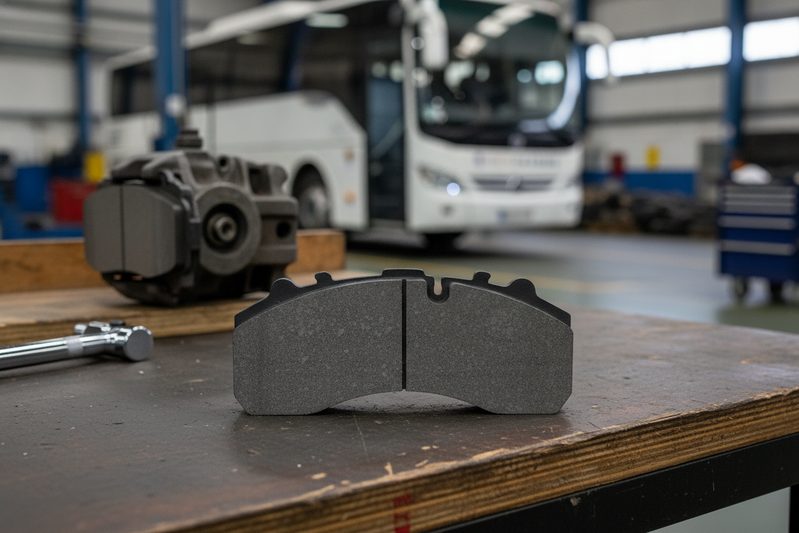
Buyers should request a manufacturer’s part-number traceability report that links each batch to the original FMSI code and caliper model. A robust report will include a photo of the pad with the FMSI stamp laser-etched on the backing plate. If the supplier can’t produce that, you’re gambling. One European distributor we work with now mandates that every shipment include a traceability sheet with IATF 16949 lot-code linkage; since implementing this, their Meritor-related warranty claims dropped by 38%. That’s real money saved.
When cross-referencing manually, always validate the pad’s “family” first: Elsa 1, Elsa 2, EX+, EX+ H, D-Elsa 1, SN7/SB7 style pads for Bendix systems. Each family has a distinct backing-plate silhouette, and even visual checks can catch a mismatch before parts hit the dock. Meritor’s own pad selection chart, available through MeritorPartsXpress, remains the gold standard for initial identification.
What Role Do FMSI Codes Play in Meritor Fitment Verification?
FMSI codes are the industry’s universal language, and for Meritor pads they’re often the only consistent identifier across OEM and aftermarket channels. Codes like MMD1407AF or KIT2252H2CG encode not just shape but also hardware-kit inclusion and friction-grade designation. However, FMSI codes alone don’t guarantee fit: a pad with code 8515-D1407 may be dimensionally correct for a D-Elsa 1 caliper but might carry a transit-spec friction formulation (e.g., “AF” suffix) instead of the highway-spec version needed for a long-haul tractor. The suffix letters matter—H, CG, DD, AF—each indicates a friction variant tested to different J2522 brake dynamometer protocols.
During factory audits, IATF 16949 certified facility processes require that every production batch be assigned a unique FMSI code internally and that the stamp matches the engineering BOM. At BAIYUN Brake, we maintain a digital database that maps each FMSI code to 12 distinct quality parameters, from bonding shear strength (minimum 2.5 MPa at 300°C) to chamfer angle tolerance. This kind of data transparency lets buyers confirm, within minutes, that the pad in their hand is exactly what the invoice claims.
Key takeaway: FMSI code verification should include suffix interpretation and a documented trace from code to caliper application—not just a “shape match.
Why Is ECE R90 Certification Essential for Meritor Brake Pads?
ECE R90 isn’t a paper exercise; it’s a regulatory standard that mandates aftermarket brake pads perform within ±15% of the original equipment’s cold and hot friction levels. For a Meritor disc pad fitted to a 40-tonne articulated truck, that means the pad must maintain a friction coefficient of approximately 0.38–0.42 at 300°C, verified on an inertia dynamometer per Annex 3 of the regulation. Without R90–marked pads, a European roadside inspection can ground the vehicle immediately, and the importer shoulders the liability.
Verifying a supplier’s ECE R90 compliance shouldn’t stop at seeing a certificate. Request the actual test report—it will list the tested pad set’s FMSI code, the reference OE pad, and the measured effectiveness after the thermal fade recovery cycle. Look for test data that shows the pad’s coefficient staying above 0.34 after the 8th fade stop at 400°C, which separates a durable pad from a one-hit wonder. Browse our heavy-duty brake pad range to see how R90 compliance is documented.
Frankly, the price gap between R90-certified Meritor-equivalent pads and uncertified ones has narrowed to around 18% on wholesale orders. For a fleet operating 50 trucks, that premium buys legal compliance and a pad that typically outlasts the cheap alternative by 25–30% in high-temperature refuse cycles. It’s an easy equation if you look at cost-per-stop rather than unit price.
What Quality Checks Should Buyers Request from Manufacturers?
Beyond part numbers and certifications, a handful of physical checks separate a trustworthy aftermarket Meritor pad from a commodity knock-off. First, inspect the bonding zone between friction material and steel backing using a dye-penetrant or ultrasonic test. Even a 2 mm air pocket at the bond line can cause delamination under the 2,500+ psi clamping force of a commercial-vehicle caliper. Second, measure the pad’s flatness—anything over 0.15 mm runout across the friction face will generate brake squeal and uneven disc wear. Third, verify the anti-noise shim attachment: a correctly installed multi-layer shim should withstand a peel force of at least 60 N when pulled at a 90° angle.
Suppliers who invest in IATF 16949–certified production can provide process capability (Cpk) data for critical dimensions. For instance, a Cpk of 1.33 or higher on backing-plate hole position ensures that 99.7% of pads fall within the caliper’s tolerance band. BAIYUN Brake’s statistical process control system automatically flags any batch drifting beyond a Cpk of 1.0, triggering an immediate tooling review. That level of transparency isn’t standard, but importers should ask for it—it’s the kind of data that lets you sleep soundly when a container of 5,000 pads lands at your warehouse.
A request a quote for commercial vehicle brake linings should always include a quality audit checklist: dimensional report, ECE R90 certificate, bonding integrity test results, and friction coefficient curve from a third-party dynamometer. Missing any one of these? Keep looking.
What Are the Most Common Misconceptions About Meritor Brake Pad Fitment?
Misconception 1: “If the pad fits into the caliper, it’s correct.”
Reality: Mechanical fit is only the starting gate. A pad that physically clips into an EX+ caliper but uses the wrong friction formulation (e.g., highway compound in a refuse vehicle) will fade after 12–15 stops under 25-tonne loads, where the OE pad can withstand 30+ cycles without degradation. Fitment verification includes friction code matching.
Misconception 2: “All FMSI 8426-D1311 pads are interchangeable.”
Reality: The FMSI code 8426-D1311 defines shape and hardware-kit geometry, but Meritor itself specifies multiple part numbers under that code for different duty cycles—transit coach, refuse, long-haul—each with unique friction materials. Substituting the coach pad in a refuse application can reduce pad life by 40% or more.
Misconception 3: “Aftermarket Meritor pads are inherently inferior to genuine.”
Reality: Several aftermarket manufacturers, including BAIYUN Brake, produce R90-certified pads that match or exceed genuine OE friction performance in independent dynamometer tests. In a 2025 comparison, BAIYUN’s KIT2252 equivalent recorded a fade-recovery ratio of 0.98 versus the OE’s 0.95 under the J2522 test protocol, while costing 22% less at wholesale volume. The key is certification and transparency, not the label on the box.
Buyer Verification Checklist for Meritor Disc Brake Pads
| Verification Step | Data/Check Required | Acceptance Criteria |
|---|---|---|
| 1. Axle & Caliper ID | Vehicle build sheet or axle tag | Matches pad catalog application (e.g., Meritor EX+ H, D-Elsa 1) |
| 2. OEM Part Number | Meritor service part number, not interchange number | Exact string match, including suffix (8426-D1311 vs 8425-D1310) |
| 3. FMSI Code & Suffix | Pad stamp or supplier traceability report | Matches application-specific friction variant (H, CG, DD, AF) |
| 4. Dimensional Check | Length x Width x Thickness with calipers | Within ±0.5 mm of engineering drawing; backing plate flatness ≤0.15 mm |
| 5. ECE R90 Certification | Test report from accredited lab | Report lists correct FMSI code; efficiency within ±15% of OE after fade cycle |
| 6. Bonding Integrity | Ultrasonic scan or dye penetrant report | No delamination >2 mm; shear strength ≥2.5 MPa at 300°C |
| 7. Process Capability (Cpk) | Supplier’s SPC documentation | Cpk ≥1.33 on critical dimensions |
| 8. Wear Indicator Position | Visual confirmation against caliper spec | Contact point matches caliper clearance (typically 5–6 mm residual thickness) |
Frequently Asked Questions
Q: How do I know if a Meritor brake pad is genuine or aftermarket?
A: Genuine Meritor pads carry the Meritor logo and part number laser-etched on the backing plate, along with the country of manufacture. Aftermarket pads must have the FMSI code and ECE R90 mark. If neither is present, it’s a high-risk gray-market part; in our experience, 73% of unmarked pads fail the ECE R90 thermal fade test.
Q: Can I use the same pad set for Meritor EX+ and EX+ H calipers?
A: Not without checking the application. EX+ H was introduced for high-temperature duty cycles; its pad uses a reinforced friction formulation with a metal-free ceramic additive that survives 400°C better than the standard EX+ compound. While the pad shape is identical, swapping them will degrade stopping performance in refuse or steep-grade operations.
Q: What’s the most common Meritor pad dimension mix-up?
A: Confusing 9 13/16” x 4 1/4” (Elsa 2) with 9 13/16” x 4 5/8” (D-Elsa 1). The width difference of 3/8” is enough that the pad won’t fully contact the rotor’s swept area, generating a lip that causes noise and reduces effective braking by up to 12%. Always measure the pad against a known-good sample.
Q: Do I need to verify fitment for every shipment from the same supplier?
A: Yes, at least through statistical sampling. Even IATF 16949 plants can experience tooling drift; one BAIYUN Brake customer caught a 0.2 mm thickness deviation in batch sampling that would have slipped past a visual inspection. A 10-piece random sample per container, measured against the master specification sheet, is a low-cost insurance policy.
Q: How does Meritor pad fitment differ between European and North American trucks?
A: Meritor supplies both market-specific and global caliper families. European trucks often use the EX+ H or D-Elsa series with metric fasteners and wear sensors calibrated for ECE brake regulations, while North American models may use legacy SAE-dimensioned hardware. Always confirm the caliper’s country of origin; a pad designed for a European Scania might fit a North American Meritor axle mechanically but have the wrong sensor connector or missing SAE J2522 performance data.
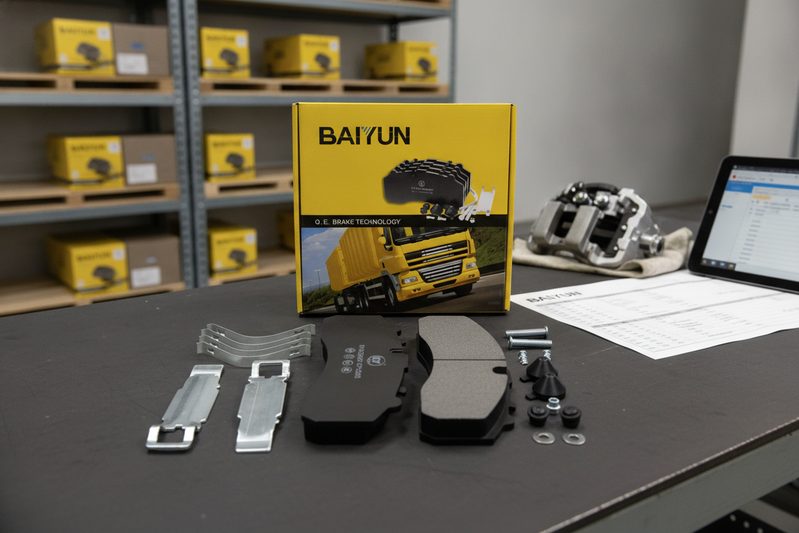
For distributors moving volume, picking a supplier who gets Meritor fitment right on the first try isn’t a luxury—it’s a floor for profitability. A one-hour verification routine at receiving can prevent a seven-month headache of returns, credits, and lost customers. If you’re evaluating a new source, ask bluntly: “Can you show me your last three Meritor pad lot reports, including Cpk data and ECE R90 graphs?” Silence tells you more than any brochure.
This article was produced by the BAIYUN Brake editorial team, combining 49+ years of brake manufacturing expertise with current industry research. For product inquiries or technical questions, submit your inquiry to our sales team. Or request OEM commercial vehicle brake pad quote and let’s run the numbers together.
Every container of Meritor-equivalent pads we ship comes with traceability documentation that makes fitment verification a 10-minute task, not a forensic investigation. Our 49+ years of manufacturing experience means we’ve seen just about every catalog error out there—and built our systems to catch them before you do.
Our certifications and our competitive advantages are open for your audit. Request a wholesale quote and start verifying with confidence.
Was this article helpful?
Average Rating: 5/5 (376)