
BPW brake lining supplier: Importer and Distributor Buying Guide
Summary:
A reliable BPW brake lining supplier must deliver certified, consistent-quality drum brake linings for BPW trailer axles while offering wholesale flexibility. This buying guide for importers and distributors covers supplier verification, ECE R90 and IATF 16949 certifications, popular BPW OE references, pricing strategies, and a practical buyer checklist to help you source BPW brake linings with confidence and reduce sourcing costs by up to 30%.
BPW brake lining supplier: Importer and Distributor Buying Guide
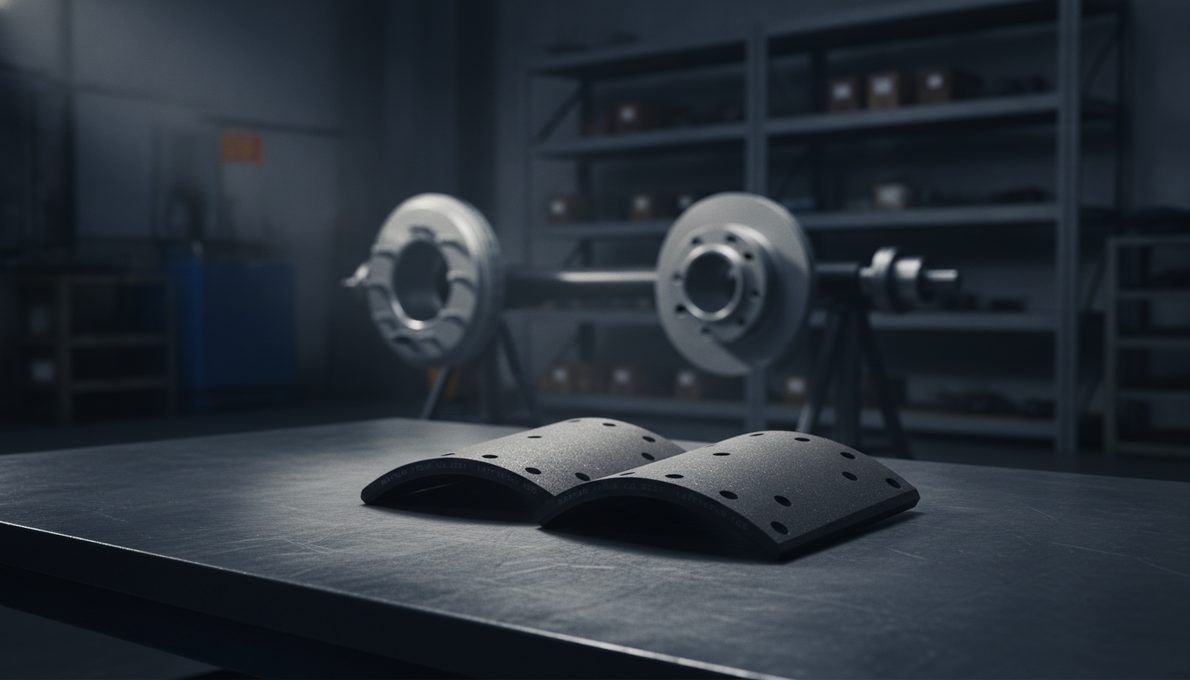
Quick answer: A genuine BPW brake lining supplier must hold IATF 16949 and ECE R90 certifications, provide transparent factory audit possibilities, and deliver consistent friction coefficients across batches—not just a low unit price. BAIYUN Brake, with 49+ years of manufacturing experience, checks all these boxes and routinely cuts sourcing costs by 15–30% for importers and distributors of commercial vehicle brake linings. That's the kind of partner that keeps your aftermarket business competitive.
Importing BPW trailer axle components is a high-stakes game. A single shipment of sub-par drum brake linings can trigger premature wear, increased stopping distances, and warranty nightmares. Yet too many buyers still chase the lowest price without a verification strategy. This guide walks you through exactly what to look for when choosing a BPW brake lining supplier—from factory qualifications to pricing models—so you can ditch the guesswork and buy with confidence.
What Does It Take to Verify a BPW Brake Lining Supplier?
Imagine opening a container of 2,000 brake linings and finding friction material thickness varying by 0.5 mm between pieces. It's not just an inconvenience—that inconsistency triggers uneven brake force across axle sets, leading to brake imbalance and potential fleet safety issues. So how do you avoid that?
Supplier verification goes beyond a glossy website or a slick trade show booth. You need hard evidence of process control. Start with factory audit capability. A credible supplier will openly offer factory photos, video walkthroughs, or even welcome third-party audits. BAIYUN Brake, for instance, operates under IATF 16949 standards, which mandate strict production batch traceability—every drum brake lining can be linked back to its raw material lot.
You'll also want to see testing data. Ask for dynamometer reports showing friction coefficient curves against temperature. For BPW trailer axles, typical friction levels (μ) should fall between 0.35 and 0.45 under normal operating conditions and remain stable up to 350°C. If a supplier can't provide such data, they're probably mixing formulations without proper validation.
Finally, check market reputation. A reliable BPW brake lining supplier will have references in key aftermarkets—Middle East, Africa, Southeast Asia, South America—that you can contact directly. Don't settle for vague testimonials. Demand specifics: delivery reliability, claim rate, and after-sales responsiveness. That's where real trust is built.
Why Are Certifications Non-Negotiable for BPW Brake Linings?
ECE R90 and IATF 16949 aren't wall decorations. They are your insulation against legal liability and product rejection. ECE R90 certification confirms that the brake lining meets European performance and safety standards—stopping distance, cold and hot friction, shear strength, and compressibility are all tested and verified. Without it, your products may be refused at customs or fail fleet inspections.
For a BPW brake lining supplier, IATF 16949 is equally crucial. It's the global quality management standard for automotive serial production, ensuring process stability and continuous improvement. BAIYUN Brake's IATF 16949 certified facility uses an automatic batch mixing system to control friction material homogeneity to within ±2%. That translates directly into consistent brake torque for every axle set you sell.
One more thing: don't confuse general ISO 9001 with IATF 16949. While ISO 9001 covers basic quality management, IATF adds defect prevention, risk management, and product safety requirements specific to the automotive supply chain. If a supplier has only ISO 9001, treat that as a red flag for any commercial vehicle braking component.
How to Read BPW Brake Lining Product Ranges and OE References
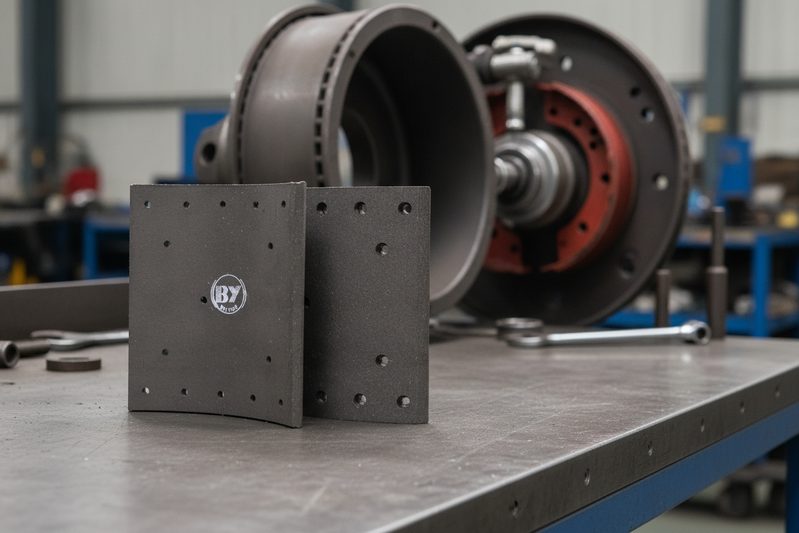
BPW manages a whole ecosystem of drum brake linings matched to their axle series. Knowing the right OE numbers sharpens your procurement accuracy. In September 2026, BPW will introduce a new lining type for SN 3015, SN 3020, and SN 4220 drums, using internal types BPW 6401, 6402, 6404, and 6405. That expansion aims to reduce supply risks, so importers should verify that their supplier can cross-reference these new types.
Here's a quick look at common BPW brake lining references you'll encounter in the commercial vehicle aftermarket. All cross-reference data must be confirmed with the supplier's current catalogue.
| BPW OE / Type | Typical Application / Drum Size | Example Aftermarket Ref. | Status |
|---|---|---|---|
| BPW 0309219500 | 9.7 t axle / SN 3015 drum | 19032, BC/36/1 | Confirm with supplier catalogue |
| BPW 0309220220 | 10.2–13 t axle / SN 3020 drum | 19245, 19782 | Confirm with supplier catalogue |
| BPW 6401 / 6402 (new) | 9.7 t axle, SN 3015 (replacement) | — | New series from Sep 2026 |
| BPW 6405 (new) | 10.2/13 t axle, SN 3020 | — | New series from Sep 2026 |
| BPW 6404 (new) | 14.2 t axle, SN 4220 | — | New series from Sep 2026 |
Partnering with a supplier that stays ahead of these updates—like BAIYUN Brake, which continuously monitors OEM specification changes—protects your stock from obsolescence. If your current supplier can't explain the difference between SN 3015 and SN 4220 linings, you're leaving money and reputation on the table.
Bottom line: Always confirm OE-to-aftermarket cross-references with the supplier's latest catalogue. Do not rely on outdated interchange lists.
How Much Can the Right Sourcing Strategy Save You?
Distributors moving 500 to 2,000 sets per month typically see all-in landed costs that vary by 20–30% between suppliers, depending on logistics, packaging, and quality tier. But here's the twist: the cheapest ex-works price rarely gives the lowest total cost. A lining that wears 15% faster might mean your fleet customers need two replacements a year instead of one—doubling your aftermarket claim exposure.
Direct sourcing from a qualified manufacturer like BAIYUN Brake can cut middlemen margins and offer flexible MOQs. We often work with startup distributors starting at 200 sets per reference, scaling as volume grows. That flexibility helps new importers test the market without overstocking. Our wholesale CV brake lining inquiry team can tailor packaging and labelling to fit regional distribution requirements, whether you need neutral brown boxes or private-label sleeves.
Logistics also play a huge role. BAIYUN Brake ships via FOB or CIF from major Chinese ports and can consolidate orders across multiple references to reduce container costs. For a mixed container of BPW brake linings and wholesale CV brake pads inquiry, you might trim freight costs by 12–18% compared to splitting shipments.
BPW Brake Lining Buyer Verification Checklist
Print this. Share it with your sourcing team. Before placing your next PO, run the supplier through each item:
- Factory holds valid IATF 16949 and ECE R90 certifications—not expired, not “in progress.”
- Dynamometer test reports for the exact BPW lining reference, showing friction coefficient stability up to 350°C.
- Will you accept a third-party audit or virtual factory tour? A “no” means you move on.
- Batch traceability: can the supplier link each production lot to raw material batch records?
- Minimum Order Quantity (MOQ): does it match your market test phase? (Ideal: ≤300 sets per SKU for trial orders)
- Lead time from order confirmation to CIF departure: 30–45 days is standard for quality lines.
- Private labeling and regional packaging compliance available without unreasonable surcharges.
- Warranty and claim-handling process clearly documented; response time under 48 hours.
- References from existing distributors in similar markets, with verifiable contact details.
- No history of friction material delamination or excessive rotor/drum wear complaints.
Frequently Asked Questions
Q: What separates a genuine BPW brake lining from a universal one?
A: A genuine BPW brake lining is designed for specific drum geometry and thermal load of BPW axles, with curvature radius, rivet hole positions, and friction material formulation tuned to OE specifications. Universal linings often lack that precision, causing uneven contact and accelerated drum wear—real-world tests show up to 20% shorter service life compared to matched linings.
Q: How do I confirm ECE R90 compliance for BPW brake linings?
A: Ask for the approval number stamped on each lining or its packaging, which follows the format “E1 90R-02xxxx” or similar. The manufacturer must provide the test report from an accredited laboratory, and you can cross-check the approval on the issuing authority’s website. BAIYUN Brake supplies all ECE R90 documentation with each shipment as standard.
Q: What MOQ can I expect from a reputable BPW brake lining supplier?
A: Quality-focused suppliers typically set MOQ at 200–500 sets per reference for initial orders to cover setup costs. Long-term partners often negotiate lower minimums for repeat orders. Your best move: request a trial quantity of 200 sets across your most popular BPW references to validate quality before committing to larger volumes.
Q: Can I get BPW brake linings in my own brand packaging?
A: Yes, most established manufacturers offer OEM/private label services. BAIYUN Brake can print your logo, part numbers, and regional compliance marks on boxes and labels, with a typical artwork approval lead time of 7–10 days. Just be aware that some suppliers charge a setup fee for custom printing; always clarify this during quotation.
Q: How does BAIYUN Brake maintain consistent friction performance across batches?
A: Through automated batch mixing with closed-loop process control, we keep friction coefficient variation within ±0.02 from batch to batch. Quarterly dynamometer audits on production samples verify real-world performance stability. The result: your customers experience uniform pedal feel and wear rates, visit after visit.
Secure Your BPW Brake Lining Supply Before the Next Rate Hike
Freight rates shift. Material costs climb. But one thing won't change: the demand for reliable, certified BPW brake linings in the global commercial vehicle aftermarket. The importers who win are the ones who lock in strong supplier relationships today—not when they're scrambling to fill a backorder.
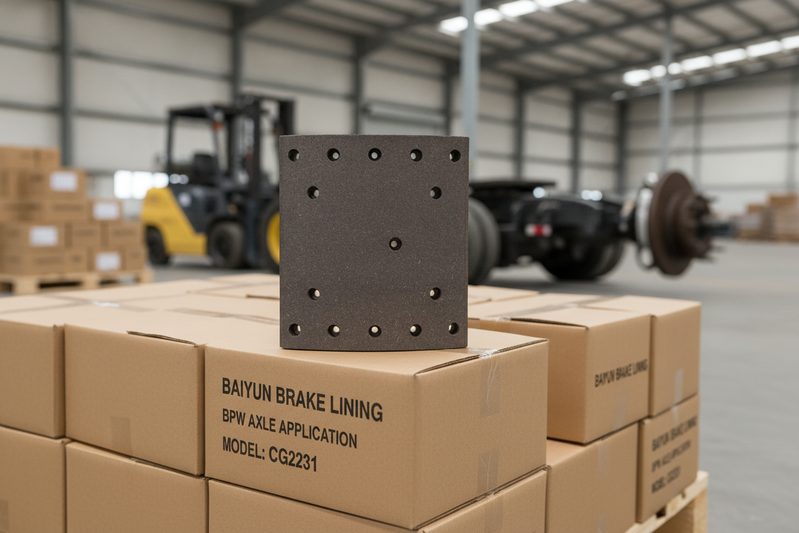
Browse our brake lining product range to see specifications, and when you're ready, request a wholesale quote from our export team. No hard sell—just technical data, transparent pricing, and the kind of partnership that has kept trusted brake pad supplier status for nearly half a century. Let's move your business forward.
Was this article helpful?
Average Rating: 5/5 (594)