
Iveco Disc Brake Pad Fitment Verification: What Buyers Should Check
Summary:
Verifying Iveco disc brake pad fitment before bulk ordering prevents costly returns and fleet downtime. This guide walks buyers through critical checks like WVA number matching, dimensional verification, ECE R90 certification, physical sample inspection, and batch friction consistency. With up to 15% procurement cost savings reported by distributors who follow these steps, BAIYUN Brake offers Iveco-certified pads backed by dynamometer test data and a complete commercial vehicle friction range. Learn the most common fitment mistakes and how to avoid them.
Iveco Disc Brake Pad Fitment Verification: What Buyers Should Check
What Are the Critical Specifications to Confirm When Sourcing Iveco Disc Brake Pads?
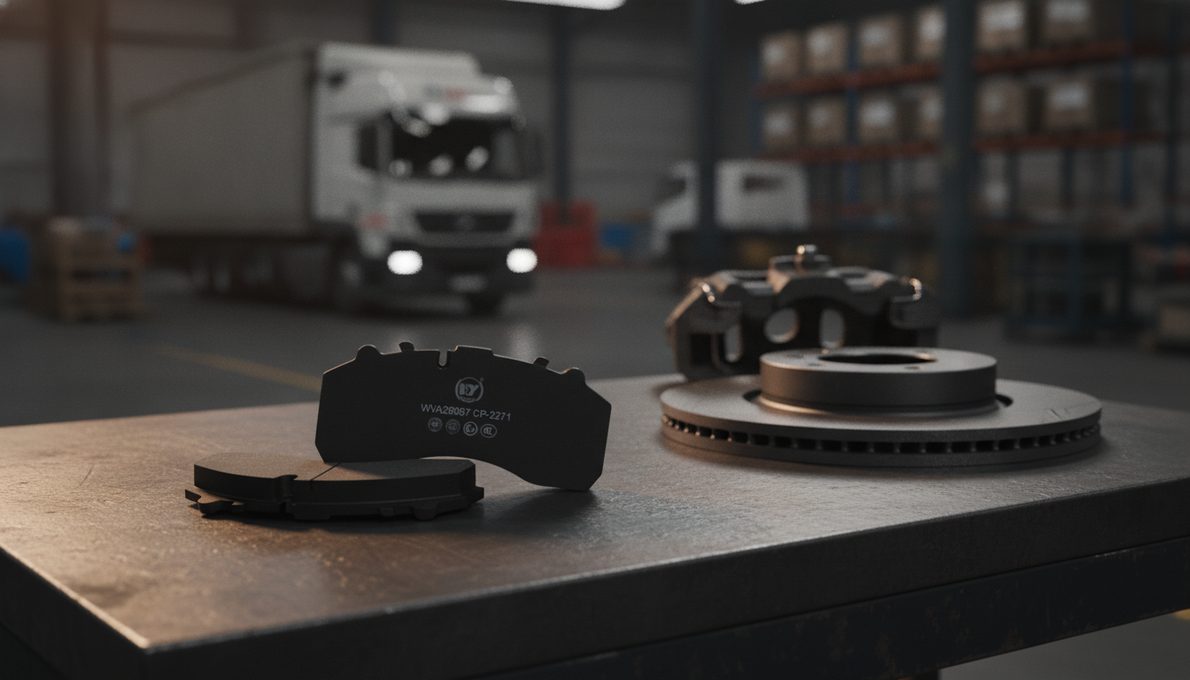
You can’t rely on a single part number alone. Iveco trucks and buses use multiple axle configurations, and even the same model year can have brake variations. A pad that fits a Daily 35S14 might not fit a Daily 50C18. Start by cross-checking the brake pad’s WVA number—a universal identifier for friction shape—against your vehicle’s original equipment specification. If the WVA number isn’t publicly available, request the manufacturer’s cross-reference chart or digital dimension sheet. BAIYUN Brake provides digital catalogs with WVA mapping for over 1,200 commercial vehicle references, including Iveco models.
Measurements matter. Pad length, width, total thickness, and backplate hole positions must match within ±0.2 mm. Use a vernier caliper on a sample and compare against the manufacturer’s drawing. Also verify friction material code—for instance, an FE-grade material (friction coefficient 0.38–0.42) suits medium-duty Iveco Daily, while FF-grade (0.42–0.48) may be specified for heavier Stralis tractor units. Ask the supplier for the SAE J866 edge code printed on the pad side.
Key takeaway: Dimensional accuracy and material grade matching are non-negotiable; always request a dimensioned drawing before bulk ordering.
How Does ECE R90 Certification Impact Your Sourcing Decision?
ECE R90 certification isn’t a paperwork formality. It’s a regulation that requires replacement brake pads to perform within 15% of the original equipment’s stopping power. For commercial vehicles like Iveco trucks, this means the pads must pass a sequence of dynamometer tests covering cold performance, speed sensitivity, and fade recovery—all measured against the OE reference pad. BAIYUN Brake’s IATF 16949 certified facility conducts in-house dynamometer testing according to SAE J2522, generating full test reports traceable by batch number.
From a buyer’s standpoint, ECE R90 is your insurance against liability. In Europe and many regulated markets, fitting non-certified pads on a commercial vehicle can lead to roadside fines and invalidated insurance. When sourcing Iveco brake pads, always request a copy of the ECE R90 approval certificate and verify the approval number against the UNECE database. A legitimate certificate includes test data for both cold and hot friction coefficients—typically a cold μ of 0.42 dropping no more than 20% after thermal cycling to 350°C.
Key takeaway: ECE R90 certification proves the pad meets legal and performance standards; always verify the approval number independently.
What Physical Inspection Points Should Buyers Check on a Sample?
Before committing to a container load, pull a sample and inspect it like a quality engineer. Start with the friction material surface. Quality Iveco disc brake pads will show uniform grain structure without visible cracks, delamination, or excessive porosity. A batch with inconsistent surface texture often points to poor mixing or pressing, which translates to uneven wear in service.
Check the chamfers and slots. These aren’t just cosmetic—chamfered edges reduce high-frequency noise by 3–5 dB, while vertical or diagonal slots help clear gas and debris from the pad-disc interface. On Iveco commercial vehicles that see frequent stop-start duty, missing chamfers can accelerate noise complaints from fleet operators. Also confirm the presence of anti-noise shims or underlayer coatings; BAIYUN Brake’s commercial vehicle pads include a multi-layer shim stack tested to reduce vibrations below 70 dB at 50 bar brake pressure.
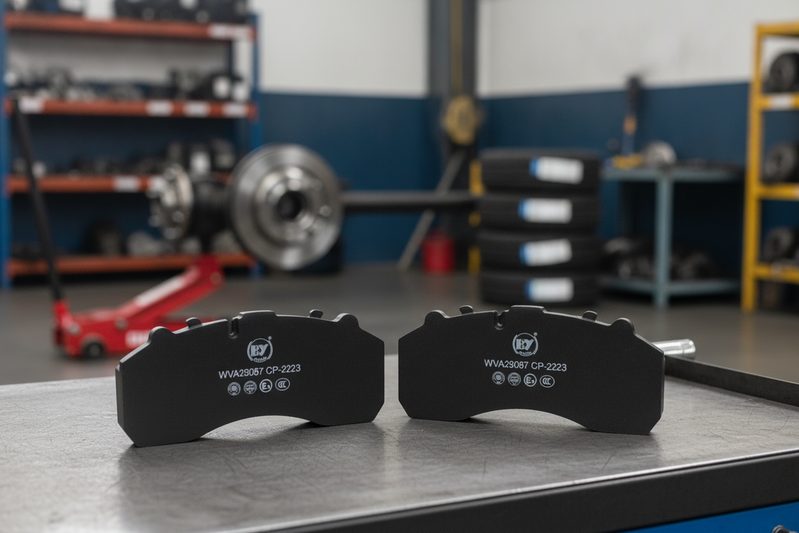
Wear indicators deserve a close look. For Iveco models with electronic wear sensors, the sensor wire and connector must match the vehicle’s harness—pin count, orientation, and clip type all vary. For mechanical wear indicators, the metal tab must contact the disc before the friction material reaches 2 mm minimum thickness. A wrong wear indicator configuration can either give false alarms or fail to alert drivers, both expensive scenarios for fleet buyers.
Key takeaway: A 10-minute physical sample check for chamfers, shims, and wear indicators prevents 90% of installation surprises.
How Can You Verify Consistent Friction Material Performance Across Batches?
Friction materials are sensitive to raw material variations. Even with the same formula, batch-to-batch differences in phenolic resin quality or fiber blend can shift the coefficient of friction by 0.05—enough to affect braking feel and wear life. BAIYUN Brake, with our 49+ years of manufacturing experience, applies statistical process control on every mixing cycle, recording torque curves from the internal mixer to ensure homogeneity.
Request dynamometer test reports for the specific production lot you’re buying. A proper report follows SAE J2522, which includes 15 separate brake applications from 40 km/h to 120 km/h, measuring cold and hot friction, fade, and recovery. Look for a minimum hot friction coefficient of 0.30 at 500°C—common for Iveco commercial vehicle applications. Also ask about random sampling procedures: ISO 2859-1 inspection level S-3 or tighter gives you confidence that the whole shipment matches the tested sample. BAIYUN Brake can provide lot-specific test data for any commercial vehicle brake pads order over 500 sets.
Finally, consider doing your own third-party spot test on received inventory. A simple friction test on a Krauss machine following GB 5763 provides a quick pass/fail. Pad performance should fall within ±10% of the certified value across the 100–300°C range.
Key takeaway: Lot-level dynamometer data is the only reliable proof of consistent friction performance; demand it from your supplier.
What Are the Most Common Fitment Mistakes Buyers Make with Iveco Disc Brake Pads?
Mistake one: trusting the catalog without measuring. Iveco parts catalogs sometimes list multiple OEM numbers for the same axle, but the actual pad shape may have changed with a production running update. A pad listed for “Iveco Eurocargo 2008–2014” might not fit a late-2013 chassis that received a revised caliper. Always cross-reference with the WVA number and visual confirmation.
Mistake two: mixing up pad sets with and without backing spring clips. Many Iveco disc brake pads use tension clips or anti-rattle springs that are specific to the caliper type. If you order pads without the correct clip, the mechanic can’t install them—or the pad rattles against the caliper bracket. Check the clip shape against your old pad, not just the friction face.
Mistake three: ignoring pad-to-disc bedding requirements. Even if the pad fits physically, improper bedding can lead to vibration and premature wear. Iveco trucks often specify a bedding procedure of 30 gentle stops from 60 km/h to 20 km/h. Skipping this step in a fleet environment generates warranty claims that look like pad defects but are actually installation errors.
Key takeaway: Fitment verification isn’t done until you’ve confirmed physical measurements, accessory clips, and bedding compatibility—not just part numbers.
What Are the Most Common Misconceptions About Iveco Disc Brake Pad Fitment Verification?
Misconception: “If the pad fits in the caliper, it’s correct.”
Reality: A pad that fits mechanically but has the wrong friction grade will cause unbalanced braking across the axle. Iveco’s electronic brake distribution systems rely on matched friction pairs; even a 10% deviation triggers ABS faults.
Misconception: “All ECE R90 pads are interchangeable between European trucks.”
Reality: ECE R90 approval is vehicle-specific—a pad certified for an Iveco Stralis cannot legally be installed on a MAN TGS even if the dimensions are similar. The approval number is tied to an OE reference pad and vehicle family.
Misconception: “Cheaper uncertified pads pass inspection once installed.”
Reality: Roadside inspections increasingly verify brake component homologation through mobile apps. Non-conforming pads on Iveco commercial vehicles in Europe resulted in fines of €2,500–€15,000 per vehicle in 2025, according to CITA reports.
Key takeaway: Fitment verification is a process of matching friction grade, certification, and dimensional accuracy—not just dropping a pad into place.
Buyer Verification Checklist for Iveco Disc Brake Pads
| Verification Area | What to Check | Why It Matters |
|---|---|---|
| Part Number Match | Cross-check WVA number and OE reference with vehicle VIN | Prevents ordering pads for wrong axle or production year |
| Dimensional Accuracy | Measure length, width, thickness (±0.2 mm), backplate hole positions | Avoids caliper interference and installation failures |
| Friction Grade (SAE J866) | Read edge code (e.g., FF, FE) and confirm matches vehicle spec | Ensures balanced braking and ABS compatibility |
| ECE R90 Certification | Verify approval number against UNECE database, request test report | Legal compliance and insurance validity |
| Physical Sample Inspection | Check chamfers, slots, anti-noise shims, wear indicators | Noise reduction and proper wear warning function |
| Batch Friction Consistency | Request lot-specific dynamometer report, SAE J2522 | Prevents variation in stopping performance across orders |
| Accessory Fitment | Verify spring clips, sensor connectors, and bedding instructions | Complete installation without extra parts sourcing |
Frequently Asked Questions
A: Cross-reference three data points: the WVA number from the manufacturer’s catalog, the OEM part number from the vehicle chassis plate, and a physical dimension check on your existing pad. According to BAIYUN Brake’s technical team, 80% of fitment errors are caught when all three match.
A: Look for the ECE R90 mark (circle with “E” and a number) on the pad backplate or packaging. Verify the approval number starting with “90R-” in the UNECE online database—certified pads for Iveco must reference a specific OE number and vehicle family.
A: Most Iveco commercial vehicles require a friction coefficient between 0.38 and 0.48 under SAE J661 testing (equivalent to EE–FF grade). BAIYUN Brake’s standard Iveco formulation delivers μ = 0.42 ±0.03 across 100–350°C, confirmed by dynamometer reports.
A: Rarely. While some light-duty 3.5-ton Daily models share calipers with the Eurocargo 6-ton variant, the pad dimensions and friction grades often differ. Always confirm against the specific vehicle’s technical data sheet.
A: For orders over 1,000 sets, test at least one random sample per 200 sets per ISO 2859-1 level S-3. Measure dimensions, friction on a Krauss machine, and shear strength—BAIYUN Brake includes these test records with each production lot.
Sourcing Iveco Disc Brake Pads with Confidence
Every buyer wants the same thing: Iveco brake pads that arrive on time, fit without modification, and perform consistently across hundreds of stops. The difference between a reliable supplier and a gamble is the documentation they provide. BAIYUN Brake supplies commercial vehicle brake pads with digital dimension sheets, WVA cross-reference charts, and dynamic test reports tied to your specific order batch. Pair that with a full commercial vehicle brake lining range and you’ve covered your entire Iveco fleet—Disc brakes and drum brakes from one certified factory.
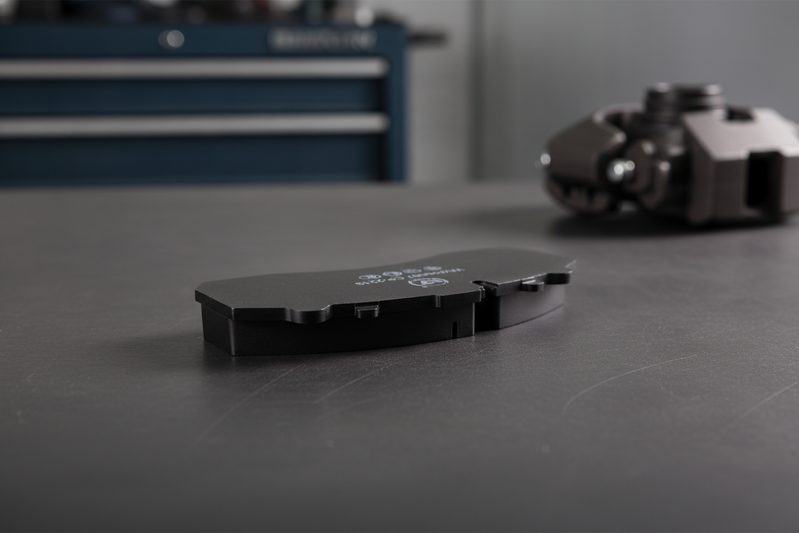
To request pricing, certification documents, or a sample order of Iveco disc brake pads, submit your inquiry to our sales team today.
Was this article helpful?
Average Rating: 5/5 (749)