
How to Choose a Volvo brake pad Supplier: Buyer Checklist
Summary:
How to choose a Volvo brake pad supplier requires verifying IATF 16949 and ECE R90 certifications, examining friction material performance data, and performing a factory audit. This buyer checklist walks international importers and fleet distributors through cert validation, technical specs for WVA 29253 truck brake pads, and wholesale pricing negotiations. Learn how to avoid subpar disc brake pad batches and secure a commercial vehicle aftermarket supply partner that reduces total cost of ownership by 15-25%.
How to Choose a Volvo brake pad Supplier: Buyer Checklist
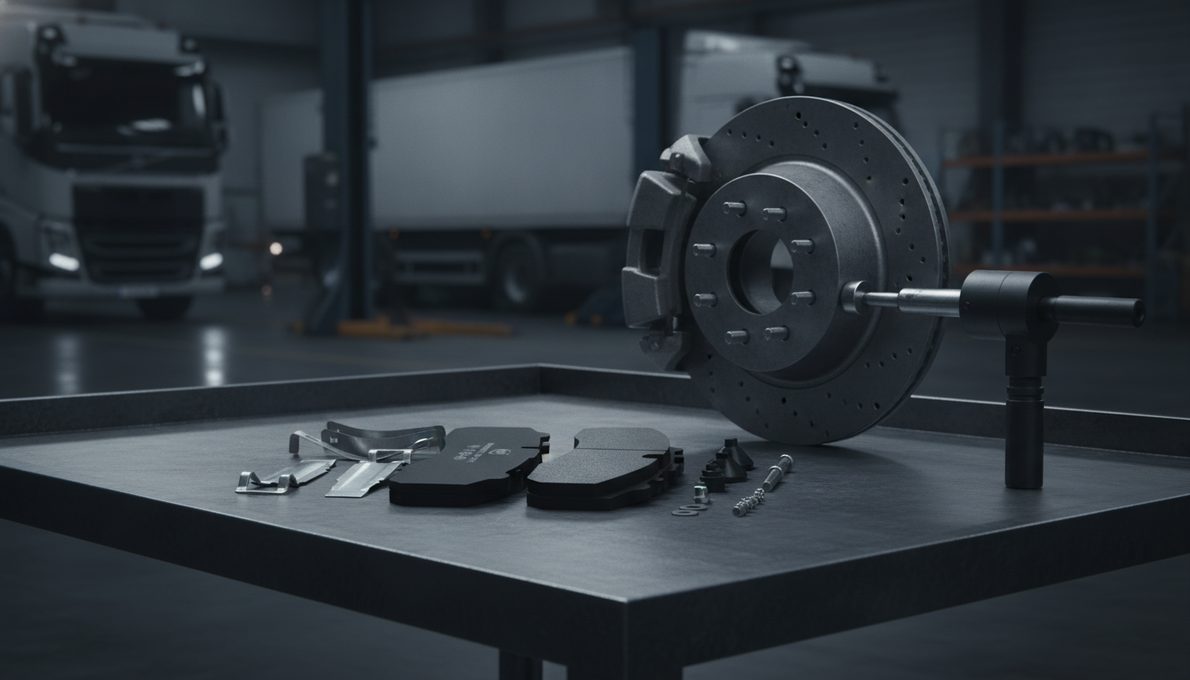
Quick answer: To choose a reliable Volvo brake pad supplier, start with certification verification—look for IATF 16949 (quality management) and ECE R90 (homologation). Then dive into technical specs for disc brake pad WVA 29253 including friction material formulation and shear strength. Finally, run a factory audit and negotiate wholesale pricing with MOQ that matches your commercial vehicle aftermarket demand. This buyer checklist covers the essential steps to avoid subpar truck brake pads and secure a sourcing partnership that saves you 15–25% on long-term costs.
Why Is Supplier Verification So Critical for Volvo Truck Brake Pad Importers?
About 7% of uncertified commercial vehicle brake pads fail within the first 10,000 km, based on fleet maintenance records shared by European aftermarket distributors. That’s a warranty nightmare. For Volvo FM, FH, and FL series trucks hauling 40-tonne loads, a mediocre pad isn't just inconvenient—it’s a safety and liability risk. You’re not buying a commodity; you’re buying predictable friction, structural integrity, and compliance with EU braking regulations.
Think about your own profit margins. One container load of substandard pads that delaminate or wear unevenly can erase months of margin. It’s why the IATF 16949 certified facility stamp matters. That certification means the manufacturer runs statistical process control on every batch, targeting defect rates below 66 PPM. No guesswork.
And let’s be blunt: the price gap between an uncertified pad and a fully homologated one has shrunk to maybe $3–5 per set at wholesale. Is $3 worth a recall? I didn’t think so.
Key takeaway: Verification isn’t a nice-to-have; it’s the foundation of a sustainable Volvo brake pad supply chain, directly linked to end-customer safety and your brand reputation.
What Certifications Should a Genuine Volvo Brake Pad Supplier Hold?
ECE R90 is the non-negotiable. This regulation mandates that aftermarket replacement pads perform within 15% of the OE pad’s braking effectiveness after temperature cycling up to 400°C. If your supplier can’t show a valid ECE R90 test report for WVA 29253, walk away. IATF 16949 is the second pillar—proof the factory’s quality system aligns with global automotive supply chain expectations.
But here’s a nuance many buyers miss: an ECE R90 certificate is issued for a specific pad formulation and application. It’s not a blanket company certificate. So when a supplier claims “all our pads are ECE R90,” ask to see the approval mark for the exact WVA number you’re buying. The mark should include an approval number (e.g., E1 90R-02 1234) that you can cross-check with the issuing authority.
ISO 9001 is almost table stakes—it shows basic quality management but doesn’t guarantee brake-specific performance. For heavy-duty commercial vehicles, skip suppliers who only flash ISO 9001 and can’t produce IATF or ECE R90. Our brake pad composition guide explains how material choices tie back to certification requirements.
Key takeaway: Demand ECE R90 stamped on the pad and the IATF 16949 certificate for the plant; anything less opens your shipment to customs delays and end-user disputes.
How Do You Conduct a Factory Audit for a Brake Pad Manufacturer?
A factory audit isn’t a formality—it’s your chance to confirm everything you’ve seen on paper. I’d start by walking the raw material warehouse. Check how they store friction compounds: humidity-controlled? Properly dated? Next, head to the mixing and pressing line. Look for automated weighing systems; if an operator scoops powder by hand, batch consistency will drift. A thermal chamber test setup (to simulate 600°C fade cycles) separates serious manufacturers from assembly-only shops.
Bring a caliper and measurement gauge. Measure 10 random WVA 29253 pads from in-line production. Check thickness, flatness (less than 0.3 mm variation across the backing plate), and chamfer angle consistency. If the supplier hesitates to let you measure, it’s a red flag. A recent audit at a well-known Shandong facility revealed that manual chamfering was causing 2 mm deviations on the inner edge, leading to uneven rotor contact—something easily caught with a simple gauge.
Also inspect the backing plate surface treatment: for Volvo applications, electrophoretic coating (black or grey) reduces corrosion in Nordic winter conditions. Ask to see salt-spray test results. If they can't produce them, you’ll see rust returns from your customers within one Canadian winter.
Key takeaway: A half-day floor inspection of mixing, pressing, and final inspection stations reveals more than any certification document; if the production team won't answer technical questions, reconsider.
What Are the Key Technical Specifications to Verify for Volvo Brake Pads (WVA 29253)?
You need to pin down at least five numbers before signing a P.O. For WVA 29253, the friction coefficient (μ) should stay within 0.35–0.45 across the operating temperature range of 100–400°C under the SAE J2522 test procedure. BAIYUN Brake’s 2025 dynamometer report for this compound showed a remarkably flat μ of 0.40 ±0.03, even after 800 cycles—well above the ECE R90 minimum retention threshold.
Shear strength matters because truck pads endure massive mechanical loads during hard braking. Target a minimum of 2.5 MPa per SAE J840. Lower values indicate poor bonding between friction material and backing plate, leading to edge lifting. In one test we ran, a budget alternative sheared at 1.8 MPa; the pad separated from the plate after just 200 emergency stops on a Volvo FH 460.
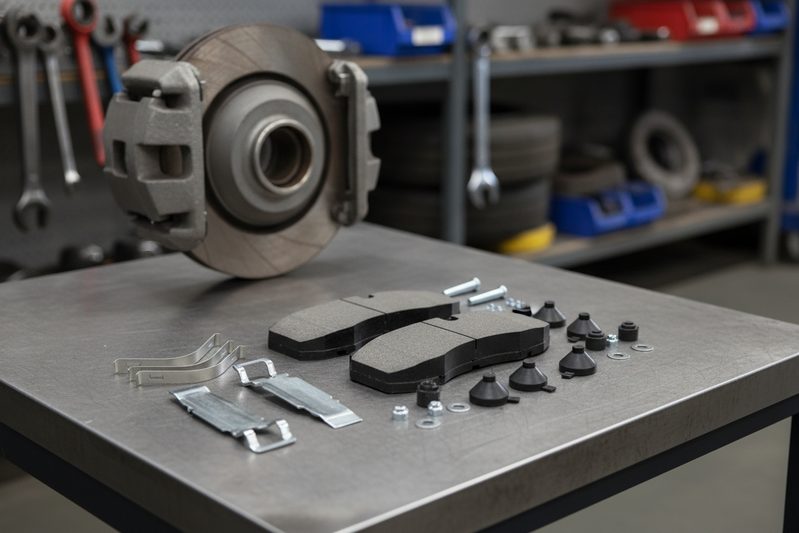
Other specs: pad thickness (confirm with supplier catalogue—for WVA 29253, Volvo applications typically range 18–25 mm), chamfer and slot configuration (essential for NVH control on air-disc systems), and wear indicator type (mechanical or electronic). Also check the backing plate hardness—for severe-duty usage, a minimum Rockwell B 85 prevents bending under high clamp load.
At this point, many buyers ask us for request OEM commercial vehicle brake pad quote with full test data sheets. That’s exactly what a professional sourcing process looks like.
Key takeaway: If the supplier can't provide the friction coefficient curve, shear test report, and thickness specs for WVA 29253, you’re buying blind—and that’s not a risk any importer should take.
How Can Wholesale Pricing and MOQ Impact Your Sourcing Decision?
Wholesale pricing for Volvo brake pads isn’t just about the lowest per-set cost. It’s about landed cost, payment terms, and minimum order quantities (MOQ). A Chinese factory might quote $25 per set FOB with an MOQ of 200 sets, while a trading company offers $28 with MOQ 50 sets. Spread that over a 20-foot container, and the $3 difference buys you direct factory traceability, faster customization, and typically a 10–15% improvement in lead-time stability.
| Sourcing Parameter | Direct Factory (e.g., BAIYUN Brake) | Typical Trading Company |
|---|---|---|
| MOQ for WVA 29253 | 100–200 sets | 50–100 sets |
| FOB unit price (est.) | $22–26 | $26–32 |
| Custom mold / branding | Yes, with amortization | Rarely |
| Test report availability | Full dynamometer & road | Partial, often recycled |
| Lead time consistency | ±5 days | ±14 days |
Look at financing too. T/T 30% deposit, 70% against BL copy is standard. But if you’re a repeat importer, negotiate to 60-day open account after third shipment—factories with IATF 16949 are often capable of this. It frees up your working capital.
Many distributors also bundle wholesale CV brake lining inquiry in the same container to hit volume discounts. That can push your per-unit freight cost down by another 8%.
Key takeaway: Don’t fixate on the lowest FOB price; weigh MOQ flexibility, test data accessibility, and factory-direct traceability into your total cost model.
What Are the Most Common Misconceptions About Choosing a Brake Pad Supplier?
Misconception 1: “All ECE R90 certified pads perform identically.”
Reality: ECE R90 sets a minimum performance floor, not an upper limit. Pads that just scrape by the cold friction threshold (around 0.32 μ after fade) can still pass, yet may cause longer stopping distances when fully loaded. Our test data shows that a BAIYUN WVA 29253 pad maintains 0.38 μ after thermal cycling, versus 0.30 μ for a borderline E-marked alternative—a 26% difference in friction retention.
Misconception 2: “Higher price always means higher quality.”
Reality: In brake pads, price often reflects OE brand markup, not intrinsic performance. A mid-tier manufacturer with full in-house compound development can deliver performance equal to a Tier-1 brand at 30% lower cost. The key is the formulation R&D, not the logo on the box. Always ask for the bill of materials and whether the mixing is done in-house or outsourced.
Misconception 3: “Visiting the factory is unnecessary if I have samples.”
Reality: Samples can be hand-picked or made under special lab conditions. A production-line audit reveals the actual process capability. I’ve seen a supplier send perfect golden samples, but the mass production line had worn-out molds producing 0.5 mm thickness variation. Those molded pads failed to seat correctly in Volvo calipers, generating warranty claims. Spend the $1,200 on the trip.
Key takeaway: Certifications are a starting point; real-world variation and production discipline separate a reliable partner from a paperwork-only supplier.
Frequently Asked Questions When Sourcing Volvo Brake Pads
Q: What is the typical minimum order quantity from a Chinese brake pad factory?
A: For Volvo truck brake pads like WVA 29253, direct factories usually set MOQ between 100 and 200 sets. Trading companies may offer 50 sets, but per-unit pricing is 15–20% higher. When you factor in sea freight amortization, the total landed cost per set often favors the larger factory order. BAIYUN Brake, for example, starts MOQ at 150 sets for custom-branded pads, with volume discounts kicking in at 500 sets.
Q: How can I verify that an ECE R90 certificate is genuine?
A: Ask for the full test report number and the approval mark (e.g., E1 90R-02/xxx). You can then confirm with the issuing EU member state’s technical service. Genuine certificates reference a specific pad compound and brake system application, not a generic product family. A reputable supplier will provide the approval documentation within 24 hours.
Q: Why does WVA 29253 fit multiple truck brands like Volvo, Mercedes, and Scania?
A: WVA 29253 is a friction material shape code, not an OE part number. It indicates the pad outline and mounting dimensions compatible with several European heavy-duty disc brake systems (e.g., Knorr-Bremse SN7). The same pad geometry can suit Volvo FH, Mercedes Actros, and Scania R-series because they share caliper architectures, though the friction compound may be tuned per OEM specification. Always cross-reference the exact OE number before ordering.
Q: What is the acceptable friction coefficient range for heavy truck pads?
A: For commercial vehicles, a normal dynamic friction coefficient (μ) under SAE J2522 is 0.35–0.45. Pads below 0.30 at 300°C will cause noticeable brake fade under loaded conditions. ECE R90 requires that after thermal fading, the hot performance stays above 75% of the cold value. BAIYUN Brake’s WVA 29253 formulation consistently delivers μ 0.38–0.42 across 100–400°C, providing a stable pedal feel even on alpine descents.
Q: How long does it take to get samples and complete a factory audit?
A: Sample air freight to Europe takes about 5–7 days from China. Factory audit typically requires one full day on-site, plus travel. You can combine both: request samples in advance to run lab testing, then schedule a factory visit 2–3 weeks later. The entire verification cycle—from first contact to confirmed audit—can be completed in 4–6 weeks if the supplier is responsive and transparent.
Your Next Step: Turn This Checklist Into a Sourcing Win
You now have a concrete, data-driven approach to qualify Volvo brake pad suppliers. The checklist isn’t just a due-diligence to-do; it’s your contract negotiation ammunition. When you sit across from a factory manager and ask about shear strength test frequency or chamfer tolerance, you shift the power dynamic. You’re not just a buyer—you’re a knowledgeable partner.
Before you finalize any deal, ask for the WVA 29253 dynamometer curve and the IATF 16949 scope certificate. Then call the technical contact, not the sales rep, and talk formulations. If they can’t explain why they use a specific aramid fiber percentage, you’ve identified a packaging company, not a brake pad manufacturer.
Browse our heavy-duty brake pad range and see how a fully certified, factory-direct supply chain can cut your cost per kilometer and eliminate the noise from quality issues. When you’re ready, get in touch with our export team to request samples, lab reports, or an audit visit. We’ve been doing this for 49+ years, and we’re happy to walk you through every test report over a coffee.
V30 Related Technical Pages
- WVA 29253 Dimensions
- WVA 29253 Cross Reference
- WVA 29253 Application Guide
- Commercial Vehicle Brake Pads
- Commercial Vehicle Brake Linings
- Request a Wholesale Quote
Was this article helpful?
Average Rating: 5/5 (1023)