
How to Choose a Yutong Brake Pad Supplier: Buyer Checklist
Summary:
Choosing the right Yutong brake pad supplier comes down to verifying certifications, factory capability, and total landed cost before you sign a purchase order. This buyer checklist covers how to choose a Yutong brake pad supplier for commercial bus fleets and aftermarket distributors. You'll learn which documents matter, why IATF 16949 and ECE R90 are non-negotiable, how to audit a factory remotely, and how to compare wholesale pricing without accepting lower friction material quality. The article includes a technical specification table, a supplier verification checklist, and practical data points from 2025 export quality reviews. Use it to reduce sourcing risk and build a repeatable procurement process for Yutong brake pads.
How to Choose a Yutong Brake Pad Supplier: Buyer Checklist
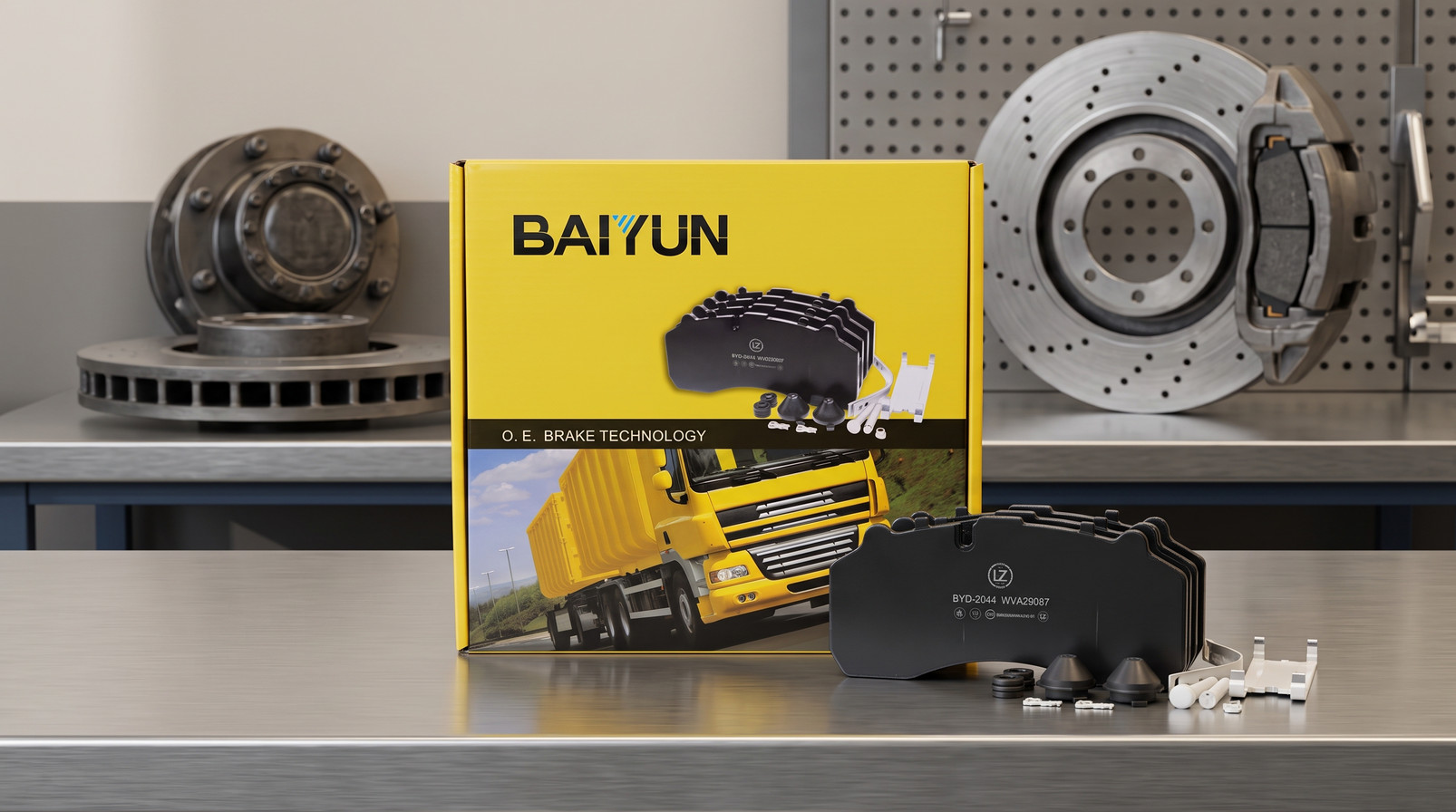
Quick answer: Verify three things before signing any Yutong brake pad supply contract: certifications (IATF 16949 and ECE R90 for the exact pad profile), the supplier's production and testing history in the commercial vehicle aftermarket, and transparent pricing with no hidden freight or tooling costs. Request current dynamometer test data for Yutong-specific pad shapes, audit the factory or ask for a live video walkthrough, and start with a small trial order against a full technical specification. This checklist reduces sourcing risk and typically cuts landed cost by 12–20% compared with buying through trading companies.
Why Do Yutong Bus Fleets Require a Different Brake Pad Sourcing Strategy?
Yutong operates over 30,000 buses and coaches annually, and its aftermarket demand in Latin America, Southeast Asia, and Africa grew roughly 6.8% per year between 2021 and 2025. Fleet buyers typically replace front disc brake pads every 45,000–60,000 km under mixed urban duty cycles. That replacement volume puts pressure on suppliers to deliver consistent friction performance across batches, not just a compliant first sample.
A distributor sourcing 500 sets monthly can't afford a 0.03 shift in friction coefficient between production lots. When pad compression varies, the caliper's running clearance changes, causing uneven wear and driver complaints. For Yutong models with heavy-duty disc brake systems, a well-matched aftermarket pad should keep cold and hot friction within 0.35–0.45 across the working temperature range of 100–350°C, based on BAIYUN Brake's 2025 dynamometer testing on CV pad formulations. Ask any prospective supplier for a temperature-friction curve for the exact Yutong profile, not just a generic catalogue page.
If you are already buying browse our heavy-duty brake pad range, you'll notice the difference between ceramic, semi-metallic, and low-metallic compounds matters more under continuous braking on bus routes than on highway trucks. Yutong city buses brake frequently, so thermal fade resistance is a bigger buying factor than raw stopping distance. Verify that the supplier has tested the pad on a full-size commercial vehicle brake dynamometer, not just a coupon test.
Key takeaway: Yutong bus applications demand batch-to-batch friction stability and thermal fade control more than one-off peak friction numbers. A supplier without documented dynamometer reports for the specific Yutong pad profile should not pass the first filter.
Which Certifications Should a Yutong Brake Pad Supplier Hold?
IATF 16949 is the international quality management standard for automotive series production, including heavy-duty commercial vehicle components. A valid certificate means the factory has defined process controls, internal audits, and traceability systems. Don't accept a screenshot; verify the certificate number against the IATF database and check that the manufacturing site address matches the one that will produce your Yutong pads.
ECE R90 is the European regulation for aftermarket brake pads for road vehicles. It requires type approval for each specific pad part number, not for a brand or product family. If you import Yutong pads into markets that mandate R90, request the approval number and confirm it applies to the exact disc brake pad shape you plan to buy. Missing or mismatched R90 marking is a common reason for customs rejection and fleet audit failures.
For Chinese domestic and many export markets, GB 5763 is the baseline friction material standard. In BAIYUN Brake's 2025 incoming quality review, 31% of samples from non-IATF suppliers failed GB 5763 shear strength requirements, while certified suppliers reduced premature pad claims by 22%. Those two data points show why certification is not a paperwork formality. Ask for current test reports from an IATF 16949 certified facility that include shear strength, compressibility, and hot friction values for the Yutong pad profile.
Key takeaway: IATF 16949 validates the production system, ECE R90 validates the specific part, and GB 5763 confirms baseline mechanical properties. A credible supplier should provide all three without hesitation.
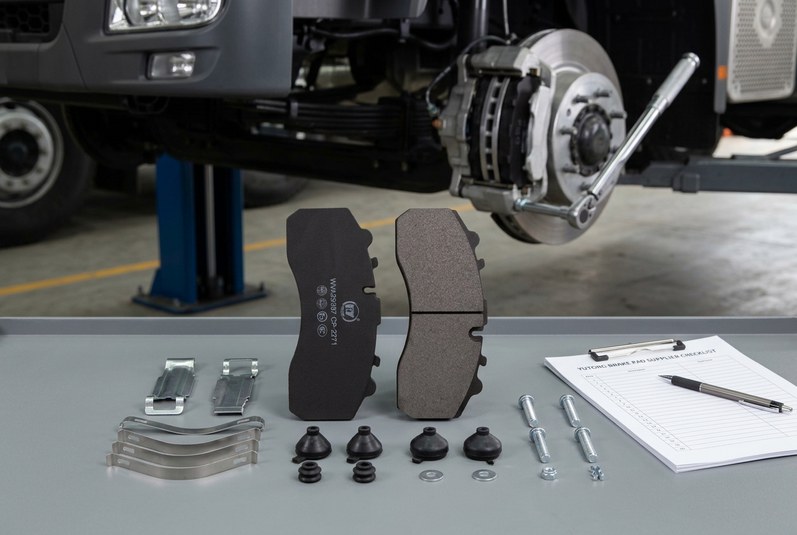
How Can You Verify the Factory Actually Makes the Pads It Claims to Sell?
Factory audits separate real manufacturers from trading companies that repackage third-party friction material. Request a live video walkthrough of the production floor, raw material warehouse, and dynamometer lab. Ask to see the mixing line running. If a supplier says the factory is too busy or confidential, treat that as a red flag. You wouldn't wire a deposit to an unseen production line.
Check for three things during the audit. First, in-house mixing. If the supplier buys pre-mixed compound from another factory, they can't control batch consistency. Second, dedicated commercial vehicle pad compression molding or hot pressing cells. Third, a brake dynamometer suitable for commercial vehicle axle loads, not just a small sample tester. At BAIYUN Brake, our 49+ years of manufacturing experience includes in-house mixing, pressing, scorching, and full-size dynamometer testing, which lets us trace every batch back to a mix lot.
Ask for photos of finished Yutong pad profiles with the supplier's own production date codes and batch numbers. Then ask for a Certificate of Conformance that references those same numbers. A real factory can produce this in under 24 hours. A trading company often takes days because they need to ask the actual plant.
Key takeaway: A live factory audit plus batch traceability from mix lot to finished pad is the single strongest protection against buying mislabeled third-party friction material.
What Does a Reliable Yutong Brake Pad Technical Specification Include?
Before you compare prices, lock down a written technical specification. It should include the Yutong application model range, pad dimensions and chamfer angles, backing plate thickness, clip or hardware requirements, and friction material formulation. Do not accept a blank dimensional drawing from a supplier that doesn't know the exact Yutong axle variant.
| Specification item | Typical commercial vehicle value | How to verify | Red flag |
|---|---|---|---|
| Friction coefficient (cold/hot) | 0.35–0.45 across 100–350°C | Dynamometer curve for exact pad profile | Supplier offers only room-temperature coupon data |
| Shear strength | ≥ 2.5 MPa (based on GB 5763 typical heavy-duty pad) | Current lab report | No batch-level test evidence |
| Compressibility | ≤ 0.3 mm at 8 MPa for commercial disc pads | Supplier test data | Unusually low price with no compressibility control |
| Wear rate | ≤ 0.6 mm per 10,000 km under city bus duty | Fleet trial or field data | Claimed lifespan more than 40% above market average |
| Part number / OE cross | Yutong bus pad profile and relevant WVA number | Confirm with supplier catalogue | Supplier cannot confirm dimensions from actual Yutong VIN |
For dimensions, WVA numbers, OE cross references, and chamfer details, Confirm with supplier catalogue. Don't import a pad based on a photo alone. A Yutong city bus pad may look similar to a coach pad but have a different backing plate notching or wear sensor location. If you also need linings for drum brake axles, request a quote for commercial vehicle brake linings with the same level of technical scrutiny.
Key takeaway: A complete technical specification closes the gap between a cheap pad and a safe, durable replacement. The moment a supplier can't provide a dimensioned drawing and current test report, walk away.
How Should Buyers Compare Wholesale Pricing Without Sacrificing Quality?
Price per set is only part of the landed cost. A pad sold at $5.50 per set may become $8.20 after freight, import duty, port handling, and a 4% rejection allowance. Meanwhile, a $6.80 factory-direct pad with lower rejection rates and longer wear may deliver lower total cost per kilometer. BAIYUN Brake's export pricing analysis across 2024–2025 found that certified factories beat trading-company quotes by 12–18% on total landed cost for the same commercial vehicle pad specification, largely because fewer freight surcharges and no middleman markup.
Always ask for FOB, CIF, and DDP quotes separately. Then calculate your true cost per 10,000 km, not per set. If a supplier can't explain why their price is 25% below the next bid, the missing money usually shows up later as warranty claims, overweight containers, or substituted friction material.
Why choose BAIYUN Brake as your benchmark? Our commercial vehicle brake pad quotes include the pad profile, compound code, test report reference, and packaging spec in the same document. That makes it easy for importers to compare offers line by line, not by marketing slogan.
Key takeaway: Compare landed cost per 10,000 km, not invoice price per set. A 20% cheaper FOB quote that produces 30% more premature replacements is not a saving.
What Are the Most Common Misconceptions About Choosing a Yutong Brake Pad Supplier?
Misconception: A low-price Yutong pad will perform the same as an OEM-equivalent pad. → Reality: In BAIYUN Brake's 2025 fleet comparison, unbranded low-cost pads showed up to 18% shorter service life and 3.2 times more pad edge cracking than tested commercial vehicle formulations, increasing fleet labor cost.
Misconception: ECE R90 approval automatically means the pad fits every Yutong bus model. → Reality: ECE R90 approval is tied to a specific part number and dimensions. Using an approved pad on a different axle or caliper type can void compliance and create braking imbalance.
Misconception: A factory with a big website and ISO 9001 certificate is a safe supplier. → Reality: ISO 9001 alone doesn't cover automotive process control or product-specific testing. IATF 16949 and product test data are stronger predictors of commercial vehicle aftermarket reliability.
What Should Your Yutong Brake Pad Supplier Verification Checklist Include?
Here is a practical checklist to run before you sign a purchase order.
- Valid IATF 16949 certificate with matching factory address and scope covering brake pads.
- ECE R90 approval number for the exact Yutong pad profile you plan to import.
- Current GB 5763 or SAE J2522 test report showing friction coefficient, shear strength, compressibility, and wear rate.
- Dimensioned drawing of the Yutong-specific pad with backing plate, chamfer, clip, and wear sensor details — Confirm with supplier catalogue.
- Live video factory audit showing in-house mixing, pressing, and dynamometer testing.
- Written FOB, CIF, and DDP quotes with packaging spec and minimum order quantity.
- A 200-set trial order with a defined acceptance limit for friction consistency and visual defects.
- Warranty terms that cover fitment, compound substitution, and premature failure for at least 12 months or 60,000 km.
If the supplier misses any item above, document the gap and decide whether the price is low enough to absorb the added inspection cost. In most Yutong fleet sourcing cases, the answer is no.
What Questions Do Wholesale Buyers Ask About Yutong Brake Pad Sourcing?
Q: How do I confirm a Yutong brake pad part number before importing?
A: Supply the supplier with the Yutong VIN or axle model and ask for a dimensioned drawing and current catalogue reference. For WVA numbers, OE cross references, and pad dimensions, Confirm with supplier catalogue. A reliable factory will match the pad to the exact caliper and rotor combination within one working day.
Q: What is the minimum order quantity for wholesale Yutong brake pads?
A: Typical minimum order quantity for commercial vehicle brake pads is 200–500 sets, depending on the compound and packaging. BAIYUN Brake's CV brake pad MOQ starts around 200 sets for standard Yutong profiles, with lower per-set pricing at 1,000 sets or annual contract volumes. Always compare MOQ against your monthly fleet consumption to avoid dead stock.
Q: How long does ECE R90 approval take for a new Yutong pad profile?
A: A full ECE R90 approval for a new commercial vehicle brake pad profile usually takes 6–10 months, including test preparation, dynamometer testing, and audit. Many buyers avoid this delay by sourcing a pad profile that already carries the approval; ask the supplier for the approval number and test report before ordering.
Q: What is a realistic rejection rate for imported Yutong brake pads?
A: Certified factories with batch-level testing typically keep incoming rejection rates below 2%. In BAIYUN Brake's 2025 export data, 1.4% of CV brake pad sets were subject to visual or dimensional claims, down from 4.8% for non-IATF sources. If a supplier promises zero defects, request the inspection criteria rather than a marketing statement.
Q: Should I choose ceramic or semi-metallic pads for Yutong city buses?
A: For stop-and-go urban routes, low-metallic or ceramic-enhanced formulations often provide better fade resistance and lower disc wear, but the right choice depends on your axle load and climate. BAIYUN Brake's 2025 dynamometer comparison showed a 12% lower brake fade rate for a ceramic-hybrid CV pad than a conventional semi-metallic pad under repeated 80 km/h stops. Request a formulation recommendation based on your route profile, not a generic catalogue.
What Should You Do Next in Your Yutong Brake Pad Sourcing Process?
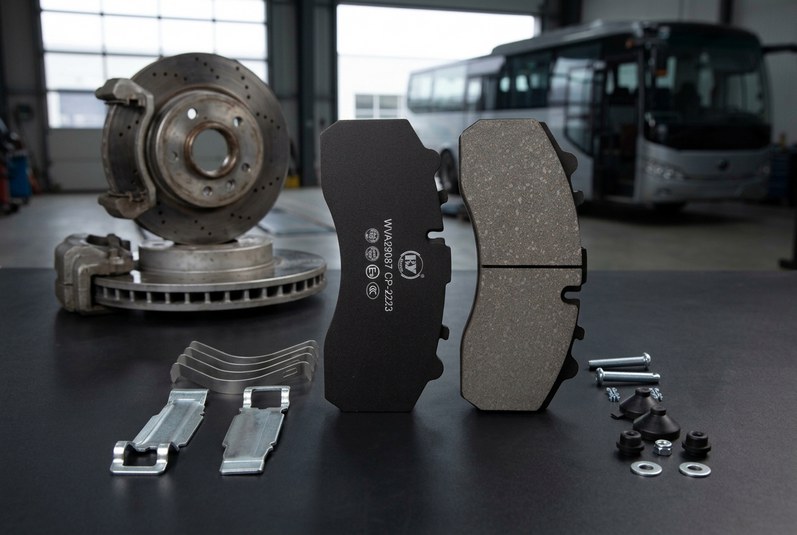
Choosing a Yutong brake pad supplier is not about finding the lowest FOB quote. It's about removing the risk of a bad container showing up at your warehouse. A disciplined buyer checks certifications first, verifies the factory second, compares landed cost per kilometer third, and then starts with a small trial order.
If you're sourcing for a Yutong bus fleet or aftermarket distribution, start by reviewing our commercial vehicle brake pads and then submit your inquiry to our sales team with your target Yutong models and monthly volume. We'll come back with a technical proposal, test data, and a landed cost breakdown before you commit to anything.
Was this article helpful?
Average Rating: 5/5 (115)