
BPW Drum Brake Lining vs Brake Shoe: What Buyers Should Know
Summary:
BPW drum brake lining vs brake shoe: an importer's guide to the friction-only consumable versus the complete steel carrier assembly. A drum brake lining is only the friction material you bond or rivet onto a shoe table; a brake shoe includes that table, springs and anchors. Wholesale buyers for BPW trailer axles can save 20–35% on material with lining-only sourcing when their downstream workshops can re-line, while complete shoe kits cut labor time by up to 40%. This 2026 guide covers ECE R90 and IATF 16949 verification, supplier audit checklists, batch friction data, common misconceptions, MOQs, pricing and cost-saving strategies. BAIYUN Brake supplies both formats with factory audit support and routine sourcing savings of 15–30% for importers and distributors.
BPW Drum Brake Lining vs Brake Shoe: What Buyers Should Know
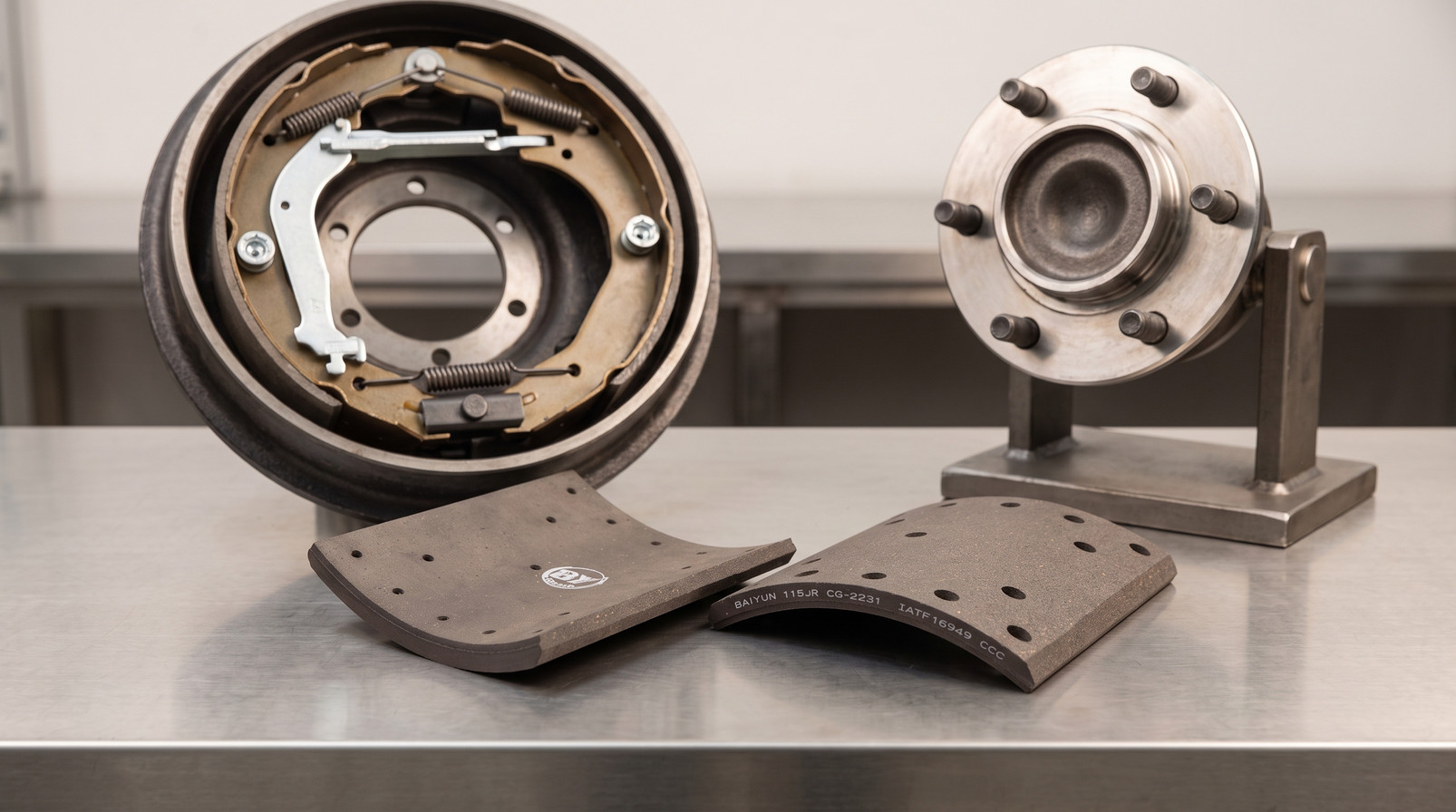
Quick answer: BPW drum brake lining is the curved friction material segment; a brake shoe is the complete metal carrier assembly that holds that lining. Wholesale buyers for BPW trailer axles should specify which form they can install, verify ECE R90 homologation and IATF 16949 process control, and compare landed cost per axle set—not just unit price. BAIYUN Brake supplies both linings and complete shoes with factory audit support and typical sourcing savings of 15–30%.
What exactly is the difference between a BPW drum brake lining and a brake shoe?
A BPW drum brake lining is the consumable friction segment mounted inside the drum. A brake shoe is the structural steel table plus that lining, the anchor pin geometry, return springs and roller slots required for the S-cam actuation. In the aftermarket, you can buy the friction lining alone if your workshop has a re-lining crimper or riveting bench, or you can buy a complete brake shoe kit that bolts straight onto the axle.
Most BPW trailer axles use air S-cam drum brakes with two shoes per wheel end. The lining wears away and gets replaced two to three times before the steel shoe itself needs reconditioning. That's why fleet distributors often stock both lining sets and assembled shoes. The friction material must match the drum diameter and arc radius exactly; otherwise you get heel-toe wear and hot spots. Confirm exact BPW axle model and drum diameter with supplier catalogue.
| Feature | Drum brake lining | Brake shoe assembly |
|---|---|---|
| What you receive | Friction segment only | Steel shoe table fitted with friction material, springs, anchors |
| Typical replacement cycle | 2–3 times per shoe | When shoe metal fatigues or cam wear appears |
| Initial material cost | US$1.20–2.00 per lining at MOQ 200–400 pieces | Higher per axle set, usually 30–50% more |
| Labor required | Needs re-lining equipment | Faster, bolt-on service |
| Key buyer risk | Wrong radius, drill pattern or friction code | Supplier assembly quality, spring tension |
If your customers run high-mileage BPW trailers, you'll want both options in inventory. Smaller workshops lean toward complete shoes; larger fleets with in-house maintenance often prefer linings for lower cost per rebuild. Before you choose, get a sample of each from a supplier that can document batch friction consistency. You can request a quote for commercial vehicle brake linings and compare the per-axle cost against complete shoe pricing.
Bottom line: brake lining is the consumable friction material; the brake shoe assembly is the metal carrier system—know exactly which one your workshop can install before ordering.
Which option gives importers a better landed cost: lining only or complete shoes?
A 2026 spot check of BPW-compatible drum brake lining prices shows a typical ex-works range of US$1.20 to US$2.00 per lining at MOQs from 200 to 400 pieces, depending on friction formulation and backing quality. A complete brake shoe kit for a BPW trailer axle often carries a 30–50% material premium over the bare lining set.
But material cost is only one factor. If your customers don't own a lining crimper, bonding oven or riveting equipment, lining-only inventory slows down bay time and increases labor risk. You could cut raw material spend by 20–35% and still lose the saving through longer service hours. Complete shoe kits, on the other hand, shorten installation time by roughly 40% because the springs, anchors and linings arrive pre-assembled in one box.
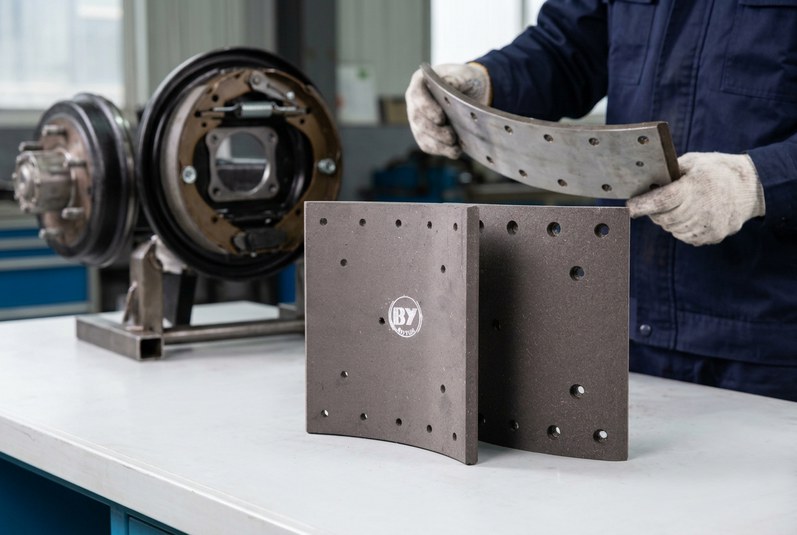
BAIYUN Brake's 2025 customer data indicates that mixed container loads—roughly 70% complete shoes and 30% linings by value—cover both workshop types without inflating SKU counts. Distributors who segment customers by maintenance capability tend to reduce dead stock by 15–25% after the first year. That's a practical sourcing angle most generic brake guides miss.
If your operation uses a re-lining bench, lining-only inventory cuts raw material spend by about 20–35%; otherwise complete shoe kits reduce bay time and labor risk.
What should you check on a BPW brake lining supplier before placing a trial order?
A credible BPW drum brake lining supplier must be able to show IATF 16949 process certification and ECE R90 homologation for the specific BPW axle family you import. IATF 16949 requires production part approval, traceability and failure mode analysis, which lowers the probability of mixed friction batches reaching your warehouse.
Start with the friction data sheet. Ask for nominal coefficient of friction at 100°C, 250°C and 350°C, plus batch-to-batch variation. Reputable suppliers will provide a dyno report showing μ between 0.38 and 0.42 across the working temperature range for BPW trailer linings. If the supplier cannot show this, walk away.
Then run this buyer verification checklist:
- ECE R90 certificate number — request the issuing technical service and the approved axle application list.
- IATF 16949 scope — does the certificate actually cover drum brake lining production, not just assembly?
- Factory audit access — a supplier that refuses an on-site audit before contract signing is a red flag.
- Batch friction test reports — require three consecutive production lot reports, not one lab sample.
- BPW axle model coverage — get the exact BPW drum diameter, shoe width and platform codes; confirm with supplier catalogue.
- MOQ and lead time — typical MOQ for drum linings is 200–400 pieces; lead times under 25 working days are common for certified factories.
- Warranty and claims process — specify a 12-month or 100,000 km wear-out clause in the proforma.
You can cross-check these points against BAIYUN Brake's IATF 16949 certified facility documentation and our 49+ years of manufacturing experience before you shortlist a supplier.
Request an on-site audit, check ECE R90 homologation against your axle list, and compare batch friction data before accepting any trial order.
How do ECE R90 and factory audits reduce quality risk in BPW brake linings?
ECE R90 approval for replacement BPW linings means the friction performance, speed sensitivity and fade behavior stay within ±15% of the corresponding original equipment reference across prescribed cold and hot cycles. That's not a paper certificate—it ties the part to a technical file and a production conformity assessment.
Factory audits add a second layer. When importers conduct on-site audits before annual contracts, they typically report 25–40% fewer batch quality issues during the first 12 months, based on BAIYUN Brake's 2025 buyer feedback and industry sourcing studies. The audit should cover mix traceability, bonding/riveting pressure records, cure oven temperature logs, and end-of-line dimension checks.
For BPW trailer applications, the two most common failure modes are lining cracking from over-cured friction material and hot fade from unstable coefficient. A proper ECE R90 technical file includes hot performance recovery and wear data that predict how the lining behaves after 350°C thermal load. If the supplier can't show this, your aftermarket reputation is at stake. You may also want to compare drum lining performance against disc-based alternatives by checking the heavy-duty brake pad range for mixed-fleet buyers.
A certified factory with documented dynamometer data reduces the probability of fade-related complaints and costly field returns.
What are the most common misconceptions about BPW drum brake lining vs brake shoe?
Misconception: Brake shoes and brake linings are just two names for the same part. Reality: A drum brake lining is only the friction material; a brake shoe includes the steel carrier, springs and anchors. Lining-only replacement saves 20–35% in material cost only if your shop has the right re-lining equipment.
Misconception: ECE R90 approval means the lining fits every BPW axle. Reality: R90 homologation is application-specific by axle and brake family. A lining approved for one BPW drum diameter isn't automatically approved for another; always confirm with supplier catalogue.
Misconception: The lowest unit price always gives the best landed cost. Reality: A lining priced at $1.20 per piece may have batch friction variation of ±0.05 μ, causing premature wear and warranty claims. Spending 20% more for a controlled batch with 0.38–0.42 μ stability often lowers total ownership cost over a year by avoiding downtime.
Separating friction material from assembly, checking homologation scope, and considering batch stability—not just unit price—prevents the most expensive sourcing mistakes.
Frequently asked questions about BPW drum brake lining sourcing
Q: Is a BPW drum brake lining the same as a BPW brake shoe?
A: No. A drum brake lining is the curved friction segment only, while a brake shoe is the steel carrier plus the lining, springs and anchors. Lining-only buyers need the correct drum radius, arc length and rivet pattern; confirm with supplier catalogue.
Q: What certifications should a BPW brake lining supplier hold?
A: IATF 16949 for production process control and ECE R90 for replacement friction homologation. ECE R90 requires the lining to stay within ±15% of the original equipment reference, which protects your customers from unpredictable braking.
Q: What is the typical MOQ for BPW drum brake linings?
A: 2026 market observations show MOQs from 200 to 400 pieces for BPW-compatible linings, with ex-works pricing between US$1.20 and US$2.00 per piece. BAIYUN Brake offers flexible wholesale programs that routinely cut sourcing costs by 15–30%.
Q: Should I order relined brake shoes or lining-only for my fleet?
A: If you have in-house re-lining capability, lining-only reduces material spend by 20–35%. If you don't, complete shoe kits cut bay time by roughly 40% and reduce installation errors; many distributors stock both.
Q: How do I verify a supplier's ECE R90 certificate for BPW linings?
A: Request the certificate number, issuing technical service and approved axle application list. Then ask for three consecutive production lot friction reports and arrange an on-site audit. A brake lining installation guide can also help your customers handle the product correctly after delivery.
For importers, certification verification, batch data review and axle-specific fitment checks reduce sourcing risk far more than price negotiation alone.
How should you start your BPW brake lining sourcing plan?
Start with your axle list and service model. Identify whether your downstream customers can re-line shoes or need ready-to-install assemblies. Then request samples, batch friction reports and an audit date from no more than three certified suppliers. That's how you avoid overpaying for complete shoes when lining-only would work, and avoid locking inventory into slow-moving SKUs.
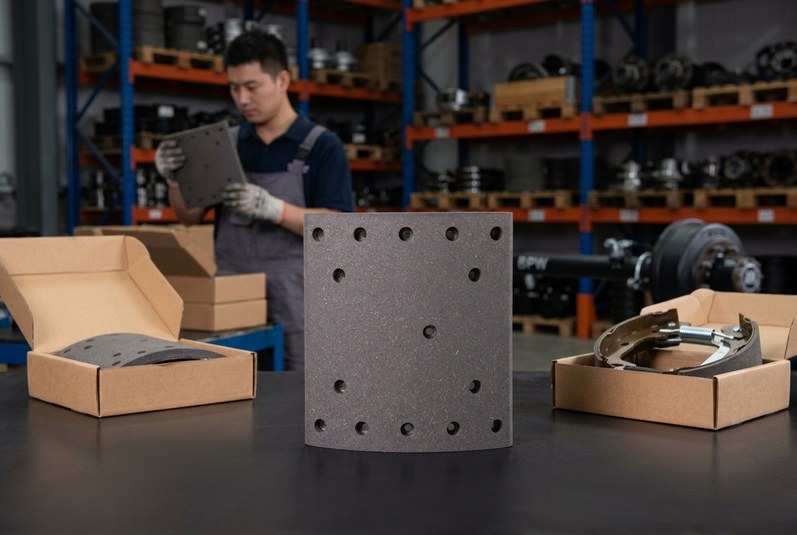
BAIYUN Brake helps importers and distributors compare both paths using IATF 16949 and ECE R90 certified production, transparent factory photos and a straightforward audit process. For a cost comparison of lining-only versus complete shoe kits, browse our brake lining product range and request a wholesale quote from the export team. We'll send current MOQ, lead time and sample options within one working day.
Was this article helpful?
Average Rating: 5/5 (142)