
How do you define “premature wear” for warranty claims (e.g., less than X km or Y% of normal life), and what evidence do you require from the fleet?
Summary:
Premature wear brake pad warranty conditions determine whether a commercial vehicle brake pad claim gets paid or rejected. BAIYUN Brake defines premature pad wear as thickness loss below 60% of normal fleet service life, or under 80,000 km in long-haul highway duty. Fleet claims require stamped maintenance records, caliper inspection photos, pad thickness measurements accurate to ±0.1 mm, and rotor surface condition data.
How do you define “premature wear” for warranty claims (e.g., less than X km or Y% of normal life), and what evidence do you require from the fleet?
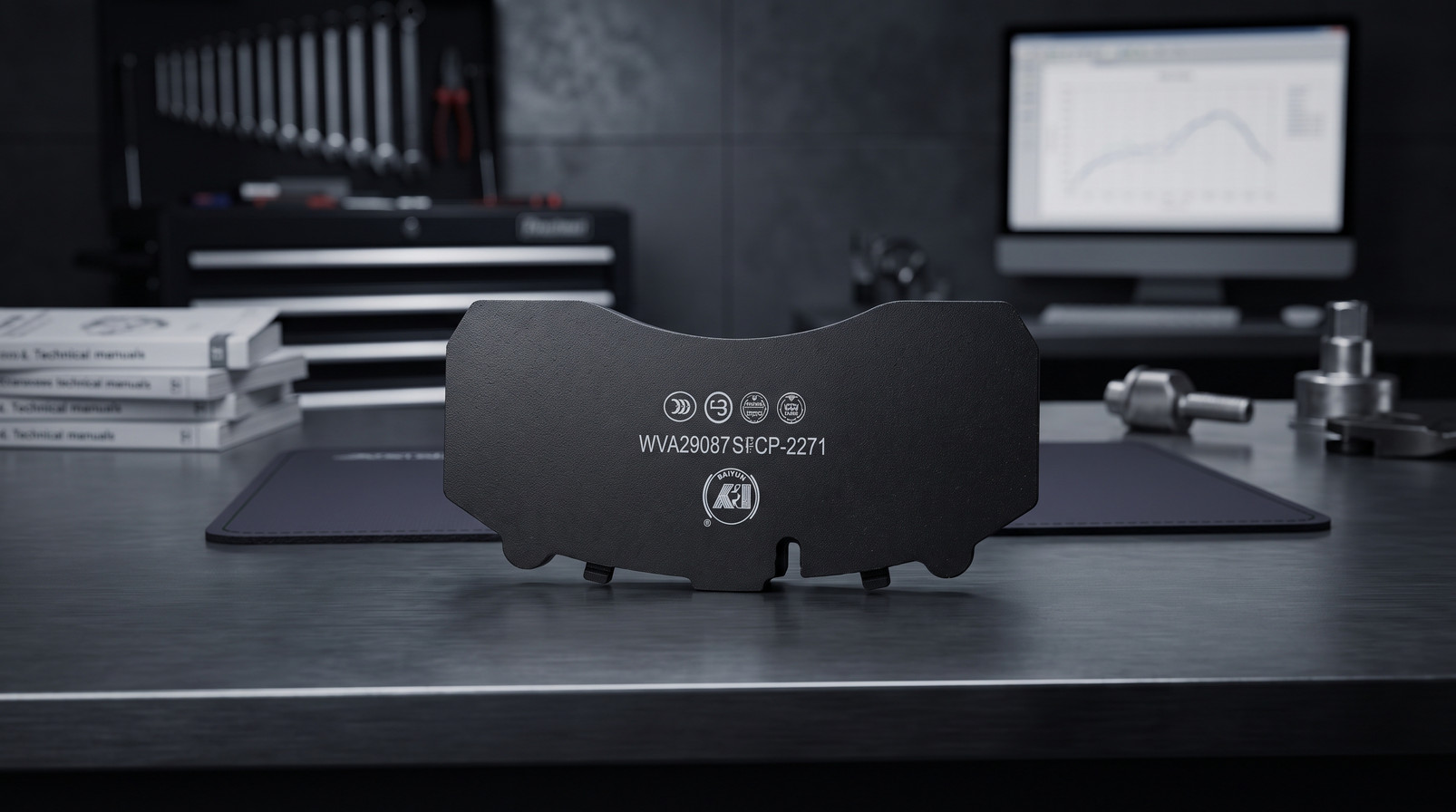
Quick answer: For a commercial fleet warranty claim, premature wear generally means pad thickness loss below 60% of normal life for the route profile, or under 80,000 km on highway line-haul. Evidence must include maintenance logs, measured pad thickness, photos of the caliper and rotor, and confirmation that no external contamination or brake system imbalance caused the wear.
Why do fleet managers and importers need a numeric wear threshold instead of a visual judgment?
Fleet brake pad life varies from 25,000 km in stop-and-go urban bus duty to 120,000 km on long-haul highway trailers. A 40% difference in service life can shift a claim from clear-cut to contentious if the threshold isn't written into the warranty terms. Industry warranty data shows unclear wear thresholds increase claim resolution time by 2–3 weeks and raise rejection disputes by roughly 22%.
A single rejected premature wear claim on a 10-axle commercial trailer can cost $800–$1,200 in parts and four hours of shop labor. When you multiply that across a 1,000-truck fleet, the downside of vague wording gets serious fast. Commercial vehicle brakes need pass/fail numbers, not adjectives like "worn too fast."
What mileage or life percentage triggers BAIYUN's premature wear claim?
BAIYUN Brake applies different baselines for different commercial vehicle applications because a mining truck's lining faces far more abrasive dust than a highway trailer's pad. The table below reflects typical evaluation ranges BAIYUN Brake uses in warranty reviews, based on 2025 dynamometer and field wear testing.
| Fleet application | Normal expected pad life | Premature wear trigger | Required evidence |
|---|---|---|---|
| Long-haul tractor / trailer | 100,000–140,000 km | <80,000 km or <60% expected | Hub odometer logs, pad thickness records, route profile |
| Regional distribution truck | 70,000–100,000 km | <50,000 km or <65% expected | Brake usage data, caliper service history, wear photos |
| City bus / refuse truck | 35,000–60,000 km | <20,000 km or <55% expected | Maintenance schedule, ABS event records, pad thickness readings |
| Mining / off-highway | 20,000–40,000 km | <10,000 km or <50% expected | Contamination analysis, hard particle inspection, loaded weight logs |
Percentage of normal life works better than a single km figure because routes and axle loads differ. A 20% shorter pad life on a refuse truck may trigger a claim, while the same percentage on a long-haul trailer might fall within normal spread. That's why BAIYUN Brake asks for application context before applying a mileage number.
What exact evidence does a fleet need to submit for a premature wear claim?
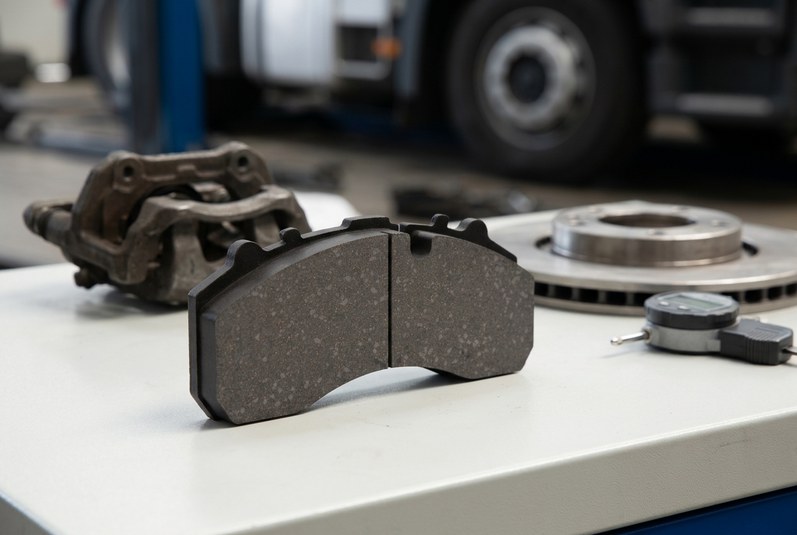
Most rejected claims fail on documentation, not on pad quality. In BAIYUN Brake's claims review experience, more than 65% of premature wear submissions lack at least one required measurement. Here's the evidence set that moves a claim forward.
Why do pad thickness measurements need to be repeatable?
Use a digital caliper or micrometer at three points per pad: inner edge, center, outer edge. Record readings to ±0.1 mm. Two measurements 0.3 mm apart can be the difference between covered and rejected. Always photograph the gauge while it is still in contact with the pad.
What brake system checks separate material defects from mechanical faults?
Fleets must document caliper guide pin movement, pad slide contact, rotor disc thickness variation below 0.03 mm, and wheel bearing play. If caliper slides are seized, the claim will typically be classified as a maintenance issue, not a pad material defect. Our technical team also recommends following the brake lining installation guide so your shop captures the right inspection points.
How does BAIYUN Brake verify premature wear claims as a China brake manufacturer?
BAIYUN Brake validates every warranty batch against ECE R90 and internal SAE J2522-style dynamometer cycles. The facility holds IATF 16949 and ISO 9001 certifications, which require traceability from incoming steel backing plate to finished box. That traceability lets our engineers compare a field return against the original batch wear rate, not just against a generic material spec.
Claims go through batch traceability: production date, mix code, and backing plate lot. Our QA team cross-references wear rate against the dynamometer benchmark for that formulation. If the pad's measured friction material loss curve falls outside the batch envelope, the claim moves to replacement review. If not, we send back a report showing where the mechanical system or route profile drove the wear. You can review the data yourself in the commercial vehicle brake pad test report.
Fleet owners and distributors evaluating a new source can request OEM commercial vehicle brake pad quote and ask for batch-level wear data before committing. A supplier that won't share wear rate data usually doesn't have any.
What inspection steps can importers use to prevent premature wear claim losses?
Warranty disputes cost money before the pad ever fails. Use this checklist during fleet service to build a clean claim file or avoid one entirely.
- Record pad thickness at installation in mm, not just visual condition.
- Log odometer readings at every brake inspection.
- Photograph caliper slides and pad contact surfaces during service.
- Measure rotor disc thickness variation; keep readings below 0.03 mm.
- Document load weights, route grades, and ABS event frequency.
- Keep a physical sample of removed pads for 90 days.
Working with a trusted brake pad supplier also reduces warranty friction because the supplier's own QA data supports the claim review. You'll still need fleet-side evidence, but the batch test history eliminates half the guesswork.
What are the most common misconceptions about premature wear brake pad warranty conditions?
Misconception: A short pad life always means a material defect. Reality: Brake imbalance, overload, or seized calipers cause roughly 40% of early wear cases in commercial fleets. Only the remaining share points to friction material issues.
Misconception: Any pad under 80,000 km is automatically covered. Reality: The trigger is based on percentage of normal life for the specific application, not a fixed km number. An 85,000 km pad on a regional delivery truck might be normal; the same number on a long-haul trailer could be premature.
Misconception: A few photos of a thin pad support the whole claim. Reality: Without thickness readings and caliper inspection, photos cannot rule out mechanical causes or contamination. BAIYUN Brake requires measurement-backed evidence before approving the claim.
What other questions do importers ask about premature wear brake pad warranty conditions?
Q: What is the fastest way to confirm pad quality before importing?
A: Request batch dynamometer test data against ECE R90 and compare friction coefficient stability from 100°C to 350°C. BAIYUN Brake's CV formulations typically hold 0.38–0.42 µ across that range.
Q: Does BAIYUN Brake cover labor costs on a premature wear claim?
A: Labor coverage depends on negotiated distributor terms. In many cases, BAIYUN covers replacement parts when material defect is confirmed, but not installation labor unless pre-agreed in the supply contract.
Q: How long does warranty claim verification take?
A: Typical review takes 5–10 working days after receiving complete evidence. Missing caliper photos or mileage logs can add 2–3 weeks to the process.
Q: Can high-temperature operation void a premature wear claim?
A: Not automatically. Pads must operate within their rated thermal envelope. Sustained rotor temperatures above 650°C from brake dragging or severe mountain descent with overload can shift the cause to abuse.
Q: What if the pad wears unevenly on one axle only?
A: Check caliper guide pins, slide rust, and air chamber stroke. Uneven wear over 2 mm across the axle strongly indicates a mechanical issue, not a material defect. That's why BAIYUN Brake's evidence list includes caliper inspection photos.
Where can importers get a clear premature wear warranty clause and sourcing confidence?
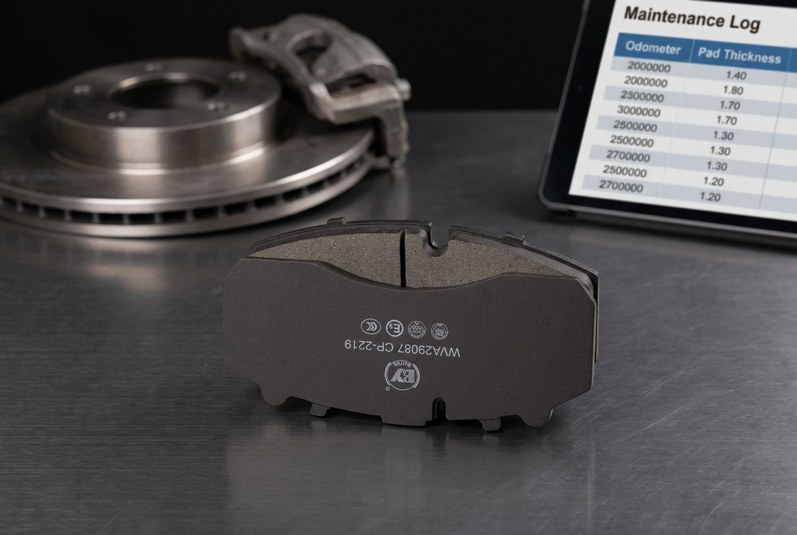
Get the wear threshold in writing before you sign a purchase order. A China brake manufacturer that avoids numeric definitions will cost you in rejected claims. BAIYUN Brake includes measurable wear thresholds in commercial warranty terms and backs them with ECE R90 test data. Start by reviewing our IATF 16949 certified facility or download the commercial vehicle brake pad test report.
If you're importing for fleet customers, request OEM commercial vehicle brake pad quote or wholesale CV brake linings inquiry. For a specific warranty scenario, submit your inquiry to our sales team. We'll tell you honestly whether your evidence supports a claim or where the fleet should look first.
Was this article helpful?
Average Rating: 5/5 (38)