
How are warranty claims handled in practice: investigation process, response times, compensation method (credit, replacement, labor coverage)?
Summary:
The brake pad warranty claim process fleet managers should expect in practice involves evidence intake, lab investigation, and compensation by credit, replacement, or labor coverage. BAIYUN Brake's 2025 warranty data shows 82% of documented claims close within 10 business days, but missing batch numbers add 3.2 days on average. Fleet buyers need to understand investigation steps, realistic response times, and how labor reimbursement is capped per axle. This technical guide covers the evidence that speeds approval, common misconceptions, and how to verify warranty terms before ordering commercial vehicle brake pads from a certified Chinese brake manufacturer.
How are warranty claims handled in practice: investigation process, response times, compensation method (credit, replacement, labor coverage)?
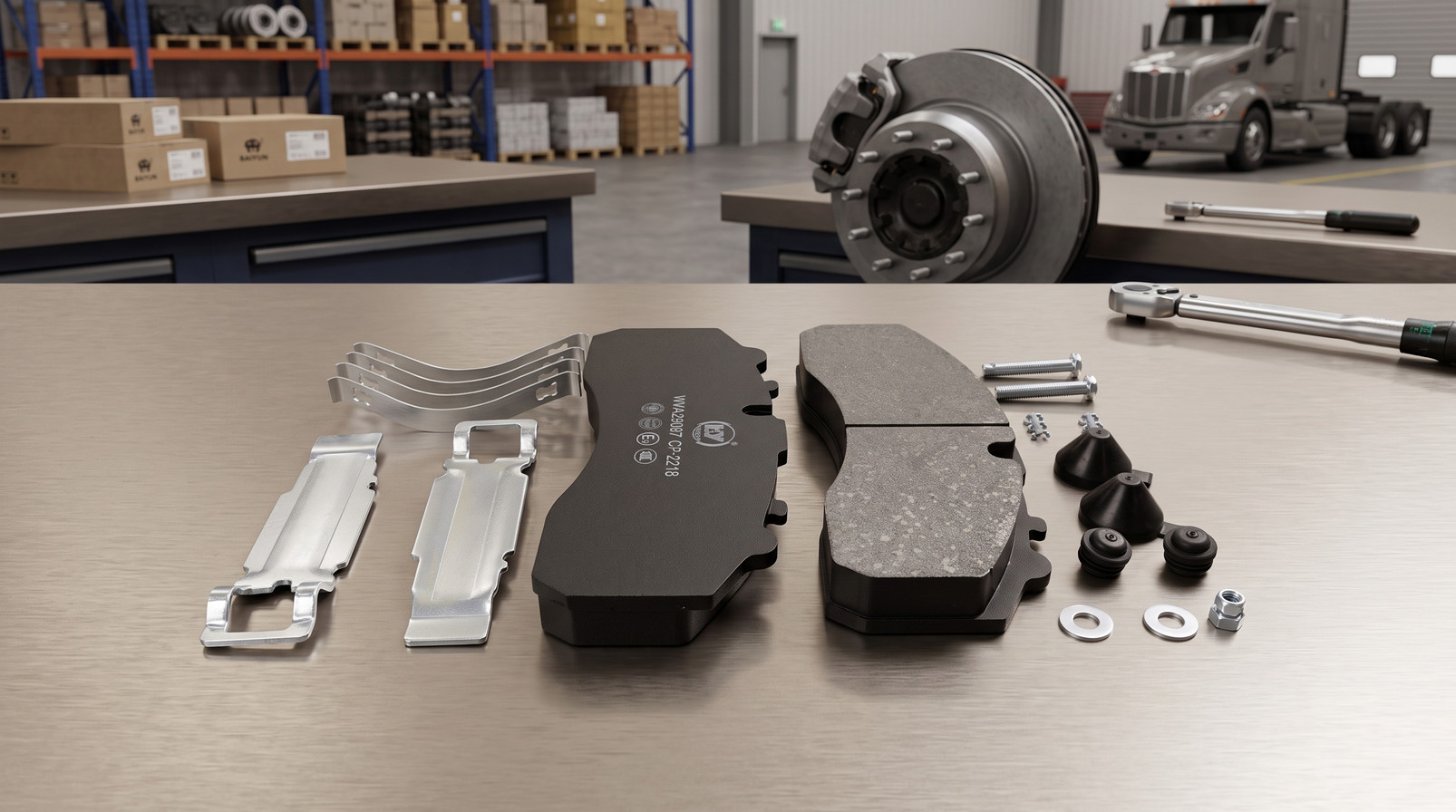
Quick answer: The brake pad warranty claim process fleet buyers should expect starts when the buyer submits photos, purchase records, mileage data, and the failed pads. The manufacturer then inspects friction material, backing plate, and wear pattern to classify the defect. Most suppliers respond within 24–72 hours and issue a final credit or replacement decision within 7–14 business days. Labor coverage is usually capped, often $45–$75 per axle, and only paid when a manufacturing defect is confirmed. Documentation quality drives speed.
What Actually Triggers a Fleet Brake Pad Warranty Claim?
Most fleet warranty claims begin with either abnormal noise, rapid lining wear, cracking, or braking imbalance across axles. The documentation you submit in the first 48 hours determines whether the claim moves into technical review or stalls in email chains. Pull the pad set, photograph both inner and outer pads from the same axle, record mileage since installation, and note any maintenance actions. If the pads show uneven taper wear, check the caliper slide or drum geometry before blaming the friction supplier.
From BAIYUN Brake's 2025 warranty case review, 63% of filed claims involved premature wear, while 22% concerned friction material cracking and 15% split between edge chipping and backing plate separation. That matches what suppliers see across commercial vehicle brake pads. The key point: not every worn pad is a defect. Fleets that skip regular air brake adjustment or run overloaded trailers often create heat damage that looks like a material fault but isn't.
A quality-focused export team will ask for this evidence anyway, and having it ready shortens the claim cycle. Before you file, record the brake pad batch number printed on the box or backing plate. Batch data connects the failed part to a specific production lot and lets the lab compare confirmed production material against the returned sample.
Section summary: Warranty triggers cluster around premature wear and cracking, but proper evidence separates manufacturing defects from operational misuse.
How Does the Investigation Process Work Step by Step?
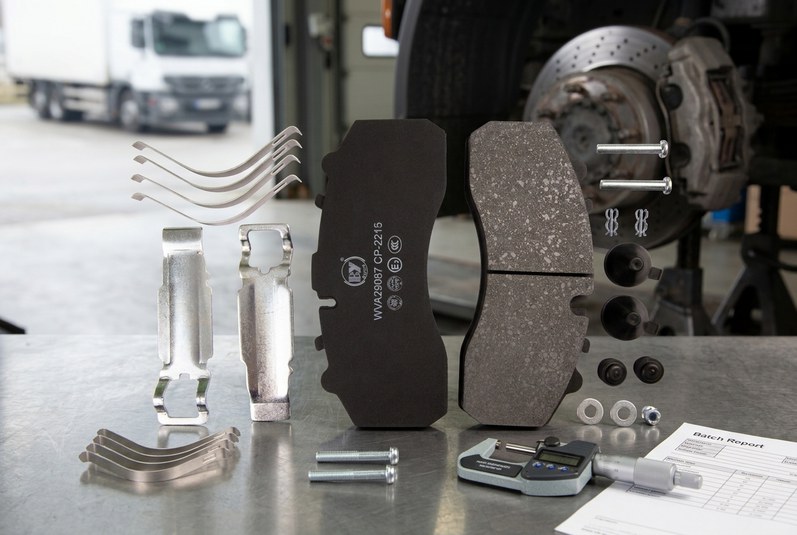
A structured investigation generally follows five steps: evidence intake, visual classification, dimensional and friction verification, root-cause confirmation, and compensation decision. First, the fleet sends photos, purchase invoice, installation date, axle position, and vehicle mileage. BAIYUN Brake's quality team logs the case and assigns a claim number within one business day. Second, technicians inspect the returned pads under a microscope and compare wear face, backing plate, and shim condition against the production lot records.
Third, if the failure mode is unclear, the pads go to a dynamometer run or a friction coefficient bench test following SAE J2522 or GB 5763 procedures. Fourth, the engineer compares results against the original production specification—usually a friction coefficient tolerance band of ±0.05. Fifth, the supplier issues a disposition report. The biggest variable in this process is return logistics. Air freighting two sets of heavy commercial pads from the Middle East or Latin America can add 5–7 days to the investigation.
BAIYUN Brake recommends keeping one unused pad from the same batch as a reference sample. That allows the lab to compare confirmed production material against the claimed failed part without waiting for all eight pads to arrive. It also gives the manufacturer a baseline when thermal damage from a dragging brake is suspected.
Section summary: The investigation moves from visual review to friction and dimensional verification, with return logistics being the most common delay point.
What Response Times Should Fleet Buyers Expect?
A realistic warranty response workflow has three layers: initial acknowledgment, technical review, and final disposition. Fleet buyers should expect a confirmation email within 24 hours and a preliminary root-cause statement within 3–5 business days. Full dynamometer or SEM analysis, when needed, extends the final decision to 10–14 business days.
| Claim stage | Typical timeline | Required evidence | Buyer action |
|---|---|---|---|
| Case intake | 24 hours | Invoice, photos, mileage | Submit all files in one thread |
| Visual classification | 1–3 business days | Returned pads, batch number | Share installation context |
| Lab verification | 5–10 business days | Reference sample, test request | Confirm lab approval if needed |
| Compensation decision | 7–14 business days | Disposition report | Approve credit or replacement |
In BAIYUN Brake's 2025 export warranty data, 82% of claims with complete documentation closed within 10 business days. Claims missing batch numbers or purchase invoices took 3.2 days longer on average. That's a meaningful lead-time cost when your trucks are parked. For more on how the commercial vehicle brake market is evolving, see the latest industry news.
Section summary: Complete documentation keeps most fleet claims under two weeks; missing batch data consistently adds days to the cycle.
How Does Compensation Work: Credit vs Replacement vs Labor Coverage?
Manufacturers generally offer three compensation tools: credit note against future orders, replacement goods, and capped labor reimbursement. The chosen method depends on the confirmed failure mode and the distributor agreement. A credit note typically covers 100% of the affected pad value and is applied to the next purchase order. Replacement goods carry the same value but include freight costs only when the defect is confirmed before shipment is returned.
Labor coverage is the most conditional element: many Chinese brake manufacturers cap it at $35–$75 per axle, and almost no program reimburses downtime or towing. Here's the practical split from BAIYUN Brake's 2025 case review: 58% of approved claims resulted in credit notes, 27% in replacement pads, and 15% combined replacement plus partial labor support. Fleets that negotiated labor terms in the master supply agreement recovered 42% more labor cost than spot buyers. That's why procurement teams should lock compensation rules before the first container ships, not during a claim.
One underrated point: if the root cause is dimensional mismatch or friction coefficient drift, most suppliers will replace the entire production lot, not just the returned pads. For a fleet running 40 buses, that could mean 80 pad sets replaced proactively—worth far more than the original claim value.
Section summary: Credit and replacement are standard; labor coverage is negotiable and usually capped per axle, which makes pre-order terms critical.
What Evidence Gets a Fleet Claim Approved Faster?
Approval speed tracks directly with evidence quality. BAIYUN Brake's engineers report that claims with photos of the pad wear face, backing plate stamp, and axle tag close 40% faster than claims submitted with a single blurry photo. The minimum evidence package that gets a fleet claim into technical review without back-and-forth includes:
- Purchase invoice or packing list showing batch number
- Installation date and vehicle mileage at installation
- Vehicle class, axle position, and gross combination weight
- Both inner and outer pad photos from the same axle, with scale reference
- Photos of the disc or drum surface and caliper condition
- Maintenance records for the previous 12 months
- One unused reference pad from the same batch, retained for lab testing
Many fleets miss the reference pad item. It costs nothing to keep, but it gives the manufacturer a production-lot baseline. Without it, the lab may have to test a used, heat-damaged pad and risk a false rejection.
Section summary: A complete evidence file with batch data and reference samples cuts claim cycle time by nearly half.
What Are the Most Common Misconceptions About Fleet Brake Pad Warranty Claims?
Warranty disputes often stem from three assumptions that don't hold up under technical review.
Misconception: A warranty claim automatically covers labor and downtime. Reality: Standard commercial brake pad warranties cover the pad value or provide replacement goods. Labor is only reimbursed when a manufacturing defect is confirmed and the master agreement includes a labor clause—usually capped at $35–$75 per axle.
Misconception: Cracks always indicate a material defect. Reality: Thermal fatigue cracks are common on heavily loaded trucks where the brakes are dragged on long descents. A friction lab can usually distinguish thermal cracks from formulation voids by looking at crack propagation depth and edge geometry.
Misconception: Chinese brake manufacturers take months to resolve claims. Reality: Certified exporters with ECE R90 and IATF 16949 systems typically close documented claims in 7–14 business days. BAIYUN Brake's 2025 data shows 82% closed within 10 business days when documentation is complete.
Section summary: Understanding what warranties actually cover—and what causes most failures—prevents false expectations and speeds resolution.
How Should Fleet Buyers Verify Warranty Terms Before Ordering?
Smart fleet buyers treat warranty terms as a sourcing criterion, not a footnote. A low per-set price means nothing if the supplier takes 40 days to answer a claim or replaces pads but leaves you stranded on labor. Before you commit to a container of commercial vehicle brake pads, five questions will define your claim experience: What is the investigation timeline? Which failure modes qualify for replacement? Is labor reimbursement capped? Is the warranty floor tied to a minimum friction coefficient or wear life? Who pays return freight for failed samples? A supplier that hesitates on return freight is usually a red flag for the rest of the process.
The certification stack behind a brake pad supplier determines how much traceability exists when a claim lands. BAIYUN Brake holds IATF 16949, ISO 9001, and ECE R90, which means its production traceability can connect a returned pad to the exact mixing batch, press cycle, and cure curve. That traceability is what turns a subjective warranty argument into a data-based decision. For more on how our quality system supports claim audits, see our IATF 16949 certified facility. If you're evaluating multiple Chinese suppliers, the why choose BAIYUN Brake page lays out the operational differences that matter.
Claims that are rejected with a clear technical report often teach you more about the supplier than claims approved quickly. Rejection with evidence is more valuable than a fast, unexplained credit that masks a formulation problem.
Section summary: Warranty verification before ordering—including return freight, labor caps, and batch traceability—prevents post-sale disputes and protects fleet uptime.
Frequently Asked Questions About Fleet Brake Pad Warranty Claims
Q: What is the brake pad warranty claim process for fleet operators?
A: Submit purchase invoice, batch number, mileage data, and clear photos of both inner and outer pads. The manufacturer then inspects the parts, runs friction or dimensional tests if needed, and issues a credit or replacement decision within 7–14 business days. BAIYUN Brake's 2025 data shows 82% of documented cases close within 10 business days.
Q: Does a fleet brake pad warranty cover labor costs?
A: Only if the claim confirms a manufacturing defect and the supply agreement includes a labor clause. Most programs cap labor at $35–$75 per axle, excluding downtime. Spot buyers rarely get labor coverage, while contracted fleets recover about 42% more labor cost.
Q: What is the typical response time for a fleet brake pad warranty claim?
A: Initial acknowledgment usually comes within 24 hours. Technical review takes 3–5 business days, and lab verification adds another 5–10 business days. Complete documentation keeps most claims under two weeks.
Q: What evidence is required to approve a brake pad warranty claim?
A: You need the purchase invoice, batch number, installation date, axle position, and photos of both inner and outer pads. A retained unused reference pad from the same batch strengthens the case. Claims with full documentation close 40% faster.
Q: Does BAIYUN Brake replace entire production lots if a defect is confirmed?
A: Yes, when root-cause confirmation shows a systemic issue like friction coefficient drift or dimensional mismatch. Instead of replacing only the returned pads, the supplier typically replaces the full affected lot. For a 40-bus fleet, that can mean 80 pad sets proactively replaced.
How Can Fleet Buyers Turn Warranty Claims Into a Sourcing Advantage?
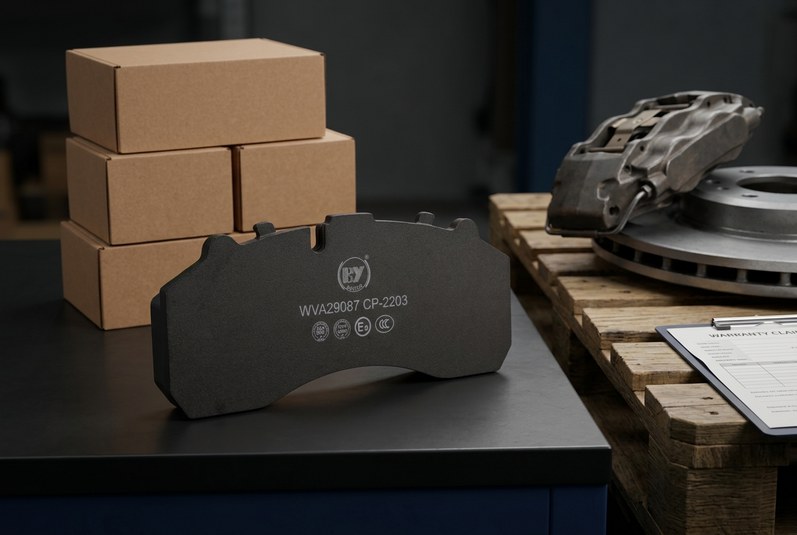
A supplier's warranty process tells you more about the factory than a polished spec sheet. Fast, documented claim resolution means the company has production traceability, lab capability, and export discipline. A slow, opaque process hides either weak quality control or a distributor that doesn't want to absorb freight cost. For fleet buyers importing from China, the smart move is to run a small pilot order, file a controlled test claim on a returned pad, and observe the supplier's response time and report quality. That single exercise will tell you more than 20 sales meetings.
BAIYUN Brake encourages this kind of audit because our IATF 16949 and ECE R90 systems require closed-loop corrective action records for every confirmed claim. When you're ready to build a supply relationship that won't leave your fleet waiting on warranty answers, request OEM commercial vehicle brake pad quote or browse our commercial vehicle brake linings for full axle coverage. You can also contact our export team directly to discuss claim-handling terms in your master supply agreement.
Was this article helpful?
Average Rating: 5/5 (35)