
Heavy-Duty Truck Brake Pads Manufacturer: Buyer Verification Guide
Summary:
Finding a trustworthy heavy duty truck brake pads manufacturer can make or break your aftermarket business. This buyer verification guide walks through the essential steps importers must take before placing an order: demanding IATF 16949 and ECE R90 certifications, remotely auditing factory production capacity, understanding realistic MOQs and lead times, and evaluating OEM versus private label opportunities. Written from real sourcing experience, the guide includes a practical checklist and data points that help distributors filter out unreliable suppliers, protect margins, and build a stable, certified supply chain.
Heavy-Duty Truck Brake Pads Manufacturer: Buyer Verification Guide
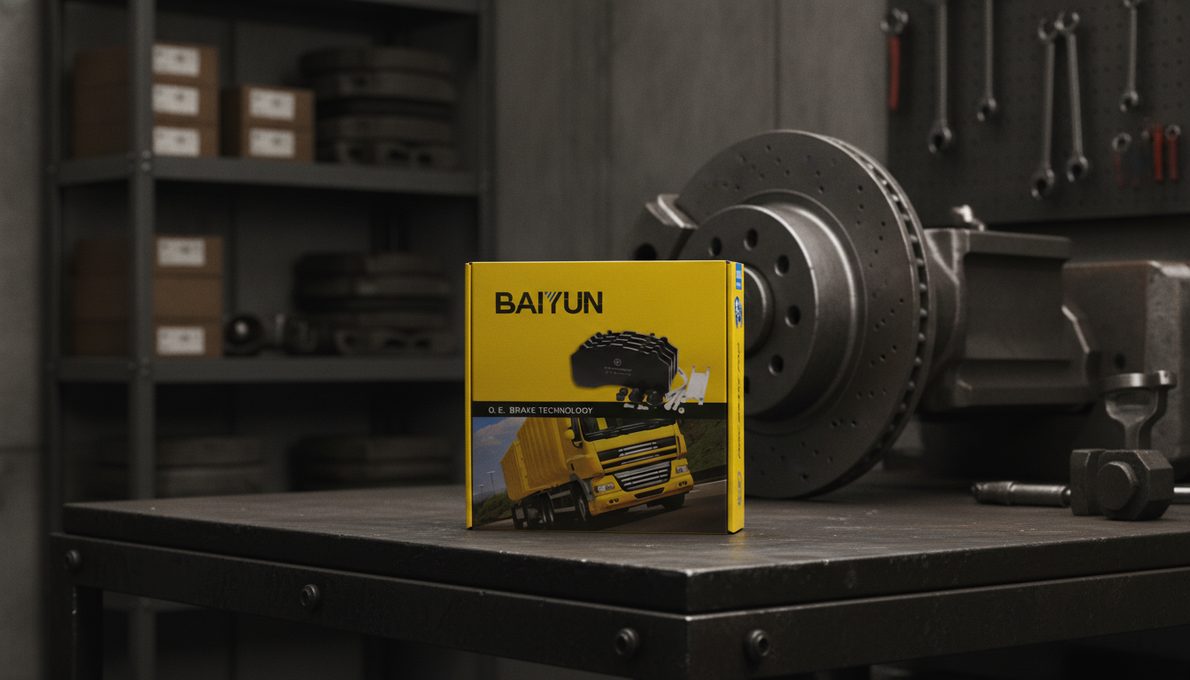
Quick answer: A reliable heavy-duty truck brake pads manufacturer must hold IATF 16949 quality management certification and ECE R90 approval for each pad part number. When sourcing from China, verify factory capabilities through remote audits, request production videos, and confirm minimum order quantities (typically 500–1,000 sets) and lead times (4–8 weeks). BAIYUN Brake, with 49+ years of experience, offers OEM and private label solutions backed by in-house dynamometer testing and full traceability. This guide walks you through the verification steps that protect your supply chain and reduce sourcing risk.
What Certifications Do You Need from a Heavy-Duty Brake Pad Manufacturer?
A shipment of 2,000 brake pad sets arrives at your warehouse. Three months later, your customers report cracking, uneven wear, and brake fade. The manufacturer claimed "OEM quality" — but their documentation didn't include one critical certificate. That's exactly the situation you can avoid by demanding three certifications upfront.
First, IATF 16949 certified facility ensures the production process meets automotive-grade defect rates (below 66 PPM) and rigorous process control. Without it, you're essentially gambling on batch consistency. Second, ECE R90 approval is a legal requirement for brake pads sold in Europe and many other markets, confirming that pad friction stays within ±15% of the OE reference after thermal cycling. Third, for markets in South America, Africa, or the Middle East, GB5763 or SAE J2522 dynamometer test reports provide additional performance confidence.
Ask for ECE R90 approval numbers that match exactly the part numbers you're importing. A legitimate manufacturer will provide these without hesitation — and can show you the corresponding test reports from an accredited laboratory.
| Certification | Scope | What It Means for Your Order |
|---|---|---|
| IATF 16949 | Automotive quality management system | Defect rate below 66 PPM, full process control |
| ECE R90 | Performance and dimensional conformity | Pad friction within ±15% of OEM; legal for road use in EU |
| GB5763 | Chinese national brake pad standard | Minimum friction coefficient and wear limits |
| SAE J2522 | Dynamometer test procedure | Standardized performance across temperature ranges |
Key takeaway: Always ask for a valid IATF 16949 certificate and ECE R90 approval numbers that match the part numbers you're importing.
How Can You Remotely Verify a Chinese Brake Factory's Production Capacity?
You can't fly to every factory. So how do you separate a genuine manufacturer from a trading company that out-sources production? Remote verification has become the standard, and it's surprisingly effective if you know what to look for.
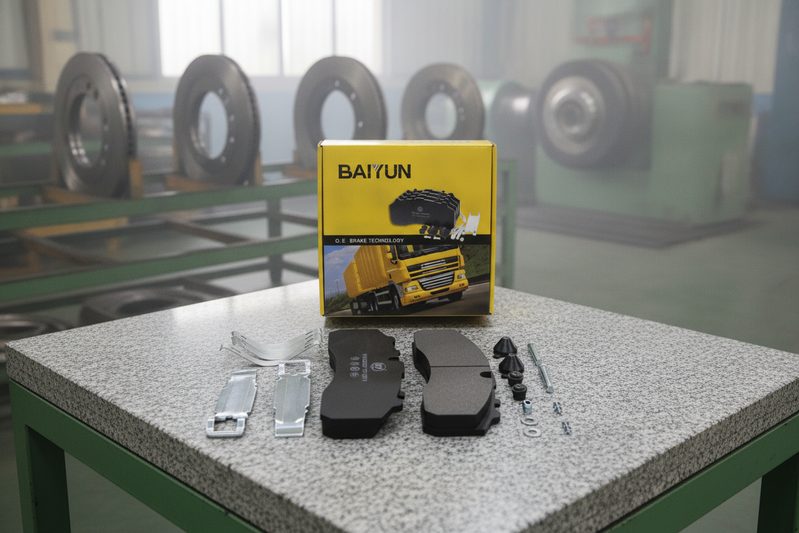
Start with a live video walkthrough — not a pre-recorded tour. Have the factory show you their mixing room. A modern automatic batch mixing system for friction materials is a strong signal. Then, ask to see the pressing line; 20 or more hydraulic presses indicate a mid-to-large-capacity factory, not a small workshop. In-house dynamometer test cells are non-negotiable for heavy-duty applications. Check if they can demonstrate a full SAE J2522 test on-screen during the call.
Next, request recent factory photos — specifically of pallets with international shipping marks bound for your region. A steady export flow reduces your risk of dealing with a startup. Finally, ask for permission to contact two existing distributor references. A confident manufacturer will provide them.
Remote verification isn't perfect, but combining video tours, sample test, and reference checks reduces the risk of dealing with an unqualified supplier.
What MOQ, Lead Times, and Logistics Should You Expect?
MOQs vary wildly in this industry. Some suppliers demand 3,000 sets minimum to touch a tooling setup. Others will run 200 sets but charge a premium. Here's what's realistic for a mid-sized distributor sourcing from a major Chinese brake pad manufacturer.
Typical MOQ for heavy-duty truck brake pads is 500–1,000 sets per SKU, depending on whether the tooling already exists. If the part number is new to the factory, a one-time tooling investment of $800–2,500 may be required. Lead time runs 4–8 weeks from order confirmation, factoring in raw material procurement, mixing, pressing, curing, and finishing. Shipping via sea freight from major Chinese ports (Shanghai, Ningbo, Shenzhen) to Rotterdam or Los Angeles takes 25–35 days; air freight takes 5–7 days but costs 3–5 times more.
For larger orders including brake linings, a wholesale CV brake lining inquiry can provide flexible mixed-container solutions. Always pad your schedule with two extra weeks for inspection and customs clearance. That way, you're never caught short.
Plan for a total supply cycle of 10–12 weeks from deposit to warehouse receipt for sea freight.
OEM vs. Private Label: Which Option Protects Your Margins Better?
Distributors who private-label brake pads see average gross margins 12–18% higher than those selling generic branded product, according to industry surveys. But the upfront cost of custom packaging and tooling for special shim designs needs to be justified by volume.
OEM purchasing means you buy existing part numbers with the manufacturer's standard branding. No tooling fee, lower MOQ (often 300–500 sets), and faster lead times. Private label includes your logo on the box, custom color printing, and sometimes a bespoke shim or slot pattern. MOQ typically starts at 1,000 sets per SKU, and you'll invest in packaging plates and die modifications.
Many importers start with OEM to test market acceptance, then transition to private label once annual volumes exceed 5,000 sets per part number. When you're ready to request OEM commercial vehicle brake pad quote, ask about their private label program too — the best factories make the transition seamless.
If your annual volume for a single SKU exceeds 5,000 sets, private labeling usually pays for itself within the first year through higher margins.
Buyer Verification Checklist for Heavy-Duty Truck Brake Pad Importers
Use this checklist before signing any purchase order. It filters out 90% of unreliable suppliers.
- ☐ Verify IATF 16949 certificate validity through the certifying body's database.
- ☐ Request ECE R90 approval documents for every part number you plan to order.
- ☐ Conduct a live video walkthrough of the production line and testing lab.
- ☐ Request samples for third-party performance testing (SAE J2522 dynamometer test).
- ☐ Check the consistency of friction coefficient across three separate sample batches.
- ☐ Ask for recent export records – photos of palletized shipments to your region.
- ☐ Review the manufacturer's warranty terms for cracking, delamination, and wear.
- ☐ Confirm MOQ, lead time, payment terms, and incoterms before issuing a PO.
- ☐ Download and study the commercial vehicle brake pad test report to see the level of detail a trustworthy manufacturer should provide.
This checklist will help you filter out 90% of unreliable suppliers before you commit a cent.
Frequently Asked Questions
What certifications are non-negotiable for a heavy-duty truck brake pad manufacturer?
At minimum, demand IATF 16949 for quality management and ECE R90 per part number for European or regulated markets. IATF 16949 ensures a defect rate under 66 PPM; ECE R90 guarantees the pad's friction stays within ±15% of the original equipment specification after thermal cycling.
How can I verify a Chinese brake pad factory's quality management system remotely?
Request a live video tour showing the automatic mixing system, pressing line, and in-house dynamometer. Ask for the IATF 16949 certificate number and verify it with the certification body. Also, request third-party lab test reports for recent production batches, matched to their part numbers.
What is a realistic MOQ for private label heavy-duty brake pads?
Expect a minimum of 1,000 sets per SKU for private label, compared to 500 sets for standard OEM orders. The higher MOQ covers custom packaging plates and possibly shim tooling adjustments. If your annual volume exceeds 5,000 sets per SKU, the investment pays off quickly through higher margins.
How long does it take to receive my order after placing it with a Chinese brake pad manufacturer?
Production lead times are typically 4–8 weeks from order confirmation. Sea freight adds another 25–35 days to major ports. With customs clearance and inland transport, plan for a total of 10–12 weeks from deposit to warehouse receipt. Air freight cuts transit to 5–7 days but costs significantly more.
Can I mix different part numbers in one container to test the market?
Yes, most established manufacturers like BAIYUN Brake allow mixed containers, including both brake pads and brake linings. This helps importers test multiple references without committing to high volumes per SKU. Discuss your mix with the export team to balance container utilization and freight cost.
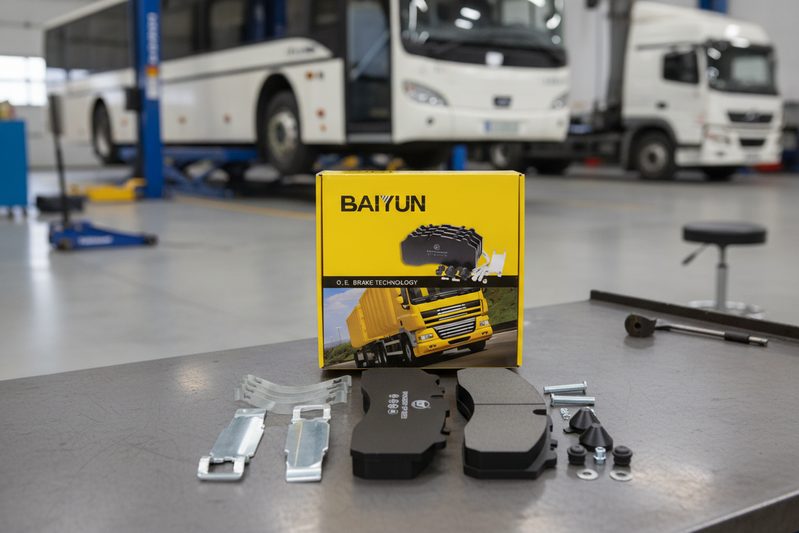
With our 49+ years of manufacturing experience and a proven track record exporting to over 40 countries, BAIYUN Brake offers the reliability and transparency you need. Contact us for a quote today and let us send you a sample for your own testing.
Was this article helpful?
Average Rating: 5/5 (629)