
Fleet and Vehicle Maintenance Market To Reach New Heights by 2035 Amid Aging Fleets and Electrification Shift – News and Practical B2B Guide
Summary:
The fleet and vehicle maintenance market is set to reach new heights by 2035, driven by aging fleets and the electrification shift. For fleet buyers, distributors, and maintenance teams, this means navigating a changing landscape in commercial vehicle brake parts. Discover practical insights on sourcing certified brake pads, supplier qualifications, and OEM/private label options. This B2B guide, backed by IndexBox data and real-world expertise, helps you prepare for the next decade of fleet maintenance.
Fleet and Vehicle Maintenance Market To Reach New Heights by 2035 Amid Aging Fleets and Electrification Shift - News and Practical B2B Guide

Quick answer: The fleet and vehicle maintenance market is heading into a decade of explosive growth—IndexBox projects the sector will expand at a 7.2% CAGR to nearly USD 2.07 trillion by 2035. Aging commercial vehicle fleets and the electrification wave are the twin engines of this shift. For fleet owners, parts distributors, and maintenance teams, the message is clear: demand for certified commercial vehicle brake pads will surge, and sourcing from a reliable truck brake pad supplier with real manufacturing muscle—not just a trading office—isn't optional anymore. This guide breaks down what the numbers mean for your brake part procurement, certification requirements, and how to build a supply chain that handles the next decade.
What’s Really Driving the Fleet and Vehicle Maintenance Market to Reach New Heights?
Let’s cut through the hype. The numbers from IndexBox and several market research firms are stacked: a global vehicle parc that’s older than it’s been in decades, tightening emissions rules, and fleet operators squeezing every last mile out of assets before replacing them. When you run trucks and buses harder and keep them longer, brake components become a wear item you replace more often—not less.
On the electrification side, it’s not that EVs don’t need brakes. They do. Heavy commercial vehicles still rely on friction brakes for full-stop events, and regenerative braking doesn’t eliminate pad wear—it changes the wear pattern and heat cycling. A 40-tonne electric truck descending a mountain pass puts the same thermal stress on a brake pad as a diesel. That means brake pad compound design for EV fleets must handle occasional high-load stops without the constant low-temperature conditioning diesel trucks experience. Shallow sourcing here can lead to glazing, noise, and rotor damage.
Distributors who spot this early will own the niche. The aftermarket for commercial vehicle brake pads that work equally well on electric and diesel trucks is about to explode. If your current supplier can’t show test data for both use cases, you’re leaving money on the table.
How Will Aging Fleets and Electrification Reshape Fleet Brake Maintenance?
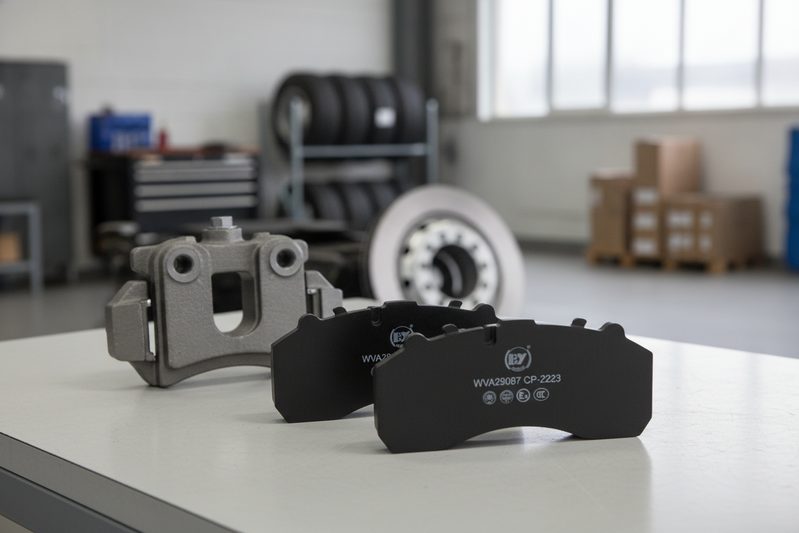
An older fleet means more unscheduled maintenance events. The average age of Class 8 trucks in North America has crept past 14 years in many fleets, and buses in Europe are pushing similar boundaries. That aging effect multiplies the number of brake jobs per vehicle lifecycle. For a distributor, this isn’t just a volume play—it’s a consistency play. A fleet running 24/7 can’t afford pad sets where the friction coefficient drifts 0.05 between batches. One bad delivery and you lose a 500-unit monthly contract.
Electric trucks bring their own twist. Because regenerative braking does a lot of the light deceleration, the foundation brakes tend to operate at lower temperatures most of the time, then jump to extreme heat during an emergency stop or hill descent. The pad must have a stable mu curve from 100°C all the way to 600°C. That’s not something a generic semimetallic formulation can guarantee. Look for a brake pad manufacturer that publishes actual dynamometer test reports—preferably to SAE J2522 or its European equivalent—for both standard and EV-duty cycles.
And don’t overlook the drum brake segment. Many electric bus platforms still use drum brakes on drive axles. Brake linings need the same certification rigor. A complete OEM brake lining solutions provider will have DTV (drum-to-vehicle) compatibility data and WVA numbers that simplify cross-referencing across fleet makes.
Certifications That Separate a Serious Truck Brake Pad Supplier from a Reseller
I’ve seen too many importers burned because they trusted a fancy website. The only thing that matters in a regulatory audit or warranty claim is the paper trail. For commercial vehicle brake parts in any regulated market—Europe, North America, Middle East—three certifications stand non-negotiable.
- ECE R90: If you’re supplying to fleets operating in the EU, Russia, or much of Asia, brake pads must carry ECE R90 homologation. This regulation tests performance conformity against OEM specs. Without it, the pads are illegal on public roads. Many tenders for municipal bus fleets mandate ECE R90 explicitly.
- IATF 16949: The automotive quality management system standard. An IATF 16949 certification means the factory has process controls, traceability, and defect prevention systems that commercial vehicle OEMs demand. When a bus operator asks for PPAP documentation, a supplier without IATF 16949 usually can’t deliver.
- WVA Reference Numbers: WVA numbers (Weiterer Vertriebs-Ausschuss) are the universal language for brake pad identification. A manufacturer who assigns and maintains accurate WVA cross-references for every part number saves you months of compatibility confusion. If the supplier can’t give you a WVA master list in Excel within 24 hours, walk away.
Our facility at BAIYUN Brake holds IATF 16949 and our entire commercial vehicle brake pad range is ECE R90 certified. We’ve been shipping container loads to distributors across 40+ countries for decades. That kind of depth isn’t accidental—it’s built into the quality system.
OEM, Private Label, and MOQ: Structuring a Supply Deal That Scales
Fleet brake maintenance isn’t a drop-ship business. Most serious importers need flexibility: some boxes under the factory brand, some under their own label, and others shipped in plain white boxes for local reassembly. The right truck brake pad supplier should offer all three without tripling the unit price.
MOQ (minimum order quantity) is often where the confusion starts. At BAIYUN, a typical initial trial order for a new WVA reference might be 200–500 sets, but core running items that we stock raw materials for can be produced in larger volumes at better per-unit pricing. That’s the gap between a trading company that aggregates random batches and a factory that controls its compounding. You’ll see the difference in lead times too. A factory with in-house hot-press lines can turn a 20,000-set order in under 30 days once tooling is set. A trader just picks up the phone and hopes.
For private label programs, the minimums are naturally higher because of printing plates and packaging setup. But here’s the upside: you get a direct link to a wholesale CV brake pads inquiry with full traceability. You can walk your customers through the factory quality certifications—something that closes enterprise fleet contracts. When a municipal transit authority asks, “Who makes this pad and what tests have they passed?” you’ll have real answers.
Buyer Verification Checklist: What Every Fleet Parts Manager Should Ask
Before you place that first container order, run through this list. I use it myself when evaluating new material sources.
| Checklist Item | Why It Matters |
|---|---|
| 1. Can the supplier provide a valid ECE R90 certificate for each part number? | Without it, the pads can’t legally be installed on road vehicles in regulated markets. |
| 2. Does the factory hold IATF 16949 certification, and can they show the latest audit report? | This confirms process control, corrective action systems, and traceability—not just a piece of paper. |
| 3. Are WVA numbers matched to OE references with physical sample photos? | Avoids mis-shipments. A correct WVA cross-reference database saves weeks of rejection handling. |
| 4. Can the factory provide a dynamometer test report to SAE J2522 or equivalent for the specific friction formulation? | Proves that the brake pad meets performance and wear requirements, especially for EV/hybrid cycles. |
| 5. What is the minimum and maximum batch size, and how does pricing scale? | Understand the cost curve for larger contracts and whether the supplier can ramp up production fast. |
| 6. Is private labeling available, and what are the MOQ and artwork requirements? | Critical for distributors building their own brand; packaging compliance matters in export. |
| 7. Can the supplier offer long-term price stability on copper-free formulations? | Copper-free regulations are expanding; you need a partner who’s already engineered compliant materials. |
| 8. What are the lead times for repeat orders of your top 5 SKUs? | Inventory planning hinges on predictable delivery; a 30-day repeat lead time is industry standard for factories. |
| 9. Does the supplier provide technical support for fleet troubleshooting? | When you get a noise or vibration complaint, the factory should provide root-cause analysis, not ghost you. |
| 10. Are there any performance test comparisons against OE pads available? | A confident manufacturer will have in-house comparison data, giving you a sales tool for fleet customers. |
This isn’t just bureaucracy. Every line on that list corresponds to a real-world failure I’ve seen in brake parts procurement. Skip one, and the cost isn’t the price of the pads—it’s the downtime and the contract you lose.
FAQ: Fleet Brake Maintenance and Sourcing in the 2035 Landscape
Q: How will the growth of electric trucks change brake pad demand?
A: Electric trucks still use friction brakes for final stopping and heavy deceleration, but the duty cycle shifts. Pads for EV fleets must maintain stable friction from low to high temperature with minimal cold judder. This increases demand for specially formulated commercial vehicle brake pads, not less demand.
Q: Why do WVA numbers matter when I can cross-reference by OE number?
A: WVA numbers provide a standardized, manufacturer-independent way to identify brake pad geometry. Many distributors use WVA numbers to build their catalog as it avoids confusion when one OE number maps to multiple aftermarket designs. A truck brake pad supplier with a complete WVA database simplifies inventory management across different truck makes.
Q: What’s a realistic MOQ for a new, untested brake pad shape from a brake pad manufacturer?
A: Typically 200–500 sets for a new mold. Once the mold is proven and volume demand is established, the per-unit cost drops. Some factories offer split molds for high-cost tooling, but that’s rare for commercial vehicle pads. Always confirm whether the MOQ includes packaging and labeling.
Q: Do ECE R90 pads cost more than uncertified alternatives?
A: Marginally, yes—but the real cost is the risk you avoid. Uncertified pads can be rejected by fleet auditors, and in the event of an accident, liability falls heavily on the supplier. For most regional bus and truck contracts, the price premium for ECE R90 pads is around 8–15%, and it’s easily justified by compliance and performance consistency.
Q: How can I verify a factory’s brake pad performance claims before a bulk order?
A: Ask for a dynamometer test report according to SAE J2522 or AK Master test. A legitimate brake pad manufacturer will have this data for each friction code. Also request a sample set for field testing on a fleet vehicle. Real factories welcome pilot programs; resellers avoid them.
Positioning Your Fleet Business for the Next Decade
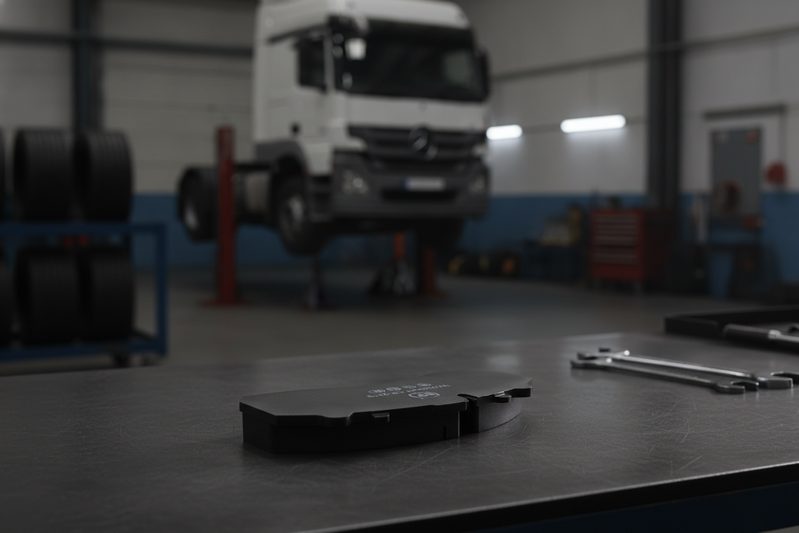
The fleet and vehicle maintenance market isn’t just growing—it’s reshaping around durability, emissions compliance, and digital traceability. Brake parts sit right at that intersection of safety, regulation, and cost control. The distributors and fleet managers who lock in a certified, factory-direct supply chain now will run circles around competitors still chasing the lowest container price.
If you’re ready to source commercial vehicle brake pads that meet IATF 16949 and ECE R90 standards with transparent production lead times and private label flexibility, I encourage you to request a wholesale quote from our export team. Our technical staff can also provide current WVA cross-reference files and dynamometer reports for your target fleet applications.
Was this article helpful?
Average Rating: 5/5 (439)