
Brake Safety Week kicks off; here’s how to keep your fleet in compliance – Fleet Equipment Magazine
Summary:
Brake Safety Week kicks off August 23–29, 2026, putting commercial vehicle brakes under intense scrutiny with a special focus on drum and rotor condition. Fleet buyers, distributors, and maintenance teams can avoid costly out-of-service violations—historically affecting 12% of inspected vehicles—by combining rigorous pre-inspection checks with certified, high-quality brake pads and linings. Sourcing from an IATF 16949 and ECE R90-approved manufacturer like BAIYUN Brake provides the documentation, friction consistency, and regulatory compliance North American and European fleets demand. This guide breaks down what inspectors look for, how to structure a pre-inspection program, and what questions to ask potential brake part suppliers to safeguard your operation.
Brake Safety Week kicks off; here’s how to keep your fleet in compliance - Fleet Equipment Magazine
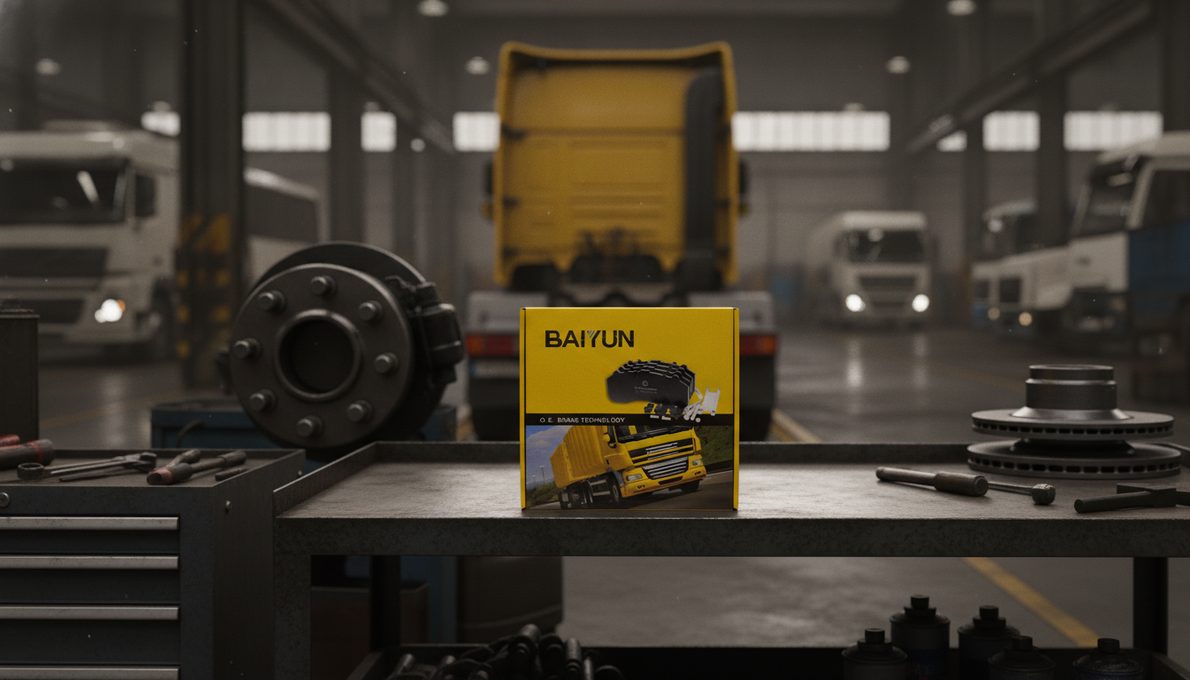
Quick answer: Brake Safety Week 2026 runs August 23–29, with CVSA inspectors putting extra scrutiny on commercial vehicle brake drums and rotors. Out-of-service rates for brake violations hover near 12% every year, costing fleets downtime, fines, and reputational hits. The simplest way to bulletproof your fleet? Combine a rock-solid pre-inspection maintenance routine with certified brake pads and linings from an IATF 16949 and ECE R90 manufacturer. BAIYUN Brake’s heavy-duty friction materials are engineered to meet or exceed those standards, giving your maintenance team a head start before the inspector even crawls under the truck.
What exactly is Brake Safety Week and why does it matter for your fleet?
Every year, the Commercial Vehicle Safety Alliance (CVSA) runs Operation Airbrake, and Brake Safety Week is its flagship event. In 2026, inspectors will blanket North America from August 23 to 29, pulling commercial vehicles for detailed brake system checks. An unannounced one-day brake blitz may hit at any time, keeping fleets on their toes year-round.
The numbers paint a sobering picture. During the 2025 Brake Safety Week, 4,706 commercial vehicles were placed out of service for brake violations across just the U.S., Canada, and Mexico. That’s roughly one in eight inspected trucks. If your fleet operates 50 power units, statistically four could be sidelined—each costing an average of $861 in fines plus towing and lost revenue. When you multiply that across a distribution network or a full truckload carrier, the financial sting becomes a serious operational headache.
This year’s focus? Drums and rotors. Inspectors will look for cracks, heat checks, excessive wear, and contamination. A cracked drum can fragment under heavy braking, causing wheel lock-up or loss of control. The CVSA isn’t pulling punches; they’ve made it clear that drum and rotor condition is a make-or-break item for passing inspection.
But compliance isn’t just about dodging fines. It’s about protecting your drivers, your cargo, and your CSA scores. Consistent brake performance across the fleet means shorter stopping distances, less uneven wear, and fewer unplanned shop visits. That’s where the quality of your replacement brake pads and linings enters the conversation.
Bottom line: Brake Safety Week is a high-stakes audit of your entire brake maintenance program, and the parts you choose today determine whether your trucks pass or get red-tagged.
What will inspectors look for this year—and where do fleets usually stumble?
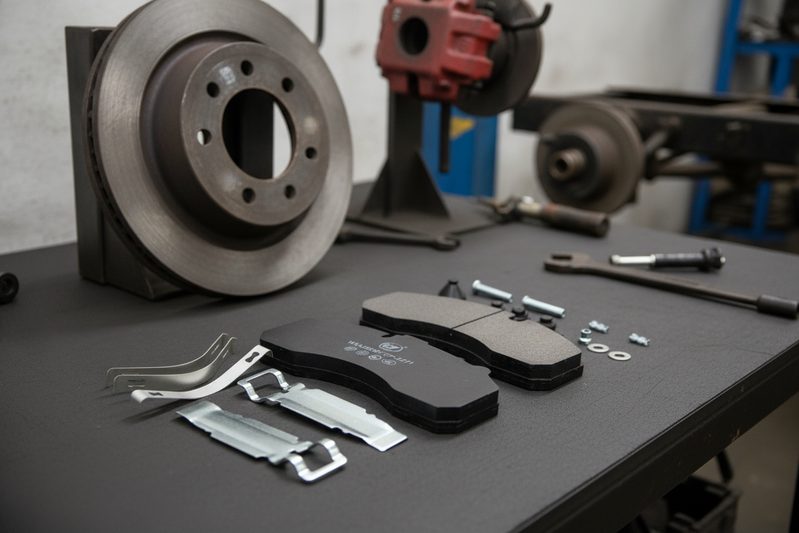
You can bet the inspector will zero in on drums and rotors, but they won't ignore the rest of the system. Their Level I inspection checklist covers everything from air lines and pushrod travel to lining thickness and ABS malfunction lights. Let’s break down the top violation magnets that send trucks to the out-of-service lane.
1. Worn brake linings and pads
The CVSA standard is unforgiving: lining thickness must be at least 1/4 inch (6.4 mm) at the thinnest point for air brake shoes, or to the wear indicator if the manufacturer specifies one. On disc brakes, pad thickness often needs to be above 2 mm for steel backing plates—or whatever the vehicle manufacturer recommends. Fleets that push change intervals too far risk automatic failure. Using premium, long-wear friction materials like those from our commercial vehicle brake pads extends service life and keeps your fleet above the threshold longer.
2. Cracked, scored, or heat-checked drums and rotors
A drum with a crack longer than 50% of the friction surface width is an out-of-service defect, period. Heat checking—those tiny spiderweb cracks—often signals repeated aggressive braking or inadequate cooling. Rotors with deep grooves or thickness variation will trigger vibration and uneven pad wear. This year, CVSA inspectors will measure rotor thickness and check runout where equipped. If you’re sourcing replacement drums or pads, make sure the friction material is matched to the drum metallurgy to prevent hot spotting and premature cracking.
3. Air system leaks and out-of-adjustment slack adjusters
Pushrod travel beyond the readjustment limit—typically 1.5 to 2 inches depending on chamber size—remains a perennial problem. Inspectors will also check for air leaks that drop system pressure below 60 psi within two minutes of a full application. Automatic slack adjusters help, but they still need greasing and inspection. Pairing well-adjusted foundations with consistent friction materials removes one variable from the compliance equation.
4. Missing or chafed air hoses, damaged ABS sensors
Rubbing hoses and cracked sensor wiring can ground a truck just as fast as thin linings. A pre-trip walkaround with a flashlight and a spray bottle of soapy water catches most of these.
Will your fleet pass an unannounced inspection tomorrow? If you’re not sure, the next section gives you a pre-inspection battle plan.
How can fleet maintenance teams prepare for inspection—starting today?
Smart maintenance directors don’t wait until the week before Brake Safety Week to scramble. They build compliance into daily, weekly, and monthly routines. Here’s a practical, tiered approach that’s worked for fleets running 50 to 500 trucks.
Daily: Empower your drivers
Drivers are your first line of defense. Train them to listen for air leaks during the pre-trip brake check, feel for pull or vibration during the first few stops, and visually scan drums for fresh cracks. Give them a simple laminated checklist in the cab. A driver who catches a bulging brake hose at 5 a.m. saves your shop a full inspection failure at 10 a.m.
Weekly: Quick shop walkaround
Every weekend, a technician should spot-check 20% of the fleet’s brake components: measure a couple of pushrod strokes, eyeball lining thickness on random shoes, and look for grease seal leaks that can contaminate linings. Document findings in your fleet management software—data trends will reveal weak points before they become OOS violations.
Monthly: In-depth brake system audit
Pull wheels off a sample of units and measure drum diameter, rotor thickness, and lining wear with precision tools. Compare against manufacturer specs. Check camshaft bushing play, slack adjuster operation, and S-cam rotation. This is also the time to verify you’re using the correct friction material formulation. BAIYUN Brake provides detailed material data sheets for heavy-duty linings, so you know exactly what coefficient of friction you’re getting at various temperatures.
Before a known brake blitz: The 48-hour prep
Concentrate on the highest-risk vehicles—those with over 250,000 miles on the current brake job, frequent mountain routes, or repeated brake-related driver write-ups. Replace any lining that will be below the minimum thickness before the inspection window ends. Swap out questionable drums and check all ABS fault codes. A wholesale CV brake linings inquiry ahead of time ensures you have the right parts on the shelf when you need them.
Reality check: A well-executed pre-inspection program cuts brake out-of-service rates by up to 40%, based on data from fleets that implemented CVSA’s own inspection procedures year-round.
Why does sourcing certified brake pads and linings matter more than you think?
Let’s face it: cheap friction materials from uncertified suppliers can look identical to premium ones on the shelf. The difference only shows up after 20,000 miles—or during a panic stop on a wet downhill. For fleet buyers and distributors, the certification paperwork isn’t just bureaucracy; it’s your insurance policy against liability claims and unscheduled downtime.
Here’s what separates a compliance-ready brake lining from a gamble:
- ECE R90 homologation: This regulation demands that aftermarket brake pads and linings match or exceed the performance of the original equipment within a 15% tolerance band for both cold and hot friction. BAIYUN Brake’s ECE R90-certified products have passed dynamometer tests covering speed sensitivity, fade behavior, and recovery, so you’re not guessing about stopping power.
- IATF 16949 quality management: This automotive-specific standard requires rigorous production controls, traceability, and continuous improvement. Our IATF 16949 certification means every batch of brake lining undergoes incoming raw material inspection, in-process statistical process control, and final dimensional checks. For a fleet buying 5,000 sets a year, that consistency translates to predictable wear rates and simplified inventory planning.
- Friction material formulation stability: Truck brake pads using semi-metallic or ceramic-enhanced formulations from established manufacturers maintain friction coefficients in the 0.35–0.42 range across the critical 100–350°C operating window, even after repeated high-energy stops. Cheap linings often fade beyond 300°C, forcing drivers to compensate with harder pedal pressure—and that leads to glazed drums and longer stopping distances.
Ask your current supplier for the friction test report per SAE J2522 (AK Master) or the equivalent GB 5763 standard. If they can’t produce it within 48 hours, you’re buying blind. At BAIYUN, we attach test data with every new product homologation. That’s not just marketing—it’s a requirement for any brake part exported to markets with strict type-approval laws.
For the distributor or fleet manager worried about warranty claims, certified linings reduce the risk of premature cracking, delamination, and uneven wear that triggers driver complaints. They also stand up to CVSA scrutiny because they meet the dimensional and performance specs the inspectors reference.
Takeaway: Certification isn’t a piece of paper; it’s a quantified, repeatable guarantee that your brake components will perform under real-world fleet conditions.
What should distributors and fleet buyers demand from a brake manufacturer?
If you’re sourcing brake pads or linings for resale or for your own fleet, the conversation with a potential supplier should go beyond price per set. Here’s a short list of non-negotiables that separate a reliable OEM/private label partner from a transaction-focused trading company.
1. Minimum order quantities (MOQ) that fit your business model
BAIYUN Brake works with distributors moving anywhere from 500 to 20,000 sets per month. We offer flexible MOQs on fast-moving WVA references and can phase in new private-label SKUs with trial orders as low as 200 sets. Locking into a supplier that demands a full container per SKU can strangle your cash flow before you’ve even tested the market.
2. Lead times that align with your inventory turn
Standard lead times for container orders range 25–35 days FOB Chinese port; air freight options can cut that to 7–10 days for urgent restocking. If a manufacturer can’t give you a firm production schedule within 48 hours of PO placement, they’re probably overbooking capacity. Our IATF 16949 certified facility runs dedicated production lines for CV brake pads and linings, so we can commit to delivery dates you can bank on.
3. Private label and packaging support
Want your own brand on the box? BAIYUN handles custom print, barcoding, and multi-language legal labeling compliant with EU and North American requirements. We also offer blister-packed, plain white box, or bulk options. For large fleet end-users, we can laser-etch part numbers directly onto the backing plate to simplify warehouse binning.
4. Technical support that goes beyond the catalog
You need more than a cross-reference list. When a fleet customer calls with a brake noise issue on a specific bus application, your supplier should be able to pull up dynamometer test data for that exact WVA number and recommend a formulation tweak if needed. We maintain a library of over 2,000 commercial vehicle friction formulas and offer direct engineer-to-engineer consultation for complex applications.
5. Regulatory compliance documentation
Demand ECE R90 test reports, IMDS declarations for material content, and REACH compliance certificates. These documents aren’t optional for European importers—they’re legally required. We supply them as standard with every shipment to our EU distribution partners.
| Buyer Verification Criteria | What to Check | Why It Matters |
|---|---|---|
| Certifications | IATF 16949 certificate number, ECE R90 approval marks | Proves quality system and regulatory compliance |
| Friction test data | SAE J2522 or GB 5763 report, hot/cold friction coefficient | Reveals performance consistency and fade resistance |
| WVA reference accuracy | Cross-check supplier’s WVA listing against OEM number | Prevents fitment errors and returns |
| Production capacity | Monthly output, lead time guarantee, backup lines | Ensures supply continuity during peak demand |
| Sample policy | Free or paid samples, delivery time, return policy | Lets you test quality before bulk commitment |
| Packaging flexibility | Private label, multilingual labels, barcoding | Streamlines your local distribution and branding |
| After-sales support | Warranty terms, technical hotline, field engineer availability | Protects your margin when field issues arise |
Print this checklist. Use it in your next supplier negotiation. The manufacturers who can’t tick every box won’t suddenly become reliable after a purchase order.
How do you spot the hidden costs in “bargain” brake pads before they bite you?
A set of brake linings priced 20% below market average might save you $50 upfront, but what’s the real cost of ownership? Let’s walk through a real-world fleet calculation.
Suppose you buy 1,000 sets of budget linings for a mixed truck fleet. Within six months, you see a spike in driver complaints about brake fade, uneven pad wear, and three road calls due to cracked linings. Each road call costs roughly $500 in tow and repair. If just 5% of those cheap linings fail prematurely, that’s 50 road calls—$25,000 in unplanned expenses. Add in the labor to swap them out early, the downtime, and the CSA points from any roadside inspection failures, and that initial $50,000 savings evaporates fast.
Quality linings from an trusted brake pad supplier like BAIYUN might cost more per set, but they’re engineered for 150,000–200,000 km service life on highway trucks when paired with proper drum maintenance. The friction material formulation resists heat cracking and glazing, so you get predictable performance right down to the wear limit. That predictability is priceless when you’re scheduling PMs and need to rotate vehicles without throwing off the whole shop calendar.
Frequently Asked Questions About Brake Safety Week and Fleet Compliance
1. What’s the single most common brake violation during Brake Safety Week?
A: Out-of-adjustment brakes and worn linings consistently top the list. In 2025, CVSA data showed these two categories accounted for roughly 45% of all brake-related out-of-service orders. Regular slack adjuster greasing and timely lining replacement—using parts that carry the correct WVA number and OEM specification—are the most effective countermeasures.
2. How can I quickly check if my brake pads meet ECE R90 standards?
A: Look for the ECE R90 approval mark stamped on the pad backing plate or printed on the packaging. The code includes a country number, the regulation “90R,” and a unique approval number. Reputable suppliers like BAIYUN Brake provide this documentation and maintain a database of homologated part numbers so you can verify compliance before purchasing.
3. What’s the minimum brake lining thickness allowed by CVSA?
A: For air drum brakes, the minimum is 1/4 inch (6.4 mm) at the thinnest point. For disc brakes, it’s typically 1.6 mm (1/16 inch) or to the wear indicator, whichever is greater. Always check the vehicle OEM’s spec, as some require more conservative limits. BAIYUN’s linings are clearly marked with wear indicators to simplify inspection.
4. Can I use the same brake pads across different truck makes and models?
A: Not necessarily. Dimensionally identical brake pads can have drastically different friction formulations optimized for vehicle weight, axle type, and duty cycle. Cross-referencing by WVA number alone doesn’t guarantee performance equivalence. When sourcing for mixed fleets, ask your manufacturer for friction coefficient curves across the expected temperature range to ensure compatibility with each vehicle’s brake system calibration.
5. What’s the fastest way to get certified brake pads for an unexpected fleet inspection?
A: For North American fleets, priority air freight from Chinese manufacturers typically adds 7–10 days to standard lead times. Domestic distributors with pre-stocked inventories can ship within 24–48 hours. That’s why we recommend our U.S. and Canadian distributors maintain buffer stock of the top 20 fast-moving WVA references—so when a fleet calls in a panic, you can answer without delay. Request a wholesale quote to set up your initial inventory.
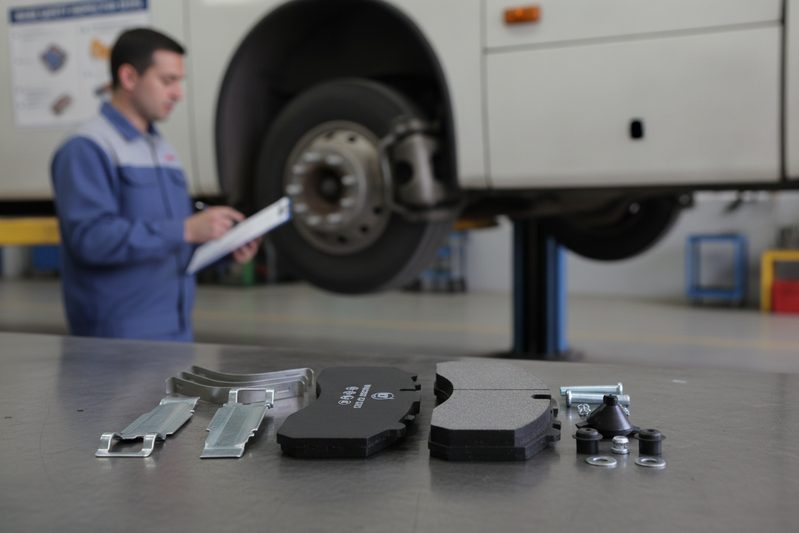
So, are you ready to face Brake Safety Week with confidence?
The tools for compliance are already in your hands: a disciplined inspection routine, a supplier that delivers certified, consistent friction materials, and a team that knows what inspectors look for. Brake Safety Week shouldn’t be a crisis—it should be a validation that your maintenance program is working.
If your fleet’s brake pad supply chain is a source of uncertainty rather than a source of strength, it’s time to make a change. BAIYUN Brake has spent 49+ years manufacturing heavy-duty friction solutions for trucks, buses, and trailers worldwide. Our IATF 16949 and ECE R90 certifications, flexible private label programs, and responsive engineering support make us a natural fit for distributors and fleet buyers who can’t afford compromises on safety.
Browse our C.V. brake pad catalog for distributors, explore OEM brake lining solutions, or contact our export team for a tailored quote. Let’s make sure your trucks roll through the next inspection with zero violations and every brake drum cool to the touch.
Was this article helpful?
Average Rating: 5/5 (557)