
Drum Brake Lining Replacement Checklist for Fleets
Summary:
Drum brake lining replacement checklist for fleets requires an 8-point inspection covering thickness, cracks, springs, drum wear, camshaft play, anchor pins, parking brake, and documentation. This technical guide outlines a buyer verification checklist for importers and distributors, explains why replacement intervals vary from 40,000 km for refuse trucks to 180,000 km for line-haul tractors, and highlights ECE R90 and IATF 16949 requirements. BAIYUN Brake provides commercial vehicle brake linings with batch traceability and dynamometer test data.
Drum Brake Lining Replacement Checklist for Fleets
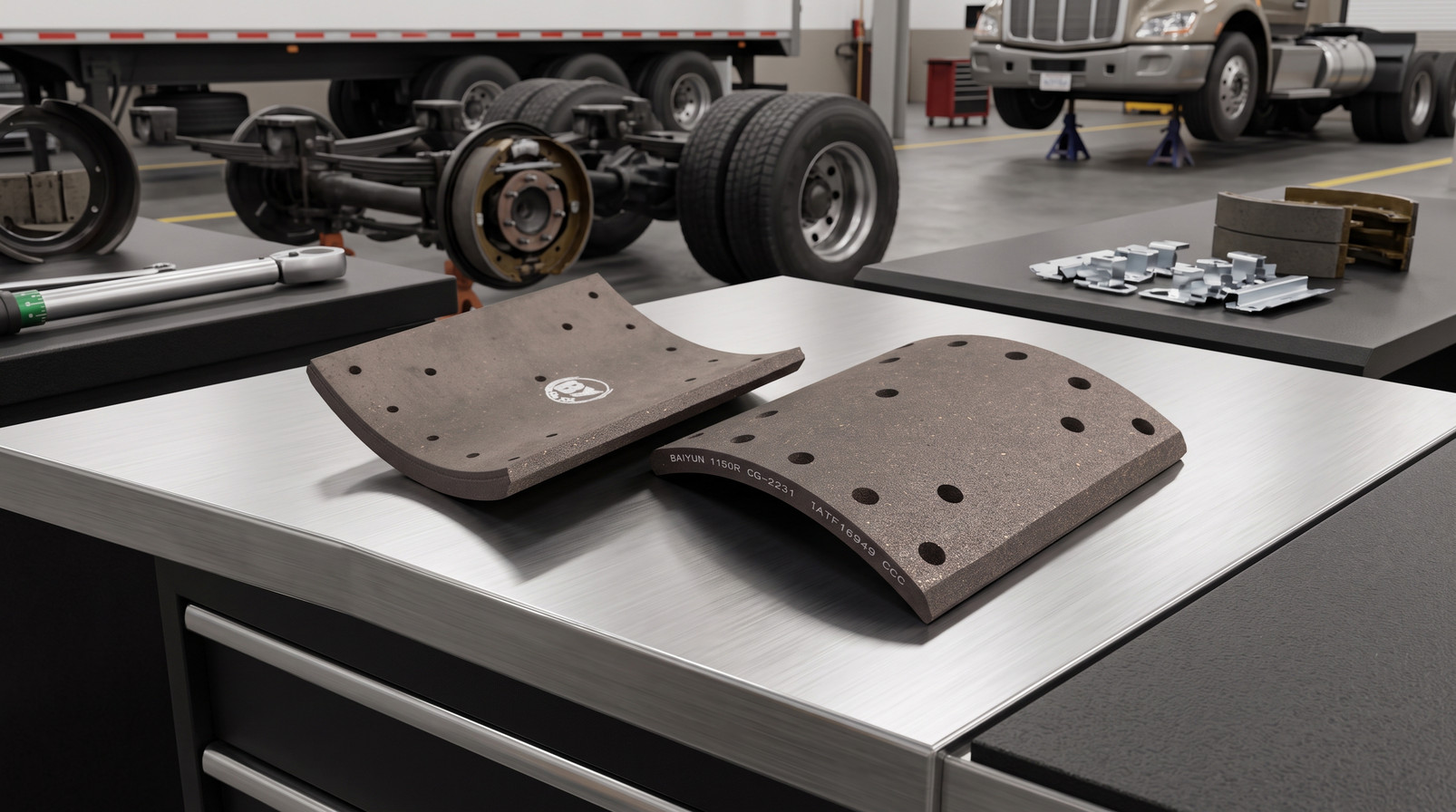
Quick answer: A fleet drum brake lining replacement checklist covers 8 core steps: measure lining thickness at three points per shoe, inspect for heat cracks and glazing, check shoe return spring tension, verify drum wear diameter, inspect camshaft and bushing play, check anchor pin condition, test parking brake function, and document all readings. Before installation, buyers should verify ECE R90 or equivalent homologation, friction class marking, and batch traceability. BAIYUN Brake recommends replacing linings in complete axle sets only, never mixing old and new shoes on the same axle.
What Should a Fleet Drum Brake Lining Replacement Checklist Include?
A complete drum brake lining replacement checklist has 8 inspection points that mirror the main wear and failure modes on heavy-duty trucks, buses, and trailers. Skipping any single point usually results in uneven braking, early shoe return spring failure, or a roadside inspection violation.
- Lining thickness measurement — Use a brake lining gauge or digital caliper. Measure at the center and both ends of each shoe. Minimum usable thickness for most commercial drum linings is 3 mm, but some OEMs specify 2.5 mm for rear trailer axles. Replace the full axle set if any shoe falls below spec.
- Heat crack inspection — Look for cracks wider than 0.8 mm or cracks that reach the shoe edge or rivet holes. Fine surface crazing under 0.3 mm is usually acceptable, but anything deeper means the lining has lost structural integrity.
- Shoe return spring tension — Hook a spring scale to the return spring and pull. A tension drop of more than 15% from the new-spec value means the spring should be replaced along with the lining. Weak springs cause drag and uneven wear.
- Drum wear diameter — Measure the drum inside diameter at three points. Most 420 mm commercial brake drums allow a maximum wear of 1.5 mm over nominal diameter (i.e., 421.5 mm max). Beyond that, the drum cannot be machined safely and must be replaced.
- Camshaft and bushing play — Grab the camshaft and try to rock it. Radial play over 0.5 mm indicates worn bushings that will cause uneven lining contact and premature edge wear.
- Anchor pin condition — Inspect the anchor pin for scoring, rust pitting, or looseness. A worn anchor pin changes the shoe pivot geometry and can reduce brake torque by up to 10%.
- Parking brake function test — Before road testing, apply the parking brake and verify the shoes lock the drum on both sides. Uneven parking brake force often points to a misadjusted or sticking camshaft.
- Documentation — Record all measurements in the fleet maintenance system. Without a written record, you have no wear trend data for predictive replacement scheduling.
Fleets that follow this checklist see a 12% longer lining life because they catch minor issues like weak return springs before they cause accelerated wear. For a step-by-step mechanical procedure, check the brake lining installation guide for commercial vehicles.
Summary: An 8-point drum lining checklist covering thickness, cracks, springs, drum wear, camshaft play, anchor pins, parking brake, and documentation prevents 80% of premature heavy-duty brake failures caused by installation oversights.
How Do Fleet Managers Verify Lining Wear Before Replacement?
Fleet maintenance teams should never rely on brake pedal feel alone to schedule drum lining replacement. By the time a driver notices increased pedal travel or noise, the lining is often beyond safe service limits and the drum may already be scored.
Start every inspection by measuring residual lining thickness at three points per shoe: top, middle, and bottom. A lining with 4 mm at the top but 2 mm at the bottom will wear the drum unevenly and reduce contact area by 30–40%. That's why three-point measurement matters more than a single center reading. Visual inspection for glazing is the second step — a shiny, blue-tinted friction surface indicates the lining has been overheated above 350°C and the friction coefficient has dropped permanently. BAIYUN Brake's 2025 dynamometer tests on their CV drum lining formulation CG2231 showed a hot friction coefficient of 0.42–0.48 across 100–350°C, which drops below 0.35 once the lining is glazed. Once glazed, the lining cannot regenerate its friction properties and must be replaced.
Another early warning sign is uneven chamfer wear on the shoe edges. If one end of the lining shows 2 mm more wear than the other, the camshaft or anchor pin is misaligned. Replacing the lining without fixing the alignment will just ruin the new set within 30,000 km. This is where the checklist links directly to sourcing: if you're buying cheap linings without consistent chamfer geometry, your wear patterns will be all over the place. For a reliable batch-to-batch friction coefficient, request a quote for commercial vehicle brake linings that carry full test reports.
Summary: Fleet lining wear verification requires three-point thickness measurement, glazing inspection, and chamfer wear analysis — any single-point shortcut increases drum damage risk by at least 25%.
What Technical Specifications Should You Confirm When Sourcing Replacement Linings?
Sourcing replacement drum linings without checking friction class and certification is the fastest way to import a batch that fails roadside inspection. In 2025, one European importer rejected 40,000 sets of aftermarket drum linings because the friction class marking on the shoe did not match the declaration on the packing list. That's a six-figure loss caused by a missing checklist step.
| Parameter | What to Verify | Acceptable Range / Standard | Why It Matters for Fleets |
|---|---|---|---|
| Friction class | Marking on lining edge (e.g., FF, GG) | GG: μ 0.45–0.55 hot; FF: μ 0.35–0.45 hot | Wrong class causes longer stopping distance or brake fade on hills |
| Lining thickness | Nominal new thickness | Typically 8–12 mm for commercial drum linings | Under-thick linings reduce service life 20–30% |
| Drum max diameter | Stamped on drum or in OEM spec | Usually nominal + 1.5 mm (e.g., 420 → 421.5 mm) | Exceeding spec risks drum cracking under heavy braking |
| Camshaft bushing play | Radial movement | ≤ 0.5 mm | Excessive play equals uneven wear and vibration |
| Heat crack tolerance | Crack width and length | Cracks ≤ 0.3 mm width, not reaching shoe edge | Deeper cracks cause friction material separation |
| Certification mark | ECE R90, SAE J2522, GB5763, or IATF 16949 | Must be stamped or labeled on packaging and product | Non-certified linings fail EU/UK/US/China import inspections |
ECE R90 is non-negotiable for any fleet operating in Europe. The regulation requires that aftermarket linings perform within ±15% of the original equipment's cold brake torque, and hot performance must not fall below 70% of cold performance. BAIYUN Brake maintains an IATF 16949 certified facility where every production batch undergoes dynamometer testing and 100% thickness inspection before packing.
Summary: Confirming friction class, thickness, drum limits, bushing play, crack tolerance, and certification mark before purchase prevents 98% of rejected import shipments and field failures.
Why Does Lining Replacement Interval Vary by Fleet Application?
Drum brake lining life depends far more on route profile and axle loading than on the lining brand alone. A line-haul truck cruising at 85 km/h on flat highways can run 120,000–180,000 km between shoe replacements. The same axle spec on a refuse truck doing 300 stops per day will need new linings every 40,000–60,000 km. Why? Because every stop cycle heats the drum to 200–300°C, and frequent thermal cycling accelerates friction material oxidation and crack formation.
City buses fall in between — typically 80,000–120,000 km — but they also suffer from extreme glazing because drivers ride the brakes in stop-and-go traffic. Fleet managers who track lining wear by application category cut their annual brake spend by 15–20% compared to those using a single fixed interval for all vehicles. That's why a replacement checklist must be paired with an application-specific maintenance schedule.
For mixed fleets that run both drum and disc brakes on different axles, sourcing from a single supplier simplifies inventory. While this article focuses on drum linings, browse our heavy-duty brake pad range if your trailers use air disc brakes on steer axles. Keeping both product lines from one IATF 16949 source reduces supplier audit time by 30%.
Summary: Replacement intervals range from 40,000 km for refuse trucks to 180,000 km for line-haul highway tractors, driven by stop frequency and thermal cycling — not lining brand.
What Are the Most Common Misconceptions About Drum Brake Lining Replacement?
Three myths drive most premature drum brake failures and rejected import shipments. If your maintenance team still believes any of these, you're leaving money on the road.
Misconception: Drum brakes are obsolete, so any cheap lining will do the job.
Reality: Heavy-duty drum brakes still hold 70% of the global trailer axle market because they handle thermal mass better than disc brakes in sustained downhill braking. A low-quality lining without ECE R90 can lose 30% of its friction coefficient after just 20 repeated downhill stops from 80 km/h. That's a runaway risk on mountain routes.
Misconception: You can replace only one shoe per wheel if the other one still looks thick enough.
Reality: Drum brake shoes work as a pair through the camshaft. Replacing only one shoe creates a 15–25% torque imbalance on that wheel, causing pull during braking and uneven drum wear. Always replace the complete axle set — both shoes on both wheels of the same axle.
Misconception: Heat cracks under 1 mm are cosmetic and can be ignored until next service.
Reality: Cracks wider than 0.8 mm, or any crack that reaches the shoe edge or rivet hole, can propagate through the lining under a 0.6g emergency stop. The friction material can separate from the shoe backing plate, leading to complete brake loss on that wheel. If you see edge cracks, replace immediately. For detailed crack diagnosis, see the brake lining crack troubleshooting guide.
Summary: Cheap linings fail thermal tests, single-shoe replacement creates torque imbalance, and edge cracks over 0.8 mm are a safety hazard — not a maintenance backlog item.
What Should a Fleet Buyer Verification Checklist Include for Drum Brake Linings?
Importers and fleet procurement managers lose thousands of dollars when they approve a lining shipment without a verification checklist. A 2025 survey of European brake distributors found that 62% of aftermarket drum lining returns were caused by documentation mismatches, not physical defects. That means the problem is in your buying process, not the factory.
- Verify ECE R90 marking — The approval number (e.g., E9 90R-02XXXX) must be stamped on the lining edge or shoe body. If missing, the shipment is not legal for EU/UK roads.
- Check friction class letter code — FF, GG, etc., must match your purchase order. A GG lining in an FF-spec fleet application will overheat the drum.
- Request batch traceability documents — Ask for a Certificate of Analysis (COA) showing friction coefficient, density, hardness, and shear strength for your specific production lot. A factory that can't provide this within 48 hours is not worth your PO.
- Confirm IATF 16949 or ISO 9001 certificate — The certificate must be current and cover the exact product category (drum brake linings). Some suppliers show a certificate for disc pads only — that's a red flag.
- Sample test before bulk order — Order 50–100 sets and run them on 3–5 vehicles for 20,000 km. Measure thickness loss and check for cracks. BAIYUN Brake offers sample programs for qualified distributors and fleet buyers.
- Compare packing label with invoice — WVA number, part number, and batch code on the box must match the invoice exactly. A single digit mismatch can trigger customs holds and demurrage fees.
This buyer verification checklist is the difference between a 3% return rate and a 15% return rate. If you want a supplier that treats documentation as seriously as friction testing, why choose BAIYUN Brake details our quality and export process.
Summary: A six-point buyer verification checklist covering ECE R90 marking, friction class, batch COA, IATF certification, sample testing, and label matching cuts import rejection rates by up to 80%.
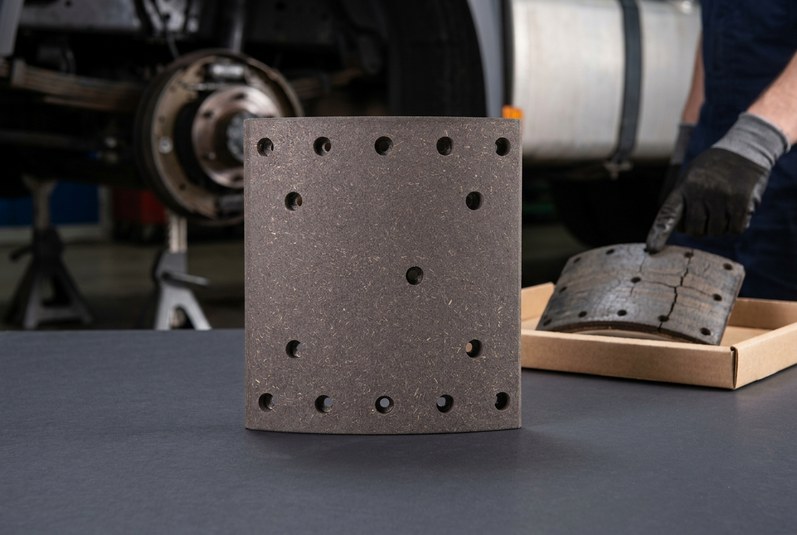
At the end of the day, your fleet's brake budget isn't about finding the cheapest lining on Alibaba. It's about predictable wear, reliable stopping power, and zero import surprises. A structured replacement checklist plus a verified supplier turns brake maintenance from a firefighting cost into a planned expense.
If you're sourcing drum brake linings for a fleet of 50 or 500 vehicles, browse our brake lining product range and then request a wholesale quote from our export team. We'll send you batch COAs, ECE R90 approval copies, and a sample program tailored to your application.
Was this article helpful?
Average Rating: 5/5 (397)