
Do you have specific test results or certifications for fade and recovery performance on Alpine or similar mountain routes?
Summary:
Brake pad mountain route test results determine whether commercial vehicle fleets can descend Alpine grades safely without fade. BAIYUN Brake exports IATF 16949 and ECE R90 certified CV brake pads with documented SAE J2522 and GB5763 fade/recovery data. This technical guide compares ECE R90, SAE J2522, and GB5763, explains which specific test reports importers should request, and provides a buyer verification checklist. The global commercial vehicle brake pad market reached $5.2 billion in 2026 and is projected to reach $7.8 billion by 2032, so verified performance protects distributor margins. Learn how to spot missing temperature steps, evaluate recovery percentage after 600°C fade stops, and confirm batch-to-batch consistency before committing to a Chinese brake pad supplier.
Do you have specific test results or certifications for fade and recovery performance on Alpine or similar mountain routes?
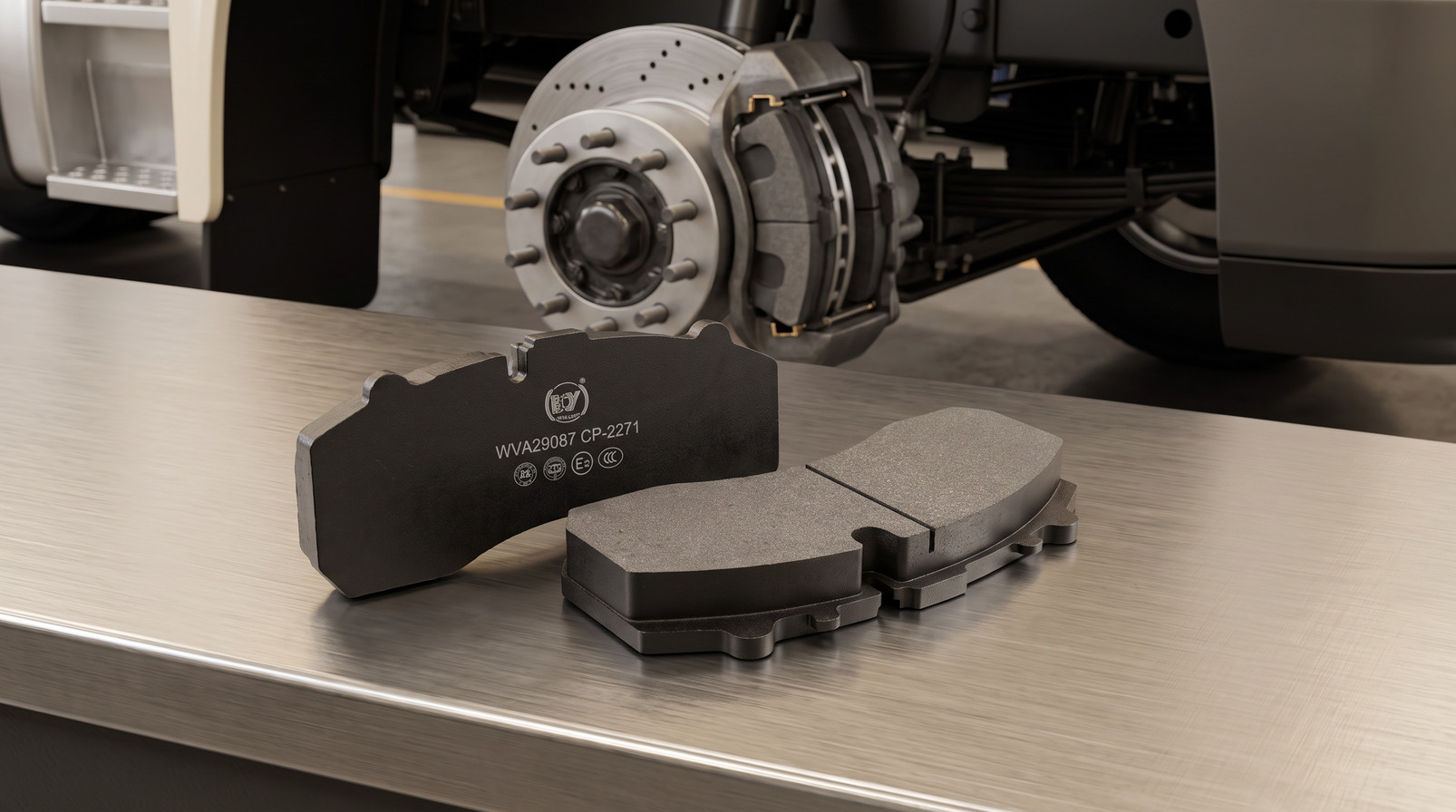
Quick answer: Yes. For Alpine and similar mountain routes, BAIYUN Brake provides dynamometer test reports and certifications covering fade and recovery under sustained high-temperature braking. Look for ECE R90 approval, IATF 16949 process certification, and SAE J2522/GB5763-style test data showing friction coefficient stability and recovery within 15% of cold performance after repeated descents. Always request the exact test report for the SKU you're importing, not a general certificate.
What Test Standards Cover Fade and Recovery for Commercial Vehicle Brake Pads?
A fleet running an 18-wheeler down an 8% Alpine grade for 10 km forces 15–20 sustained brake applications. Rotor temperatures cross 500°C fast, and that's exactly where cheap linings start losing friction.
ANSI/SAE J2522 and China's GB5763 are the two references buyers should recognize. J2522 runs 15 fade stops from 100 km/h to 50 km/h at 0.4g, pushing the system to 600°C. GB5763 sets fade and recovery limits for commercial friction materials sold into Asia, Africa, and Latin America. ECE R90 sits on top as the type-approval mark required for replacement pads in EU and ECE markets.
For a distributor sourcing 500 sets monthly, inconsistent friction batch to batch isn't acceptable. Ask for the dyno report, not just the certificate. Request OEM commercial vehicle brake pad quote with SKU-level fade and recovery graphs included.
What Specific Certifications Should Buyers Require for Mountain-Route Braking?
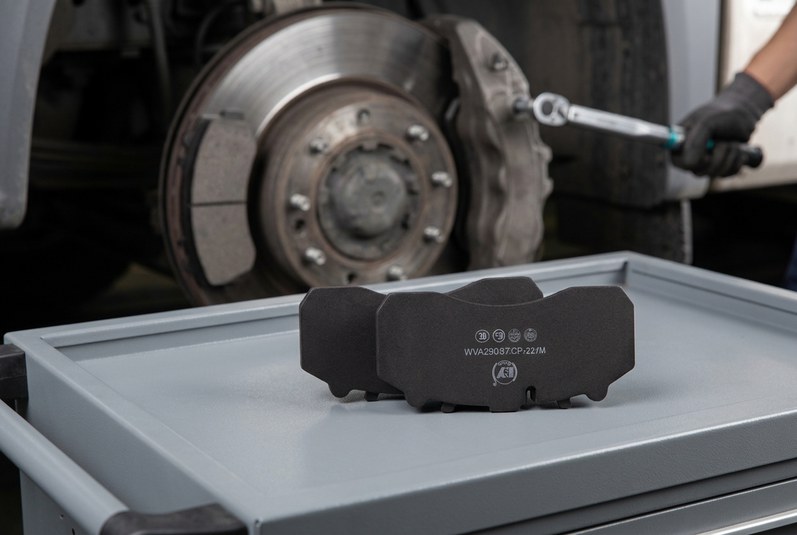
IATF 16949 is the first filter. It confirms process control, traceability, and raw material consistency across production batches. ECE R90 then validates the pad as a safe replacement for specific commercial vehicle applications in European and many export markets.
But here's the gap: certification doesn't always equal mountain-route proof. A pad can pass ECE R90 cold performance and still lose 25% of its friction during a 20-minute Alpine descent. That's why BAIYUN Brake's factory is IATF 16949 certified facility, but we still send SKU-specific fade/recovery reports with each export batch.
Your sourcing checklist should include ISO 9001 for QMS baseline, IATF 16949 for automotive-grade process control, ECE R90 for legal replacement approval, and a raw dynamometer test report showing recovery after 600°C fade stops. Don't accept a PDF certificate that lacks test conditions and pad part numbers.
How Do ECE R90, SAE J2522, and GB5763 Compare for Heavy-Duty Brake Pads?
All three standards address brake fade, but they answer different sourcing questions. ECE R90 tells you the pad is legal to fit. SAE J2522 tells you how the friction material behaves under controlled thermal loads. GB5763 tells you whether the formulation meets China's national friction limits for commercial vehicles.
| Standard | Test Focus | Key Fade/Recovery Metric | Buyer Relevance |
|---|---|---|---|
| ECE R90 | Replacement brake pad type approval | Hot performance after repeated braking; recovery within 15% of cold performance | Legal requirement for EU/ECE markets |
| SAE J2522 | Bench friction and thermal characterization | 15 fade stops to 600°C then recovery stops; friction variation under 0.05 | Sourcing verification for North American fleets |
| GB5763 | Chinese national friction material standard | Fade and recovery cycles with class-based friction coefficient limits | Baseline for China-sourced CV pads |
You can see the data format we use by downloading a commercial vehicle brake pad test report from BAIYUN Brake. Compare it with your current supplier's report and look for missing temperature steps.
What Test Data Should a Chinese Brake Manufacturer Provide Before You Commit to an Order?
A legitimate fade and recovery file for commercial vehicle brake pads contains at least 12 data points, not just a pass/fail stamp. You need initial cold friction coefficient, hot friction at 400°C, 500°C, and 600°C, recovery percentage at 100°C after cooling, pad wear after test, disc wear after test, number of fade cycles, bedding procedure, dynamometer inertia setting, pad thickness before and after, caliper type, and the lab accreditation name.
Raw friction coefficient curves matter more than averages. Two pads can both show a 0.40 average, but one drops to 0.22 at 550°C and recovers slowly. Ask for the plotted curve. A good heavy-duty semi-metallic pad holds 0.38–0.45 from 100°C to 450°C with recovery back to 0.35 or above at 100°C after cooling.
Fleets that run drum-brake trailers face the same risk on secondary mountain roads. Request a quote for commercial vehicle brake linings and require GB5763 fade/recovery graphs for the exact lining width and diameter you import.
What Are the Most Common Misconceptions About Brake Pad Fade Testing?
Misconception: A high coefficient of friction always means better mountain braking.
Reality: Friction above 0.50 at low temperatures can cause thermal shock, lining cracking, and aggressive rotor wear. Mountain descents need stability, not maximum bite. Heavy-duty pads that hold 0.38–0.45 across a 350°C span generally deliver safer recovery than a 0.52 pad that collapses at 500°C.
Misconception: ECE R90 certification alone proves fade and recovery performance.
Reality: ECE R90 type approval includes a hot performance sequence, but the certificate may not show the exact recovery curve for your SKU. You still need the dynamometer report showing recovery percentage after 600°C fade stops and the test lab name.
Misconception: Test reports from Chinese manufacturers are unreliable.
Reality: Many suppliers lack in-house dynos, but IATF 16949 certified factories like BAIYUN Brake maintain calibrated dynamometers and third-party audit trails. If a supplier cannot provide raw data and test conditions, the problem isn't the country—it's the supplier. That's why distributors choose BAIYUN Brake as a traceable source.
Buyer Verification Checklist: How to Confirm Mountain-Route Brake Pad Performance?
- ☐ Request SKU-specific fade/recovery dyno report — not a generic company certificate.
- ☐ Verify test standard version — SAE J2522, GB5763, or ECE R90 with test date and pad part number.
- ☐ Check recovery percentage — should return to at least 75–80% of cold friction after 600°C fade stops.
- ☐ Ask for friction coefficient curve — inspect the 400°C, 500°C, and 600°C points, not only the average.
- ☐ Confirm pad and disc wear after fade test — excessive wear under 0.5 mm per pad set is a red flag.
- ☐ Validate lab accreditation — in-house dyno data should be supported by ISO/IEC 17025 or IATF 16949 audit trail.
- ☐ Compare batch-to-batch data — request two consecutive production lot reports to confirm consistency.
If your current source won't provide the curve, the price savings probably isn't worth the hidden warranty risk.
What Questions Do Importers Ask About Fade and Recovery Test Data?
Q: What is the minimum recovery percentage buyers should accept for Alpine routes?
A: A reliable heavy-duty pad should recover to at least 75–80% of its cold friction after 15 fade stops from 100 km/h to 50 km/h at rotor temperatures above 500°C. Anything below 70% means the pad may still brake, but the driver will feel a longer pedal on the next descent.
Q: How often should BAIYUN Brake test fade and recovery for commercial vehicle pads?
A: BAIYUN Brake runs fade/recovery dynamometer checks on every new formulation and revalidates after raw material changes. For export batches, we can provide test reports dated within 12 months, which is a practical interval for formulation stability.
Q: Does ECE R90 cover mountain-route fade performance directly?
A: ECE R90 includes a hot performance and recovery test sequence, but it is a type-approval requirement, not a route simulation. Buyers should still request the underlying dyno graph because a certificate alone won't show recovery percentage after 600°C fade stops.
Q: Can GB5763 test data substitute for SAE J2522 when sourcing from China?
A: GB5763 is the Chinese national standard and gives a solid baseline for fade and recovery class limits. For North American fleets, request an SAE J2522 overlay or equivalent in-house protocol to confirm consistency beyond 500°C.
Q: What market size justifies stricter fade-test documentation for distributors?
A: The commercial vehicle brake pad market was valued at $5.2 billion in 2026 and is projected to reach $7.8 billion by 2032 at a 6.8% CAGR. In that volume, a 2% return rate from fade complaints can erase margins, so test documentation directly protects your bottom line.
What Should You Do Next to Verify Mountain-Route Brake Pad Performance?
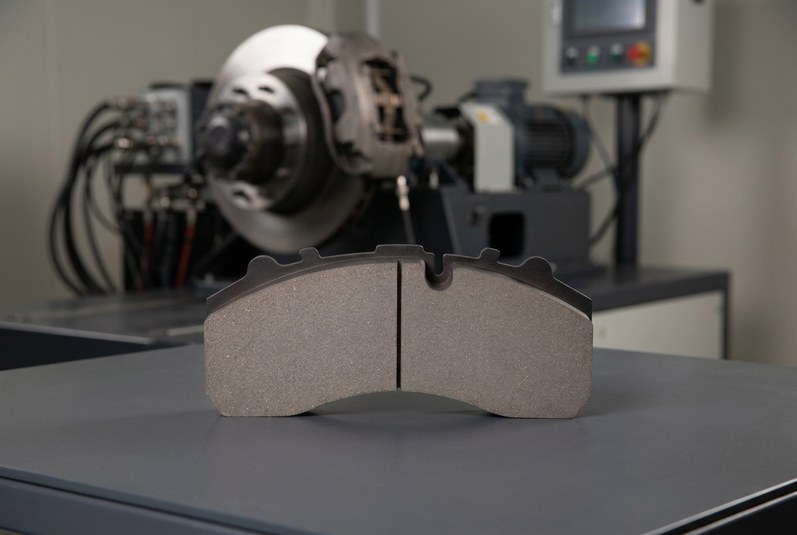
Don't settle for a supplier who shows you a wall of certificates but can't pull up the raw fade curve for your exact part number. You're not buying paper; you're buying repeatable stopping power on long grades. BAIYUN Brake's export team keeps SKU-level dynamometer files, ECE R90 approvals, and IATF 16949 process records ready for distributor audits.
Request the test report first, then compare pricing. That's the sourcing sequence that prevents expensive warranty claims later.
Ready to move forward? Browse our heavy-duty brake pad range and submit your inquiry to our sales team for SKU-specific dyno files and current wholesale pricing.
Was this article helpful?
Average Rating: 5/5 (51)