
Ceramic Brake Pads vs. Ordinary Brake Pads: Materials, Working Principle, and Real-World Advantages
Summary:
Ceramic brake pads use advanced mineral, aramid, and ceramic fibers (no steel fiber) to deliver stable friction at high temperatures, quieter operation, cleaner wheels, and longer service life. Compared with ordinary pads, they resist fade during repeated high-speed stops and reduce wear on both pads and rotors—making them a strong choice for performance cars and commercial vehicles alike.
Ceramic Brake Pads vs. Ordinary Brake Pads: What Really Changes and Why It Matters
What Are Ceramic Brake Pads Made Of?
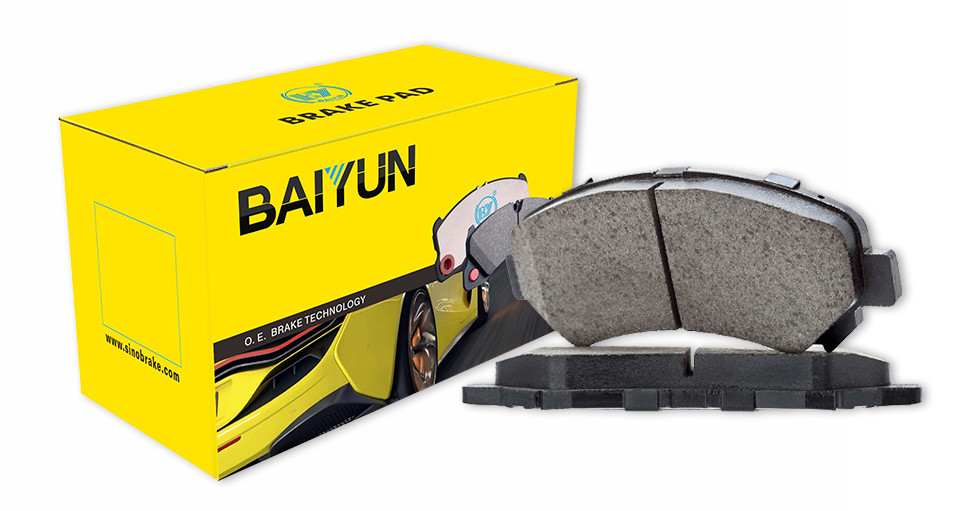
Ceramic brake pads are formulated from advanced composites that typically include mineral fiber, aramid fiber, and ceramic fiber—and exclude steel fiber to avoid rust, noise, and dark dust. This modern fiber matrix is lighter in color, cleaner in use, and engineered for quiet stopping with excellent braking performance.
Same Braking Principle—Different Friction Behavior
Like traditional pads, ceramic pads decelerate a vehicle by pressing the pad against the brake disc to convert kinetic energy into heat.
What’s different is the material and micro-structure inside the pad, which changes how friction develops at the pad–disc interface—especially under repeated, high-energy stops.
High-Temperature Stability: Where Ceramic Pads Shine
During high-speed or repeated braking, interface temperatures can soar to 800–900°C or higher. In this extreme environment, ceramic fibers and binders undergo sintering-like changes at the surface, forming a stable, dense transfer layer that maintains consistent friction.
Conventional pads, by contrast, are more susceptible to surface melting, outgassing, or micro “air-cushion” effects at these temperatures—leading to brake fade and sharp drops in performance.
Heat Management by Design
Modern ceramic recipes often pair optimized heat-dissipation layouts (e.g., ventilation grooves and relief channels) with thermally stable binders. The result is faster heat dispersion, better pad integrity, and sustained braking efficiency during demanding cycles.
Key Advantages of Ceramic Brake Pads
- High-Temperature Stability – Consistent friction across a wider temperature band with reduced fade during repeated stops.
- Wear Resistance & Longer Life – Advanced composites minimize abrasive wear on both pad and rotor, reducing maintenance frequency and total cost of ownership.
- Low Noise & Vibration – Fiber architecture and tuned modulus help suppress squeal for a quieter, more comfortable drive.
- Cleaner Wheels & Lower Dust – Less aggressive wear yields lighter-colored, finer dust, improving appearance and reducing environmental impact.
- Rotor-Friendly – Balanced friction films help minimize rotor scoring, preserving disc life.
Are Ceramic Pads “All Ceramic”?
No. “Ceramic” describes the tribological behavior and fiber content, not a brittle pottery-like block. These pads are composite materials engineered to form and maintain a robust friction layer under heat and pressure.
Who Should Consider Ceramic Pads?
- High-performance and premium passenger vehicles needing quiet, repeatable braking.
- Commercial vehicles that benefit from reduced maintenance and consistent performance in heavy-duty cycles.
- Drivers prioritizing clean wheels, comfort, and long service intervals.
Conclusion
By upgrading both materials and structure, ceramic brake pads deliver stable high-temperature friction, low noise, reduced dust, and longer life. For fleets and performance applications alike, they offer a compelling balance of safety, comfort, and cost efficiency.
FAQs
Q1: Do ceramic brake pads wear rotors faster?
A: Typically the opposite. A stable transfer layer can reduce rotor wear compared with many conventional pads.
Q2: Are ceramic pads suitable for all climates?
A: Yes. Their wide operating window supports cold starts and sustained high-temperature use, provided they’re matched to the vehicle’s duty cycle.
Q3: Are ceramic pads more expensive?
A: Upfront, yes. But longer service life, cleaner wheels, and less rotor wear can lower lifetime costs.
Q4: Do ceramic pads stop better than ordinary pads?
A: In repeated high-energy stops, ceramic pads generally maintain friction more consistently, reducing fade and improving confidence.
Looking for OEM/ODM ceramic brake pads for commercial vehicles? Contact us for formulas, MOQ, and bulk pricing.
Was this article helpful?
Average Rating: 5/5 (3861)