
Brake Pads Wholesale Pricing: What Affects Cost?
Summary:
Brake pads wholesale pricing factors determine what importers and fleet buyers actually pay per set. Raw material costs, ECE R90 and IATF 16949 certification, order volume, and factory-direct supply shape the final landed cost. A distributor ordering 5,000 commercial vehicle brake pad sets yearly pays 12–20% less than a buyer ordering 500 sets. Certified pads carry a 5–8% premium but reduce warranty claims and field failures. BAIYUN Brake's factory-direct model removes intermediary markups and stabilizes pricing through in-house mixing and pressing. This guide covers buyer verification, supplier checklists, and cost-saving strategies for commercial vehicle brakes.
Brake Pads Wholesale Pricing: What Affects Cost?
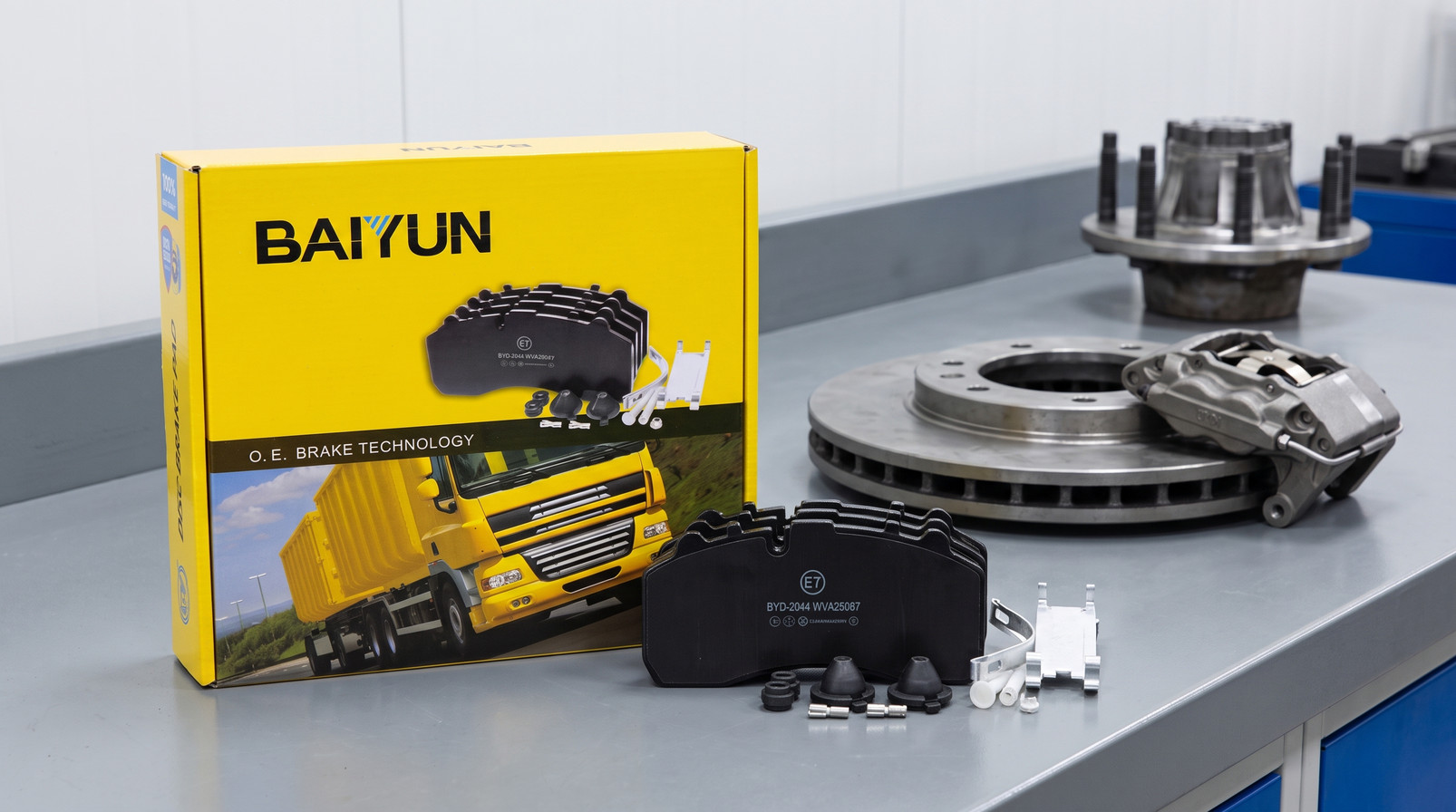
Quick answer: Wholesale brake pad pricing is set by material inputs (steel, copper, friction compounds), ECE R90 and IATF 16949 certification, order quantity, and whether you buy factory-direct or through a trading company. A distributor ordering 5,000 commercial vehicle brake pad sets yearly pays 12–20% less than a buyer ordering 500 sets. BAIYUN Brake's factory-direct model removes middlemen and stabilizes cost through in-house mixing and pressing.
What Raw Material Costs Actually Move Brake Pad Wholesale Pricing?
Friction material accounts for 35–50% of a brake pad's unit cost. Steel backing plates add another 10–20%, and copper-based fibers or their substitutes can swing 8–15% depending on commodity markets. Buyers who only compare final pad price miss these underlying levers.
In commercial vehicles, heavy-duty truck pads use more friction compound and thicker backing plates than light-duty parts. A 20 mm commercial brake pad may use 40% more friction material than a standard aftermarket pad. That's why fleet buyers see wider price swings on heavy-duty part numbers.
Volatility in raw materials is not abstract. The United States brake components market has flagged steel, copper, and friction material price fluctuations as a major challenge. When copper prices jumped 20% in a quarter, manufacturers either absorbed the hit or passed it along. BAIYUN Brake orders friction raw materials in bulk quarterly and locks pricing with long-term steel suppliers, which keeps wholesale quotes stable for 90–120 days.
Raw material mix and purchasing discipline explain 40–60% of the price difference between two suppliers quoting the same WVA number.
How Much Do ECE R90 and IATF 16949 Certifications Add to Cost?
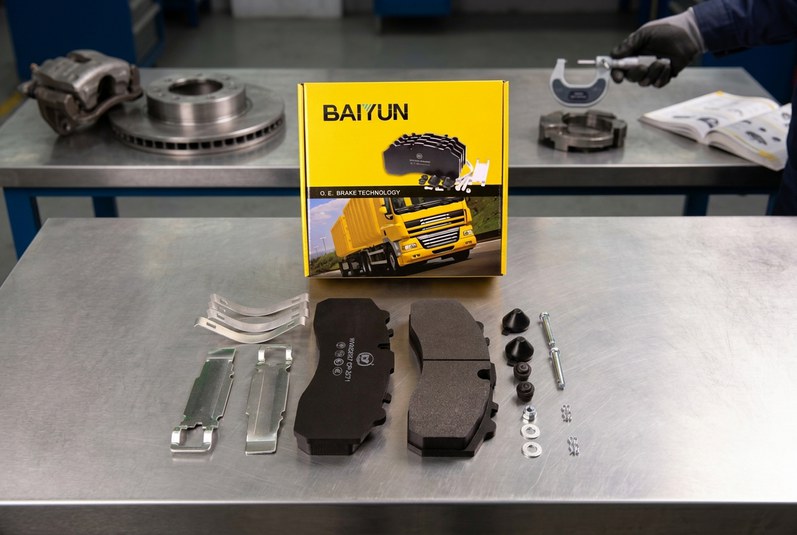
ECE R90 approval requires dynamometer testing that costs USD 8,000–15,000 per pad family depending on the test house. The regulation demands friction performance within 85–115% of the type-approved reference across cold and hot cycles, plus speed sensitivity and temperature recovery checks. That's not a one-time cost: each formulation update triggers re-testing.
IATF 16949 certification adds process control, traceability, and supplier quality management. A certified brake factory runs SPC on mixing, pressing, and curing. In practice, IATF 16949 suppliers show process capability above 1.33 Cpk and scrap rates below 1.5%. That's why certified pads cost 5–8% more than uncertified alternatives.
Does the premium pay for itself? For a fleet managing 200 commercial vehicles, a 2% reduction in premature brake pad failures saves roughly USD 12,000–18,000 per year in parts and labor. Frankly, the price gap between certified and uncertified pads rarely justifies the warranty risk. BAIYUN Brake is an IATF 16949 certified facility and supplies ECE R90 approved commercial vehicle brake pads for truck and trailer applications.
Certification adds 5–8% to unit price but reduces field failure exposure and improves sourcing predictability.
How Does Order Volume Reduce Brake Pads Wholesale Pricing Factors?
Volume discounts are real, but they're not linear. A buyer moving from 500 sets to 2,000 sets per order might see 10–12% lower unit price. Going from 2,000 to 10,000 sets delivers 18–25% savings through lower setup costs, raw material batch efficiency, and better freight consolidation.
Here's a practical comparison for a mid-size commercial vehicle brake pad importer:
| Order Quantity | Typical Unit Price Index | Setup / Tooling Cost per Unit | Freight Cost per Unit |
|---|---|---|---|
| 500 sets | 100% | High | High |
| 2,000 sets | 88–92% | Moderate | Moderate |
| 10,000 sets | 75–82% | Low | Low |
Bulk orders also reduce the price per brake pad because press changeover time is amortized across more pieces. Simplified logistics helps too: fewer shipments mean lower shipping costs per unit, a point confirmed by OEM bulk sourcing studies.
Moving from 500 to 2,000 sets per order typically saves 10–12%; moving to 10,000 sets saves 18–25% on unit price.
Why Does Factory-Direct Pricing Beat Multi-Tier Distributor Markups?
Every intermediary adds 15–35% margin. A trading company that buys from a factory and sells to a regional wholesaler may mark up twice before freight even enters the calculation. Factory-direct pricing removes at least one margin layer and gives you direct quality accountability.
So what does that mean for your landed cost? A factory-direct supplier removes at least one margin layer and gives you direct quality accountability. BAIYUN Brake runs its own mixing, pressing, curing, and packaging. That vertical integration means the factory controls batch consistency and cost instead of sourcing semi-finished pads from subcontractors. A distributor sourcing 500 sets monthly can't afford inconsistent friction coefficients batch to batch. Direct factory relationships make that variance visible.
You can trusted brake pad supplier by checking a supplier's production capability before quoting. Ask for the factory's IATF 16949 certificate, recent ECE R90 test reports, and an online tour. BAIYUN Brake's manufacturing team has 49+ years of experience, which shows up in stable formulations and repeatable production output.
Factory-direct supply cuts 15–35% of intermediary markups and reduces batch-to-batch friction variation.
What Are the Most Common Misconceptions About Brake Pads Wholesale Pricing Factors?
Buyers often assume lower ex-works price equals lower total cost. That's rarely true when freight, duties, and reject rates are included.
- Misconception: Heavier brake pads are always better. Reality: Pad weight correlates with backing plate steel thickness and friction material density, but a poorly formulated friction material can add weight without improving wear life. ECE R90 test reports show wear rate and friction stability, not weight.
- Misconception: A WVA number guarantees identical product across suppliers. Reality: The WVA number identifies a fitment shape, not the formulation. Two suppliers can offer the same WVA 29087 shape with different friction coefficients, wear rates, and thermal recovery.
- Misconception: Certified pads are too expensive for aftermarket distribution. Reality: ECE R90 and IATF 16949 pads cost 5–8% more upfront but reduce warranty claims and field complaints. For commercial fleets, downtime from a failed brake lining can exceed USD 500 per event.
Price per set is only one variable; total cost of ownership and fitment-specific performance matter more.
How Should a Fleet Buyer Verify a Brake Pad Supplier Before Signing?
A supplier checklist is not optional. We recommend verifying these items before placing a wholesale order:
- Request the IATF 16949 certificate and verify it is current.
- Ask for ECE R90 approval numbers for the exact commercial vehicle pad part numbers you are buying.
- Review the supplier's dynamometer test data for friction coefficient (µ) and wear rate. BAIYUN Brake's commercial pads typically show µ 0.38–0.42 across 150–350°C.
- Confirm raw material batch traceability from mixing through pressing.
- Ask about MOQ, lead time, and packaging spec. For commercial fleets, MOQs may range from 500 to 2,000 sets per part number.
- Request samples before committing to a container order.
- Check the supplier's export experience for your region's regulatory requirements, such as ECE R90 for Europe or GB 5763 for China.
This buyer verification process is how BAIYUN Brake works with distributors. You can explore quality assurance documentation and request a sample set before bulk pricing is locked.
Supplier verification should cover certifications, test data, batch traceability, and sample approval before any volume order.
How Can Importers Cut Brake Pad Sourcing Costs Without Sacrificing Quality?
Start with the total landed cost equation: ex-works price + inland freight + sea freight + customs duties + reject rate. A 3% reject rate on a 10,000-set order means 300 sets you can't sell. Certified suppliers with sub-1.5% scrap rates reduce that hidden cost.
Consider consolidating part numbers. A distributor sourcing 20 different WVA numbers in small quantities pays more per unit than one sourcing 10 fast-moving numbers at higher volume. Ask your supplier which part numbers share a common backing plate or tooling family. That alone can cut setup charges.
Negotiate annual pricing with quarterly raw material review clauses. Don't lock a fixed price for 12 months if copper and steel are moving 8–15%. Instead, agree on a price adjustment formula tied to London Metal Exchange or Shanghai Futures Exchange indices. BAIYUN Brake offers 90–120 day firm quotes and semi-annual price reviews for long-term distributors.
For commercial vehicle brake linings, request a wholesale CV brake lining inquiry early. Lead times for heavy-duty linings can stretch to 35–45 days in peak seasons. Planning ahead avoids air freight surcharges that can add 20–30% to landing cost.
Importers can cut 10–20% from sourcing costs by consolidating part numbers, negotiating raw material adjustment clauses, and planning around lead times.
What Are the Most Asked Questions About Brake Pads Wholesale Pricing Factors?
Does ECE R90 certification increase wholesale brake pad prices?
A: Yes. ECE R90 dynamometer testing costs USD 8,000–15,000 per pad family, and the approval requires friction performance within 85–115% of the reference. Certified pads typically carry a 5–8% price premium compared with uncertified alternatives.
What MOQ should a new brake pad importer expect?
A: For commercial vehicle brake pads, MOQs commonly range from 500 to 2,000 sets per part number. Ordering above 2,000 sets usually unlocks 10–12% lower unit pricing, and 10,000 sets can unlock 18–25% savings through setup and freight efficiencies.
Why do two suppliers quote different prices for the same WVA number?
A: The WVA number defines fitment shape, not friction formulation. Differences in steel grade, friction material, copper substitute, certification level, and factory overhead explain 20–60% price variance between suppliers quoting the same shape.
How do raw material prices affect brake pad wholesale quotes?
A: Steel, copper, and friction compounds can move 8–15% per year. Many suppliers issue quotes valid for 30 days. BAIYUN Brake extends firm quotes to 90–120 days by purchasing raw materials in bulk and locking steel contracts quarterly.
Is factory-direct sourcing always cheaper than using a trading company?
A: Not always after freight and duties, but factory-direct removes 15–35% of intermediary markups. The real advantage is direct accountability for batch consistency and certification, which matters more than a 2% ex-works price difference.
How Can You Get a Wholesale Brake Pad Quote That Reflects These Pricing Factors?
Don't chase the lowest ex-works number. Build a quote around certified materials, realistic lead times, and a supplier you can audit. Request itemized pricing for raw material surcharges, tooling amortization, and freight so you can compare landed cost line by line.
BAIYUN Brake supplies IATF 16949 and ECE R90 certified commercial vehicle brake pads and linings for trucks, buses, and trailers. You can browse our heavy-duty brake pad range and request a wholesale quote from our export team. We'll review your part numbers, volumes, and destination port to give you a realistic CIF or FOB price.
Was this article helpful?
Average Rating: 5/5 (636)