
Brake Pad MOQ & Wholesale Pricing: What Importers Should Expect
Summary:
Brake pad MOQ wholesale China: when sourcing commercial vehicle brake pads, expect minimum orders of 500–1,000 sets. Volume commitments of 2,500+ sets unlock 8–12% discounts, while 5,000+ sets can yield 15–20% reductions. Learn to verify IATF 16949 and ECE R90 certifications, understand the real cost components, and avoid hidden pitfalls. BAIYUN Brake’s 49+ years of manufacturing expertise helps importers navigate MOQ thresholds and secure competitive pricing with full traceability.
Brake Pad MOQ & Wholesale Pricing: What Importers Should Expect
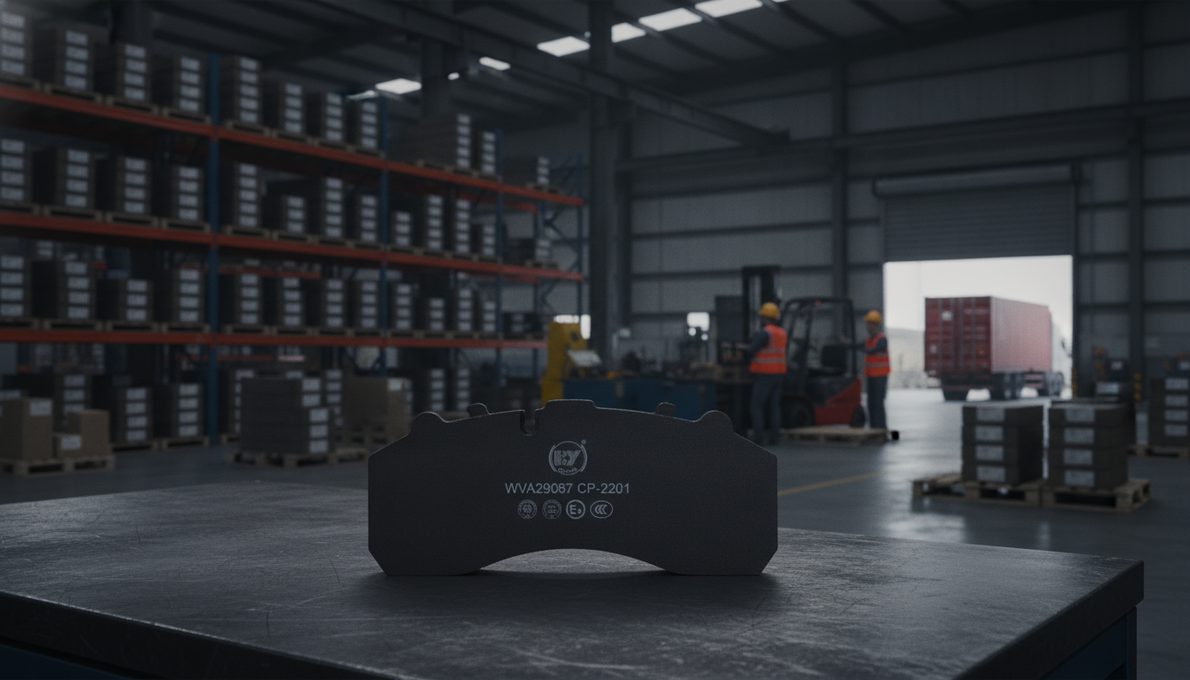
Quick answer: When sourcing brake pads from China, expect minimum order quantities (MOQs) ranging from 500 to 1,000 sets for standard commercial vehicle pads. Volume commitments of 2,500+ sets often unlock 8–12% discounts, while 5,000+ sets can yield 15–20% reductions. Working with an IATF 16949 and ECE R90 certified factory like BAIYUN Brake safeguards quality and reduces total landed cost compared to non-certified sources. Shipping by sea freight is most economical, with lead times averaging 25–40 days. This guide explains how to navigate MOQ thresholds, secure competitive pricing, and verify a supplier's credibility before placing your order.
Why Do Chinese Brake Pad Factories Enforce Minimum Order Quantities?
Picture this: you've found a brake pad factory with impressive certifications. You ask for pricing, and they come back with a 500-set minimum. That's not arbitrary.
Commercial vehicle brake pads use specialized friction formulations that require dedicated mixing batches. A single mix—pressurized, heat-treated, and cured—can produce several hundred pads, but the cost of setting up the press tooling and running QC tests means small runs are economically unviable. Factories like BAIYUN Brake, with 49+ years of manufacturing experience, operate under IATF 16949 controls: every batch must undergo density, hardness, and shear-strength tests. That statistical process control makes sense only when the batch size covers the cost of calibration and lab time.
From a buyer's perspective, enforced MOQs also mean consistent quality. You don't want a supplier who changes friction material composition every 200 sets because they're buying small lots of raw materials. A stable, high-volume run reduces variability. So, what do these tiers look like in practice?
What MOQ Tiers Are Common for Commercial Vehicle Brake Pads?
Distributors often start with a trial order, but the real savings kick in at higher volumes. The table below gives a realistic snapshot based on current FOB China pricing for certified heavy-duty truck and bus brake pads. Keep in mind that actual figures vary with friction code (FF, GG, etc.), backing plate steel grade, and the level of certification required.
| Order Volume (sets) | Approx. Price Break | Typical Unit Price Range (USD/set, FOB) |
|---|---|---|
| 500–1,000 (MOQ) | Base price | $8–$12 |
| 2,500+ | 8–12% discount | $7.00–$10.80 |
| 5,000+ | 15–20% discount | $6.40–$9.60 |
| 10,000+ (annual contract) | 20%+ plus quarterly delivery | Negotiable |
You'll notice that doubling the MOQ from 2,500 to 5,000 sets can slash unit cost by another 7–8%. That's why sourcing managers often consolidate multiple SKU orders with one supplier to hit the higher bracket. BAIYUN Brake's commercial vehicle brake pad catalog lists over 1,500 different reference numbers, so consolidating isn't usually a problem.
How Can Importers Verify a Supplier's Quality and Certifications?
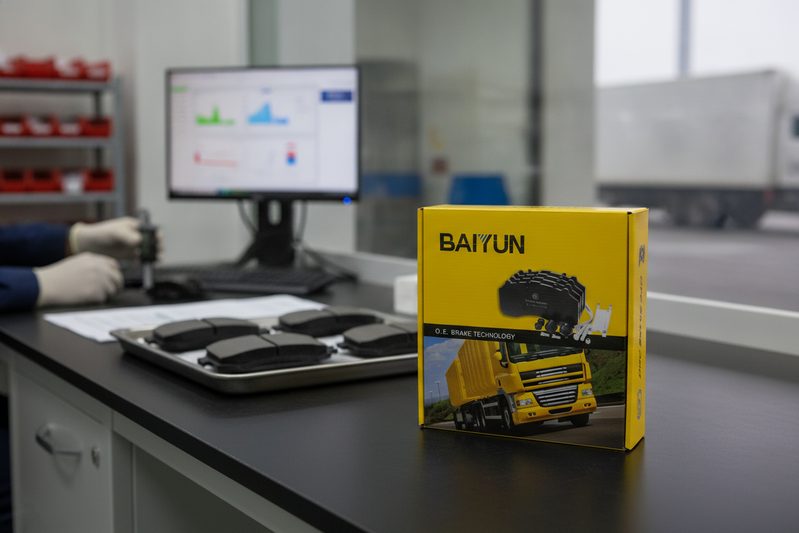
Price means nothing without consistent performance. A brake pad that fades after three hard stops on a loaded mining truck creates a safety and warranty nightmare. That's why buyer verification should be step one—not a formality.
Start with the certifications that matter in the commercial vehicle aftermarket. IATF 16949 is the automotive quality management system standard; an IATF 16949 certified facility must demonstrate rigorous process control from incoming raw materials to finished product testing. For European markets, ECE R90 approval is mandatory. The regulation ensures replacement pads deliver performance within ±15% of the original fitment's friction level, and every pad must carry an E-mark with an approval number.
Don't accept a scanned certificate at face value. Here's a checklist we recommend:
- Request a copy of the IATF 16949 certificate and verify the scope includes brake pad manufacturing—some suppliers hold certificates only for brake shoe assembly, not full friction material production.
- Ask for the ECE R90 approval number and test report corresponding to your specific pad model. Each pad must be stamped with the E-mark on the side or backing plate.
- Request recent SAE J2522 or GB5763 dynamometer test reports for the friction material grade you're buying. These reports show cold and hot friction coefficients, fade behavior, and wear rates.
- Obtain photos or a live video of the production line and laboratory equipment. A well-funded factory runs a LINK or Krauss dynamometer, not just a hardness tester.
- Hire a third-party inspection agent (SGS, Bureau Veritas) to conduct an on-site audit if you can't visit the factory yourself.
- Request recent shipping documents (Bill of Lading) to your region—proven export history reduces risk.
- Always order production samples and send them to an independent lab for comparison against the test reports the supplier provided.
At BAIYUN Brake, we've built our competitive advantages on transparency: every client can access their batch's specific test data via our cloud portal. That kind of openness saves importers thousands of dollars in avoidable quality claims.
What Are the Real Cost Components in Wholesale Brake Pad Pricing?
The quoted FOB price isn't just steel and friction material. In a high-quality commercial vehicle brake pad, you're paying for:
- Steel backing plate: Stamped from high-strength, non-recycled steel to prevent deformation under heavy loads. Inferior recycled steel can crack near the piston contact area.
- Friction compound: A proprietary blend of up to 20 different raw materials—abrasives, lubricants, fillers, and binders. IATF 16949 factories source premium-grade resins to maintain consistent friction across temperature ranges.
- Noise-damping shims and underlayers: These multi-layer steel/rubber shims reduce vibration and noise on buses and coaches, where cabin comfort is a differentiator.
- Labor, energy, and environmental compliance: Modern factories invest in closed-loop water systems, dust extraction, and waste treatment, adding roughly 5–8% to production costs compared to unregulated workshops.
- Logistics and documentation: Proper export packing, fumigation certificates, and regulatory paperwork add another layer of cost.
Contrast this with so-called "MOQ-free" workshops that hand-mix friction compounds in open sheds. You'll save $2–3 per set upfront, but the total landed cost explodes when customers return pads that wore out in 20,000 km instead of 80,000 km. A 2025 aftermarket survey indicated that 62% of fleet managers would pay a 15% premium for pads that last 30% longer—because downtime and labor costs outweigh the pad price. That's why BAIYUN Brake's IATF 16949 production, with 100% density and hardness testing on every batch, makes financial sense even if the unit price appears slightly higher at MOQ level.
OEM and Private Label Options: How Do MOQs Shift?
Many importers want their own brand on the backing plate or packaging. That's entirely possible, but it adds a layer of complexity to the MOQ.
Private labeling requires custom steel stamping dies or laser engraving for the backing plate, plus printed boxes, labels, and blister cards. These tooling costs are amortized over the production run. As a result, the MOQ for a private label project usually climbs to 1,500–2,000 sets per design. If you're ordering multiple references with unique packaging, the total volume must still be attractive to the factory to justify the tooling swaps.
For distributors wanting OEM brake lining solutions, BAIYUN Brake offers flexible programs: we can match an existing friction formulation to your fleet's needs, or develop a custom material for extreme-duty applications like quarry trucks. In such cases, the MOQ is driven by the R&D batch size rather than just the pad count—typically starting at 3,000 sets to cover formulation development costs.
Logistics and Lead Times: How to Plan Your Import?
Sea freight from major Chinese ports (Qingdao, Shanghai, Ningbo) to hubs like Rotterdam, Houston, or Dubai takes 25–40 days door-to-door, including port handling and customs clearance. For a 5,000-set order, a 20-foot container usually absorbs the load and keeps per-unit freight cost around $0.80 to $1.20. Smaller orders shipped via LCL (less-than-container-load) push that cost to $2.00+ per set.
Production lead time for commercial vehicle brake pads is typically 30–45 days after deposit receipt, though rush orders can be squeezed into 20–25 days during low season. So, from signing the proforma invoice to receiving goods at your warehouse, plan for 10–12 weeks. Establish an annual purchasing agreement with quarterly delivery schedules, and you'll not only lock in better pricing but also smooth out your inventory—something BAIYUN Brake supports with warehousing options near Chinese ports for client-owned buffer stock.
What Hidden Pitfalls Should You Watch for When Negotiating?
Even experienced buyers get tripped up. Here are four hazards that cost importers real money:
1. The "low MOQ, high unit price" bait. Some factories advertise MOQs of 100 sets but quote prices 30–40% above market. You'll think you're testing the water, but you're actually paying premium for the supplier's inefficiency. Legitimate factories like BAIYUN Brake are upfront: our MOQ is 500 sets because that's the smallest batch we can produce with full IATF 16949 traceability. If you need a smaller sample quantity, we arrange that separately at a fair markup—no hidden games.
2. ECE R90 approval misrepresentation. A few workshops laser-etch an E-mark onto pads without ever passing the tests. The only defense: ask for the test report from an accredited laboratory (e.g., TÜV, IDIADA) and cross-check the approval number on the UNECE database. BAIYUN Brake's pads carry legitimate ECE R90 marks; we provide the certificate for every shipment.
3. Recycled steel back plates. You might not notice during a visual inspection, but recycled steel plates can fracture under the clamping force of a truck's air disc brake, leading to catastrophic pad failure. Always request a material certificate (3.1 certification) showing the steel grade and yield strength.
4. Ignoring friction code compatibility. A GG-rated pad may offer high friction but wear the disc faster; an FF-rated pad might fade under heavy loads. Consult the original fitment's code before placing an order—our technical team helps match SAE J866 codes to your specific truck or trailer model.
Frequently Asked Questions
Q: What is the typical MOQ for commercial vehicle brake pads from China?
A: Most certified manufacturers set MOQs between 500 and 1,000 sets. This threshold ensures production efficiency for friction material mixing and pressing. BAIYUN Brake's standard MOQ for CV brake pads is 500 sets, with discounts increasing at higher volumes.
Q: Can I negotiate MOQ down if I'm a new importer?
A: Some suppliers may accept 200–300 sets for trial orders, but expect a 10–15% price premium. Alternatively, you can request sample quantity pricing to test market reaction. BAIYUN Brake works with new distributors by offering reasonable trial quantities alongside transparent cost breakdowns.
Q: How do I confirm that brake pads are ECE R90 compliant?
A: Check the E-mark stamped on the pad's side or backing plate, and request the ECE approval number and test certificate. The regulation requires that the pad's friction level stay within specified ranges after hot and cold tests. BAIYUN Brake provides certificates for all ECE R90 approved models.
Q: Does ordering larger volumes also reduce shipping costs per unit?
A: Absolutely. Full container loads (FCL) reduce sea freight per unit by up to 40% compared to LCL shipments. For 5,000+ sets, you can typically fill a 20-foot container, maximizing logistics efficiency. BAIYUN Brake's logistics team helps optimize containerization and port selection.
Q: How long does it take from order to delivery?
A: Production lead time is typically 30–45 days after deposit, plus 25–40 days sea transit to major ports. So plan for 8–12 weeks total. Rush orders may be accommodated depending on factory capacity. Contact our export team for current schedules.
Your Next Step Toward Sourcing Confidence
Understanding MOQ and wholesale pricing isn't about finding the cheapest unit price—it's about building a supply partnership that protects your margins and your reputation. When you align with a manufacturer that delivers consistent quality, transparent certification, and logistics support, you're not just buying brake pads; you're buying peace of mind for every fleet that trusts your parts.
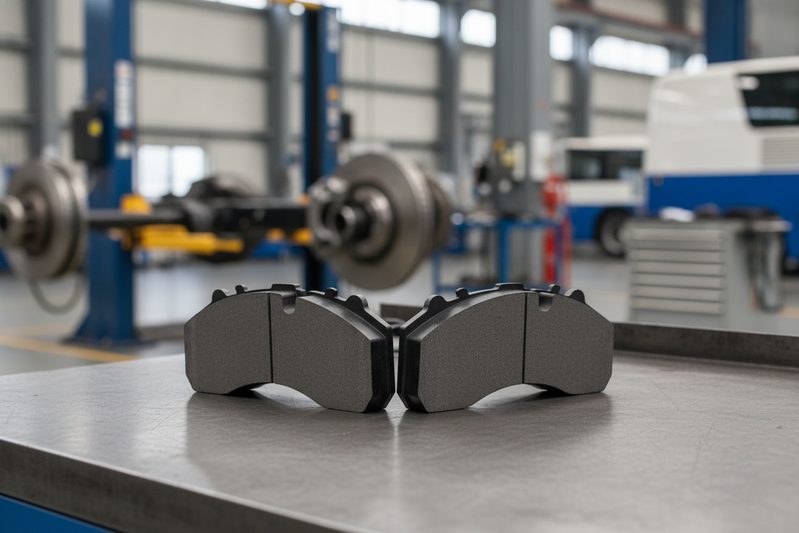
Ready to move from research to action? Browse our heavy-duty brake pad range to explore over 1,500 commercial vehicle references, or request a wholesale quote tailored to your volume and target market. Don't forget to download our product catalogue for a complete overview of our OE-quality brake solutions.
Was this article helpful?
Average Rating: 5/5 (497)