
Brake Pad Industry Standards: Design, Production, and Testing Requirements Explained
Summary:
Brake pad standards form a complete system covering design, production, and testing to guarantee safety and consistency. Key frameworks include China’s GB/T 5763 for automotive brake linings, production and assembly provisions, and international standards such as ECE R90, ISO (e.g., ISO 6310/6311), SAE, and JASO. They define dimensions, friction behavior, wear limits, mechanical strength, thermal stability, and appearance quality—so compliant pads deliver predictable stopping performance and durability in real use.
Brake Pad Industry Standards: What They Cover and Why They Matter
Industry standards are the backbone of brake pad safety. They set uniform requirements for design, production, and testing so that brake pads deliver consistent friction, durability, and reliability across vehicles and operating conditions. Below is a practical guide to what’s inside these standards and how they translate into real-world safety.
1) Design Standards: Geometry, Materials, and Performance Targets
Design rules ensure the pad’s structure, materials, and dimensions meet functional needs and packaging constraints.
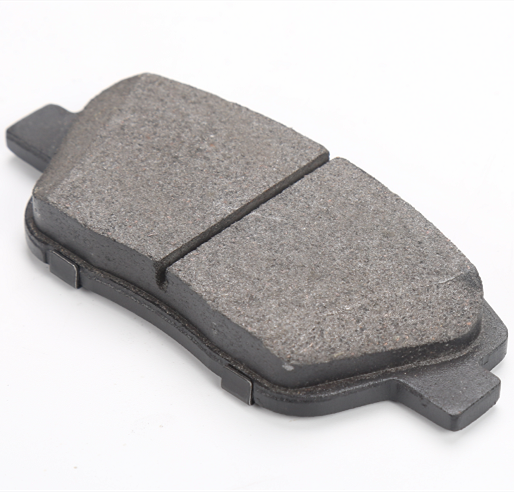
- Geometry & tolerances: length, width, thickness, chamfers, slots, ear/clip shapes, hole diameter and position, backing plate flatness.
- Material selection: binder resins, fibers (e.g., mineral/aramid/ceramic), fillers and lubricants, thermal stability, and environmental compliance (e.g., copper/lead limits where applicable).
- Performance envelopes: target friction coefficient (μ) windows, fade resistance, recovery, noise/vibration/harshness (NVH), and rotor friendliness.
Typical references
- GB/T 5763 (Automotive brake linings) – technical requirements for friction performance, size tolerances, and appearance quality.
- Vehicle-specific or heavy-duty guidance emphasizes brake distance, temperature rise, and service life under high load.
2) Production Standards: Process Control and Traceability
Manufacturing standards minimize variability and ensure every batch matches design intent.
- Material controls: incoming inspection, resin/fiber ratios, moisture/volatile limits.
- Process parameters: mixing, molding/pressing pressure, cure temperature/time, scorching, post-cure, machining.
- Assembly requirements: backing plate bonding/shear strength, shim and hardware installation, adhesive specs.
- Quality systems: lot traceability, SPC on critical dimensions and strength, end-of-line checks, labeling and packaging rules.
Typical references
- GB/T 5764 (General provisions for automotive disc brakes—often cited alongside component process requirements).
- Internal plant SOPs aligned with IATF 16949/ISO 9001 for automotive quality management.
3) Testing Standards: Friction, Fade, Wear, and Appearance
Testing verifies the pad meets performance claims before it leaves the factory.
- Dimensional accuracy: overall size, thickness tolerance, arc radius, hole position.
- Friction properties: μ stability across temperature, fade and recovery, cold effectiveness.
- Wear metrics: pad and rotor wear rate under defined cycles.
- Mechanical properties: hardness, density, compressibility, shear strength of lining-to-backing, thermal expansion.
- Appearance quality: no cracks, warping, delamination, voids or bubbles; uniform and tight internal structure.
Typical references
- ECE R90 (Europe): type-approval for replacement pads/shoes—requires on-vehicle or inertia-dyno tests to ensure performance parity with OE.
- ISO series (e.g., ISO 6310/6311): procedures for compressibility, shear, thermal behavior.
- SAE (U.S.): dynamometer methods and performance definitions (e.g., AK Master schedules).
- JASO (Japan): test cycles and evaluation criteria for road vehicles.
Quick Reference Table
| Area | What the Standard Ensures | Typical Metrics/Checks |
|---|---|---|
| Design | Fit, material integrity, baseline friction | Geometry tolerances; μ window; NVH features (shims, chamfers, slots) |
| Production | Repeatability and safety margin | Cure profile; bond/shear strength; SPC; traceability |
| Performance | Stable stopping across conditions | Fade/recovery; wear rate; cold/hot μ; rotor compatibility |
| Mechanical | Structural robustness | Hardness; density; compressibility; thermal expansion |
| Appearance | Consistency and durability | No cracks/voids/warping; clean surfaces; correct labeling |
International & Regional Frameworks (At a Glance)
- ECE R90 (EU/UK and widely adopted markets): mandatory type-approval for replacement pads; checks friction equivalence to OE, fade, recovery, and structural integrity.
- ISO: lab procedures for measuring compressibility, shear, thermal characteristics to compare materials consistently.
- SAE: North American test schedules and definitions for dynamometer evaluation and noise characterizations.
- JASO: Japanese methods detailing duty cycles and evaluation thresholds for road vehicles.
- China GB/T (e.g., 5763): comprehensive technical requirements for friction, dimensions, and appearance; commonly paired with production/assembly provisions.
Bottom line: Compliance is not a sticker—it’s a proof of design discipline, process control, and verified performance.
Why Standards Matter to Buyers and Fleets
- Safety & liability: certified pads reduce risk of fade-induced incidents.
- Consistency: predictable pedal feel, braking distance, and NVH across batches.
- Lifecycle cost: Verified wear and rotor friendliness lower total cost.
- Global trade: Recognition of ECE/ISO/SAE/JASO eases multi-market approvals.
FAQs
Q1: Is ECE R90 really necessary for replacement pads?
For many markets it’s mandatory. It ensures replacement pads perform comparably to OE across defined tests, protecting safety and consistency.
Q2: What’s the difference between ISO and ECE R90?
ISO provides lab test methods (how to measure). ECE R90 is type-approval (pass/fail against criteria and OE parity). They complement each other.
Q3: Do standards cover noise (squeal)?
Not all standards give a single pass/fail for noise, but NVH is addressed through specified tests, hardware (shims/clips), and process controls. Many makers also apply internal NVH targets.
Q4: Can a pad be “good” without certification?
Maybe—but without recognized approval, you lack independent verification. For safety, fleets and consumers should prefer certified products from audited plants.
Need ECE R90/ISO-verified pads for passenger or commercial vehicles? Contact Baiyun Brake for test reports, fitment lists, MOQ, and lead time.
Was this article helpful?
Average Rating: 5/5 (8893)