
Brake Lining Compliance and Fleet Uptime Priorities Reshape Heavy-Duty Truck Brake Lining Materials Market – openPR.com : Practical B2B Guide
Summary:
Brake Lining Compliance and Fleet Uptime Priorities Reshape Heavy-Duty Truck Brake Lining Materials Market - openPR.com demands a practical sourcing response from fleet buyers, distributors, and maintenance teams. Copper and asbestos restrictions now cap copper at 0.5% by January 2025, while ECE R90 remains the export market baseline. Heavy-duty trucks logging 120,000–150,000 miles annually replace linings every 12–18 months, so compliance gaps and batch variation directly increase downtime. The global brake linings market is projected to rise from USD 4.23 billion in 2025 to USD 6.45 billion by 2035 at a 4.31% CAGR, but cost per set no longer decides the purchase. Certified suppliers with documented wear consistency, IATF 16949 process control, and verified WVA references win the container orders. This guide covers supplier qualification, MOQ and lead time, OEM/private label options, and a buyer verification checklist for commercial vehicle brake parts.
Brake Lining Compliance and Fleet Uptime Priorities Reshape Heavy-Duty Truck Brake Lining Materials Market - openPR.com : Practical B2B Guide
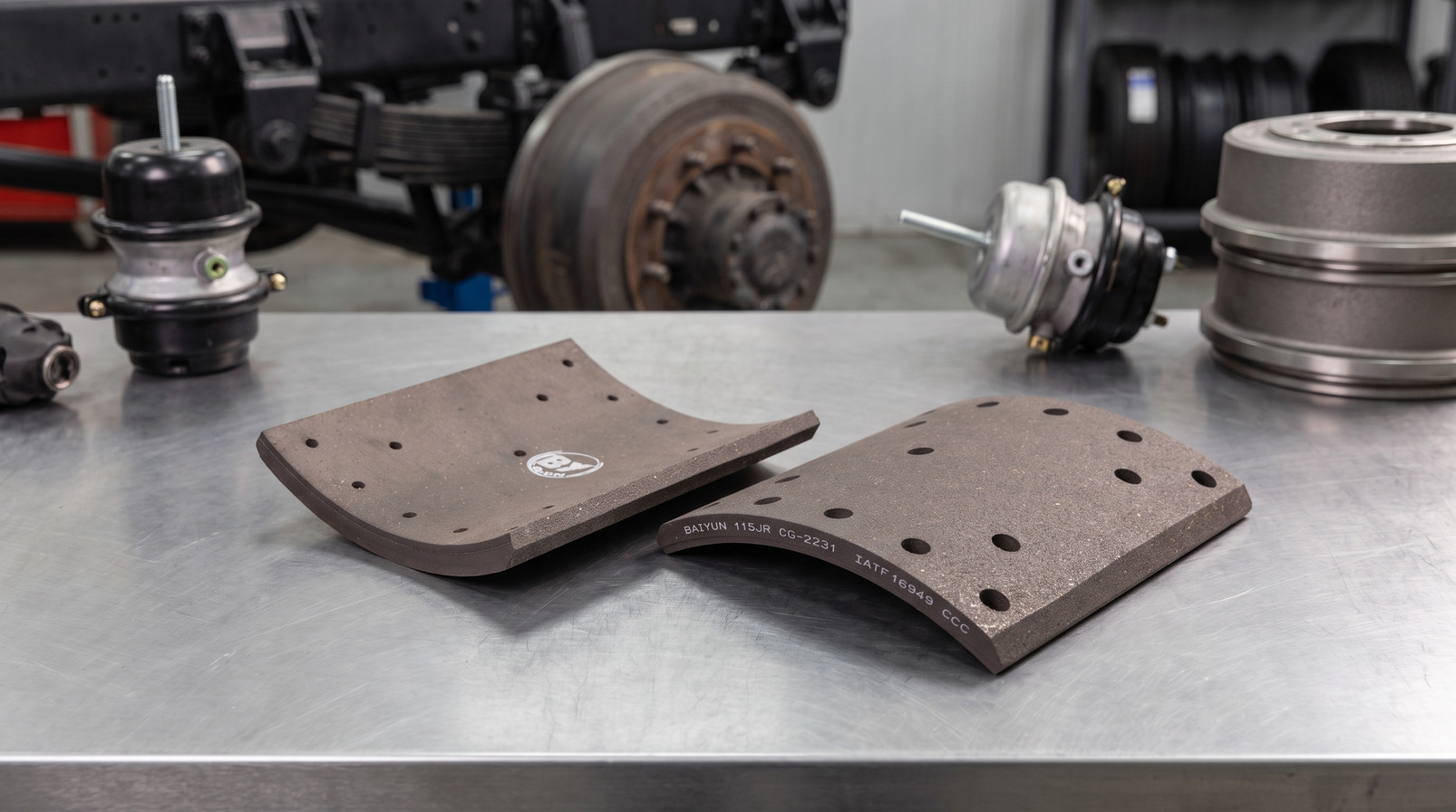
Quick answer: Heavy-duty truck brake lining sourcing now balances regulatory compliance and fleet uptime economics. Copper and asbestos restrictions tightened, with California and Washington capping copper at 0.5% by January 2025, while ECE R90 remains the aftermarket export baseline. A heavy-duty truck running 120,000–150,000 miles annually replaces linings every 12–18 months. The brake linings market will grow from USD 4.23 billion in 2025 to USD 6.45 billion by 2035 at 4.31% CAGR, but fleet buyers now prioritize certified suppliers with documented consistent wear rates over the lowest price.
Why Are Copper and Asbestos Restrictions Forcing Fleet Sourcing Decisions?
California's SB 346 and Washington's matching statute set the playbook. They limited brake friction copper to 5% by weight starting in 2021, then tightened that cap to 0.5% by January 2025. For any distributor supplying West Coast fleets or ports, old stock with higher copper content is now a liability, not a bargain.
Asbestos hasn't been acceptable in most developed markets for decades, but the enforcement pressure now sits with importers and wholesalers, not just manufacturers. A truck brake pad supplier who can't document material composition becomes a customs and warranty risk. That's why more buyer RFQs specify lab test reports up front instead of waiting for a field failure.
ECE R90 adds a second layer. It requires aftermarket pads and linings to deliver braking performance within specified tolerance bands versus the original equipment part. The regulation isn't academic; it's the gate for selling into many European, Middle Eastern, and African fleet markets. BAIYUN Brake runs ECE R90-approved production lines for commercial vehicle brake pads and linings, which means the homologation work is already done before the first container ships. For fleets moving between disc and drum setups, having one supplier for both commercial vehicle brake pads and linings cuts admin time.
What Does Fleet Uptime Actually Do to Lining Material Demand?
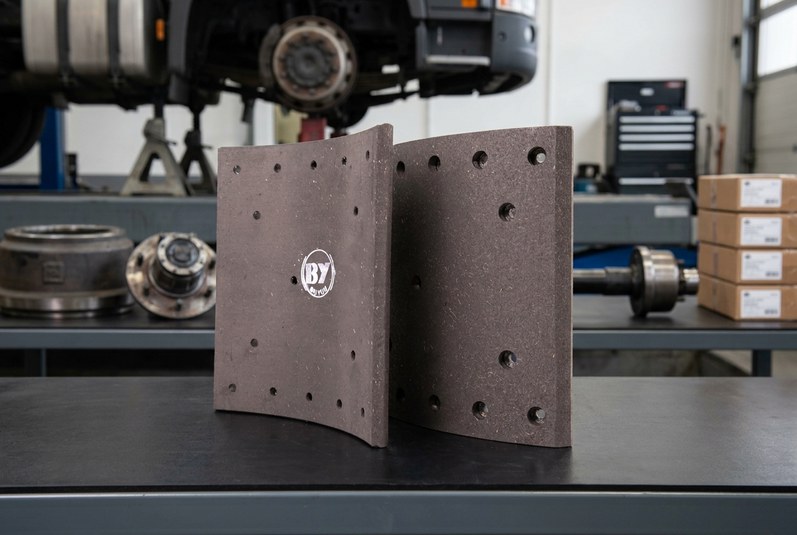
Fleet managers don't buy linings; they buy road days. A truck parked for brake relining costs money. Heavy-duty trucks in mature markets now average 120,000–150,000 miles a year. At that utilization, a lining set that lasts 12 months instead of 18 months adds a full extra service event, extra labour, and extra downtime per truck.
This simple arithmetic changes material priorities. Buyers still ask about price per set, but warranty period, wear consistency, and drum-to-disc conversion fitment now carry more weight. Fleets running regional distribution or port logistics operations also prefer sensor-ready pads that integrate with predictive maintenance tools. That data signal lets the workshop plan replacements before roadside inspection failures or cracked linings sideline a vehicle.
For aftermarket brake parts importers, the opportunity sits in stocking fewer SKUs with tighter friction consistency. A distributor sourcing 500 sets monthly cannot afford batch-to-batch friction coefficient swings. BAIYUN Brake's IATF 16949 certified facility controls mixing and pressing parameters, so the friction behaviour a fleet measured in March remains the same in December.
What Should a Truck Brake Pad Supplier Prove Before You Issue a PO?
This is the question every importer should ask before committing to a container. Certifications are the starting point, but they don't tell the whole story. A supplier can hold IATF 16949 and still deliver inconsistent linings if their process control isn't verified by your own incoming quality checks.
| Verification Item | What to Ask For | Why It Matters for Fleet Uptime |
|---|---|---|
| IATF 16949 certificate | Current certificate with site address matching production plant | Confirms automotive-quality process control, not just paper compliance |
| ECE R90 homologation | Approval number and test report for the specific part number | Allows legal sale in markets requiring ECE R90 aftermarket approval |
| Copper and asbestos content | Third-party material test report showing copper ≤0.5% and asbestos-free | Covers California, Washington, and future restriction risk |
| WVA reference match | Supplier catalogue cross-reference; confirm exact dimensions and OE numbers with supplier catalogue | Reduces wrong-boxing and fitment errors in bulk orders |
| Batch consistency data | Dynamometer test results comparing friction coefficient across batches | Prevents field performance drift and warranty claims |
| Lead time and MOQ | Confirmed production schedule, minimum order quantity, shipping terms | Keeps distributor inventory planning predictable |
What Does a Practical Buyer Verification Checklist Look Like?
- Request current IATF 16949 certificate and verify the site address matches the production plant.
- Get ECE R90 approval numbers for each part number, not just a company-level claim.
- Ask for a third-party copper and asbestos lab report, not a supplier declaration alone.
- Confirm WVA references and exact dimensions; if missing, mark as Confirm with supplier catalogue.
- Compare batch-to-batch friction coefficient data from dynamometer tests.
- Confirm MOQ, lead time, packaging, and shipping terms before sampling.
- Run a field trial on at least 3–5 heavy-duty trucks for 60–90 days before bulk rollout.
Why Should Importers Treat WVA References as a Compliance Tool, Not a Fitment Shortcut?
WVA numbering is the common language for friction shape and fitment. But the reference alone doesn't tell you anything about friction level, temperature range, or wear rate. A WVA number describes geometry; it does not replace material specification. I've seen buyer inquiries that list only a WVA code and expect identical performance across suppliers. That's a mistake.
When you issue an RFQ, ask for the WVA reference plus the supplier's test report for that specific part number. If the supplier says a dimension or OE cross-reference is not in their catalogue, don't accept a guess. Write it exactly as: Confirm with supplier catalogue. For custom or older heavy-duty applications, BAIYUN Brake's technical team can verify geometry against the sample drawing and provide the appropriate commercial vehicle brake pad or lining reference before quoting. After fitment is confirmed, your maintenance crew can follow the brake lining installation guide to reduce installation errors.
How Does BAIYUN Brake Handle MOQ, Lead Time, and OEM/Private Label Programs?
I've sat through enough supplier audits to know the first question after compliance is always logistics. BAIYUN Brake operates from an 49+ years of manufacturing experience base in China, with IATF 16949 and ECE R90 certifications across commercial vehicle friction lines. For CV brake pad and brake lining programs, the plant supports bulk aftermarket packaging, distributor-branded boxes, and OEM private label production.
MOQ and lead time depend on the product family and whether the buyer needs a WVA number already in the catalogue or a custom formulation. I'd rather be blunt: if you're asking for 200 sets of a low-volume lining with a custom edge code, that's not going to move as fast as 2,000 sets of a running SKU. The team typically quotes current production slot availability after receiving the target part number and annual volume estimate.
Logistics planning matters just as much as the product. Consolidated sea freight, palletized packing, and customs documentation support all reduce landed cost risk. For container-quantity buyers, we recommend a wholesale CV brake lining inquiry before shipment, plus requesting material data sheets for each part number so the compliance file is complete on day one.
Frequently Asked Questions About Heavy-Duty Truck Brake Lining Sourcing
What certifications should I require from a truck brake pad supplier?
Require IATF 16949 for process control and ECE R90 for aftermarket homologation in export markets. You should also ask for a third-party copper and asbestos material report showing copper at or below 0.5% by weight and asbestos-free status.
How often do heavy-duty fleets replace brake linings?
Heavy-duty trucks running 120,000–150,000 miles annually typically replace linings every 12–18 months, depending on duty cycle, terrain, and axle configuration. Fleet buyers should benchmark supplier wear data against their own route profiles before placing bulk orders.
Does ECE R90 apply to commercial vehicle brake pads or linings?
Yes, ECE R90 covers replacement brake lining assemblies for many commercial vehicle categories in EU and other adopting markets. It requires performance within prescribed braking tolerance bands versus the original equipment part.
What is a WVA reference and is it enough to confirm fitment?
A WVA reference identifies friction shape and geometry only. It does not specify friction level, material, or thermal range. Always confirm exact dimensions, OE cross-references, and material specifications with the supplier catalogue before ordering.
What MOQ and lead time should I expect for private label commercial brake pads?
MOQ varies by SKU and whether the part is an existing running item or a custom formulation. Most commercial vehicle programs quote MOQ per part number after receiving annual volume projections; lead time depends on current production slots and packaging requirements.
Look, the brake lining market isn't getting simpler. Copper caps, ECE R90 enforcement, and fleet telematics are all pushing buyers toward fewer, better-documented suppliers. The distributors who win are the ones who stop quoting on price alone and start auditing compliance files, batch consistency, and lead time predictability before the first order.
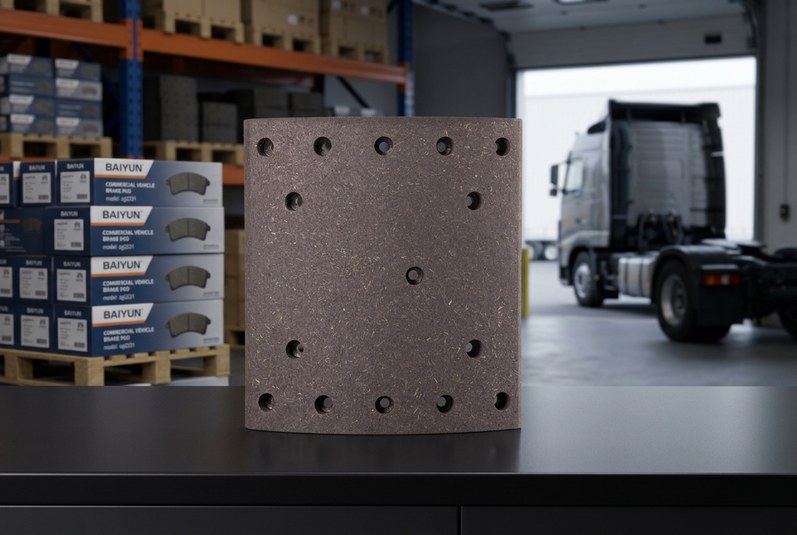
If you're sourcing heavy-duty commercial vehicle brake pads or linings for fleet accounts, request current test reports and a sample run. BAIYUN Brake's export team can quote your target part numbers, WVA references, and packaging specs from our heavy-duty brake pad range and C.V. brake linings. For volume pricing, MOQ, and lead time, contact our export team directly.
Was this article helpful?
Average Rating: 5/5 (67)